Rental Property Care
Barrhaven Rental Garage Turnover Clean-Up: A Practical Handoff Guide for Storage, Floors and Access
A practical Barrhaven guide for documenting, clearing and cleaning a rental garage between tenants while protecting access, fixed equipment and the final property handoff.
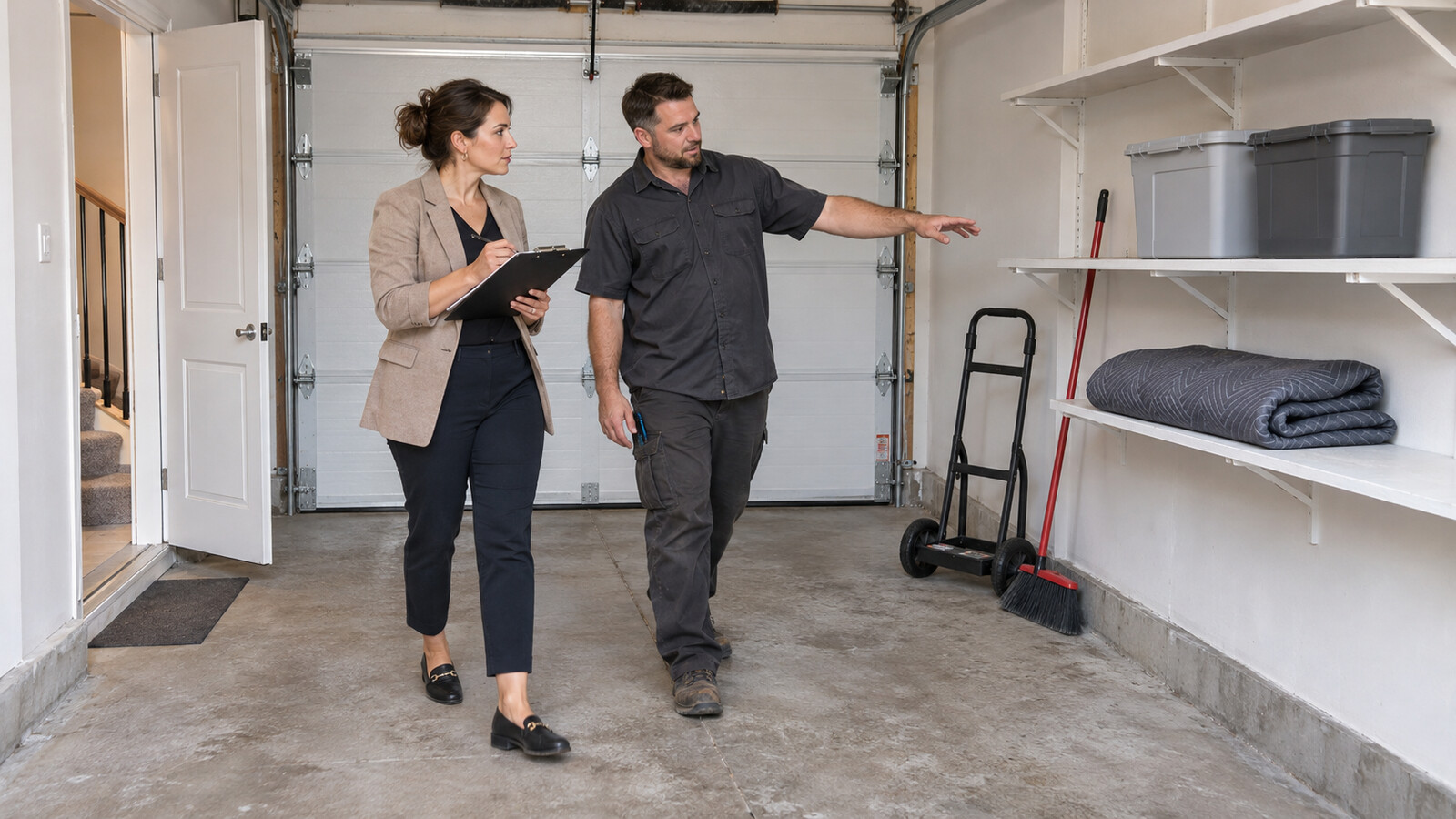
A rental garage can look simple on a turnover checklist, but it often combines several jobs in one compact space. There may be items left by the departing tenant, storage that belongs to the owner, wall-mounted equipment, concrete floor dust, door-track debris and a route into the home that must remain usable. In a Barrhaven townhouse or detached rental, a rushed garage clean-up can create confusion about ownership or hide maintenance details that should be recorded.
A reliable handoff starts with documentation and an approved removal list, not with loading the first loose item. The aim is to leave a clear parking area, accessible shelves, visible floor edges and useful condition notes for the property manager. Routine clean-up should not be presented as a repair, environmental service or substitute for a qualified inspection.
Confirm ownership before anything leaves
Begin by confirming possession of the unit and who can authorize disposal. A property manager may know that empty cartons and a broken plastic tote can go, but be less certain about a ladder, winter tires, shelving parts or an unopened box. Photograph uncertain items where they were found and place them on a hold list. Do not assume that something is abandoned because it is dusty, inexpensive or stored near the garage door.
Separate ordinary approved contents from materials that need another route. Paint, solvents, fuel, propane cylinders, automotive fluids, batteries, unknown containers, sharp waste and anything leaking should not be mixed into an ordinary non-hazardous removal load. Record them for the owner or property manager and pause that part of the scope until appropriate direction is confirmed.
Photograph the starting condition
Take wide photographs from the overhead door and the interior entry before moving storage. Include the walls, shelving, floor, lower corners and the route between both doors. Add close photographs of damaged bins, loose hardware, floor marks, cracked concrete, door weather seals and anything that may need repair. These images support a cleaner handoff because they separate pre-existing condition from the work completed during turnover.
- Record which remotes, keys and access devices are present.
- Photograph owner-owned shelving and wall-mounted equipment.
- Note loose cords, exposed fasteners or unstable storage before working nearby.
- Keep the interior door and an emergency exit route unobstructed.
- Create a written hold list for anything without clear authorization.
Sort by decision, not by appearance
Use simple decision groups: owner storage, tenant pickup, relocate within the property, approved ordinary removal and hold for direction. This is more useful than sorting only by material because ownership determines what can move. Work along one wall at a time so the centre route stays open and the property manager can see what has already been reviewed.
Flatten empty cartons only after their contents have been checked. Keep hardware with the shelf, appliance or fixture it appears to serve. Do not open sealed personal containers, dismantle fixed storage or combine small loose items into an unmarked box. If the departing tenant still has a pickup window, group approved belongings neatly without blocking vehicle access or the door into the home.

Protect the parking route and interior entry
A garage turnover is easier when the work area is divided into a clear travel lane and a controlled sorting edge. Keep bags, hand carts and vacuum cords out of the route from the overhead door to the interior entry. In a narrow townhouse garage, even a small pile at the bottom of the steps can make carrying awkward and can block a door from opening fully.
Check the width and height of the removal path before moving bulky approved items. Protect finished thresholds and the first section of interior flooring where needed. If shared driveways, visitor parking or condominium rules affect access, confirm the loading position and service window in advance rather than leaving a vehicle or materials in a common route.
Clean dry surfaces in a sensible sequence
Once approved items are out of the way, start high and finish at the floor. Remove loose cobwebs from accessible corners, dust stable shelf surfaces and wipe only materials suited to the chosen method. Then sweep or vacuum dry debris from the perimeter toward the open centre. Avoid blowing dust toward the home, the driveway or neighbouring properties.
Garage floors often show old tire marks, salt residue, paint spots, minor cracks or previous repairs. A turnover clean-up can remove loose dry debris and leave the slab presentable, but it should not promise to erase every mark. Pressure washing or wet cleaning is a separate decision that depends on drainage, temperature, drying time, stored contents and the condition of the concrete.
Check floor edges, tracks and lower corners
With storage reduced, inspect the wall-to-floor edge, shelf feet, steps and the accessible area beside the overhead-door tracks. Use a narrow vacuum attachment for loose dry debris where it can be reached safely. Photograph staining, crumbling concrete, damaged trim, corrosion, loose weather seals or signs that water has entered. Do not scrape, probe or cover a condition simply to make the final photographs look cleaner.
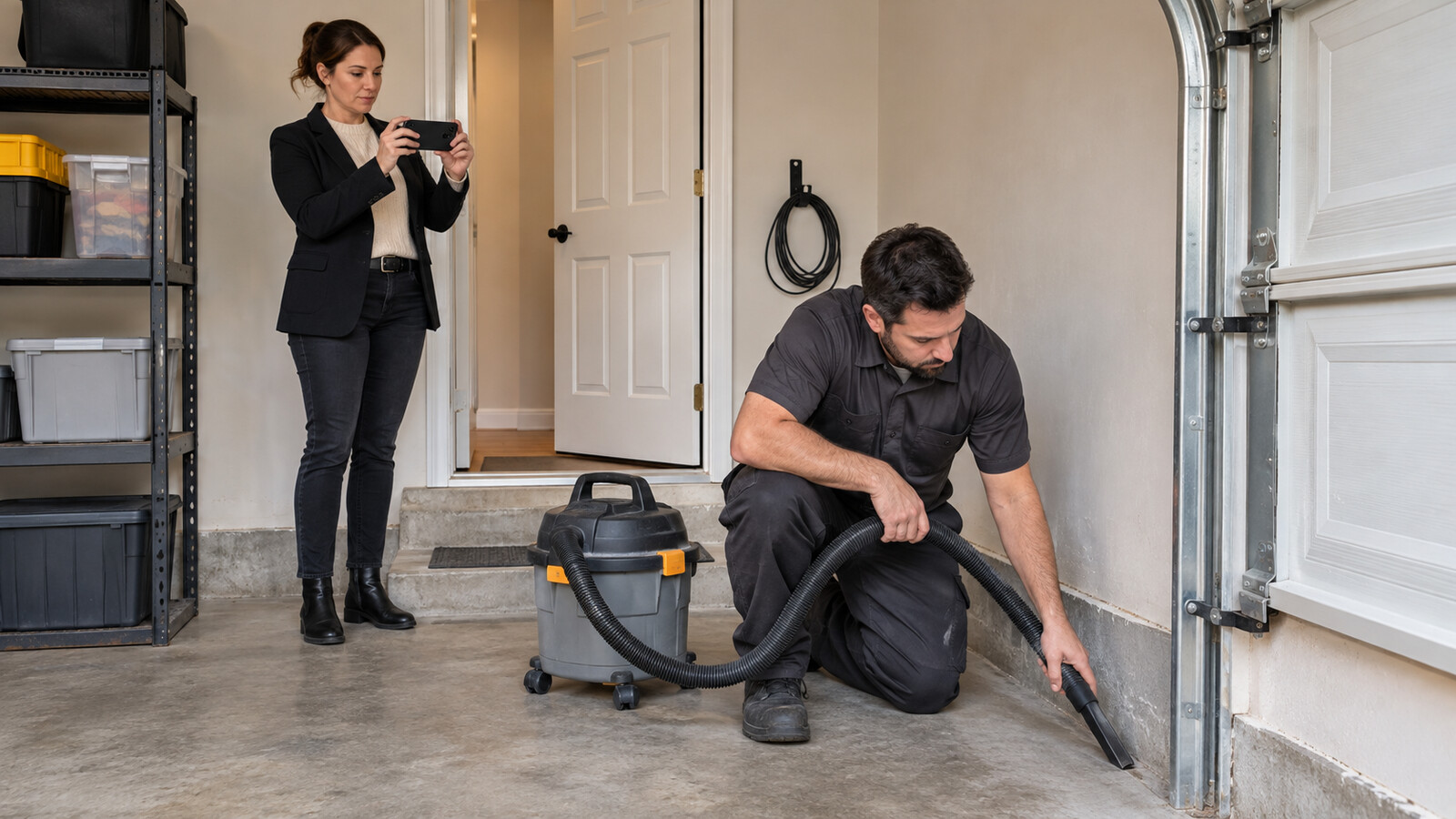
Stop and request appropriate direction if there is standing water, an active leak, sewage, widespread suspect growth, pests, strong chemical odours, damaged electrical equipment, unstable shelving or an unknown substance. These conditions change the scope and may require a landlord, property manager or qualified specialist before routine clean-up continues.
Leave fixed systems for the right trade
Do not adjust the overhead-door springs, cables, opener, sensors or track hardware during ordinary turnover cleaning. Keep storage away from electrical panels, outlets, shutoffs and mechanical equipment. Loose brackets, damaged drywall, non-working lights and door-operation concerns should be recorded as maintenance items. A clear note is more useful than an improvised repair that has not been approved or scoped.
Finish with a documented handoff
Take final photographs from the same positions used at the start. The property manager should be able to see the open parking area, clear door route, shelf condition and visible floor perimeter. List everything left behind, even if it is neatly grouped, and identify whether it belongs to the owner, awaits tenant pickup or needs separate disposal direction.
- Confirm that both doors open and the route between them is clear.
- Return approved owner items to stable, accessible storage.
- Remove tools, bags, cords and loose packaging used during the work.
- Record maintenance concerns without attempting unapproved repairs.
- Send final wide photos and the hold list to the decision-maker.
What to send for a Barrhaven garage-turnover quote
Send wide photographs from both doors, closer views of approved items to remove and images of the shelving and floor edges. Include the Barrhaven address, approximate garage size, access details, stairs or thresholds, parking instructions and the handoff deadline. Identify heavy items, glass, tires, fixed equipment and any paint, fuel, batteries, unknown containers or active moisture before the scope is confirmed.
A good rental-garage turnover is less about making the space look perfect and more about leaving it understandable. Clear authorization, an open access route, dry surface cleaning, careful condition notes and matched before-and-after positions give landlords and property managers a practical record for the next tenant handoff.
Photos are illustrative examples of typical residential service results.