Property Management
Centretown Apartment Stairwell Winter Clean-Up: A Practical Plan for Salt, Grit, Landings and Clear Access
A practical Centretown guide for property managers planning winter stairwell clean-up, with clear steps for salt, grit, landings, railings and usable access.
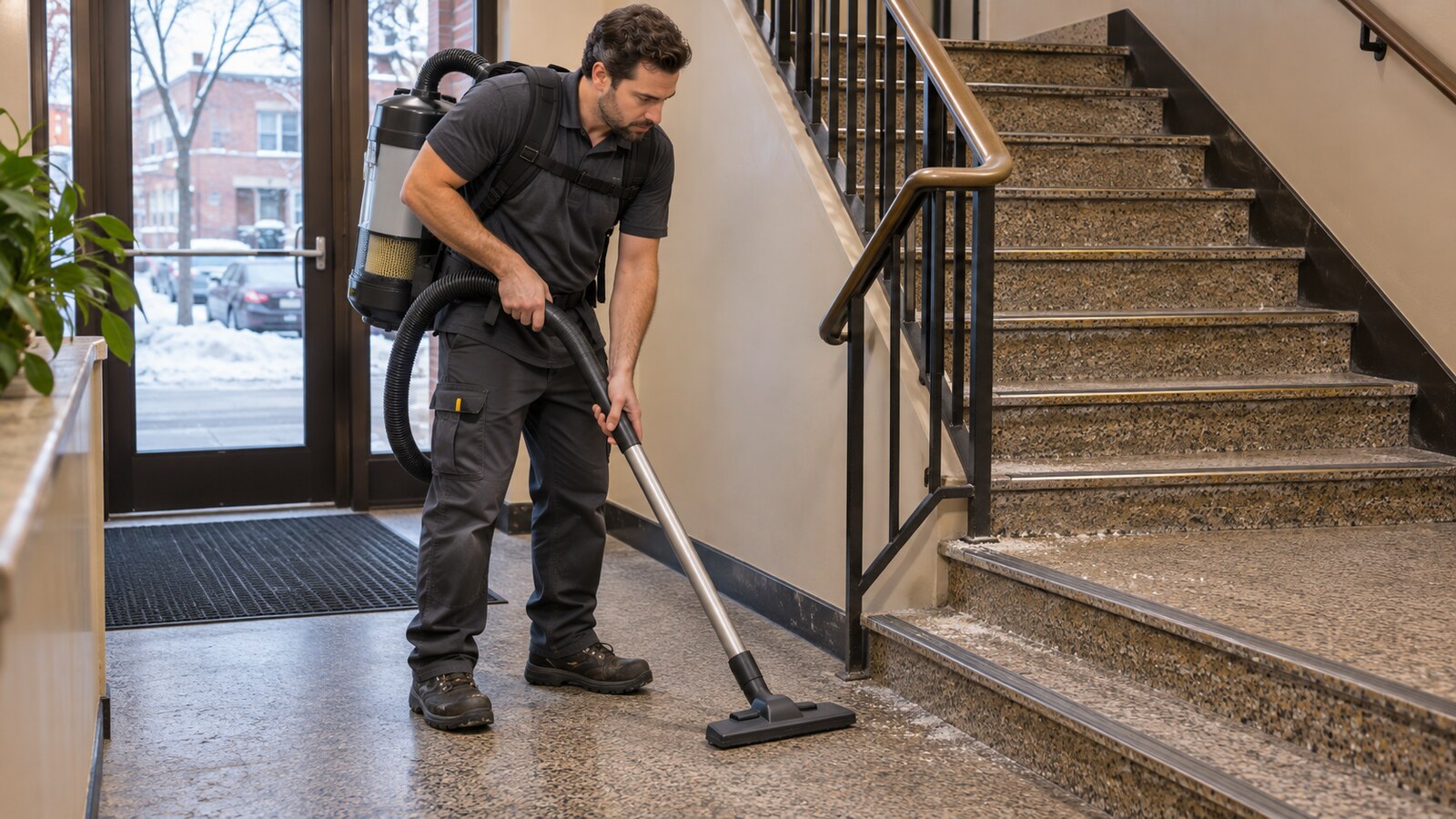
Winter stairwells in Centretown apartment buildings collect more than ordinary dust. Footwear carries in salt crystals, fine grit, moisture and small bits of slush from the sidewalk and entrance. That material gathers at mat edges, along stair nosings, beside walls and on the landings where people change direction.
A useful clean-up plan protects the route while the work is happening. It separates dry soil removal from controlled damp cleaning, keeps equipment out of the travel path and gives each landing enough time to dry. For property managers, the goal is a repeatable reset that supports regular building care without overstating what routine cleaning can correct.
Start with the building layout and daily traffic
Walk the full route from the exterior door to the highest landing included in the scope. Note every entrance mat, stair flight, intermediate landing, corridor connection, handrail, threshold and door swing. In a walk-up building, the main stair may be the only route residents use, so a crew needs a section-by-section plan rather than treating the whole stairwell as one open work area.
Record the busiest periods, any delivery pattern and the locations where residents need uninterrupted access. Identify whether a second stair or elevator is available, but do not assume people can be redirected without the property manager's approval. A clear scope should also state which floors, vestibules and adjacent corridors are included.
Inspect surfaces before choosing the cleaning method
Stairwells may combine terrazzo, ceramic tile, resilient flooring, painted concrete, metal nosings and different wall finishes. Check for loose edging, cracked tile, lifting floor material, damaged caulking and worn anti-slip strips before cleaning. Photograph existing defects so they are not confused with cleaning results.
Salt residue can look similar on several surfaces but does not justify using one chemical everywhere. Confirm the floor finish and any building-approved product requirements before applying a cleaner. Routine property care should not include repairing loose stair parts, treating unknown coatings or using an untested product on a visible landing.
Remove dry salt and grit first
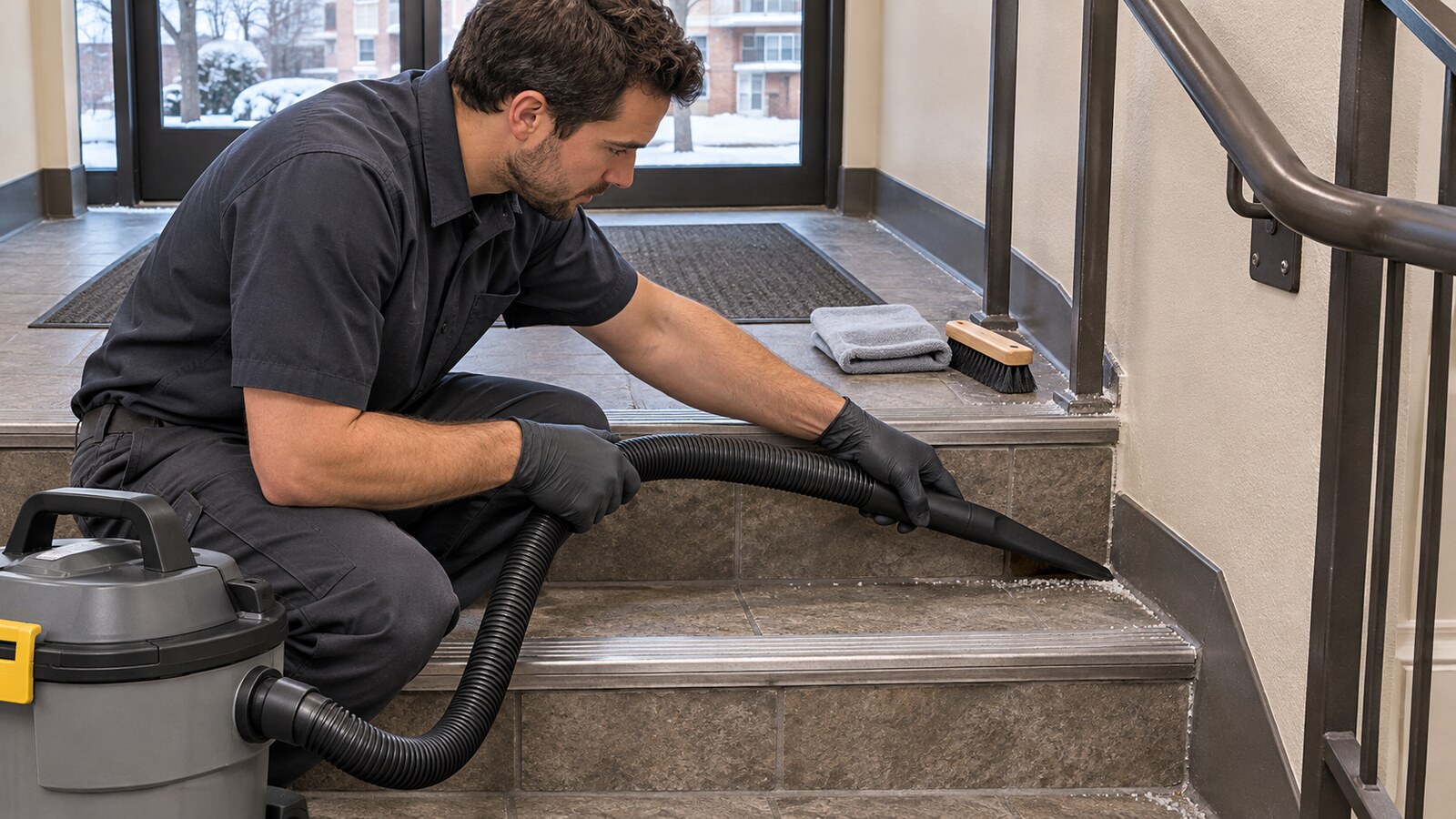
Vacuum or collect loose material before introducing moisture. Start at the upper edge of the assigned section and work toward the landing, paying attention to nosings, wall edges, corners, radiator covers and the bases of rail posts. A crevice tool can reach the narrow lines where white residue often builds up.
Do not sweep grit down a flight of stairs or push it into a doorway. Dry crystals can spread under footwear, scratch some finishes and turn into a cloudy film when they are immediately soaked. Empty or change the vacuum collection system as needed so captured grit is not released back into the stairwell.
- Photograph each landing and any existing surface damage.
- Lift only mats that can be moved safely and return them flat.
- Vacuum tread edges, nosings, corners and rail-post bases.
- Keep cords, hoses and cleaning caddies outside the walking line.
- Collect loose grit before using a damp mop or cloth.
Use controlled damp cleaning on landings and treads
After dry soil is removed, use a well-controlled damp method suited to the confirmed surface. The mop or cloth should collect the remaining film without leaving water at nosings, under doors or beside the wall. Change the solution or cleaning pad when it becomes dirty instead of moving grey residue from one landing to the next.
Work in manageable sections and leave a clear route wherever possible. Avoid over-wetting stairs, mixing cleaning products or adding a strong product simply because residue is persistent. If a finish reacts unexpectedly, stop, document the area and confirm the next step with the property manager.
Clean railings, doors and touchpoints without losing the route
Handrails, push plates, door edges and accessible ledges can be included after the floors are under control. Use clean cloths and a product appropriate for the material. Do not leave damp residue on a handrail that residents may need while using the stairs.
Keep doors operating normally throughout the work. A propped door, cleaning caddy or vacuum left in a doorway can create a bigger access problem than the soil being removed. Cleaning should not interfere with locks, closers, alarm equipment or building hardware.
Reset entrance mats and the walking line
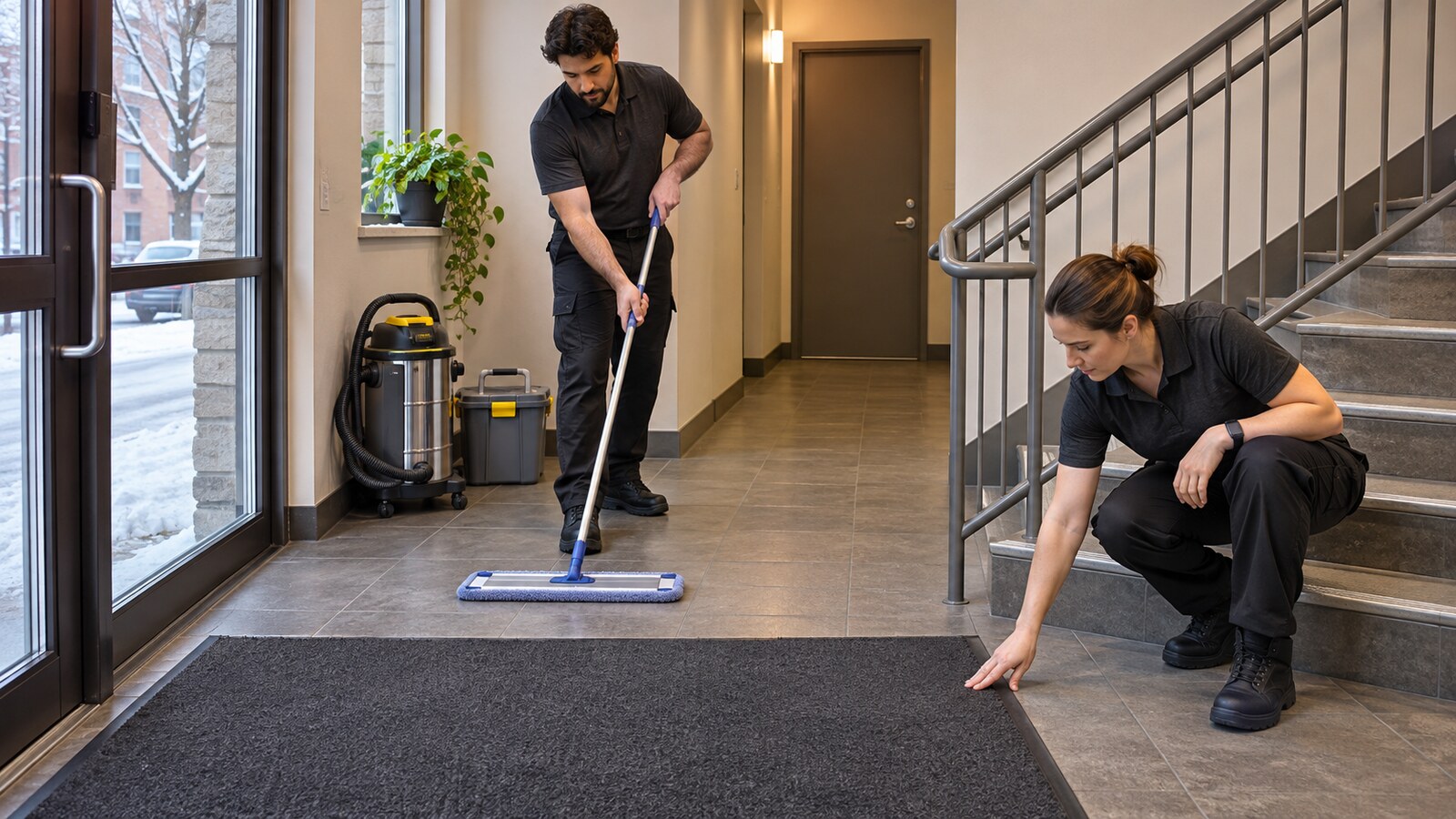
Entrance mats help collect moisture and grit only when they sit flat and fit the available space. Lift a movable mat to clean beneath it, inspect the backing and return it without curled edges. A saturated, damaged or poorly sized mat should be reported rather than hidden under another layer.
Place equipment on a stable landing outside the door swing and walking line. If one section needs drying time, coordinate the sequence so residents are not directed onto a visibly wet tread. The final route should be easy to understand without relying on an improvised obstacle or an unattended machine.
Separate routine soil from conditions needing another response
This plan is for ordinary tracked salt, sand, dust and light winter moisture. Unknown liquids, needles, animal or human waste, significant pest activity, mould-like growth and other potentially hazardous conditions are outside routine stairwell cleaning. Secure the immediate area according to the building's process and arrange the appropriate specialist response.
Likewise, cleaning cannot repair a loose nosing, unstable handrail, damaged stair tread or active water entry. Photograph the condition, keep the scope clear and report it to the responsible contact. A good handoff distinguishes what was cleaned from what still requires maintenance.
Build a practical winter service schedule
The right frequency depends on traffic, entrance design, mat capacity, surface type and what is being tracked in. A property manager can use short condition checks after busy periods to decide whether the stairwell needs dry grit removal, a landing reset or a fuller clean. The schedule should respond to actual conditions rather than promise a fixed result for every day.
Keep brief notes on the floors completed, repeated trouble spots, mat condition and any maintenance issue reported. That record makes the next visit easier to scope and helps separate recurring winter soil from a building condition that needs repair or a change in entrance setup.
Complete a clear property-management handoff
Before leaving, walk the route from the entrance upward. Confirm that treads and landings are dry enough for normal use, mats lie flat, doors close properly and no hose, cord, cloth or container remains behind. Check rail bases and corners for collected grit.
Send the property contact a concise note listing the areas completed, exclusions, surface damage observed and anything that needs follow-up. Photos of representative landings are more useful than implying that routine cleaning corrected every mark or worn finish.
What to send for a firm stairwell clean-up quote
Send wide photos of the entrance, each stair flight and the upper and lower landings. Include close photos of the heaviest salt or grit, mat edges, tread material, nosings and any damaged surface. State the number of floors, whether there is an alternate route, the building access contact and the preferred work window.
Also identify parking or loading limits, product restrictions, water access and whether adjacent corridors or the vestibule are included. Disclose unknown residue or a condition outside ordinary cleaning before an appointment is arranged.
A useful Centretown stairwell clean-up is methodical: dry grit first, controlled moisture second, equipment kept out of the route and a documented handoff at the end. That keeps the work practical for residents and gives the property manager a clear record of what was completed.
The images in this article are illustrative examples and do not show an actual Mattabo Property Care job.
Photos are illustrative examples of typical residential service results.