Property Management
Orléans Apartment Garbage and Recycling Room Clean-Up: A Practical Plan for Bins, Cardboard and Clear Access
A practical Orléans guide for property managers planning an ordinary non-hazardous garbage and recycling room reset without blocking bins, doors or collection access.
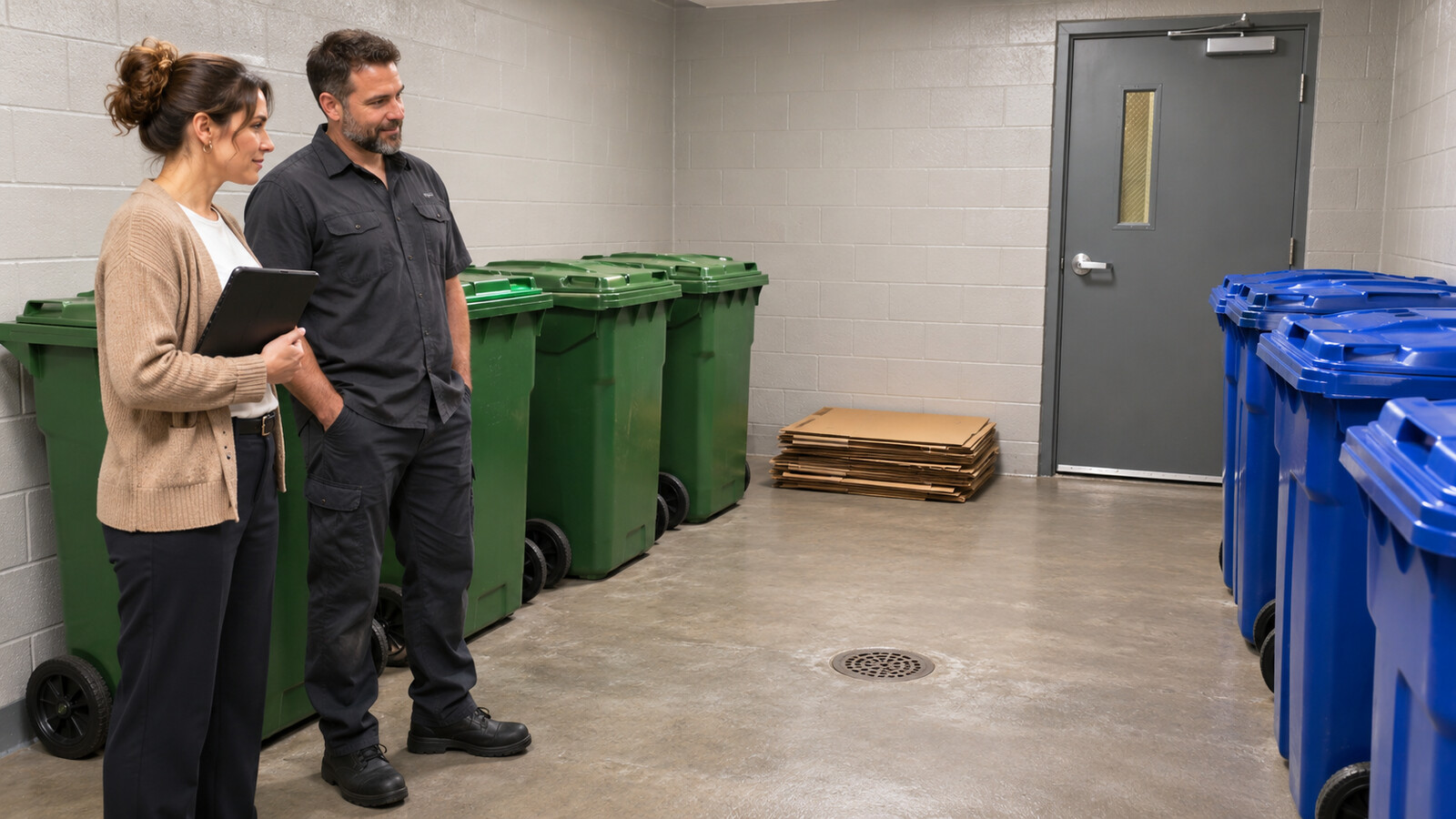
A garbage or recycling room can become difficult to manage long before it looks extreme. Flattened boxes lean into the walkway, loose ordinary items collect beside the bins, and floor edges become hard to inspect. In an apartment building, the best clean-up plan protects access first and treats the room as an operating service area, not an open storage space.
For Orléans property managers and building staff, a useful reset starts with the collection schedule, the approved scope and the conditions present in the room. Ordinary non-hazardous cardboard and misplaced household items may fit a routine clean-up. Unknown liquids, sharps, pest contamination and other specialist concerns do not.
Define the room and the approved scope
Confirm which areas are included: the bin room, recycling alcove, short service corridor, loading area or an adjacent approved storage section. Photograph the full room before moving anything. Include every bin, doorway, drain, wall edge and item left outside a container so the quote reflects the actual conditions.
Identify who controls the bins and when collection or internal movement is expected. A contractor should not relocate a container, block a fire door or change the building's waste setup without property-management approval. If another company services compactors or specialized equipment, keep that work outside an ordinary room reset.
- Photograph the room from the entrance and opposite corner.
- Show every bin, doorway and item left on the floor.
- Confirm the next collection or bin-movement time.
- Separate approved ordinary items from unknown materials.
- Identify equipment that another contractor controls.
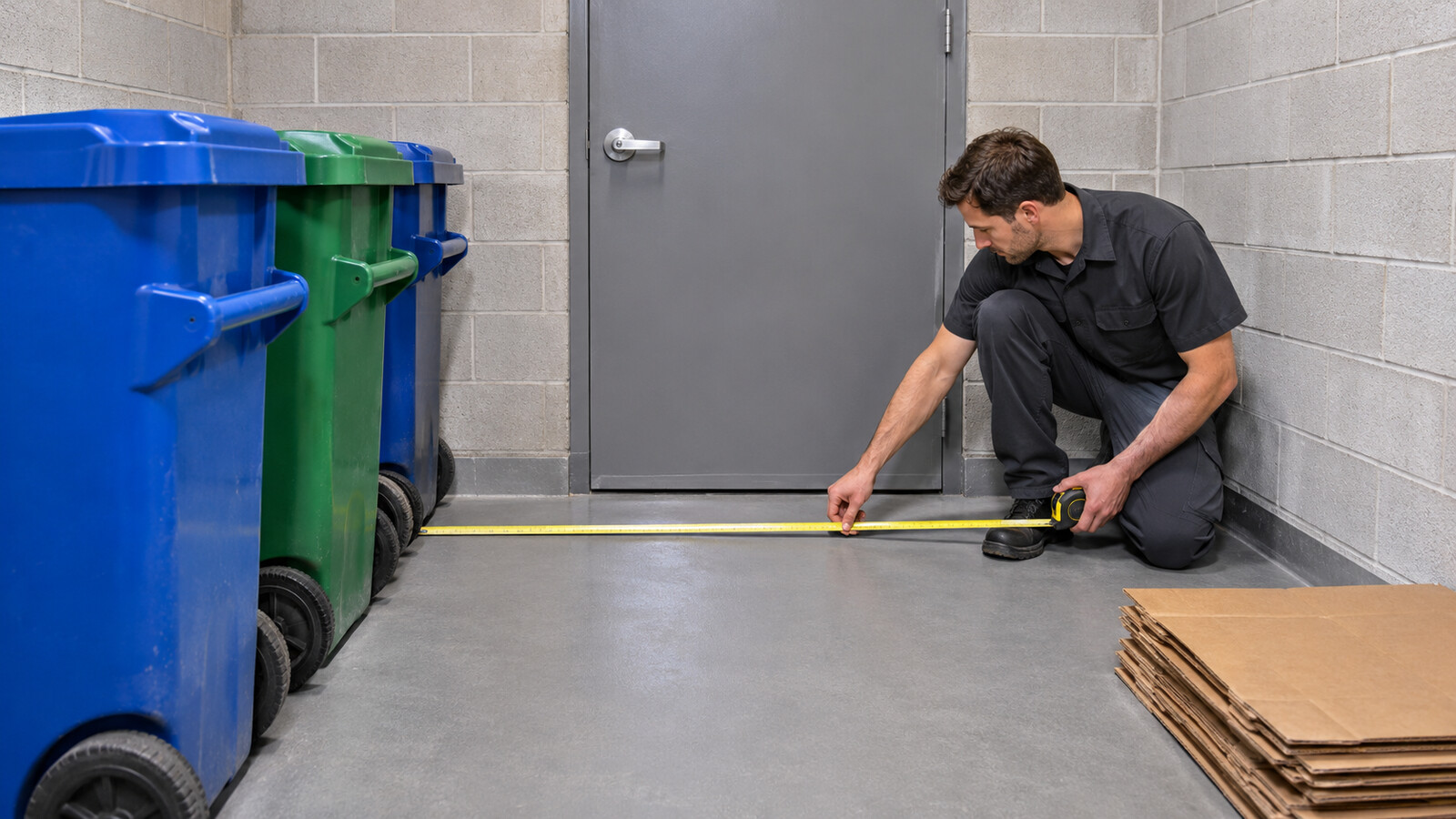
Document first, then move approved items
Take clear photographs of misplaced furniture, bags, loose cardboard and any damaged area before the reset begins. Property managers may need a record of where items were found, especially when the room serves many units. Documentation also helps distinguish a recurring disposal problem from a one-time blocked route.
Do not open sealed bags or containers simply to identify their contents. If an item cannot be confirmed as ordinary and non-hazardous from the outside, pause and ask the building representative how it should be handled. Keep approved and excluded materials visually separate so the scope does not drift during the work.
Sort only ordinary, clearly identified material
The routine portion of a reset may include flattened clean cardboard, empty packaging and ordinary unwanted household items that management has approved. Place material only in the correct designated container or removal stream. Do not assume that an item belongs in recycling because it is made partly from paper, metal or plastic.
Large boxes should be emptied and flattened only when their contents are known and the cardboard is suitable for the approved stream. Remove packing inserts, loose plastic film and other separated materials as directed by management. Keep the floor clear while sorting rather than building a second pile beside the bins.
Know when an ordinary clean-up must stop
Stop and isolate the area if the room contains needles or other sharps, leaking or unknown liquids, chemicals, pressurized cylinders, strong unexplained odours, significant pest activity, biological material or damaged electrical equipment. These conditions should not be folded into a standard interior clean-up or junk-removal scope.
Do not sweep, compress or move an unknown material to make the room appear finished. Record the location without handling it and notify the property manager. A specialist referral or separate building procedure may be needed before ordinary work can continue safely in the affected area.
Rebuild clear routes around bins and doors
Keep a continuous path from the entrance to each active bin and any approved service door. Bin lids, casters and handles need room to operate without striking stored items. Floor drains, access panels and shutoffs should remain visible; do not use those spaces as convenient locations for flattened cardboard or cleaning supplies.
Return moveable bins only to positions approved by management. Check that doors close freely, signs remain visible and the next collection crew can reach the containers. The room should be functional at the end of the appointment, not merely less crowded from one camera angle.
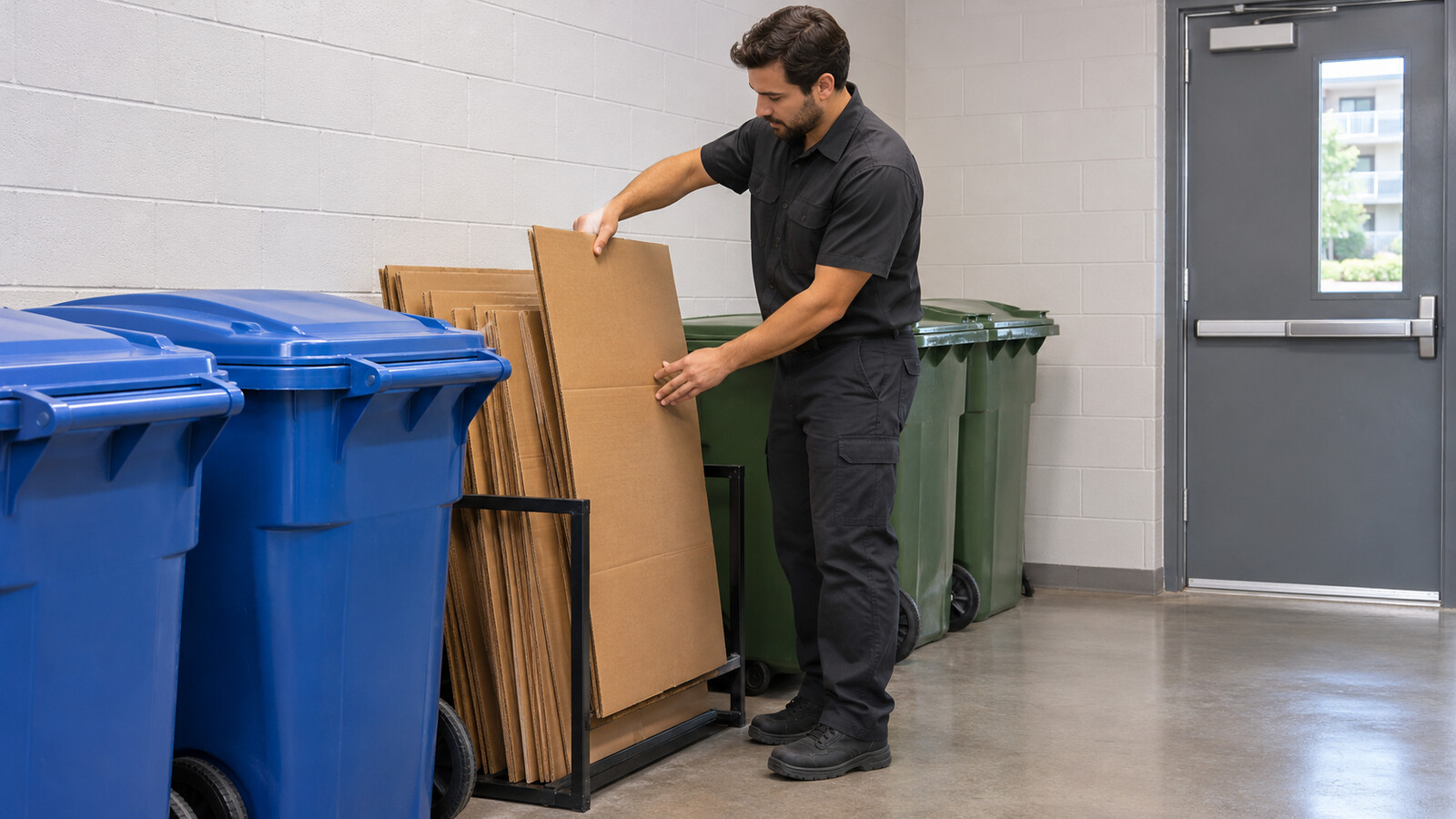
Finish floors, edges and touchpoints
After approved loose material is removed, collect ordinary dry debris from the centre and edges of the floor. Work around bin casters, wall bases and door thresholds without forcing heavy equipment. Use cleaning methods suitable for the floor and surrounding finishes, and avoid sending debris or excess water into a drain.
Wipe approved non-porous touchpoints such as door handles or bin lids with products appropriate for the surface. Do not mix cleaning chemicals or try to cover an unexplained odour with fragrance. Persistent odours may indicate a container, drain, spill or building condition that needs separate investigation.
Make the handoff easy to verify
Take completion photos from the same positions used at the start. Show clear walkways, accessible bins, closed doors and any excluded area that still requires attention. Record ordinary items removed or consolidated without presenting generated images, unrelated examples or undocumented conditions as actual site evidence.
A short handoff note can identify what was completed, what remained outside scope and what management should monitor before the next collection. This is especially useful when a superintendent, property manager and waste contractor share responsibility for the room at different times.
What to send for a garbage-room clean-up quote
Send wide photos of the entire room plus close views of loose items, cardboard, floor edges and access points. Include the building address, room location, stairs or elevator details, parking or loading access, approximate bin count, next collection time and the required completion deadline. State whether unknown liquids, sharps, pest activity or other excluded conditions have been observed.
- Wide photos from the entrance and opposite corner.
- Close photos of loose ordinary items and cardboard.
- The bin count and next collection or movement time.
- Door, corridor, elevator and loading-access details.
- The Ottawa address, site contact and firm deadline.
A reliable garbage and recycling room reset is built around clear scope, ordinary identified material and uninterrupted access. By documenting first, keeping exclusions firm and finishing with a practical handoff, Orléans property managers can restore a usable service area without turning routine clean-up into specialist waste handling.
Photos are illustrative examples of typical residential service results.