Pressure Washing
Pressure Washing Apartment Entrances in Ottawa: A Property Manager’s Planning Guide
A practical guide for Ottawa property managers planning entrance pressure washing around tenants, deliveries, drainage, access and realistic surface conditions.
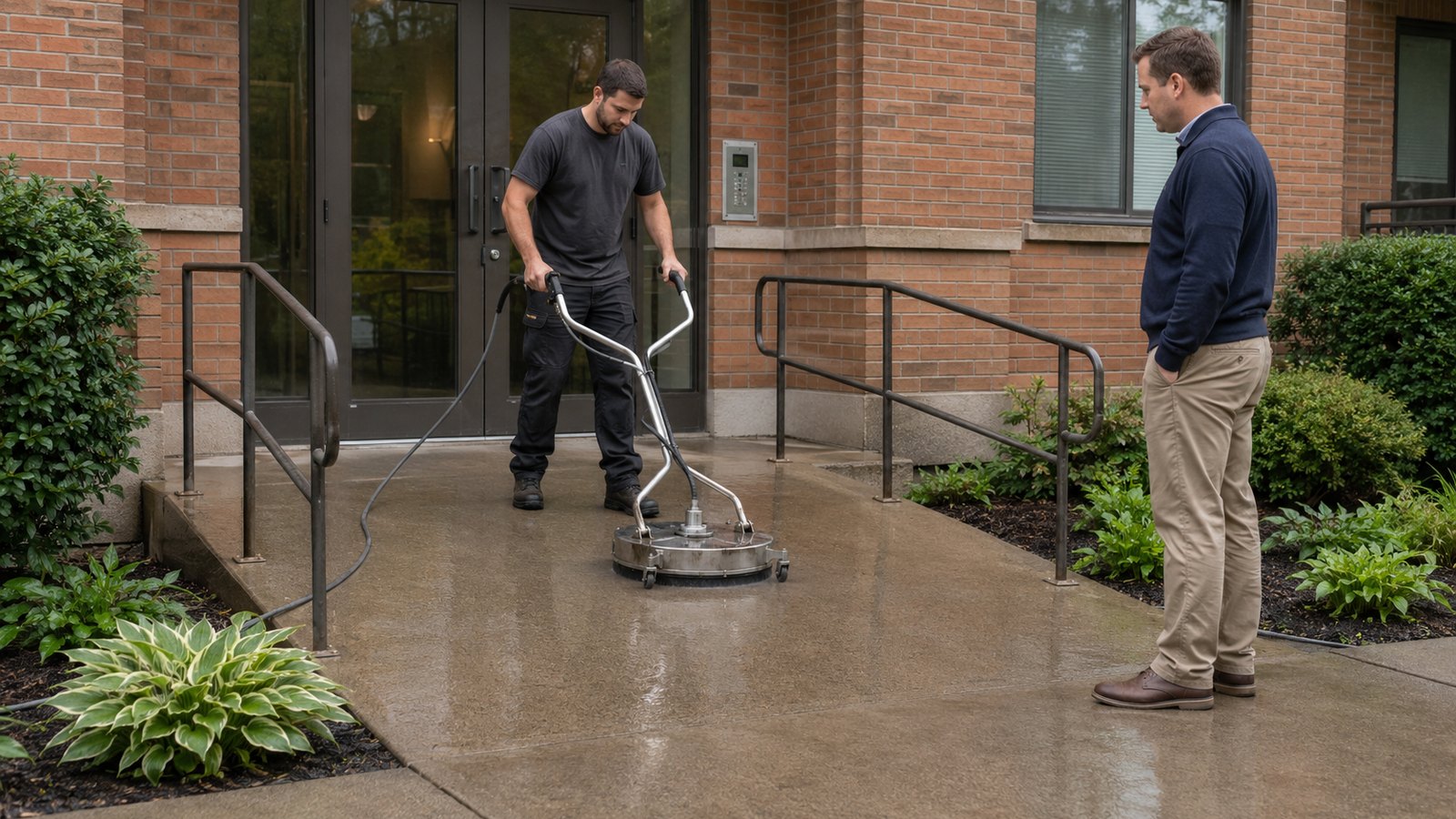
An apartment entrance has to do several jobs at once. It welcomes residents and visitors, handles deliveries, provides an accessible route and absorbs the soil, grit and residue carried in from the sidewalk and parking area. When that concrete starts looking tired, pressure washing can improve presentation—but the work needs more planning than an empty residential driveway.
The useful question is not simply when a crew can arrive. Property managers also need to define the surfaces, preserve safe access, protect doors and fixtures, control water movement and decide when each area can reopen. This guide lays out the practical details to settle before entrance cleaning begins at an Ottawa apartment or condominium property.
Define the entrance scope in exact surfaces
“Clean the front entrance” can mean several different things. It may include the sidewalk from the parking area, the main landing, steps, an accessible ramp, the lower masonry beside the doors or a secondary entrance used for deliveries. Walk the area and identify each surface rather than relying on one wide photo.
- Main concrete walkway and landing.
- Steps, edges and the bases of handrails.
- Accessible ramp and its turning area.
- Lower brick or masonry that is appropriate for the agreed cleaning method.
- Secondary door, delivery route or waste-room approach if included.
Record what is outside the scope as well. Interior vestibules, glass, painted metal, damaged coatings and landscaping may require different methods or separate work. A clear boundary keeps expectations realistic and prevents an entrance-cleaning appointment from expanding unexpectedly.
Inspect the surface before choosing the method
Concrete, brick, pavers, coatings and sealers do not all respond the same way. Note loose mortar, flaking paint, open joints, cracked edges, spalled concrete, unstable pavers and previous repairs. Existing damage should be photographed before work begins, and a suitable method should be chosen for the actual material and condition.
More pressure is not automatically better. Effective cleaning depends on the equipment, distance, nozzle or surface-cleaner setup, water flow, treatment used and the condition of the surface. Delicate or deteriorated areas may need a reduced approach or may be unsuitable for the planned work.
Plan resident access before hoses are placed
An occupied entrance cannot be treated like a closed work yard. Residents may use mobility devices, visitors may arrive unexpectedly and couriers will often take the shortest route to the door. Decide whether the entrance will stay partially open, alternate between sections or close briefly while another accessible entrance is used.
- Confirm which entrance residents should use during each phase.
- Keep the accessible route continuous or communicate the approved alternative.
- Account for scheduled deliveries, move-ins, contractors and service calls.
- Keep hoses and equipment outside the active pedestrian path wherever practical.
- Assign someone to coordinate access if the entrance remains busy.
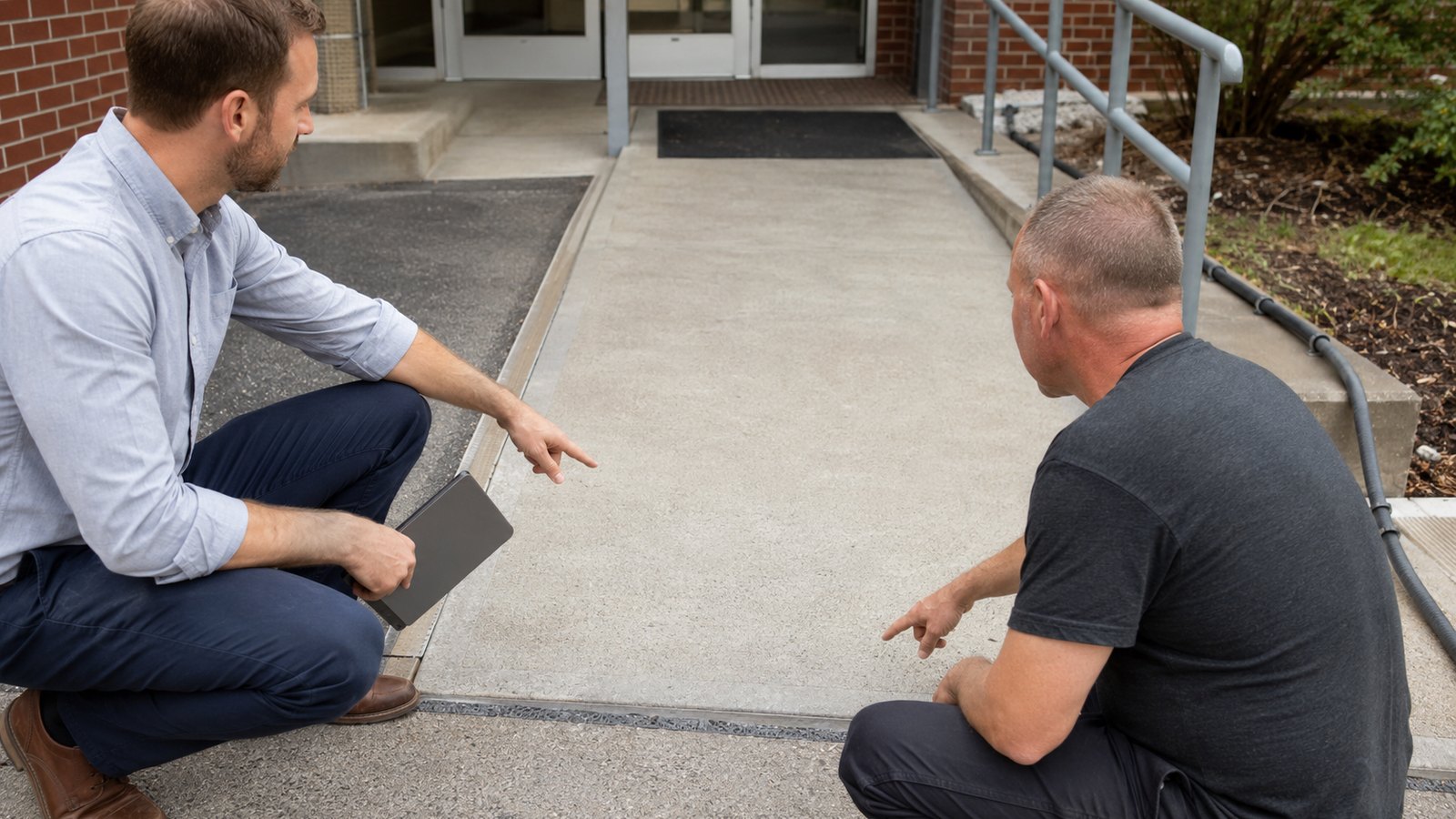
Confirm water access, hose routes and drainage
Before quoting or scheduling, confirm where water can be accessed, how far the equipment must sit from the work area and where hoses can travel without crossing doors or stairs. Note locked service rooms, restricted parking, loading zones and any distance between the water source and the entrance.
Water movement matters just as much as supply. Identify low points, drains, thresholds, garden beds and areas where runoff could reach parked vehicles or another tenant route. The work sequence should direct water away from doors and keep cleaned soil from simply settling on the next section.
Make a realistic inventory of spots and residue
General soil, loose grit and ordinary surface residue are different from oil, rust, gum, paint, efflorescence, deeply embedded organic marks or damage within the material. Photograph specific concerns and point them out before the crew arrives. Some marks require a different treatment, and some cannot be removed completely without risking the surface.
- Show the overall appearance in wide daylight photos.
- Add close photos of gum, oil, rust or dark traffic areas.
- Identify any previous coating, sealer or spot treatment.
- Distinguish staining from cracks, wear and material loss.
- Agree on the priority areas instead of promising a uniform new appearance.
Protect the doors, fixtures and landscaping
Entrance cleaning happens beside intercoms, access-control readers, door sweeps, electrical fixtures, planters, mats, railings and glass. Move loose furniture and mats before work starts. Identify sensitive fixtures and confirm which items should be covered, avoided or cleaned by another method.
Check the lower doorway and weather stripping for gaps. Direct spray away from door seals, vents and electrical components. Nearby mulch and soil should also be considered so they are not washed back across the concrete after the surface has been cleaned.
Sequence the work from preparation to final rinse
Begin by removing loose debris and movable items. Address agreed spot treatments according to the surface and product guidance, then clean the larger concrete areas in a controlled pattern. Edges, rail bases and transitions may need separate attention. Finish by managing runoff, rinsing adjacent surfaces where appropriate and checking that no equipment remains in the access route.
For properties with more than one entrance, completing one usable section at a time can reduce disruption. The sequence should reflect resident traffic and drainage rather than simply following the shortest path for the hose.
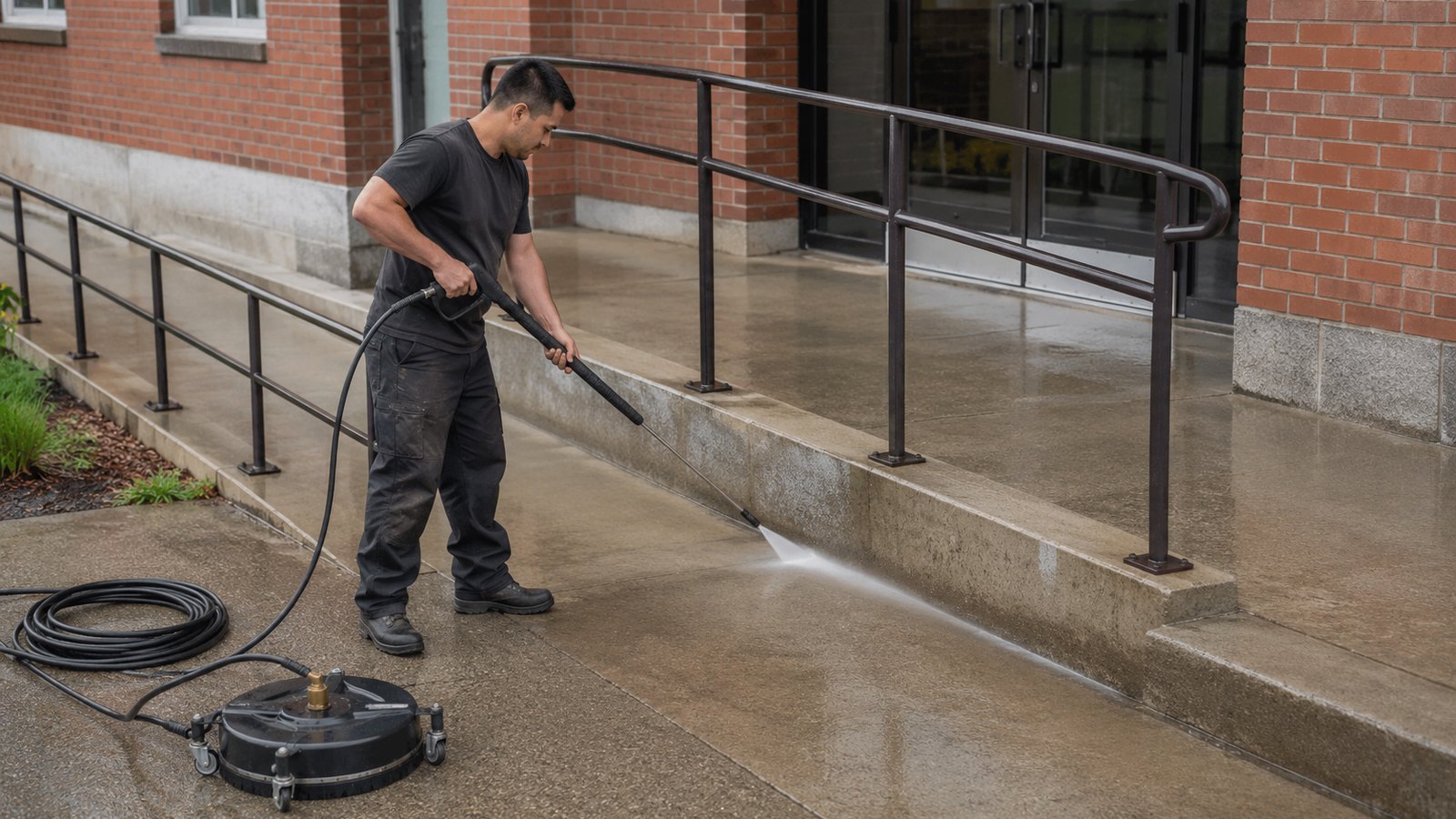
Reopen the area based on conditions, not a guess
A freshly washed entrance can remain slippery while water drains and the surface dries. Drying depends on shade, temperature, airflow, surface texture and the amount of water held in low areas. Inspect the route before reopening it fully and keep residents directed away from any section that is not ready for normal use.
Remove temporary barriers only after hoses, equipment and pooled water are gone. Check the threshold, ramp turns and the first interior mat, since those are the points where tracked moisture is most likely to affect residents.
Document the result and note maintenance concerns
Take consistent photos after the work from the same practical viewpoints used during scoping. These records help confirm what was included and distinguish remaining stains from surface damage. Note cracks, drainage issues, failed sealant or recurring runoff patterns that need maintenance rather than additional washing.
What to send for a firm quote
Send wide and close photos of every included entrance, the Ottawa address, the required completion deadline, the number of steps and ramps, water-access details, parking restrictions and the times when tenant traffic is heaviest. Mention sensitive fixtures, difficult stains, damaged sections and any alternate entrance available during the work.
Mattabo Property Care is fully insured for the services it provides. Same-day service is often available but is not guaranteed until Mattabo confirms the appointment.
Photos are illustrative examples of typical residential service results.