Junk Removal
Ottawa Appliance Removal: A Practical Guide to Fridges, Stoves, Washers and Dryers
A practical Ottawa guide to preparing old household appliances for removal, including disconnection, drainage, doorway measurements, floor protection and condo access.
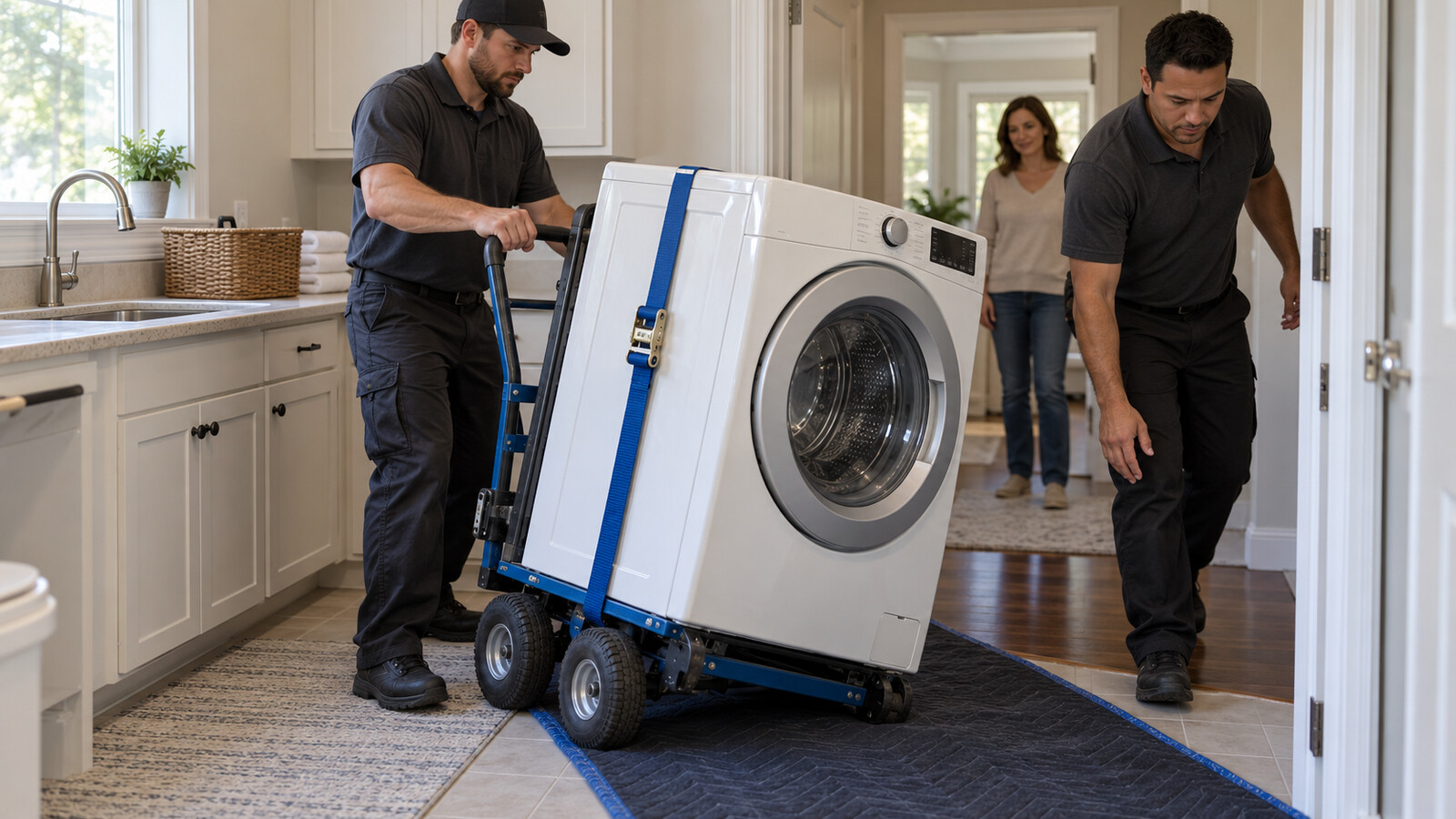
Removing an old refrigerator, stove, washer or dryer is rarely just a matter of lifting it into a vehicle. The appliance may still be connected, hold water, exceed the width of a doorway or sit behind furniture that blocks the route. In a condo or rental property, elevator and loading arrangements can add another layer to the job.
A smoother removal starts before the crew arrives. Confirm who owns the appliance, arrange any required disconnection, empty and dry it, measure the route and identify the approved destination. This guide covers ordinary intact household appliances. It does not replace licensed gas, electrical, plumbing, refrigeration or hazardous-material work.
Confirm the appliance is approved for removal
Homeowners should confirm that the appliance is no longer needed and that a replacement installer is not expecting to take it away. Property managers should identify who has authority to approve removal, especially during a tenant turnover. Mattabo does not decide ownership or dispose of an appliance based only on where it was left.
Photograph the appliance and its location before moving anything. Include a wide view of the room, the connection area, the closest doorway and any stairs. If more than one appliance is involved, provide a simple list with the type, approximate size, floor level and whether it has already been disconnected.
Arrange disconnection before removal day
An appliance should be safely disconnected before routine removal begins. A licensed or otherwise qualified professional may be required for a gas stove or gas dryer, a hard-wired appliance, an altered electrical connection or plumbing work beyond a simple confirmed shutoff and hose removal. Do not ask a removal crew to improvise technical work outside the agreed scope.
If a valve will not close, a cord is damaged, wiring is exposed, a gas odour is present or water continues to leak, stop. Keep people away and contact the appropriate professional or emergency service for the situation. The removal appointment can proceed only after the appliance and work area are ready for ordinary access.
Prepare refrigerators and freezers
Remove all food, shelves or loose bins that could shift, then defrost the appliance far enough in advance for ice and water to drain. Wipe the interior dry and secure the doors for transport using a method that does not damage the finish. Leave the doors safely open only while drying and only where children or pets cannot access the appliance.
Keep the refrigeration system intact. Do not cut lines, puncture the cabinet or attempt to release refrigerant. Tell the provider if the appliance is damaged, leaking an unknown substance or has already been dismantled. An ordinary junk-removal scope may not be appropriate until the condition is assessed.
Prepare washers and dryers
A washing machine can retain water in its drum, pump and hoses even after a cycle is complete. Turn off the supply as directed for the property, have the hoses disconnected, and drain them into an appropriate container. Wipe the drum and gasket, remove loose accessories and keep the floor dry before the appliance is moved.
Clean loose lint from an electric dryer's accessible filter area and secure its cord and vent hose after disconnection. A gas dryer needs the proper professional disconnection and confirmation before removal. Do not cap, alter or test a gas line as part of a general clean-up or hauling appointment.
Prepare electric stoves and dishwashers
For an electric stove, remove loose racks or trays, clean out ordinary crumbs and secure the oven door. Confirm that the power connection is safely disconnected. A range that is hard-wired or a gas model requires the appropriate qualified trade before the removal crew arrives.
Dishwashers are usually installed rather than freestanding. They may be fixed to cabinetry and connected to plumbing and electrical systems. Arrange proper removal from the installation first. A hauling crew can quote the approved, disconnected unit once it is free of cabinetry, drained and ready to move.
Measure the appliance and the complete route
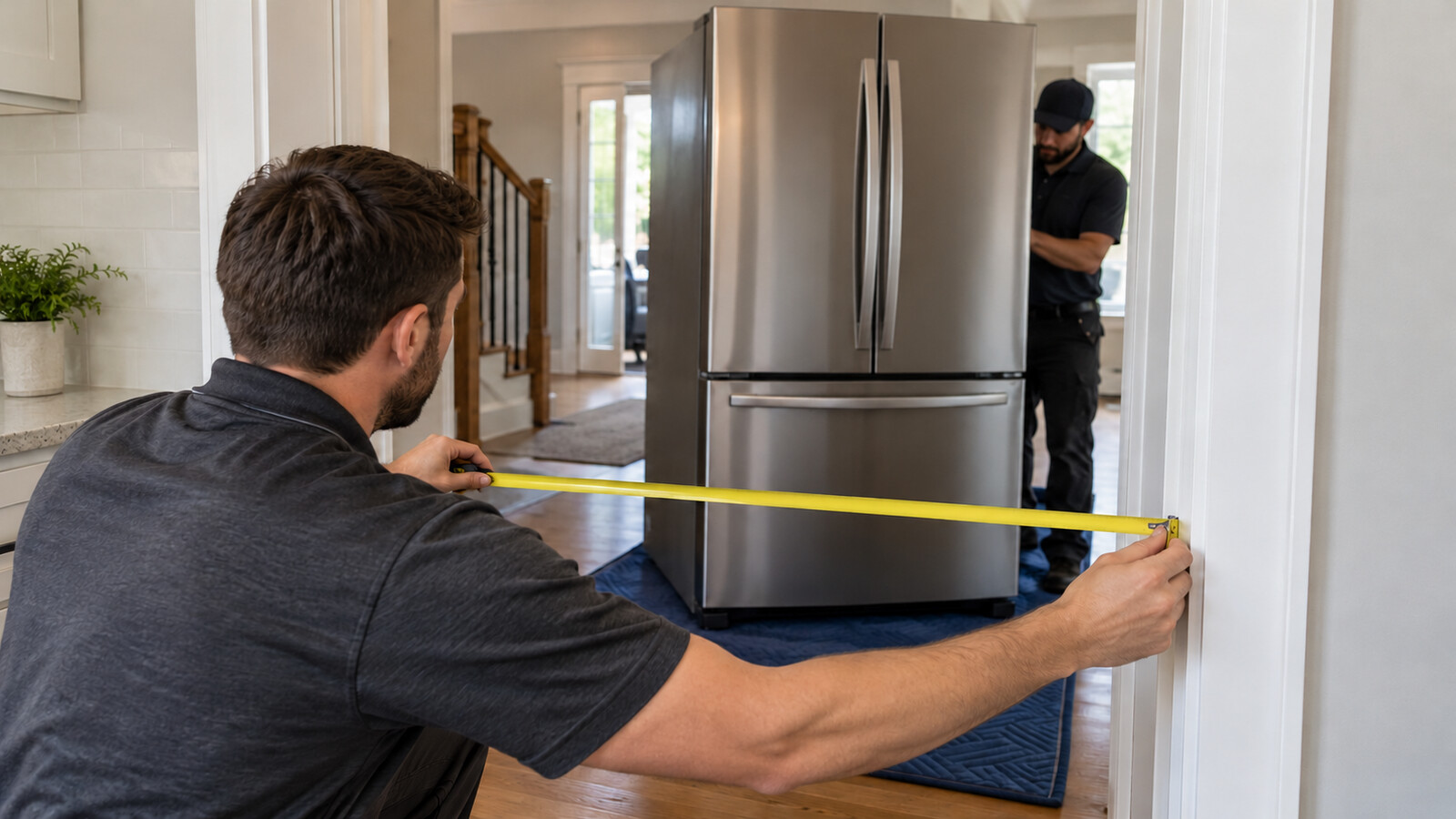
Measure the appliance at its widest and deepest points, including handles or controls that project. Then measure every doorway, hallway turn, stair landing and final exit. Check whether doors can open fully and whether a railing, light fixture or piece of furniture reduces the usable space.
Do not assume an appliance will leave by the same route simply because it once entered the home. Flooring, cabinetry or railings may have changed. If removing an appliance door or a house door appears necessary, identify that before the appointment and decide who is qualified and authorized to do it.
Protect floors and clear the route
Remove mats, shoes, pet items, small furniture and other trip hazards from the route. Protect suitable floors and thresholds before the appliance is tilted or rolled. An appliance dolly and proper strap help control the load, but they do not make every staircase, tight turn or damaged appliance safe to move.
Keep household members and pets away from the work path. Do not leave an appliance standing in a hallway, stair landing or shared exit while another decision is made. If the route is unsafe or the appliance cannot be controlled with the planned equipment, pause and revise the method or use a specialist mover.
Plan condo and apartment access
Confirm elevator booking rules, loading access, protective-padding requirements and permitted work times before scheduling. Measure the elevator door and cab, not just the unit doorway. A property manager or resident should arrange keys and building access and keep common areas clear.
Do not stage appliances in a lobby or parking garage without permission. Provide the loading location, parking height or time limits and the distance from the elevator to the vehicle. These details affect the labour, equipment and timing needed for a firm quote.
Stage appliances only after they are ready
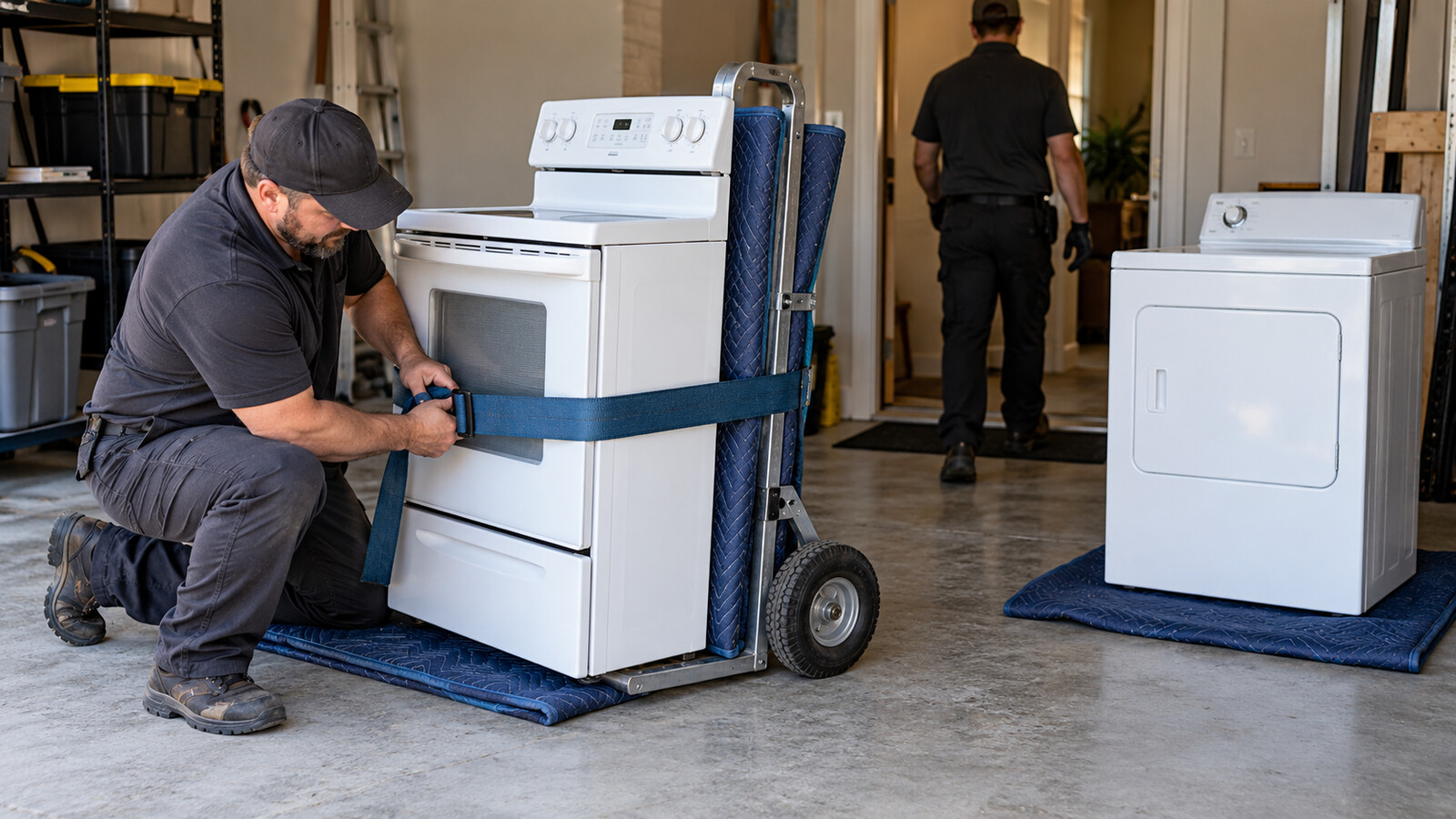
If a garage or ground-level area will be used for staging, keep the appliance upright where required, place it on a suitable protective surface and maintain a clear route around it. Secure cords, hoses and doors so they cannot catch during handling. Keep the appliance dry and protected until the confirmed pickup.
Do not place an appliance at the curb or in a shared collection area unless the destination and timing are confirmed. A quote request does not authorize dumping, and an unattended unit can create an access or safety problem. The approved removal list should match what is waiting when the crew arrives.
Identify conditions that need a different service
Report rusted-through panels, broken glass, sharp exposed metal, pest contamination, unknown liquids, oil, chemical residue or a suspected refrigerant leak before booking. Commercial, built-in or unusually large equipment may also require a different crew or method. Do not conceal a condition simply to keep the item in an ordinary load.
The provider should confirm whether the intact appliance fits its removal scope and what happens after pickup. Reuse, recycling and disposal options depend on the appliance, its condition and the receiving facility. Avoid assuming a specific outcome until it is included in the confirmed scope.
Send enough detail for a firm quote
Send one wide photo of each appliance, a view of its connection area, measurements, the floor level and photos of every tight turn or staircase. Include the number and type of appliances, whether each one is disconnected and dry, the building-access details and the deadline.
State whether another contractor is installing a replacement and whether that contractor controls the disconnection or timing. Clear handoffs prevent the removal crew from arriving before the old appliance is ready or while the delivery route is occupied.
Photos are illustrative examples of typical residential service results.