Junk Removal
Old Barbecue Removal in Ottawa Before Winter: A Practical Guide to Fuel, Grease and Backyard Access
Planning to remove an old barbecue before winter? Prepare the unit safely, separate fuel cylinders, secure loose parts and confirm the route from an Ottawa backyard, balcony or patio.
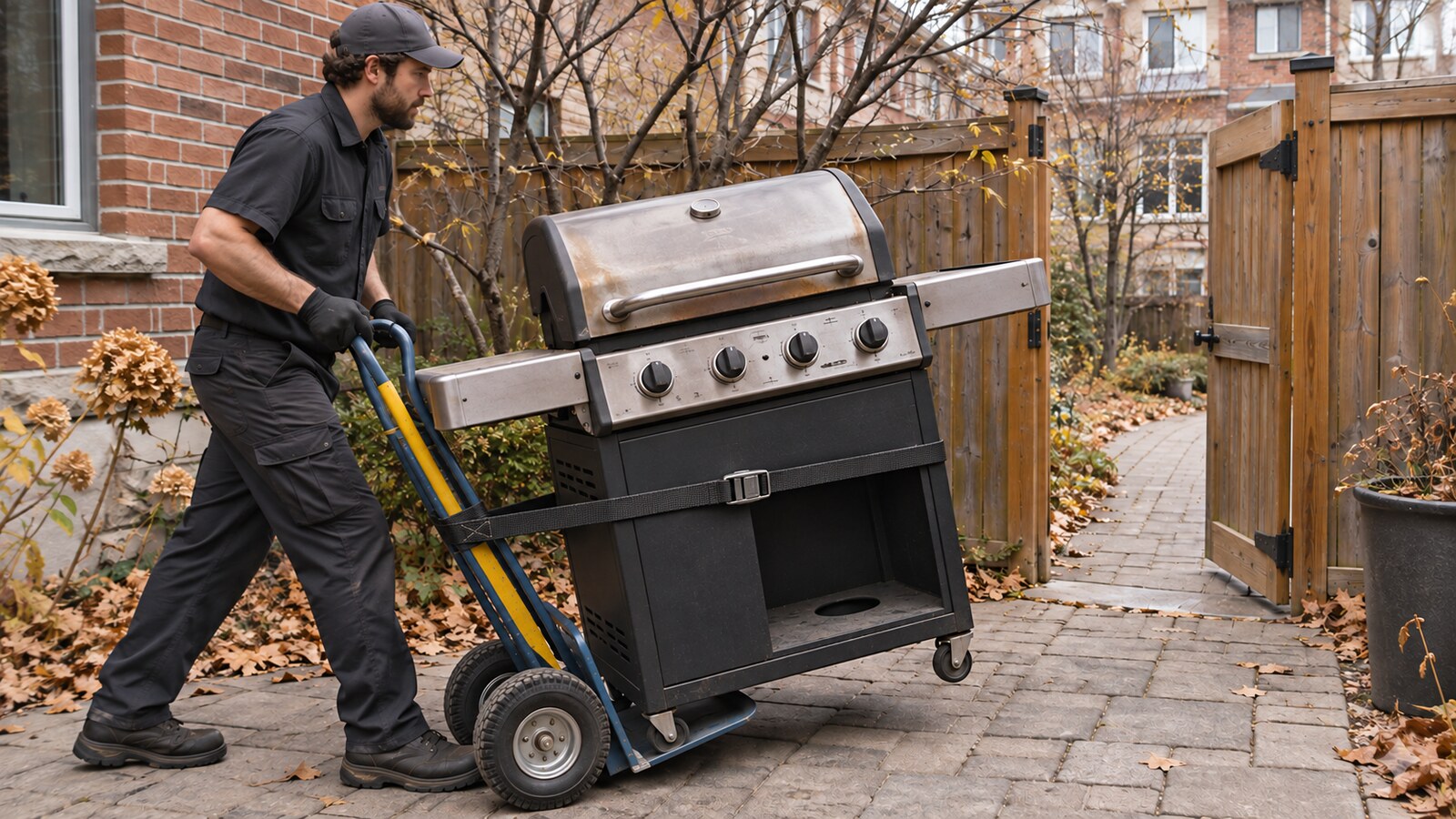
An old barbecue can be awkward to remove. The lid is heavy, side shelves widen the load, small wheels catch on paving joints, and the route may include a narrow gate or turn beside the house. Fuel cylinders, grease and ash also need to be dealt with before the barbecue becomes ordinary non-hazardous junk.
For an Ottawa homeowner or property manager, the safest plan starts with a cool, disconnected unit and a clear description of what remains. A useful quote request identifies the barbecue type, approximate dimensions, fuel setup, condition, loose components and the route to the driveway or loading area. That information helps separate a straightforward removal from a job that first needs fuel, chemical or hazardous-waste handling by an appropriate provider.
Define what ordinary barbecue removal includes
This guide covers an ordinary household barbecue that is cool, disconnected from its fuel source, reasonably free of loose food waste, and safe to move as a bulky item. It may be a small cart-style gas grill, a charcoal kettle or another portable residential unit. Built-in outdoor kitchens, fixed natural-gas appliances and commercial cooking equipment require a different scope.
Do not assume that disconnecting, emptying or transporting a propane cylinder is automatically part of a junk-removal appointment. Fuel cylinders, partly filled containers, lighter fluid, unknown chemicals and pressurized components need to be disclosed in advance and handled through an approved option. A barbecue should never be presented as empty if a cylinder or fuel canister is hidden in the cabinet.
Inspect the barbecue before anyone tries to move it
Photograph the barbecue with the lid closed, then show the lower cabinet or shelf, wheels, side shelves and fuel connection. Note heavy rust, sharp edges, missing fasteners, a loose lid, broken casters or a frame that no longer feels stable. Existing damage affects how the unit can be secured and whether parts should be removed before transport.
If the barbecue is connected to a fixed gas line, arrange qualified disconnection rather than loosening a fitting for removal day. If the connection is unclear, say so. Do not ignite the burners or use a flame to confirm whether fuel remains.
- Confirm the barbecue is fully cool and has not been used recently.
- Photograph the front, back, lower shelf, wheels and fuel connection.
- Identify propane, charcoal, pellets or another fuel source accurately.
- Record loose shelves, grates, trays, doors and damaged metal.
- Measure the widest and tallest points before planning the route.
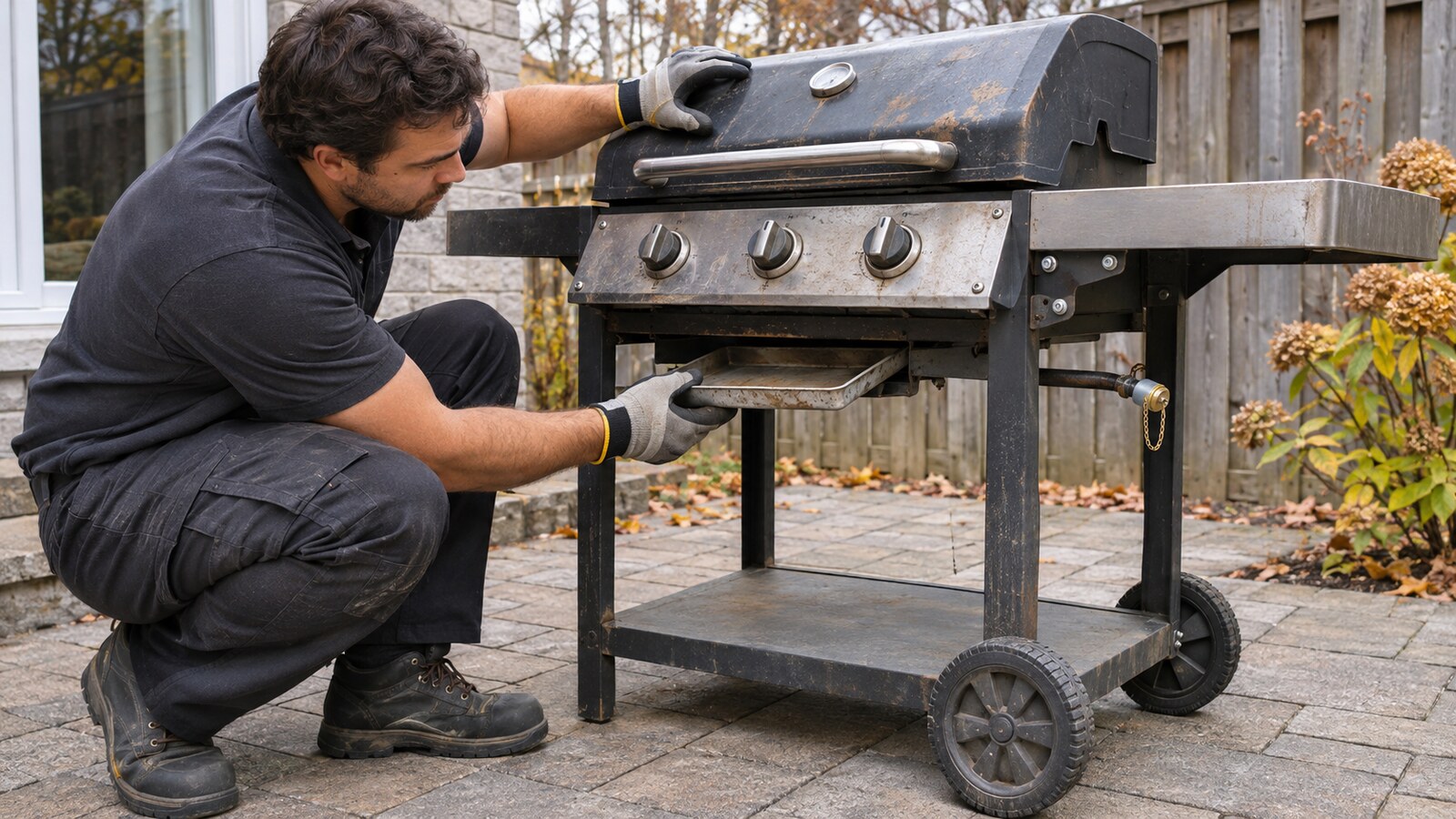
Separate fuel cylinders and fuel containers
Remove a propane cylinder only when it can be handled safely and the connection is understood. Close the valve, keep the cylinder upright and follow the instructions supplied by the cylinder provider or appropriate local program. Do not put a cylinder inside the barbecue cabinet for transport, leave it loose beside the unit, or conceal it in a bag or box.
Charcoal, pellets, lighter fluid and other fuel products need to be separated. Ash and coals must be completely cold. Unknown liquids, leaking cylinders or damaged fuel containers are outside routine junk removal and should not be moved simply to clear the patio.
Reduce loose grease, ash and food residue
A removal crew should not have to manage a dripping grease tray or loose ash while carrying the barbecue through a gate. Once the unit is fully cool, empty removable trays and collect ordinary residue using an appropriate method. Wipe loose grease from accessible surfaces and close or secure the lid.
Do not pour grease, cleaning solution or fuel onto the ground, into a catch basin or down an outdoor drain. Avoid using a last-minute chemical cleaner that leaves wet residue or an unknown mixture inside the cabinet. If the unit contains animal waste, needles, unknown chemicals, significant pest activity or another hazardous condition, stop and arrange appropriate specialist handling.
Secure grates, shelves and other loose parts
Cooking grates, warming racks, burner covers, grease trays and cabinet doors can shift when the barbecue is tilted onto a dolly. Remove small loose pieces when they are cool and safe to handle, then place them in a sturdy container or secure them as part of the confirmed scope. Do not leave a heavy grate balanced under the lid.
Folding side shelves may reduce the width, but only if they operate normally. Rusted fasteners and damaged hinges should not be forced. If a shelf or handle is loose, photograph it and mention it before the appointment so the crew can plan how to stabilize the load.
Measure the full backyard route
Measure the barbecue at its widest point, including fixed shelves and handles. Then measure the gate, narrow passages, deck doors and turns. Check the route for hinges, posts, planters, loose gravel, raised pavers and soft soil.
Photograph every step, threshold and slope. A barbecue that rolls easily on a patio can become difficult at a deck stair or a narrow side yard. Do not plan to lift it over a fence or drag it through landscaping. If the only route involves stairs, identify how many, their width and whether there is a stable landing.
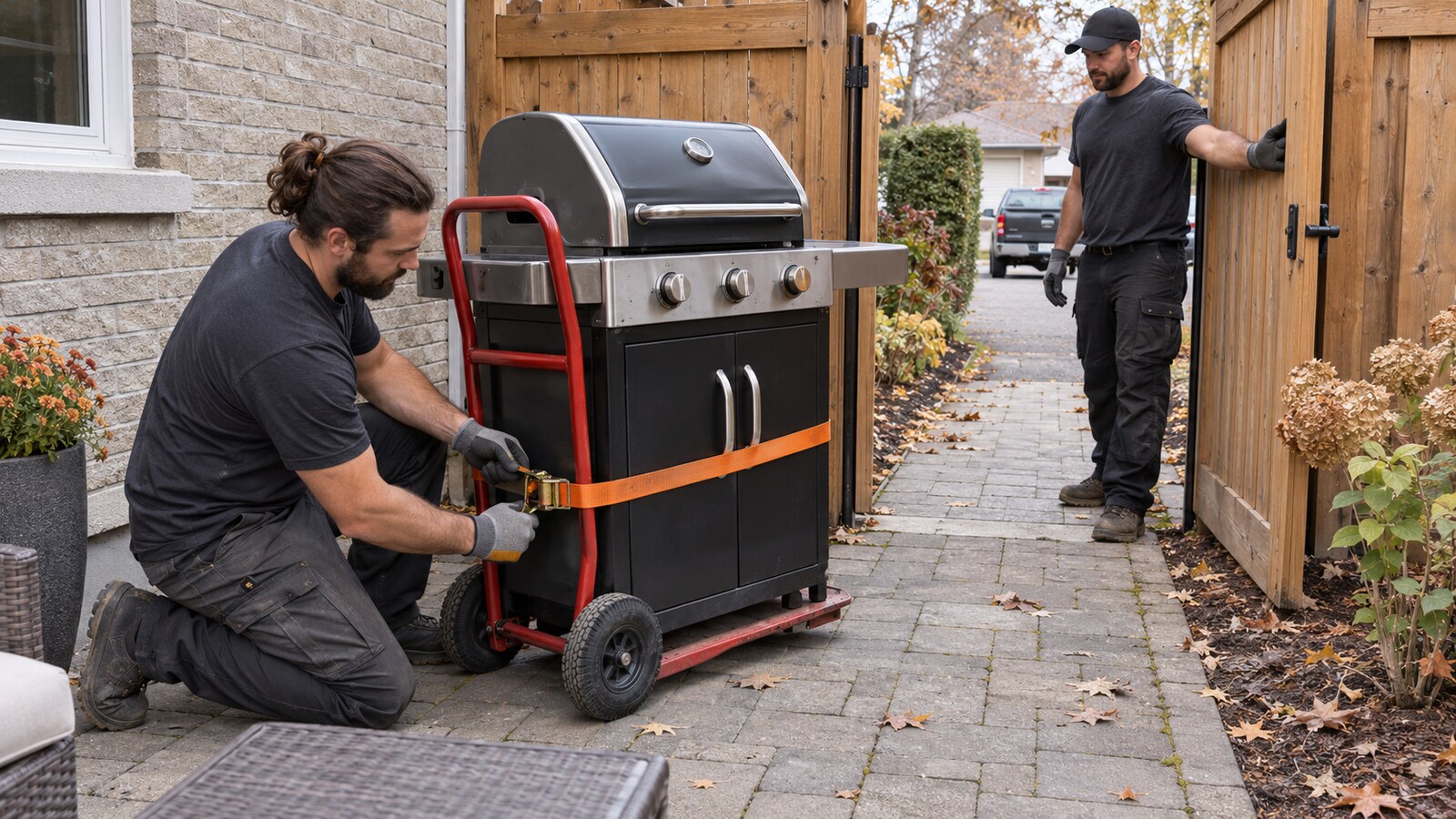
Plan for rowhouses, condos and managed properties
Rowhouses and townhouses may have long side-yard routes or shared access. Confirm which gate belongs to the property and avoid blocking a neighbour's walkway. For a condo balcony or terrace, obtain building approval, reserve the elevator if required and confirm whether the barbecue is permitted to travel through the unit or must use another route.
Property managers should identify the unit, access contact, parking location and any building time window. Protect shared corridors and floors according to building requirements. A crew should not arrive with a bulky barbecue and discover that the elevator, loading area or service entrance needed advance booking.
Coordinate timing before winter storage fills the route
Complete the removal before the barbecue becomes boxed in by patio furniture, winter equipment or stored planters. Keep the gate and side-yard route unlocked and free of snow-clearing tools, bins and vehicles on appointment day. Weather and surface conditions can affect safe access, so timing is not guaranteed until the appointment is confirmed.
If the barbecue is part of a larger patio cleanout, list the other ordinary items separately. Chairs, a table, a cover and empty planters change the volume and handling plan. Do not add fuel, chemicals, batteries or unknown containers to the pile after the quote has been prepared.
Complete a simple handoff
Before the crew leaves, check the patio, gate and route for loose parts or residue. Confirm which listed items were removed and which were excluded. Fuel cylinders and separate fuel products should remain with the responsible owner or approved handler unless acceptance was confirmed in advance.
For a rental or managed property, photograph the cleared area and note any existing damage to the gate, paving or wall near the route. A short record is more useful than assuming the barbecue's removal also resolves unrelated patio repairs or cleaning.
What to send for a firm barbecue-removal quote
Send wide photos of the barbecue and the full route, plus close photos of the lower shelf, fuel connection, wheels, rust and loose parts. Include the Ottawa address, property type, barbecue dimensions, fuel type, whether the cylinder has been removed, the number of gates or steps, parking details and the deadline.
Also state whether other patio items are included and disclose any liquid, ash, pest activity, unknown material or structural damage. Accurate information helps confirm that the job is ordinary non-hazardous junk removal before a crew is dispatched.
A disconnected barbecue with an empty fuel shelf, secured parts and a measured route is much easier to assess than a unit still connected, full of residue or trapped behind storage. Preparing those details first keeps the quote clear and the removal focused on the ordinary bulky item.
The images in this article are illustrative examples and do not show an actual Mattabo Property Care job.
Photos are illustrative examples of typical residential service results.