Seasonal Property Care
Ottawa Basement Cleanout Before Winter: A Practical Plan for Storage and Safe Access
A practical Ottawa basement cleanout plan for sorting seasonal storage, keeping utilities accessible and removing ordinary non-hazardous items before winter.
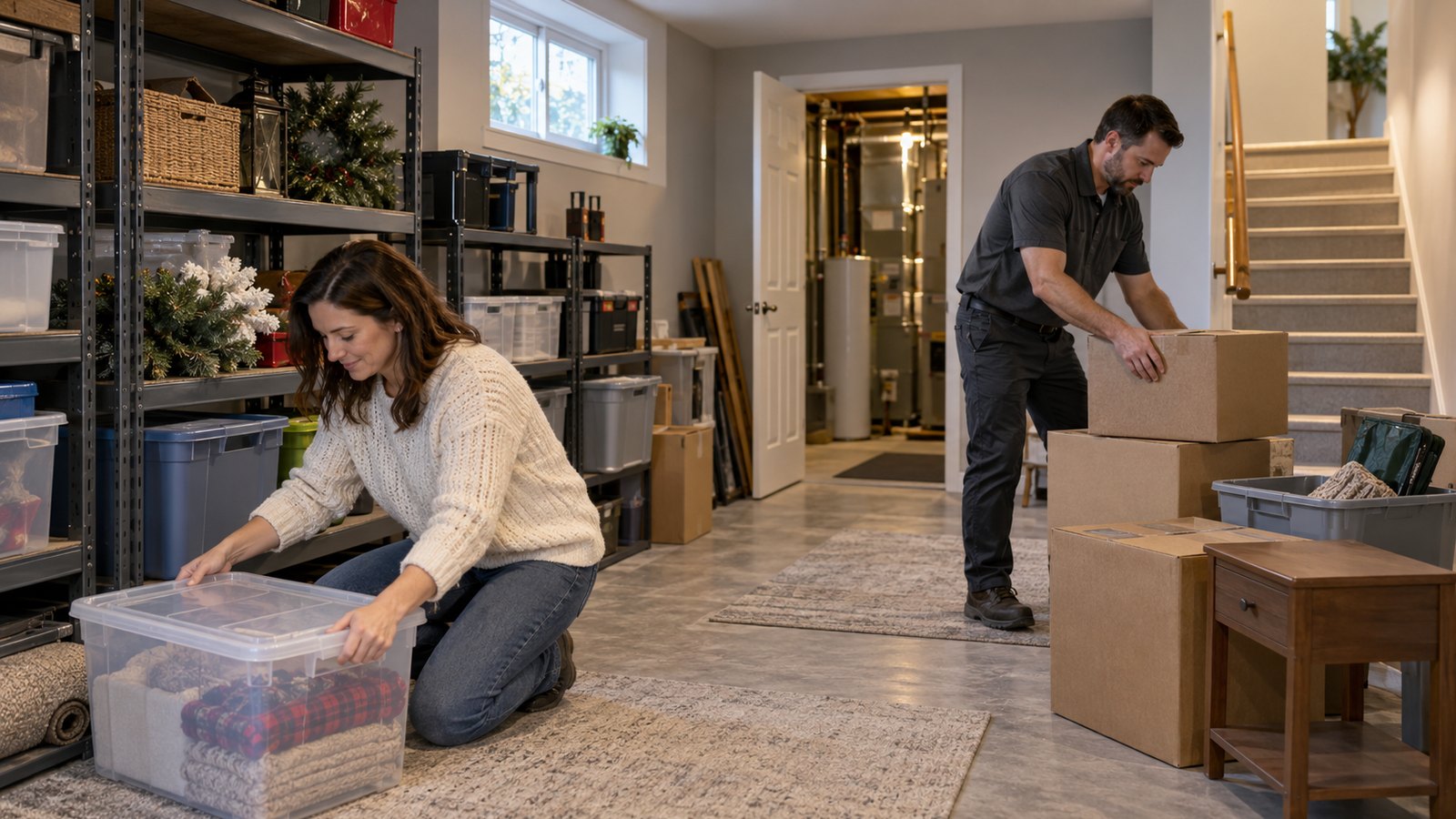
Basements in Ottawa carry the whole year. Bins of seasonal decorations, spare furniture, sports gear, boxes that came down during a move and never went back up. Once the cold sets in, that same space becomes the route to the furnace, the water heater, the shut-off valve and the shovels you actually need. A basement cleanout done before winter is less about tidiness and more about access: knowing where things are, and being able to reach the mechanical room without moving five bins first.
This is a practical plan you can work through over a weekend, written for ordinary non-hazardous household storage. It covers what to sort, what to keep clear, how to describe a removal scope accurately, and where to stop and call a qualified trade instead.
Start by defining what “done” looks like
A cleanout without a target turns into an afternoon of shuffling boxes. Before you touch anything, write down three or four outcomes you want by the end. Most Ottawa households land on something close to this:
- A clear walking path from the stairs to the mechanical room and to any exterior exit.
- Winter items reachable without climbing or unstacking — shovels, salt, boots, extra blankets.
- Off-season items stored higher, labelled, and off the floor.
- A single pile of ordinary items leaving the house, staged where it can be carried out.
Map utility and exit access before you sort
Walk the basement and mark, mentally or with painter's tape, the areas that must stay clear year-round: the furnace and its service panel, the water heater, the electrical panel, the sump pump if you have one, floor drains, the main water shut-off, and the path to any walk-out or basement window used as an exit. Keep a comfortable working space in front of each, and never store anything on top of or leaning against mechanical equipment.
If a technician has to visit in January, that clearance is what makes the appointment straightforward instead of an hour of moving your belongings. It is also the difference between finding a shut-off valve quickly and hunting for it during a problem.
Build four zones: keep, donate, recycle, remove
Working zone by zone beats working item by item. Clear a staging area near the bottom of the stairs, then sort into four groups and commit to a decision as each item is handled:
- Keep — goes back into labelled bins on shelving, not on the concrete floor.
- Donate — clean, complete and genuinely usable; boxed and closed so it does not creep back into the keep pile.
- Recycle — cardboard broken down, metal separated, electronics grouped for a proper drop-off.
- Remove — ordinary bulky items and household junk that need to leave the property.
Separate anything hazardous or unidentified — and leave it alone
Basements collect things that do not belong in a general cleanout. Mattabo handles ordinary non-hazardous household items only. Set the following aside, do not move it into the removal pile, and arrange the correct disposal or service:
- Paint, stains, solvents, cleaners and other chemicals.
- Gasoline, propane, kerosene, oil and any fuel container.
- Pressurized cylinders, tanks and extinguishers.
- Unlabelled or unknown containers of any kind.
- Sharps, medications and biological waste.
- Suspected mould, water damage requiring remediation, sewage backup or standing water.
- Evidence of pests or rodent activity.
- Asbestos-suspect materials, insulation of unknown type, or anything you are unsure about.
Photograph and describe the removal scope
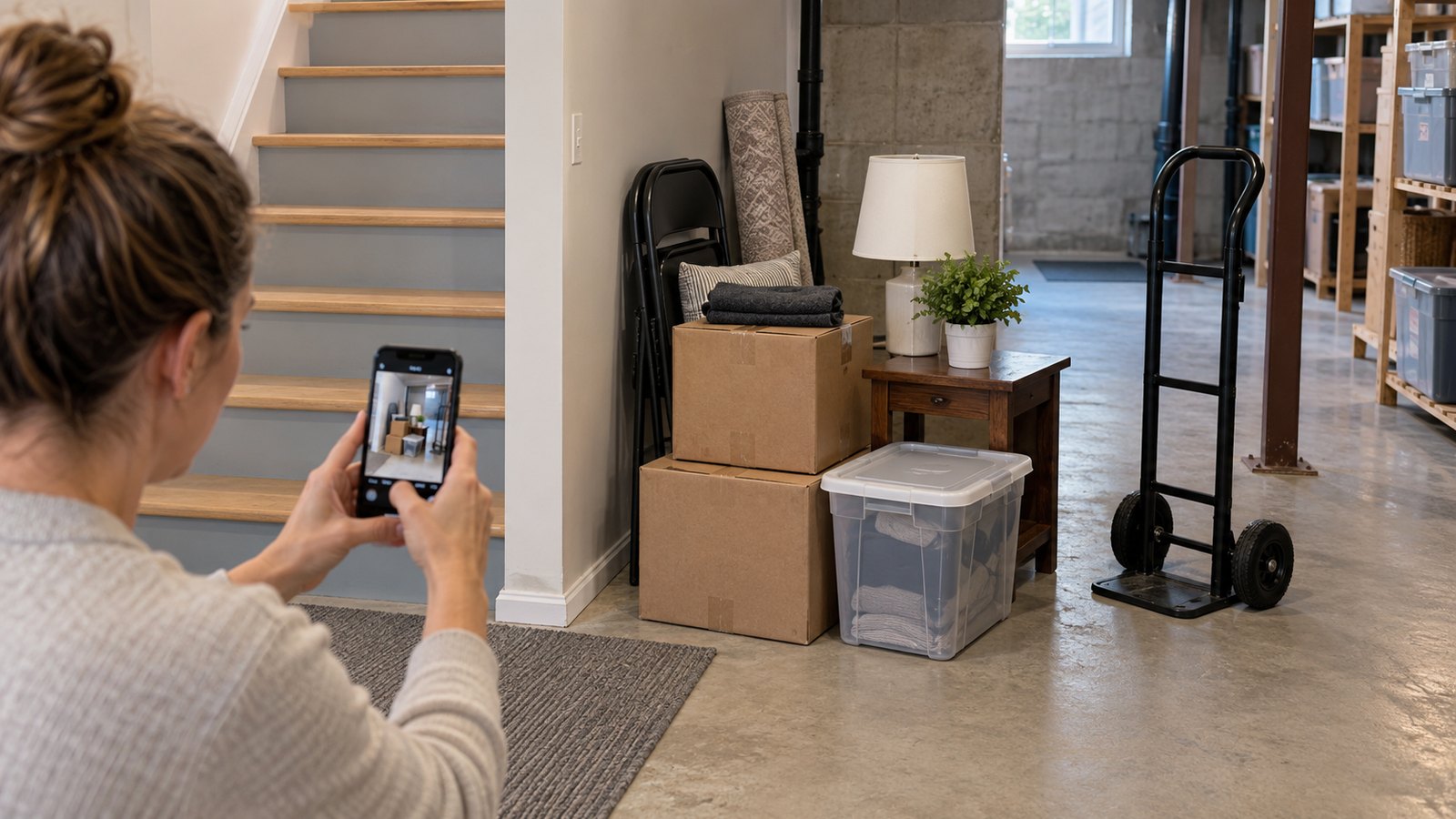
Once the removal pile exists, photograph it properly. Clear, honest photos are what turn a rough guess into an accurate assessment, and they take about five minutes:
- Two or three wide shots of the grouped pile, with something in frame for scale.
- Close shots of the largest or heaviest items — an old couch, a treadmill, a workbench, a chest freezer.
- The carrying route: the stairs, any turns or low headroom, doorways, and the exterior door the crew would use.
- Where a truck can park, and roughly how far it is from that spot to the door.
In writing, note the approximate item count, anything that must be disassembled, whether the stairs are narrow or turn, and whether parking is on-street. Say plainly if you are not sure about something. An accurate description is worth more than an optimistic one, for you and for the crew.
Plan the stairs and the carrying route
In most Ottawa homes the basement stairs decide how long a cleanout takes. Measure the narrowest point and the door openings before you promise yourself that the sectional is going up in one piece. Then prepare the route: clear the landing, remove anything on the treads, secure loose runners, take the door off its hinges if that buys you the clearance, and set up lighting if the stairwell is dim.
Sequence matters too. Move the small, light items first so the route is open, then bring the awkward pieces up while the path is clear and everyone still has energy. If an item genuinely will not fit, it is better to know that before it is wedged halfway.
Protect belongings and finishes on the way out
A cleanout should not cost you a wall or a floor. Lay runners or moving blankets on finished flooring and stair treads, protect corners and railings at the turns, and keep the exterior threshold covered where boots will track back and forth. If it is slushy outside, plan to sweep the route more than once.
Stage bulky ordinary items where they can actually be loaded
Group the removal pile in one place, as close to the exit as your layout allows, with a walkable perimeter around it. Keep it out of the mechanical clearances and off the stair landing. If a piece needs to come apart, do that in advance and keep the hardware in a labelled bag taped to the frame.
Clean only after the decisions and removal are done
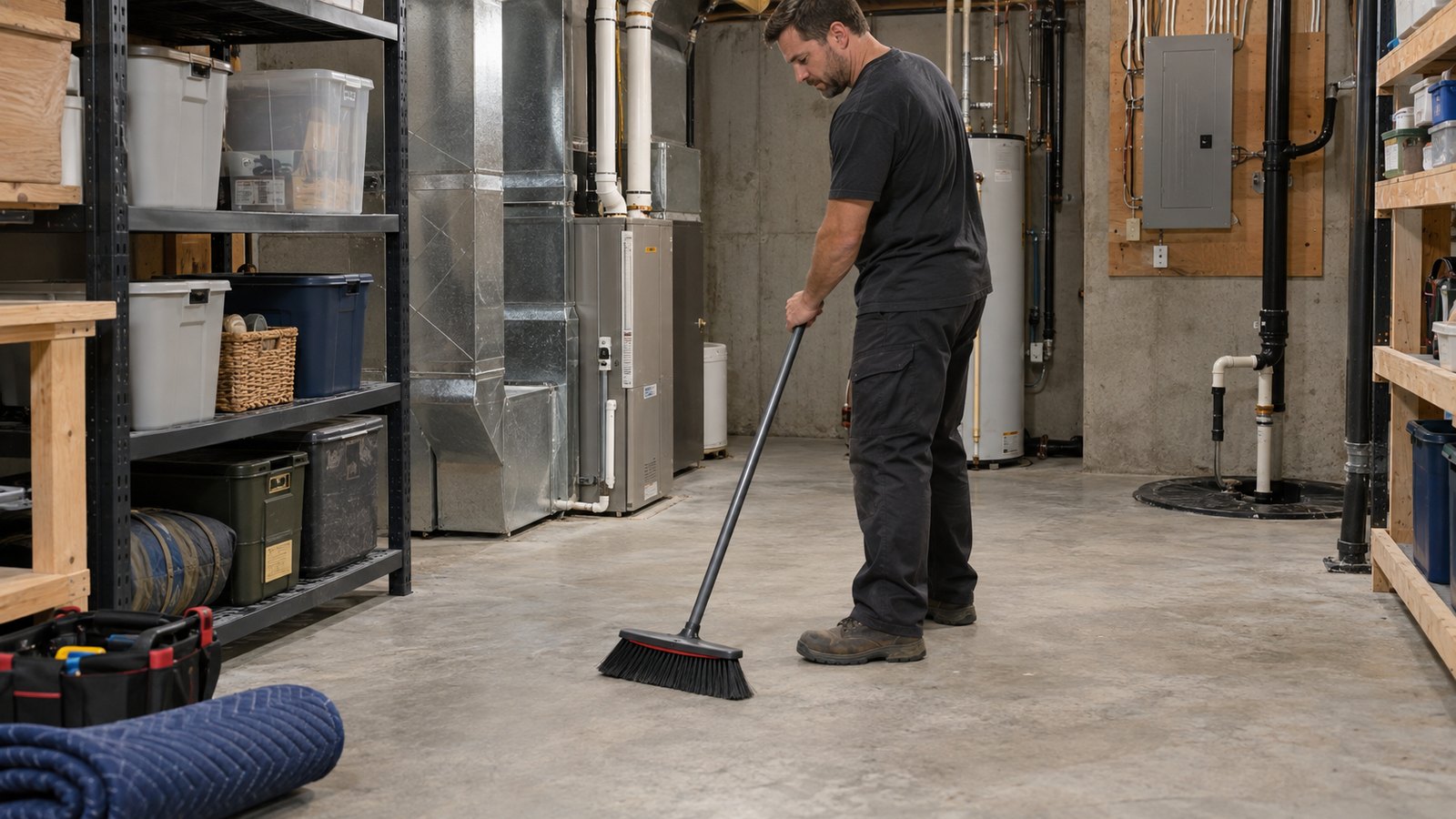
Sweeping before the pile is gone is wasted effort. Once the items have left, do the reset in order: sweep or vacuum the floor, wipe down shelving, check under and behind where things had been sitting for staining or dampness, and let the space air out if you can. Then put the keep bins back on shelving, heaviest low, winter items in front.
If the floor looks damp or discoloured under something that has been there for years, note it and have it looked at by a qualified trade. That is a condition to assess, not a stain to scrub away and forget.
Final winter-readiness walkthrough
Before you call it finished, walk the space once more and check the things that matter in February:
- Clear path from the stairs to the mechanical room and to any exterior exit.
- Working clearance in front of the furnace, water heater and electrical panel.
- Shut-off valve, floor drains and sump area visible and reachable.
- Shovels, salt and winter gear within easy reach.
- Nothing stored on top of mechanical equipment or blocking a window used as an exit.
- Bins labelled, off the floor, and stacked so the top one can be lifted safely.
What to send Mattabo for a firm quote
For a firm quote on ordinary non-hazardous basement clean-up and junk removal, send the photos and details from the scope step: wide shots of the pile, close shots of the largest items, the stairs and carrying route, your Ottawa address, and the deadline you are working toward. Mention parking, stair width and anything already disassembled.
Mattabo Property Care is fully insured for the services it provides; same-day service is often available but is not guaranteed until Mattabo confirms the appointment.
Readers can send photos, their Ottawa address and deadline for a firm quote; a quote request is not a confirmed booking.
Photos are illustrative examples of typical residential service results.