Carpet Cleaning
Carpet Cleaning Ottawa Stairs and Landings: A Practical Guide to Edges, Railings, Access and Drying
Carpeted stairs need a different cleaning plan than an open room. Learn how to assess treads, edges, nosings and landings, prepare safe access and protect drying time in an Ottawa home or managed property.
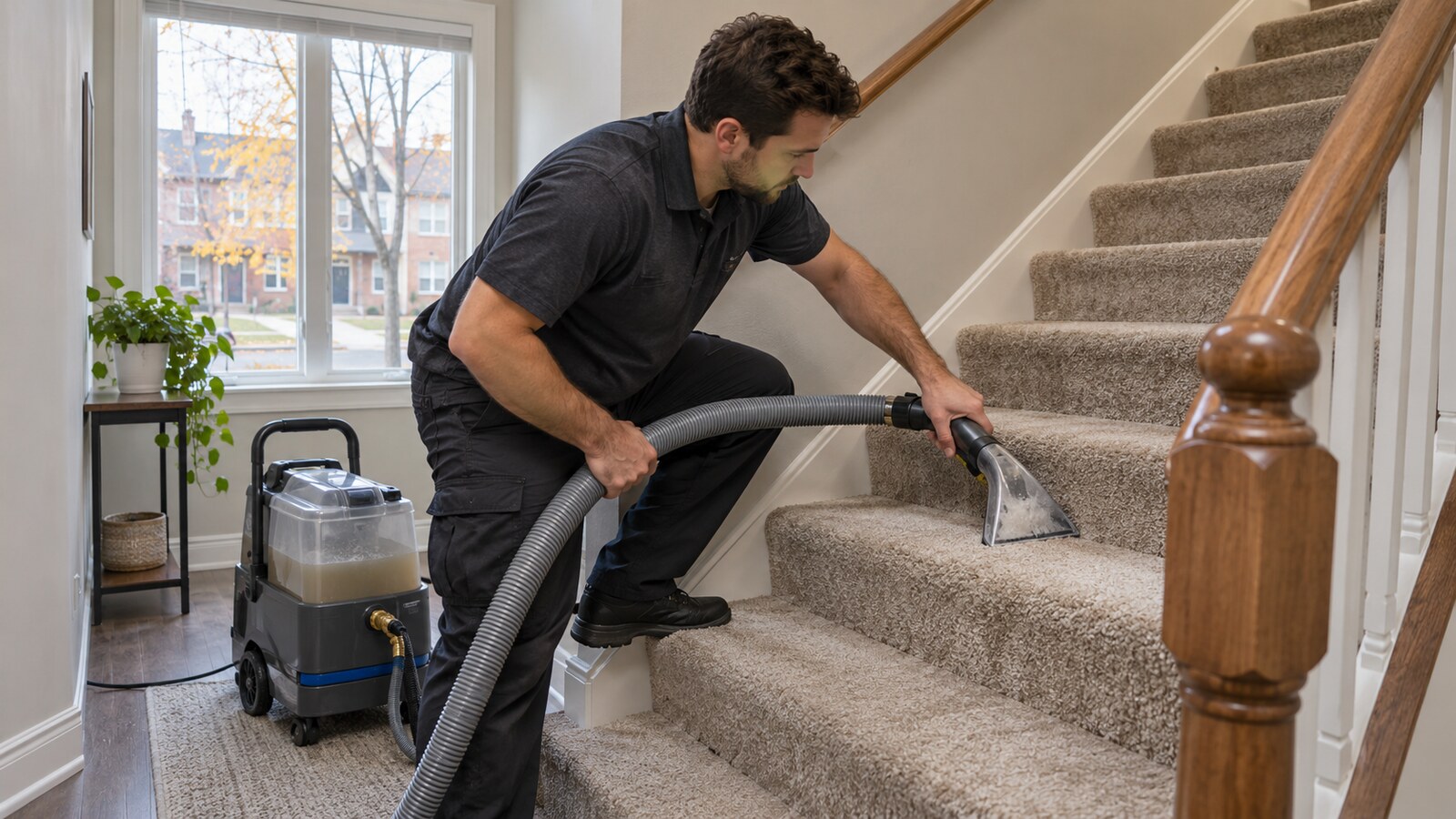
Carpeted stairs collect soil differently from a bedroom or living room. Shoes repeatedly land on the same narrow area, dust settles along the edges, and the curved nosing of each tread receives concentrated wear. The staircase is also a travel route: residents, pets, cleaners and contractors may all need it while the work is being planned.
A useful Ottawa stair-carpet cleaning scope therefore covers more than the number of steps. It should identify landings, turns, railings, ordinary spots, fibre information when known, equipment access and the time available for drying. This practical preparation helps homeowners and property managers arrange routine cleaning without confusing permanent wear or damage with removable soil.
Why stairs need their own cleaning plan
An open room gives equipment a broad, level surface. Stairs combine horizontal treads, vertical risers, rounded nosings, tight edges and corners beside spindles or walls. A mid-landing may be carpeted even when the upper hall is not. Winders and pie-shaped steps add another shape to the scope, while a narrow stairwell can limit where hoses and equipment can be positioned.
These details affect setup, technique and drying. They also affect access for everyone in the property. Before scheduling, decide whether the staircase can be kept clear and whether there is another safe route between floors. If the stairs are the only route, coordinate the work around residents rather than assuming people can step over hoses or walk on damp carpet.
Inspect every tread, riser and landing before cleaning
Start at the bottom and photograph the full stair run, then take closer views of high-use treads, nosings, edges, transitions and landings. Note loose seams, ripples, frayed edges, exposed fasteners, separated trim or carpet that is pulling away from a riser. Record ordinary spots separately from physical wear so the expected result is clear.
Check whether the carpet continues under a closed door at the top or bottom. Identify nearby wood, painted trim and metal transitions that may need protection. If a stair gate, wall-mounted handrail or decorative spindle reduces working space, photograph it rather than removing it without a plan.
- Count straight treads, winders, risers and carpeted landings separately.
- Photograph traffic lanes, edges, nosings, seams and transitions.
- Note the carpet construction and fibre information when records or labels are available.
- Identify loose carpet, damaged trim or repair needs before equipment is brought in.
- Confirm whether the staircase is the only route between occupied floors.
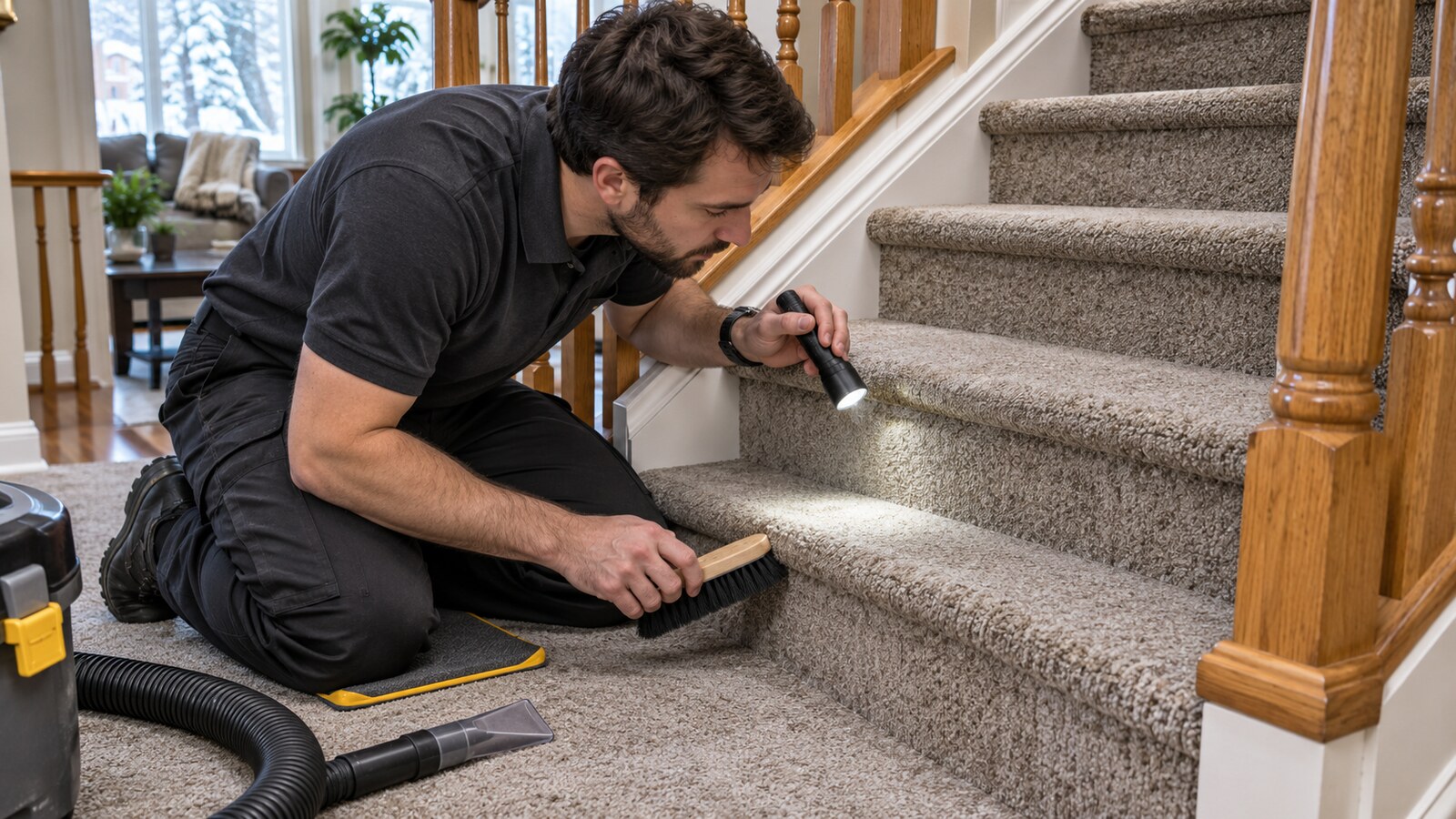
Separate routine soil from damage and specialist conditions
Routine carpet cleaning can address ordinary tracked-in soil and known, non-hazardous spots, but it cannot rebuild worn pile or restore colour that has been bleached or faded. A dark line on a nosing may include soil and crushed fibre. A pale spot may be colour loss rather than residue. Set expectations from the inspection instead of promising that every mark will disappear.
Stop and arrange appropriate assessment if the stairs may involve sewage, flooding, mould, bodily fluids, animal waste, pests, fire residue, unknown chemicals or another hazardous condition. Do not vacuum, wet or brush an uncertain area simply to see what happens. Damage beneath the carpet or underpad may also require repair rather than routine surface cleaning.
Prepare the staircase and equipment route
Remove shoes, baskets, toys, small furniture and loose runners from the stairs and landings. Clear the route from the exterior entrance to the stairwell, including tight corners and doors. Fragile wall decor near the hose path should be moved by the owner or property manager before the appointment.
Do not remove handrails, gates or fixed trim unless that work has been separately authorized and safely planned. Confirm parking, entrance access, water and power availability, the location of any alarm or door code, and the route for equipment. In a condo or managed building, arrange elevator bookings and protection for shared corridors where required.
Plan for edges, nosings and tight turns
Stair edges beside a wall or spindle can hold compacted dust that an ordinary room pass may not reach. Rounded nosings receive repeated foot contact, while the back of a tread can collect fine debris. The cleaning approach should account for these shapes without oversaturating the carpet or damaging adjacent finishes.
Share information about any spot product previously used on the stairs. Residue, dye change or bleaching can affect the result. Avoid applying another household product immediately before the appointment unless the cleaning provider has confirmed it is compatible with the carpet and the planned method.
Coordinate residents, pets and other work
Keep residents and pets out of the active work area. A hose across a landing is not a step-over obstacle, and a damp tread should not become the route to a bedroom or washroom. If someone needs regular access between floors, schedule the appointment for a time when an alternative arrangement is practical.
Finish drilling, drywall sanding, painting and other dusty work before the final carpet clean. Arrange furniture deliveries and moving work after the staircase has dried enough for normal use. Cleaned stairs should not immediately become the route for toolboxes, renovation debris or outdoor footwear.
Protect the drying window
Drying time varies with carpet construction, cleaning method, indoor temperature, humidity, ventilation and the amount of moisture needed. Stairs can dry differently from an open room because air movement around edges, risers and a narrow stairwell is not uniform. Build a reasonable buffer into the schedule and follow the drying guidance provided for the job.
Keep unnecessary traffic off the carpet while it is damp. Do not cover treads with plastic, cardboard or a loose runner unless the cleaning provider has confirmed an appropriate method. A makeshift covering can trap moisture or create a slip and trip hazard. Position approved air-moving equipment so it does not block a doorway, landing or required exit route.
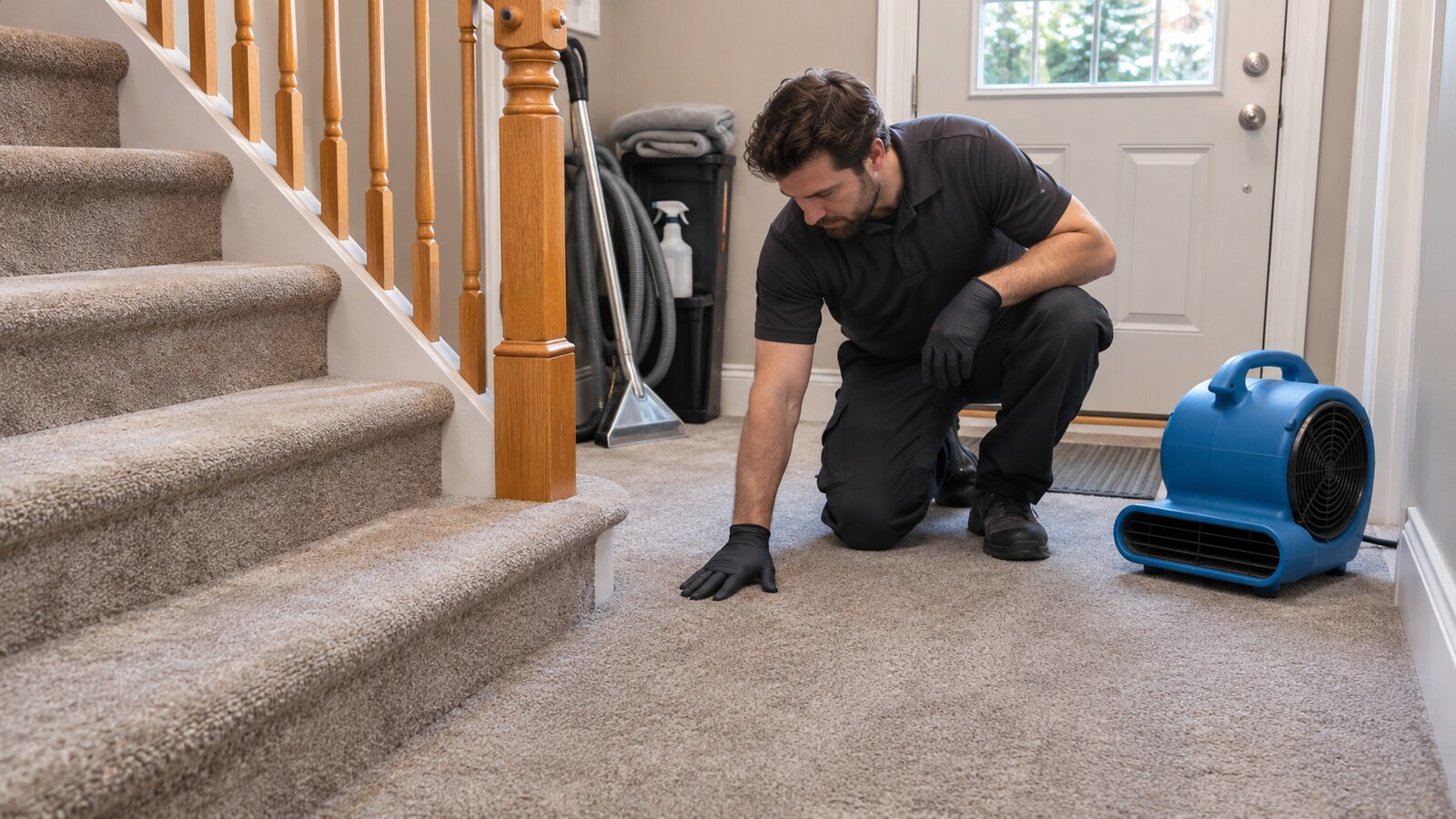
Inspect the finished staircase in consistent light
Once the carpet is dry enough for inspection, review each tread, riser and landing from the same general viewpoints used before cleaning. Note permanent wear, colour loss, damaged seams or any spot that remains. Photos are especially useful for a landlord or property manager who will not be present at the property.
Confirm that doors, gates and thresholds operate normally, the handrail remains secure, temporary corner protection has been removed and equipment has been cleared from the route. A practical handoff states what was cleaned, what was excluded and whether any area needs repair or specialist attention.
What to send for a firm stair-carpet cleaning quote
Send one wide photo from the bottom, one from the top and close photos of landings, turns, spots, worn nosings and damaged edges. Include the total number of steps, whether risers and landings are carpeted, the Ottawa address, property type, parking and entrance details, water and power availability, and whether the staircase is the only route between floors.
Also provide the deadline, known spot sources, previous products used and any building access requirements. Accurate information helps define an ordinary carpet-cleaning scope and reduces the chance that a repair, hazardous condition or access problem is discovered only after arrival.
Carpeted stairs are a small area with a demanding shape and an important role in the home. When the tread condition, access route and drying window are confirmed in advance, the work is easier to coordinate and the final result is easier to assess honestly.
The images in this article are illustrative examples and do not show an actual Mattabo Property Care job.
Photos are illustrative examples of typical residential service results.