Seasonal Property Care
Ottawa Carport Clean-Up Before Winter: A Practical Plan for Parking, Storage and Clear Access
Prepare an Ottawa carport for winter with a practical plan for parking clearance, weather-resistant storage, drainage, shared access and ordinary non-hazardous item removal.
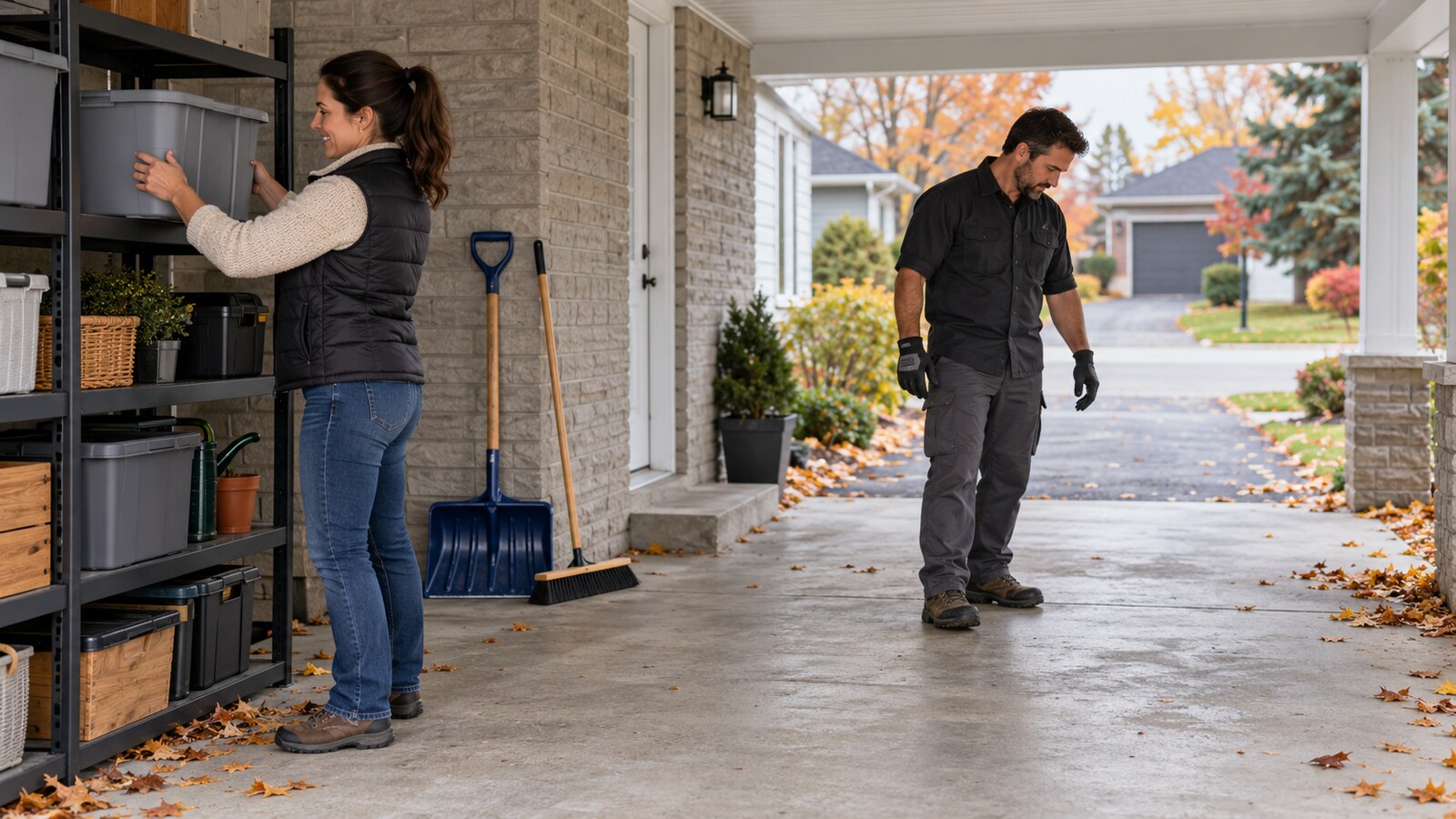
A carport can become a convenient holding area for planters, sports gear, patio furniture, tools and items that never quite made it indoors. By autumn, that storage can compete with the space needed for a vehicle, snow-clearing equipment and a safe route to the house. A focused clean-up before winter makes the area easier to use without turning the job into a rushed disposal project.
Unlike a closed garage, a carport is exposed to wind, blowing precipitation and changing temperatures. Anything left there should be suitable for the conditions and stored so it cannot narrow the parking bay, block a door or interfere with drainage. This guide covers organization, interior-style clean-up of the covered area and removal of approved ordinary non-hazardous items. It does not cover structural repairs, electrical work, pest remediation or hazardous-material disposal.
Decide what the carport must do this winter
Start with the primary function. Will the carport hold one vehicle every day, provide a clear passenger-side exit, protect a walkway to the house or support snow-clearing equipment? Mark the space that must remain open before moving storage around. A vehicle needs more than its footprint: doors must open, people need room to walk, and mirrors should clear posts, shelves and hanging items.
Take wide photos from the driveway and from the house door. Include posts, stairs, downspouts, shelving, outdoor outlets and the route used for garbage or recycling bins. If a vehicle normally parks there, note its approximate length and width. These details help distinguish a storage problem from an access problem and make a quote more accurate.
Sort items into four practical groups
Work in one small zone at a time. Create groups for items that will stay in the carport, move indoors, move to another storage area or leave the property with approval. Keep family belongings and property-management inventory separate. In a rental or managed property, confirm ownership before anything is removed; an unlabeled chair, shovel or planter may belong to a tenant, owner or contractor.
Clean, ordinary items such as empty plastic planters, broken household storage bins, worn outdoor chairs and flattened cardboard can be assessed for the agreed non-hazardous removal scope. Do not mix unknown liquids, fuel containers, paint, chemicals, propane cylinders, automotive fluids, batteries, sharps or pest-affected materials into an ordinary junk pile. Set them aside without opening or combining them and arrange the appropriate specialized handling separately.
Use storage that suits an exposed space
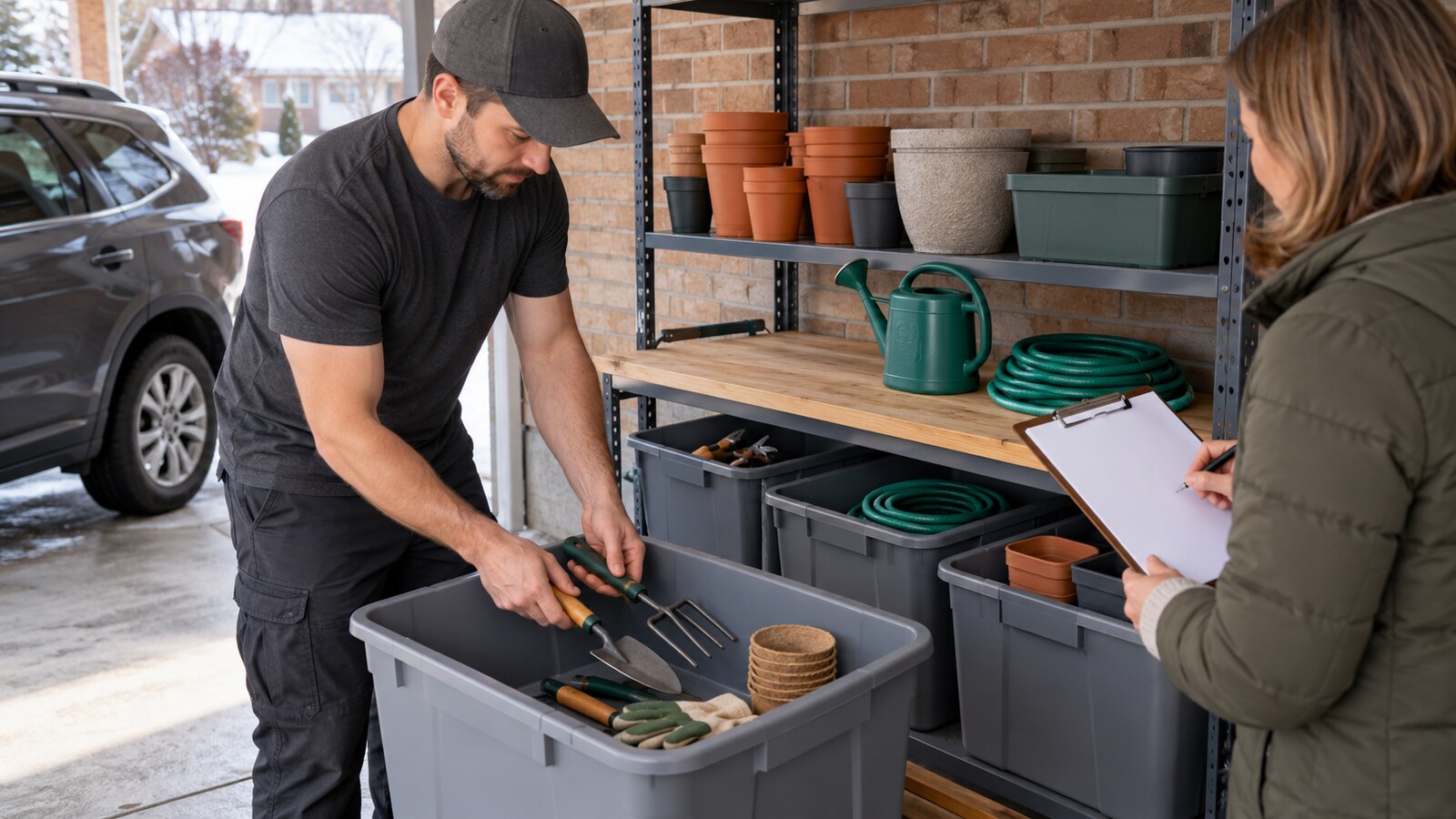
Items staying in the carport should be dry, stable and appropriate for outdoor temperature changes. Use sound containers with secure lids rather than open cardboard boxes. Place heavier bins on lower shelves and keep frequently used items within easy reach. Long-handled tools should be restrained so they cannot fall across the walking route or onto a vehicle.
Avoid stacking against siding, doors, outdoor equipment or utility access. Do not cover vents, meters, shutoffs, electrical panels or service equipment. If a shelf rocks, leans or shows damage, unload it and deal with the support issue before restacking. Organization does not make an unsafe shelf safe.
Keep the parking and walking routes clear
Walk the route a driver and passenger will use from the driveway to the vehicle and from the vehicle to the house. Move low bins, cords, loose mats and garden tools out of that path. Check that the house door opens fully and that stairs, handrails and any side gate remain usable. Keep the route wide enough for people carrying groceries or managing a child seat rather than planning only for an empty-handed walk.
Do not hang objects where wind can move them into a vehicle or walkway. Bicycles, roof carriers and seasonal equipment need secure storage that respects the manufacturer's mounting instructions and the structure's capacity. When a safe mounting location is uncertain, choose floor-level or enclosed storage instead of improvising overhead supports.
Check the threshold and drainage edge
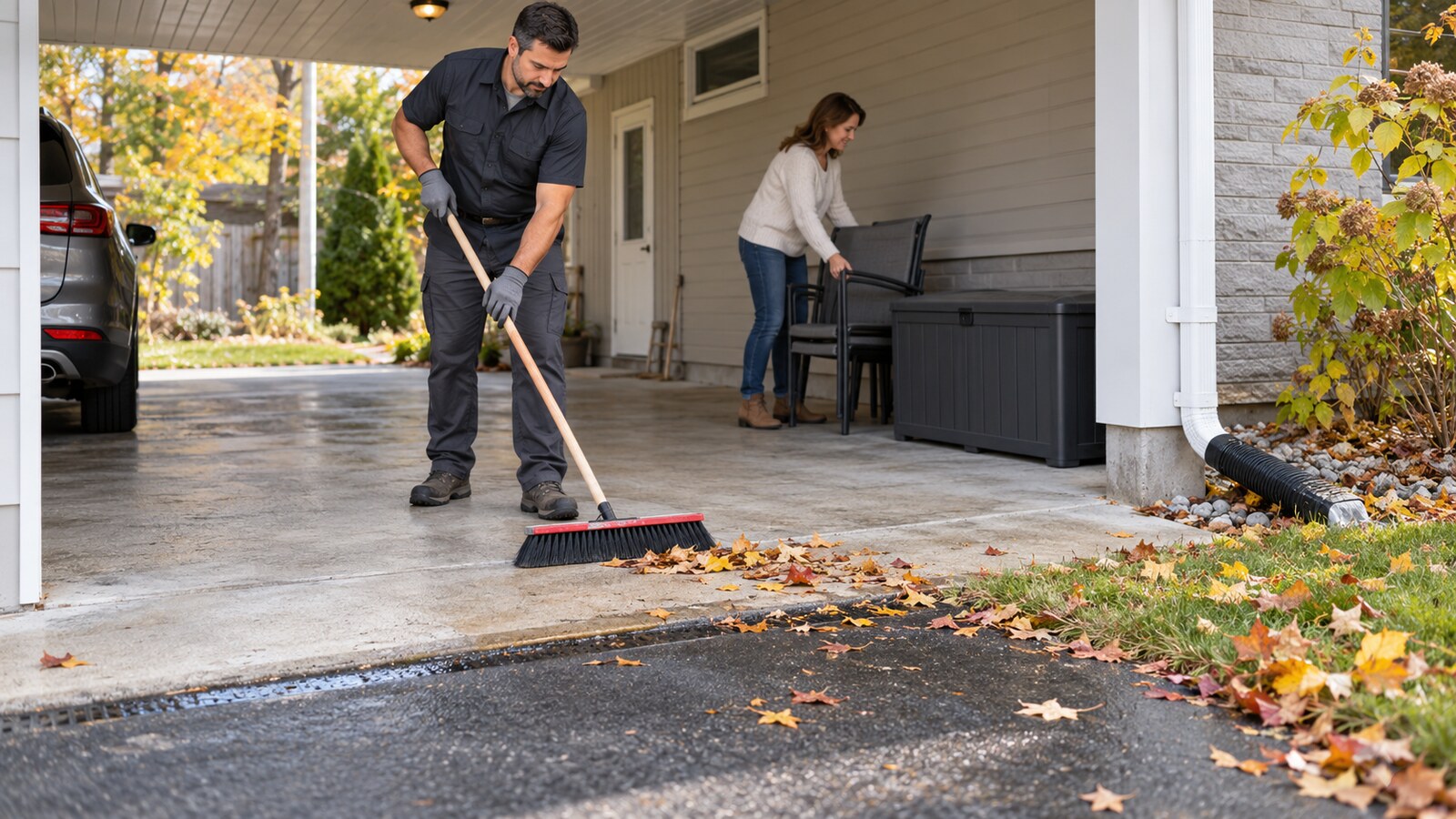
Sweep loose leaves and ordinary debris from the slab, especially where the carport meets the driveway. Look for a downspout extension, drain or natural runoff path and keep it visible. Do not push debris into the street, a catch basin or a neighbouring property. If water already collects in the area, document the condition rather than hiding it under storage or assuming a clean-up will correct the underlying cause.
Keep containers and furniture back from door thresholds and the bottom of steps. An item that seems stable on dry concrete may become a trip point when the surface is wet or snow-covered. A clear edge also makes it easier to see cracks, shifting surfaces or damaged drainage components that may need assessment by the appropriate trade.
Stage winter tools without blocking the car
Place the snow shovel, push broom and vehicle brush where they can be reached without squeezing between the car and a post. Keep salt or ice-control products in their original closed containers and follow their labels; do not transfer them into unmarked bins. The goal is a simple sequence: arrive, park, reach the house and access winter tools without moving a pile first.
Coordinate shared and managed properties
At a rental, condominium or multi-unit property, confirm which parts of the carport are assigned and which routes are shared. Property managers should record the approved removal list and any access instructions before work begins. Keep fire routes, neighbouring parking spaces and common walkways open, and follow the property's rules for temporary staging and vehicle access.
Carport clean-up checklist
- Define the parking bay, passenger exit and walking route that must stay clear.
- Photograph the carport, posts, shelving, doors and drainage edge.
- Separate keep, relocate and approved removal items one zone at a time.
- Confirm ownership before removing anything from a rental or managed property.
- Keep hazardous, unknown or contaminated materials out of ordinary junk removal.
- Use secure, weather-suitable containers and place heavier bins on lower shelves.
- Keep doors, steps, handrails, meters, vents, panels and shutoffs accessible.
- Sweep leaves from the slab without pushing debris into the street or drainage system.
- Stage winter tools where they can be reached without entering a tight vehicle gap.
- Finish with a vehicle-door and doorway walk-through before restacking anything.
Request a firm quote
For a clear scope, send wide photos of the carport and closer views of storage, ordinary removal items and the route to the driveway. Include the Ottawa address, property type, parking needs, stairs or shared-access details and the deadline. Identify anything unusually heavy and disclose unknown, leaking, pest-affected or potentially hazardous items before scheduling.
Photos are illustrative examples of typical residential service results.