Seasonal Property Care
Ottawa Condo Balcony Cleanout Before Winter: A Practical Plan for Furniture, Planters and Access
A practical Ottawa condo balcony cleanout guide covering furniture, planters, cushions, elevator access, floor protection and ordinary non-hazardous removal before winter.
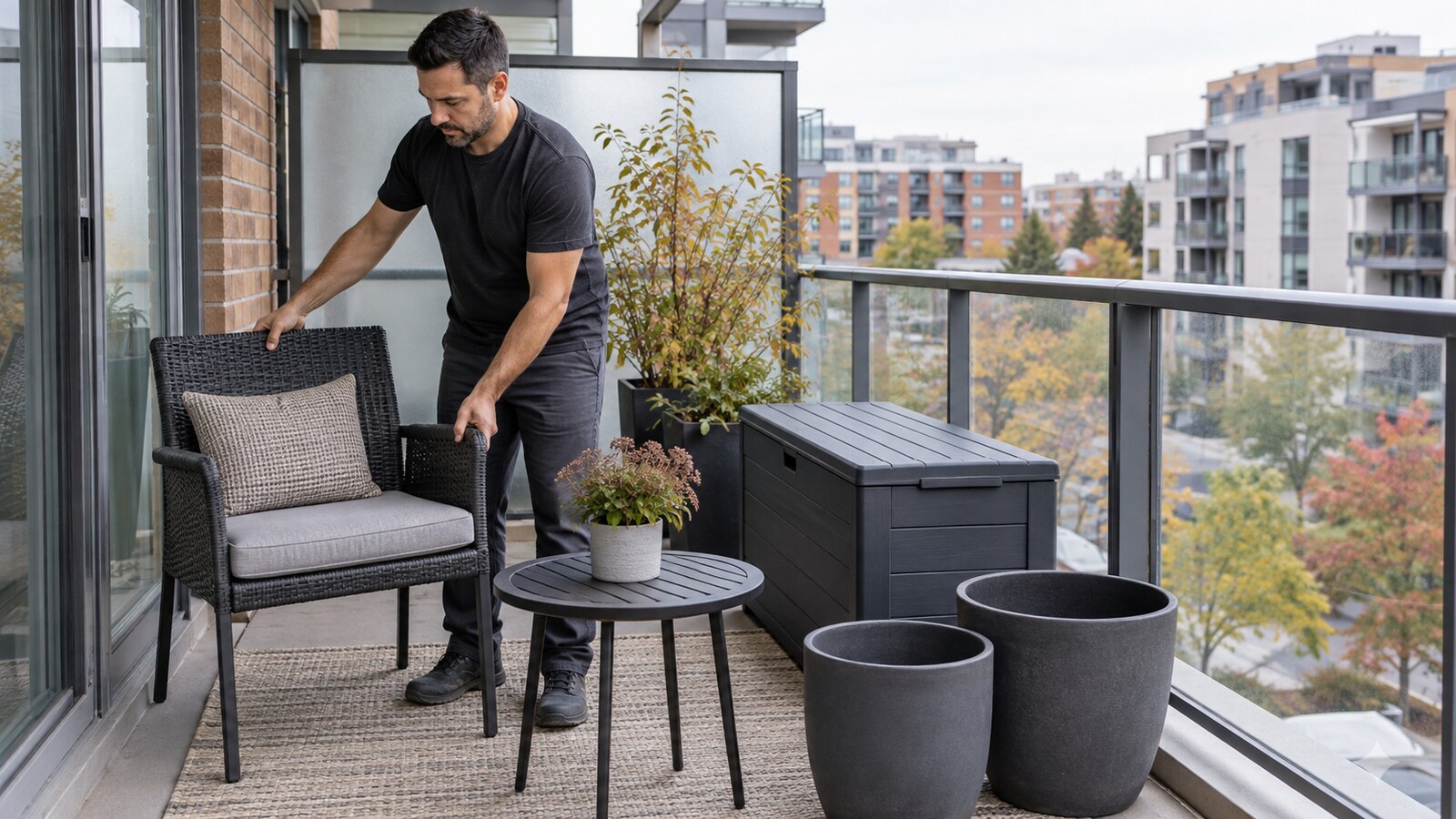
A condo balcony can collect more than outdoor furniture. Empty planters, bags of soil, folded chairs, worn cushions, gardening tools and delivery packaging can gradually reduce the usable floor area. Before winter, that clutter also makes it harder to check drains, move snow safely or bring seasonal items indoors without carrying dirt through the unit.
A useful balcony cleanout is not a fast sweep into one removal pile. The practical approach is to decide what will stay, confirm the building’s access procedures, separate reusable items from ordinary non-hazardous removal, and protect the suite and common areas while everything is moved. For Ottawa condo owners, tenants, real-estate agents and property managers, a clear plan can turn a cramped balcony into a manageable one-day project.
Decide what “finished” should mean
Start with the purpose of the cleanout. A resident preparing for winter may want to keep a compact chair and storage box while bringing cushions inside. A seller may need the balcony cleared for listing photos. A landlord or property manager may be preparing the unit for a new tenant. Each goal changes what stays, what moves into storage and what is approved for removal.
Write down the finish line before lifting anything. For example: keep two chairs, empty all planters, move cushions to the locker, remove the damaged table, sweep the floor and leave the drain visible. A specific scope prevents useful items from being removed by mistake and keeps the work focused.
Confirm building access before the appointment
Condo buildings often have their own procedures for service elevators, loading areas, move protection, parking and contractor access. Confirm the applicable process with building management before choosing a time. Ask whether an elevator must be reserved, which entrance workers should use, where a vehicle may stop and whether floor or wall protection is required.
Measure the balcony doorway and note tight turns between the balcony, suite entrance and elevator. Large chairs and storage boxes may fit outside but not through the route in one piece. Photos of the route are useful when deciding whether an item should be folded, emptied or carefully disassembled before moving.
Sort the balcony before creating a removal pile
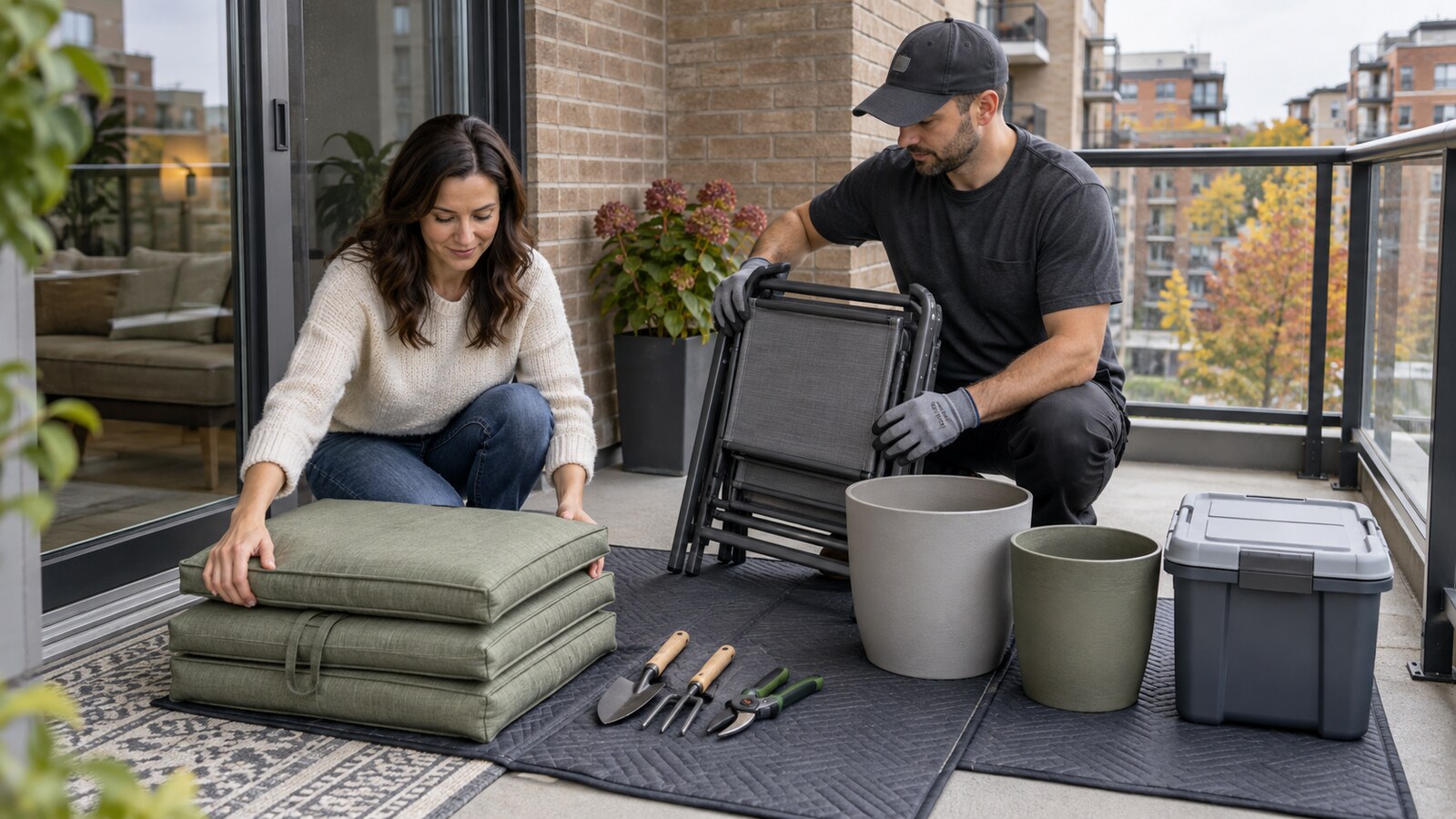
Use simple groups: keep outside, store indoors, move to a locker, donate or reuse, ordinary non-hazardous removal, and special handling. Keep the groups physically separate so a cushion intended for storage does not end up beside damaged furniture approved for removal.
Begin with obvious decisions. Empty packaging, broken plastic accessories and worn outdoor decor are usually easier to classify than furniture, planters or tools. Early progress creates floor space for the items that need a closer decision. If ownership is uncertain in a rental or shared household, set the item aside until the responsible person confirms its destination.
Handle planters, soil and plants separately
Planters are often heavier than they look. Even a small container can hold wet soil, stones or a hidden reservoir. Do not try to move a large planter until its contents and condition are understood. Cracked ceramic and weathered plastic can fail when lifted, so use a stable container or tray where appropriate and keep the travel route clear.
Decide which living plants will come indoors, be given away or be handled through an appropriate seasonal gardening plan. Ordinary property clean-up should not assume that loose soil, liquids, fertilizers or plant treatments can all go into the same load. Keep labelled products in their original containers and follow the applicable building or municipal disposal direction for anything requiring special handling.
Prepare furniture, cushions and storage boxes
Dry outdoor cushions before storing them and brush off loose leaves or soil outside. Check covers, seams and foam for moisture or damage. A clean, dry cushion is easier to store without transferring debris into a locker or closet. If a cushion is no longer usable, confirm it is approved for removal before placing it with the outgoing group.
Empty benches, deck boxes and cabinets completely. Small hardware, tools and personal items are easily missed in corners. Lockable storage should be opened by the owner, and keys should stay with the resident. Fold furniture only as designed; forced hinges and weathered fasteners can break. If a piece must be disassembled, keep reusable hardware together and label it for the owner.
Protect the suite and common route
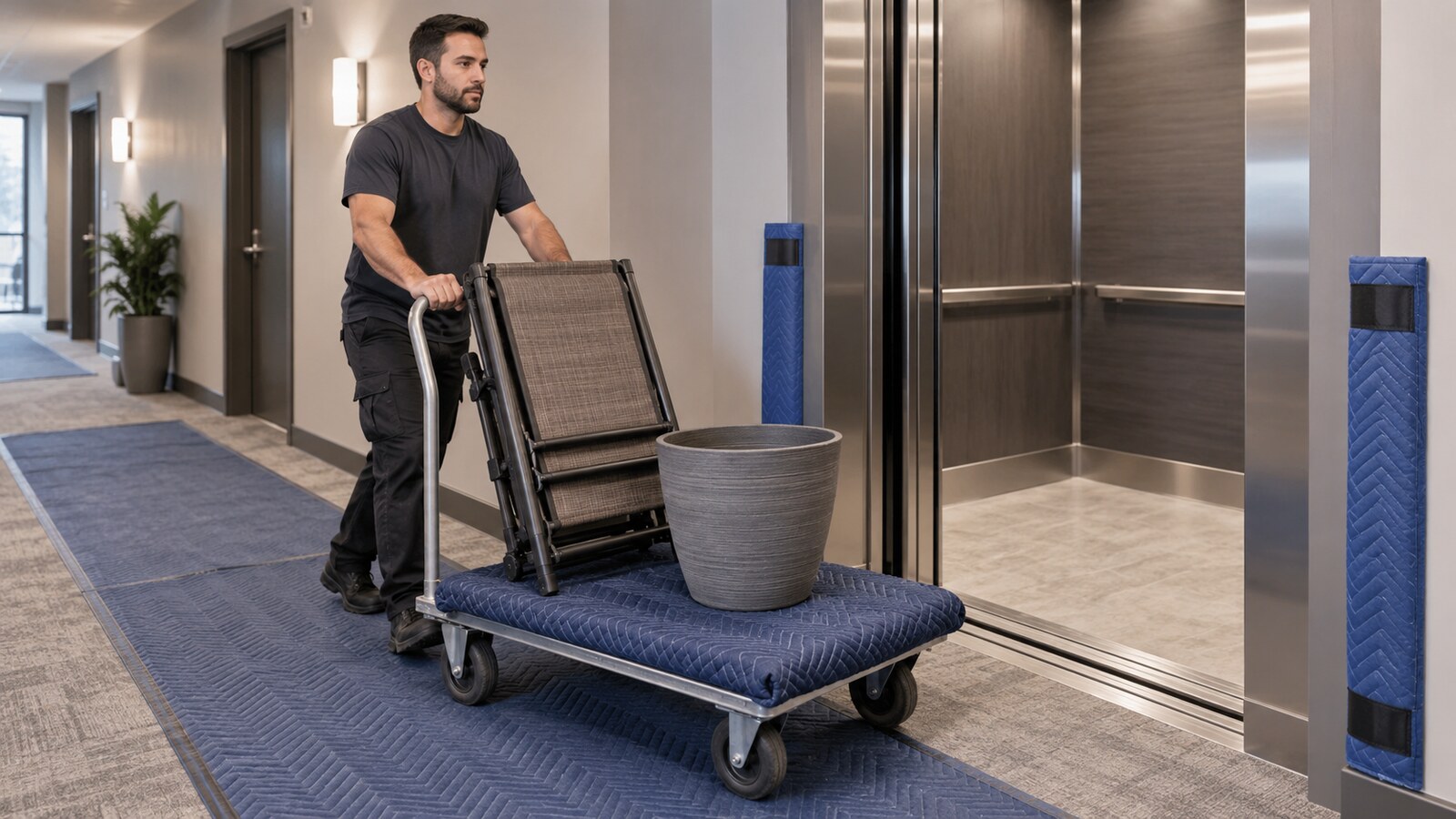
Balcony items often carry grit, moisture and plant debris. Place a protective mat inside the balcony door and have a second clean staging area near the suite entrance. This reduces repeated tracking across floors. Wall corners, elevator jambs and finished doors may need the protection required by the building.
Keep loads modest and stable. A padded cart can help with folded chairs, empty planters and sealed bins, but it should not be overloaded. Secure loose pieces, keep sightlines clear and avoid blocking hallways, doors or elevator access. One controlled trip is better than a tall, unstable stack.
Clean only after the balcony is clear
Once the selected items are removed or stored, collect loose leaves and dry debris before washing anything. Check the floor, corners and drain area without pushing debris into openings. Use a cleaning method suitable for the balcony surface and the building’s requirements; water must not be allowed to run onto neighbouring balconies, walls or public areas.
Wipe railings, door tracks and reachable surfaces with an appropriate product and controlled amount of moisture. Do not lean over the railing or place tools where they could fall. If staining, damaged concrete, loose rail components or drainage problems are visible, document them for the owner or property manager rather than treating a cleanout as a repair.
Keep special-handling items out of an ordinary load
Paint, solvents, fuels, pressurized cylinders, unknown chemicals, sharps, leaking containers and hazardous materials are not ordinary non-hazardous junk. Batteries, electronics and some lamps may also require a separate destination. Identify these items before the work begins and use an appropriate provider or facility for them.
The same caution applies to unusually heavy stone planters, fixed screens, attached flooring and building-owned items. Confirm ownership and responsibility before moving them. A balcony cleanout should not alter the building envelope, railing, drainage or installed components.
Condo balcony cleanout checklist
- Define what the cleared balcony should contain when the work is finished.
- Confirm elevator, loading, parking and protection requirements with building management.
- Photograph the balcony, doorway and route to the elevator or exit.
- Create separate keep, store, donate, ordinary removal and special-handling groups.
- Empty storage boxes and inspect planters before moving them.
- Dry and brush off cushions before indoor storage.
- Use stable, manageable loads and keep common paths open.
- Collect dry debris before using any water.
- Leave drains and access points visible, then document damage or maintenance concerns.
What to send for a firm quote
Useful photos include one wide view of the full balcony, closer views of the furniture and planters, the balcony doorway, the path through the suite, and the elevator or stair route. Include the floor level, parking or loading details, elevator booking window and which ordinary non-hazardous items are approved for removal.
Mattabo Property Care is fully insured for the services it provides. Readers can send photos, their Ottawa address and deadline for a firm quote. Same-day service is often available but is not guaranteed until Mattabo confirms the appointment. A quote request is not a confirmed booking.
To plan an Ottawa condo balcony cleanout, [contact Mattabo Property Care](/contact) with the photos, access details and desired timing. A clear scope helps Mattabo assess labour, carrying distance, building access and the correct destination for eligible items before the appointment is confirmed.
Photos are illustrative examples of typical residential service results.