Home Organization
Downsizing to an Ottawa Condo: What to Keep, Move and Remove
Plan a smaller-home move around the space you actually have, confirmed handoffs and a clear removal list—without emptying your current home too soon.
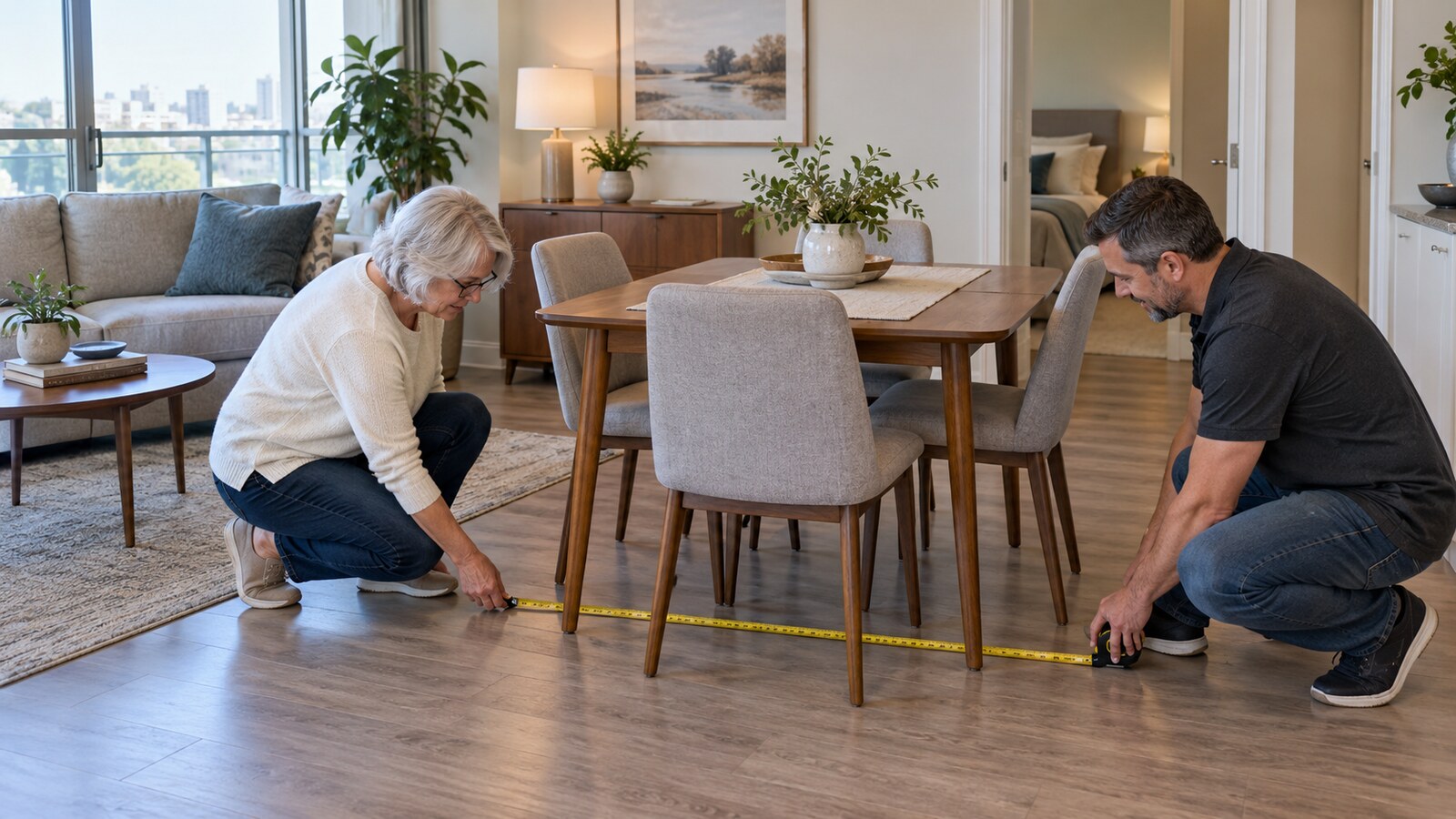
Moving from a house to a condo changes more than the number of rooms. The dining set may fit through the door but leave no space to pull out chairs. A basement's worth of useful belongings may have nowhere to go. And a pile marked for donation is still your responsibility until someone has agreed to accept it.
A useful downsizing plan starts with the destination, not with garbage bags. Whether you are leaving a long-time home in Nepean, a townhouse in Barrhaven or a house in Kanata, the goal is to bring what supports daily life in the new space. Ordinary junk removal is one part of that plan, after ownership and destination decisions are clear.
Start with a usable-space inventory
Measure the new home where you can, and confirm dimensions rather than relying only on a marketing floor plan. Note wall lengths, door swings, windows, fixed cabinets and the routes between rooms. Record closet shelf depth and the storage available for linens, kitchen equipment and seasonal belongings. Do not count a locker, parking-space storage area or shared room as usable storage until its availability and permitted use are confirmed.
Make a short list of functions the new home must support: sleeping, eating, working, hosting and a hobby you genuinely use. Match each function to available space. This gives decisions a practical basis: a second desk may be useful in theory, but not if it blocks the only comfortable route through the living room.
Decide on large furniture before small possessions
Measure the width, depth and height of furniture you hope to keep. Include handles, projecting arms and the space needed to open drawers or use reclining features. Check chairs in their pulled-out position, not just tucked under a table. A tape outline can help you judge a footprint, provided the tape is suitable for the floor finish and removed as directed.
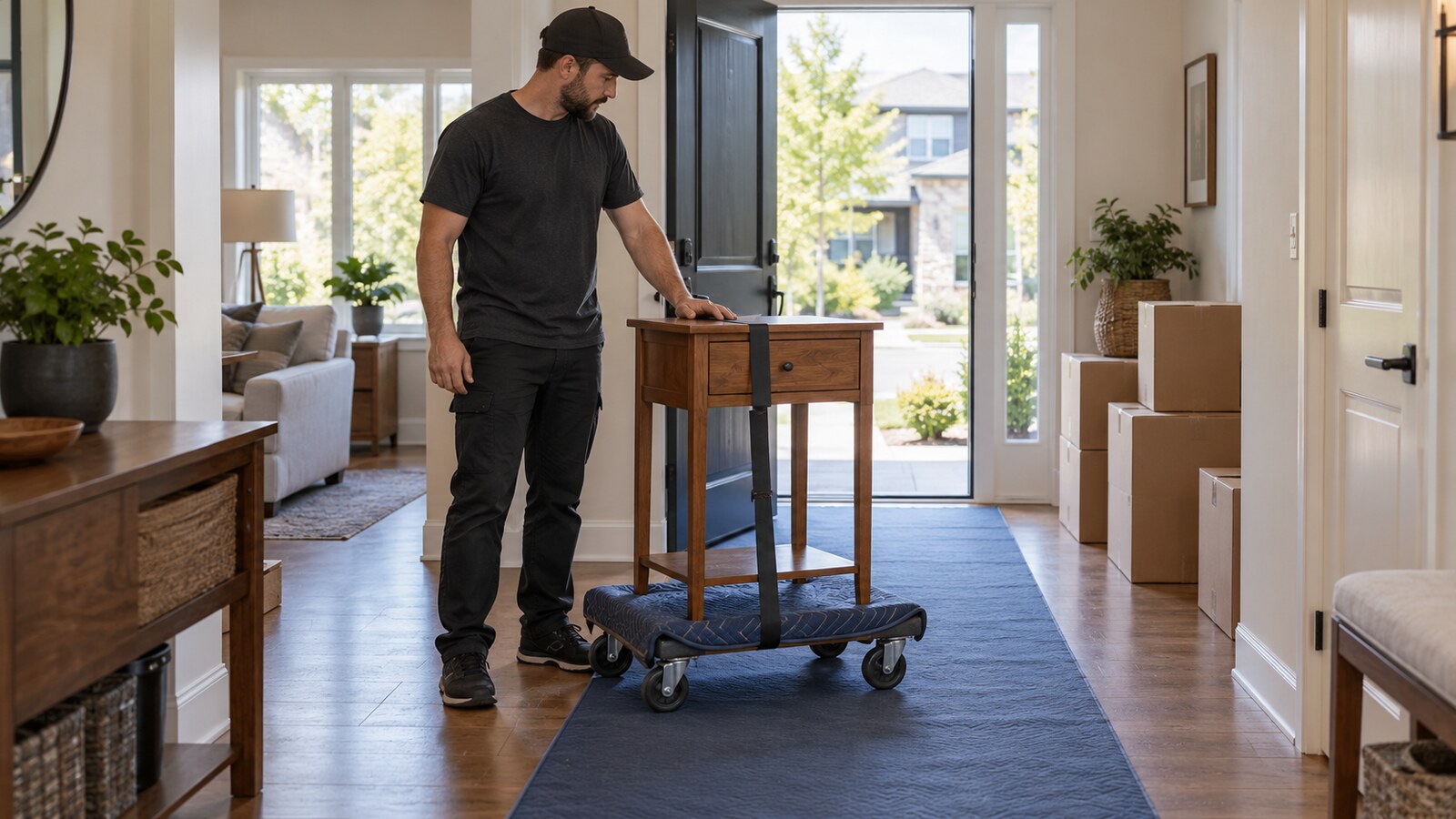
Then check the delivery route separately. Unit doors, hallway turns, elevator openings and the elevator cab can all limit what reaches the room. Ask the mover to assess awkward pieces rather than assuming removable legs solve every fit problem. Do not dismantle furniture that has uncertain fixings, glass panels or wall anchoring without a safe plan.
Create destination groups, not one discard pile
Use five destinations: the new home, a named recipient, a confirmed donation or sale, approved ordinary removal, and undecided. Keep the undecided group small enough to review at a table. Give it a decision date so it does not become a second storage room. If several people share ownership, resolve permission before an item enters the removal group.
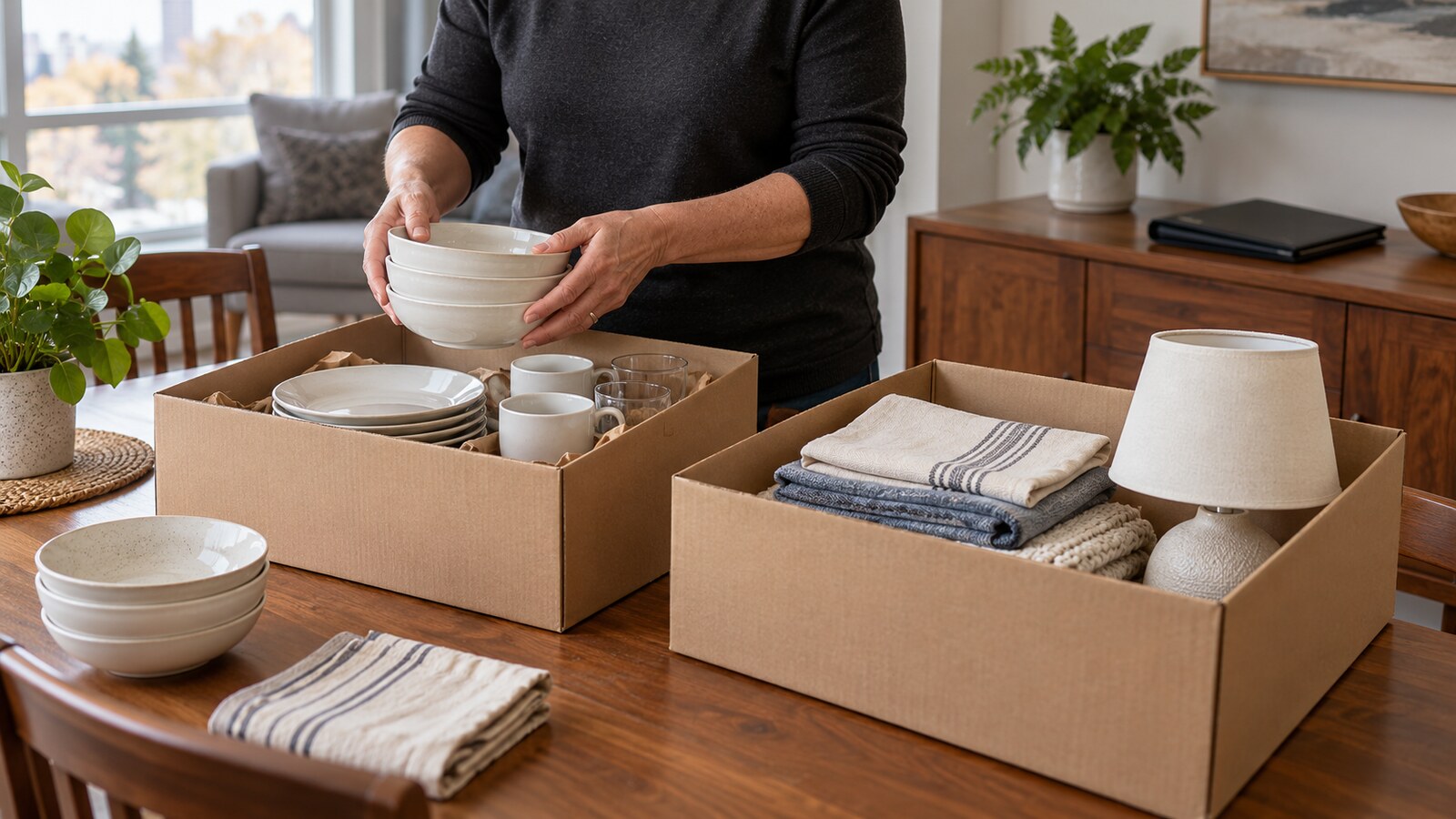
Sort duplicates by what you use, not by how much you once paid. Lay out similar kitchen tools, towels or small appliances together and choose the useful quantity for the new storage. Keep one working set accessible while you still live in the current home. Packing every plate or removing the only comfortable chair weeks early makes the remaining move harder.
Give family handoffs and sales a clear endpoint
A relative saying they might want a cabinet is not a collection arrangement. Confirm the exact item, who will collect it, whether help is needed and the latest workable pickup date. Photograph the piece and its dimensions so there is no misunderstanding. Agree on a fallback decision with the owner if that handoff cannot happen.
The same discipline helps with sales and donations. Check acceptance and collection arrangements directly with the intended recipient before setting anything aside for them. Do not promise donation on a removal list unless the destination is confirmed. An unsold item is not automatically authorized for disposal; it needs a separate decision before the deadline.
Protect personal and sentimental items first
Set aside identification, keys, medication, jewellery, photographs and important records before helpers begin sorting. Keep these with the person responsible for the move, not in a box beside a removal pile. Review desk drawers, furniture compartments and bags individually. Do not assume an apparently empty cabinet has been checked.
For sentimental belongings, choose a realistic storage boundary such as a shelf or a small number of containers. Photograph larger objects if that helps the owner make a decision, but do not treat a photo as a substitute for their consent. Work through these items in short sessions; rushed decisions during a loading appointment are difficult to reverse.
Schedule collections in a workable order
Build the sequence around confirmed access to both homes. Family collections and accepted donations can happen first, followed by approved ordinary removal, the main move and final cleaning. Adjust that order to preserve the bed, seating, food preparation and walking routes needed while the home is occupied. Leave time to deal with a missed collection without relying on an unconfirmed last-minute appointment.
For the condo, ask management about elevator booking, loading access, protective coverings and permitted work hours. For the current home, identify stairs, narrow turns, parking and the route to each item. A real-estate agent can help coordinate access around photography and showings, but the owner still needs to approve what leaves.
Make the removal scope unmistakable
Use an item list with photos rather than instructions such as 'everything downstairs'. Identify quantities, approximate dimensions and any unusually heavy or awkward pieces. Mark approved items clearly and walk through the list with the provider before loading starts. Keep packed belongings for the new home in a separate area, with exits and stairs unobstructed.
This is a plan for ordinary non-hazardous belongings. Paint, chemicals, fuel containers, batteries, sharps, unknown liquids and contaminated or pest-affected items need separate assessment and handling. Disclose them before arranging work; do not hide them inside bags or furniture. Also distinguish junk removal from moving retained possessions, packing, storage and donation delivery. Confirm each service separately rather than assuming one appointment includes all of them.
Clean the spaces that are actually empty
Once approved items leave, remove ordinary loose debris and clean accessible shelves, floor edges and surfaces using methods suitable for their finishes. Leave maintenance concerns visible and document them. There is little benefit in a full final clean while furniture and sorting boxes still cover the work area. Finish with a room-by-room check for retained belongings, overlooked cupboards and items that must remain with the property.
Request a firm quote for the approved work
Send wide photos of the areas involved, close views of the approved removal items and the route out. Include the Ottawa address, stairs or elevator details, parking instructions and deadline. Explain whether the home remains occupied and which handoffs must happen first. If the list changes, ask for the scope and quote to be reconfirmed before work starts.
Photos are illustrative examples of typical residential service results.