Seasonal Property Care
Ottawa Front Porch Clean-Up Before Winter: A Practical Plan for Steps, Mats and Clear Access
A practical Ottawa front-porch clean-up guide covering dry inspection, mats, planters, steps, railings, thresholds, drainage and a clear route before winter.
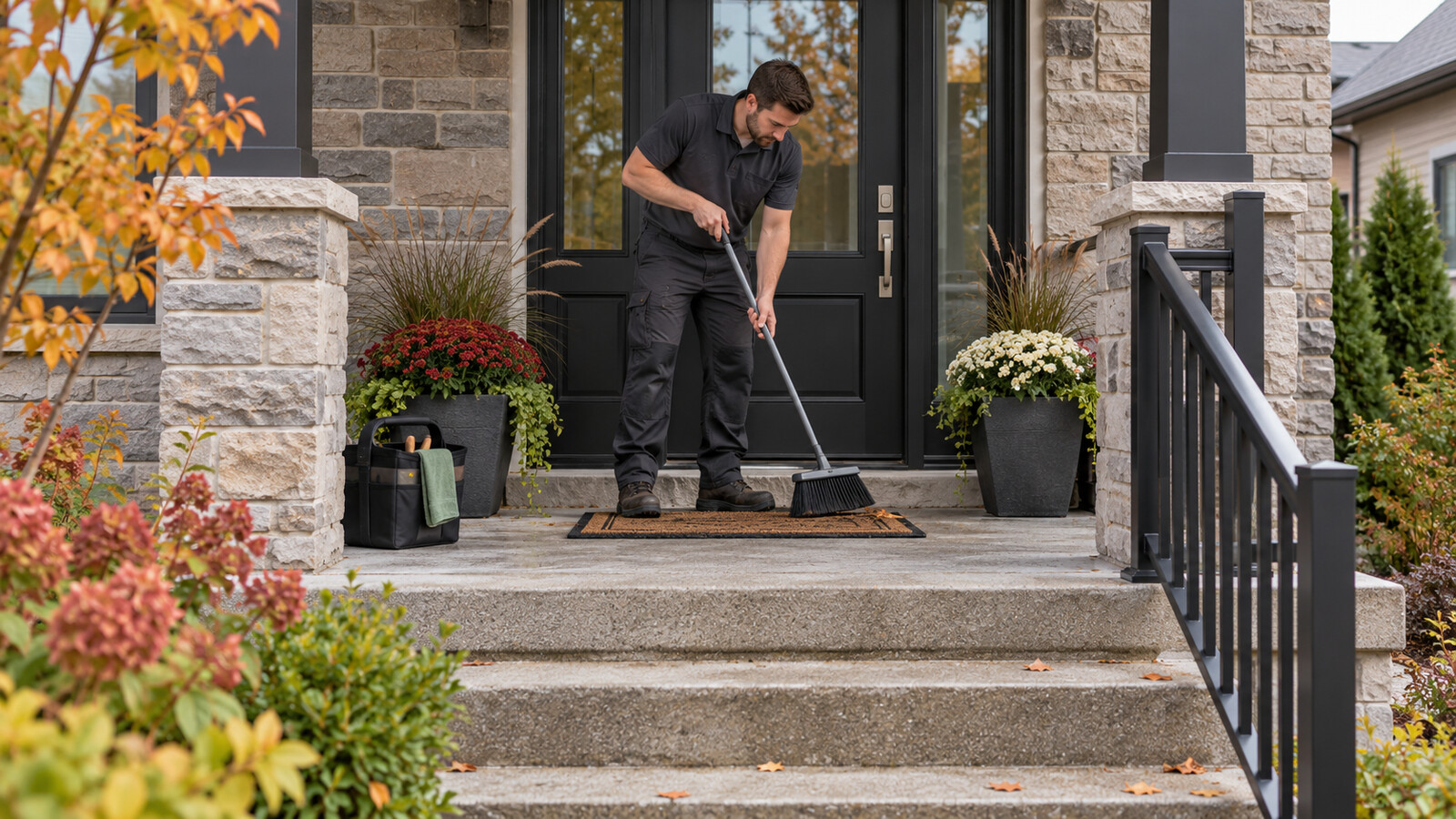
A front porch is a small work area with a large effect on how an Ottawa home functions through the colder months. Steps collect leaves and grit, mats hold moisture, planters crowd the landing and seasonal items can narrow the route to the door. Once everything is wet or frozen in place, a simple clean-up becomes harder.
The useful goal is not a decorative reset. It is a dry, orderly entrance with a clear walking line, visible step edges and fewer loose items around the doorway. A practical plan also separates routine cleaning and ordinary non-hazardous removal from repairs that need a contractor.
Inspect the porch while it is dry
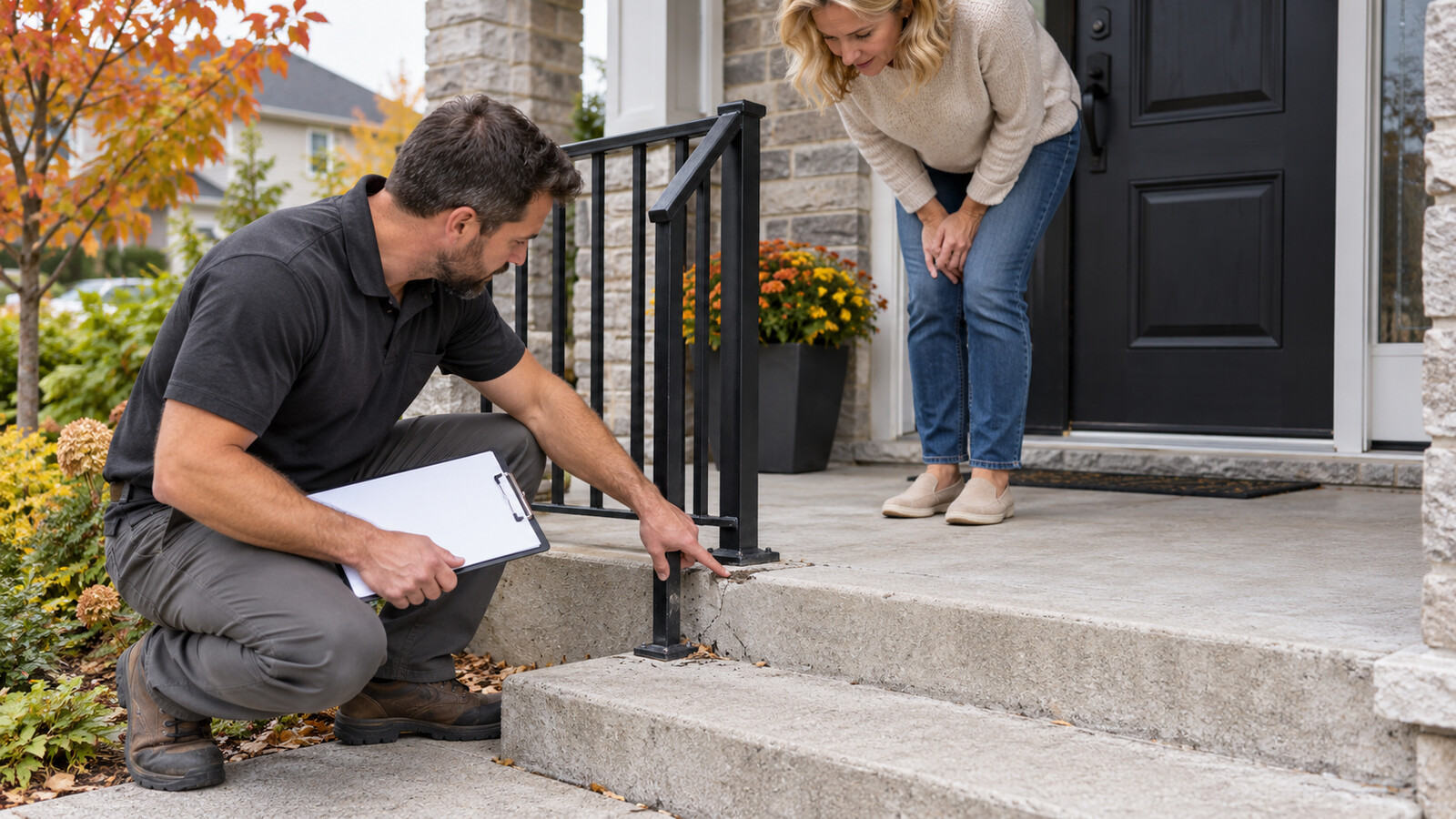
Start before sweeping or moving anything. Look at the porch from the driveway or walkway, then check the landing, step edges, handrail, door threshold and the area where water leaves the surface. Photograph cracked concrete, loose boards, unstable railings, lifted pavers, damaged lighting or a threshold that already shows moisture.
Cleaning will not correct movement, rot, failed sealant or drainage problems. Mark those conditions for repair and keep routine work within the safe, accessible area. If a step or railing is unstable, stop using it as a work platform and arrange the appropriate assessment.
Confirm what stays and what can be removed
Do not assume every item near the door is unwanted. Set aside deliveries, keys, children’s items, mobility aids and anything that may belong to a resident or tenant. For a rental or managed property, get written direction before removing planters, furniture, décor or stored supplies.
Separate ordinary non-hazardous items from paint, fuel, chemicals, batteries, propane cylinders, needles, unknown containers or material affected by pests. Those items need the correct specialized handling and should not be mixed into a routine clean-up load.
Create a clear route before detailed cleaning
Work from the outside edge toward the door. Move only approved lightweight items, then collect loose leaves, twigs, grit and packaging. Keep the path wide enough for normal entry and leave the handrail usable throughout the job. Tools, bags and cords should stay off the main walking line.
Check that the door can open fully without striking a planter, bench or storage bin. The route from the walkway to the threshold should not require anyone to step around loose objects or cross a wet cleaning area.
Handle mats, footwear and seasonal décor
Lift the doormat and check both sides. A mat can look dry on top while holding grit and moisture against wood, concrete or pavers. Shake or vacuum it in a suitable location, clean it according to its material and return it only after the porch surface is dry.
Move loose footwear and small decorations indoors or into approved storage. Avoid stacking items beside the door, where they can interfere with access or hide the surface condition. If holiday décor will be installed later, leave safe attachment decisions to the owner and keep lighting cords away from steps and pinch points.
Move planters and furniture with a destination in mind
Large planters can be awkward even when the foliage is light. Check the base, soil moisture and intended destination before lifting. Use two people or suitable moving equipment when an item is bulky, and do not drag a heavy pot across finished decking or stone.
Empty only planters the owner has approved for disposal. Soil, live plants and reusable containers are not ordinary junk by default. Wipe furniture that will stay, and store cushions or lightweight pieces where they will not blow back onto the landing.
Match the method to the porch surface
Concrete, brick, interlock, composite boards, painted wood and natural stone do not respond the same way. Begin with dry sweeping or vacuuming. Test any cleaning method in an inconspicuous spot, use compatible products and avoid aggressive pressure that can damage joints, finishes or older materials.
Work gently around mortar, paver sand, peeling coatings and board edges. Cleaning can improve suitable surface soil, but it cannot restore a failed finish, replace missing joint material or repair cracked masonry. Record those limits instead of forcing a more aggressive result.
Give steps and railings separate attention
Step edges deserve a deliberate pass because dirt can collect where the tread meets the riser. Remove dry debris first, then use a controlled surface-appropriate method. Do not leave cleaning solution or rinse water on a route that residents need to use.
Wipe a sound handrail with a compatible product and check the accessible anchors while working. Cleaning a loose railing is not a repair. Photograph movement, corrosion or damaged fasteners and keep the final handoff clear about what still needs maintenance.
Protect the threshold, door and nearby finishes
The doorway combines several materials and openings: the sill, weatherstripping, door finish, trim, siding and sometimes an electrical fixture. Keep spray and excess water away from gaps, outlets and the bottom of the door. Use damp cloths or a small controlled tool around these details instead of flooding the area.
Check the lower door face and trim for loose paint, swelling or failed sealant before cleaning. These conditions should be documented and referred for repair. Routine clean-up should never be used to hide damage before a listing, inspection or tenant handoff.
Control water around the doorway
If wet cleaning is appropriate, use the least water needed and work in small sections. Keep the door closed, protect the threshold and guide water toward the open edge or existing drainage path rather than into the house, beneath cladding or toward a neighbouring entrance.
A squeegee, absorbent cloths and a clear exit plan are more useful than uncontrolled rinsing. Stop if water pools, flows toward the foundation or reveals a blocked drain. Drainage corrections are a separate maintenance issue.

Let the entrance dry before the final reset
Leave the porch open to dry and prevent foot traffic across a wet surface. Return only approved items, with the doormat flat and planters positioned outside the walking line. Confirm that the door opens normally, the handrail remains accessible and no tool or bag has been left behind.
Take final condition photos from the walkway and doorway. For a managed property, note any repair, drainage or lighting issue separately from completed cleaning so the next action is easy to assign.
Front porch clean-up checklist
- Photograph the dry porch, steps, railing, threshold and drainage path.
- Confirm which furniture, planters and décor are approved to move or remove.
- Separate chemicals, fuel, batteries and unknown material from ordinary waste.
- Keep the route to the door and handrail clear throughout the work.
- Lift and clean the mat, then return it only to a dry surface.
- Move heavy planters with suitable help instead of dragging them.
- Match cleaning methods to concrete, masonry, wood, composite or stone.
- Protect the door, threshold, siding, outlets and lighting from excess water.
- Guide rinse water away from the doorway and stop if drainage is poor.
- Record loose railings, damaged steps, failed coatings and other repair needs.
- Allow surfaces to dry before the final reset and handoff.
What to send for a firm quote
Send one wide photo from the walkway plus closer images of the landing, steps, handrail, threshold, mat, planters and any approved items for removal. Include the surface type if known, parking or access details, whether the entrance must remain open during the work and the date the property needs to be ready.
Mattabo Property Care is fully insured for the services it provides. Readers can send photos, their Ottawa address and deadline for a firm quote. Same-day service is often available but is not guaranteed until Mattabo confirms the appointment. A quote request is not a confirmed booking.
To plan an Ottawa front porch clean-up, [contact Mattabo Property Care](/contact) with the photos, access notes and deadline. A clear scope helps separate routine cleaning, approved ordinary non-hazardous removal and repair items before the appointment is booked.
Photos are illustrative examples of typical residential service results.