Pressure Washing
Pressure Washing an Ottawa Garage Floor Before Winter: A Practical Guide to Storage, Drainage and Safe Access
A practical Ottawa garage-floor preparation guide covering storage clearance, concrete condition, water control, thresholds, drying and safe access before winter.
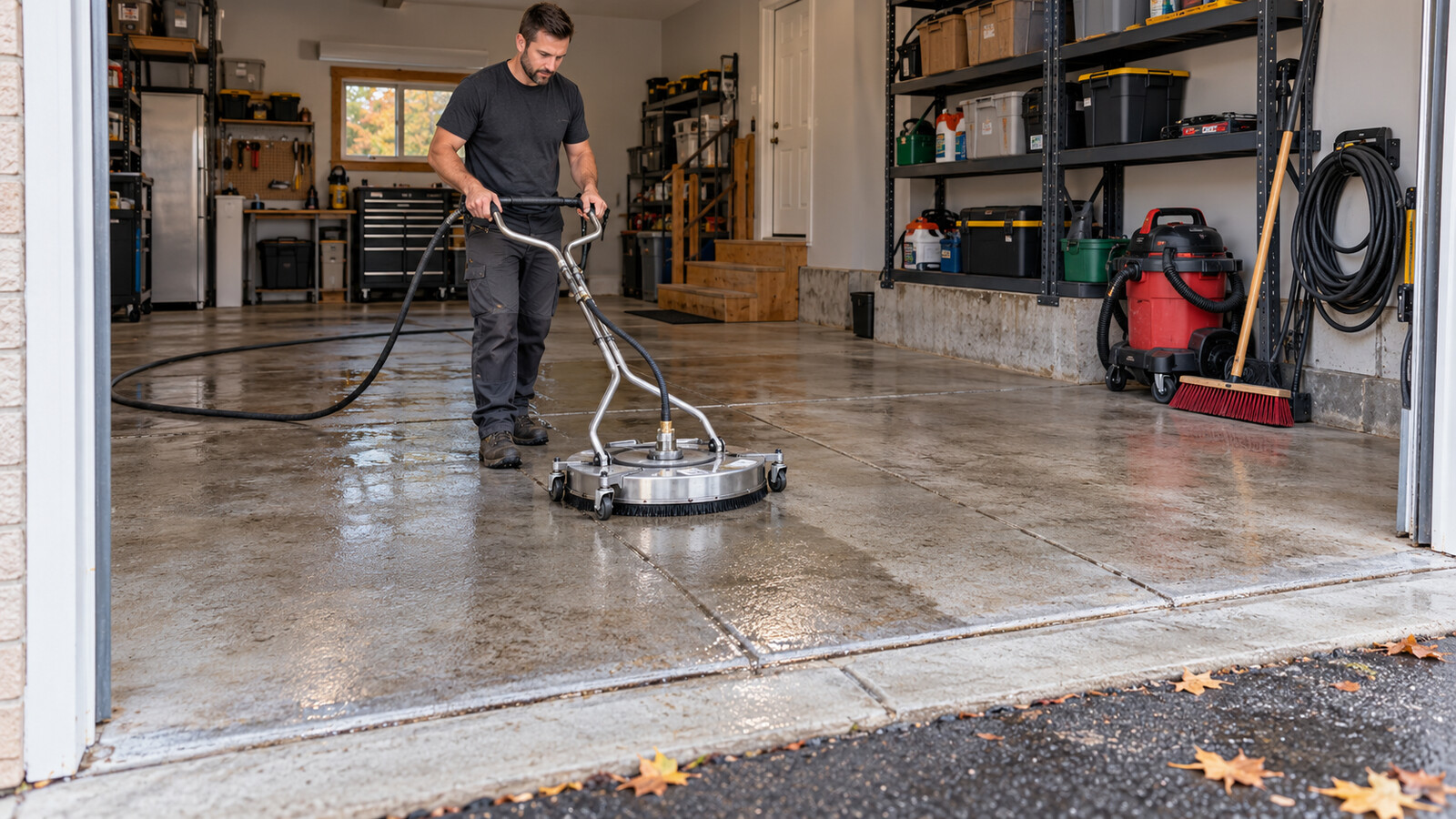
A garage floor may look like a straightforward concrete surface, but cleaning it affects the whole garage. Storage, drywall, electrical outlets, the door into the house and the overhead-door threshold all sit close to the work area. Water that is not controlled can reach places that were never meant to be washed.
For Ottawa homeowners and property managers, a pre-winter garage-floor wash can remove ordinary tracked soil and seasonal grime before the space is closed up more often. The useful first step is not pressure—it is inspection and preparation. A clear plan protects the building, keeps access workable and establishes what cleaning can reasonably accomplish.
Inspect the floor and garage while everything is dry
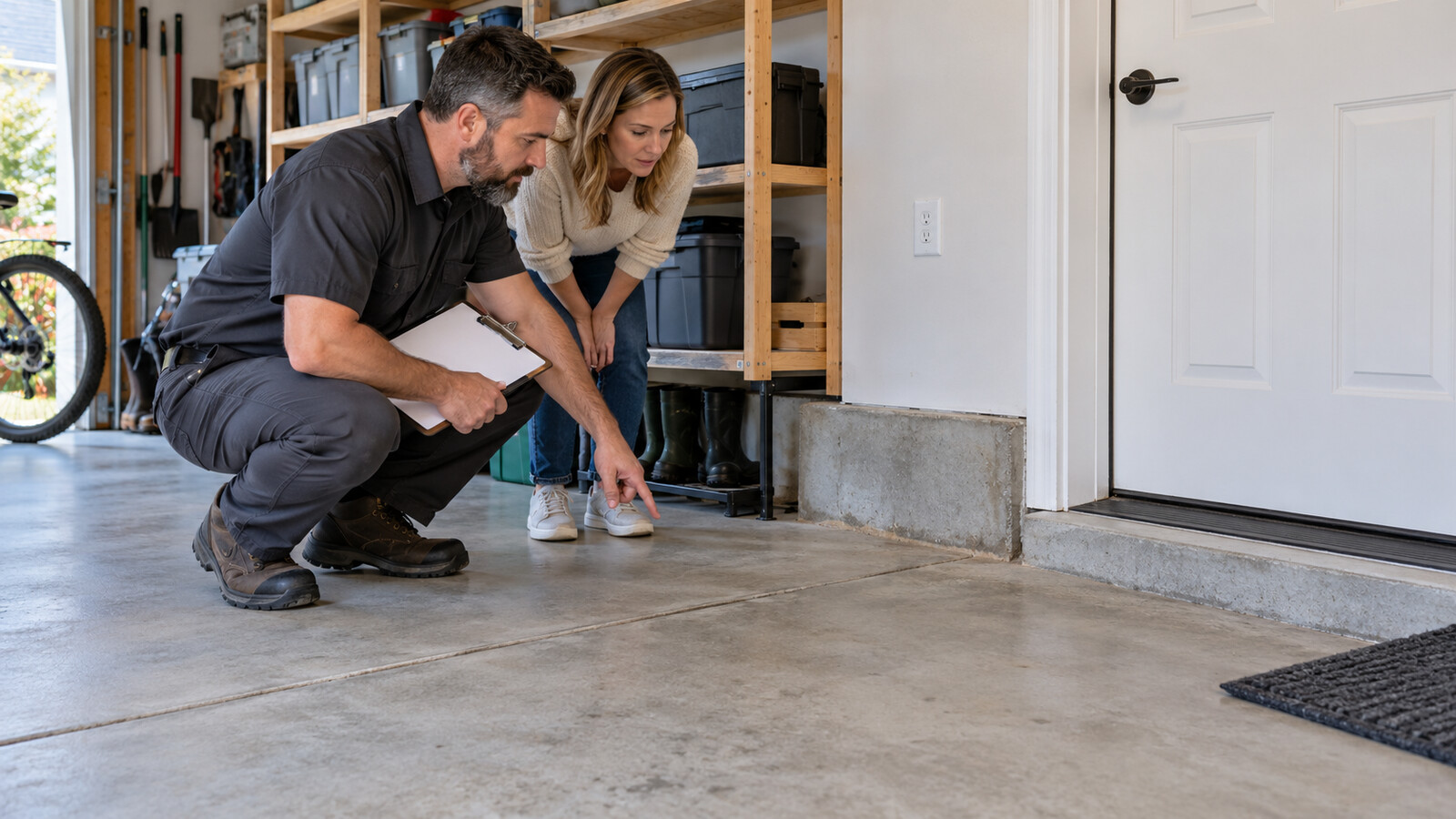
Start with the garage empty enough to see the floor. Note cracks, spalled areas, patched sections, expansion or control joints, coatings and transitions between different surfaces. Photograph existing damage before moving equipment or applying water. Cleaning can reveal a defect that was hidden by dirt, but it does not repair concrete.
Look beyond the slab. Check the height and condition of the interior door threshold, exposed drywall edges, wood trim, low outlets, stored cardboard and any furnace, water heater or other appliance located in the garage. Confirm where water naturally travels when the overhead door is open and whether the floor slopes toward the driveway, a drain or a low spot.
Decide whether pressure washing fits the surface
Sound, uncoated concrete can often be cleaned with controlled pressure, suitable attachments and good water recovery. A painted, sealed or epoxy-coated floor needs a different approach. High pressure can lift a failing coating or damage weak concrete, especially at cracks, edges and patched areas. Test a small, inconspicuous section before committing to the full floor.
Do not wash simply because the calendar says it is time. The garage needs a practical drying window, safe exterior conditions and a clear route for rinse water. If water could freeze at the threshold or on the driveway, or if the slab cannot dry properly, reschedule the work.
Clear storage and identify excluded materials
Move vehicles, floor-level boxes, mats, sports equipment, tools and loose shelving out of the working area. If a heavy rack must remain, raise compatible items onto secure shelves and leave enough space to clean around the feet without spraying stored goods. Keep the driveway and garage entrance clear for hoses, a surface cleaner and water-recovery equipment.
Separate ordinary clutter from materials that require special handling. Fuel, paint, solvents, automotive fluids, batteries, propane cylinders and unknown chemicals should not be treated as routine junk or washed toward the driveway. If a container is leaking, damaged or unidentified, stop and arrange the appropriate specialized service.
Protect the house side of the garage
Close the interior door and protect its threshold without blocking safe access. Keep spray away from outlets, switches, wiring, door hardware, drywall, insulation and appliances. Loose dust and cobwebs can be removed before wet work, but avoid turning the garage into a wash bay from floor to ceiling. The target is the slab.
Plan the hose route so it does not pinch under a door or create a trip hazard. If occupants need to enter or leave through the garage, establish another route or a clear pause procedure. Children and pets should stay out of the work area until the floor is clean, recovered and dry.
Set realistic expectations for oil marks and spills
Surface soil, road grit and loose residue are different from material that has soaked into porous concrete. Older oil marks may lighten without disappearing. A coating may also hold discolouration differently than bare concrete. Identify the type and age of a known spill where possible, then choose a surface-compatible cleaning method rather than increasing pressure.
Active leaks should be addressed before cleaning. Unknown liquids, strong chemical odours or suspected hazardous contamination are not ordinary garage-floor maintenance. Do not combine products or push unidentified residue toward a drain or exterior surface.
Work in controlled zones
Divide the slab into manageable sections. A suitable surface-cleaner attachment can help produce a more even result on compatible concrete while reducing uncontrolled spray compared with a narrow wand pattern. Keep the tool moving, maintain a consistent pace and give extra space to edges, cracks, joints and coatings.
Begin on the house side and work toward the overhead door only when the floor slope supports that direction. Use the least aggressive effective method. Repeated close passes can etch concrete, expose aggregate or create visible cleaning lines without solving a deep stain.
Control water at the garage-door threshold
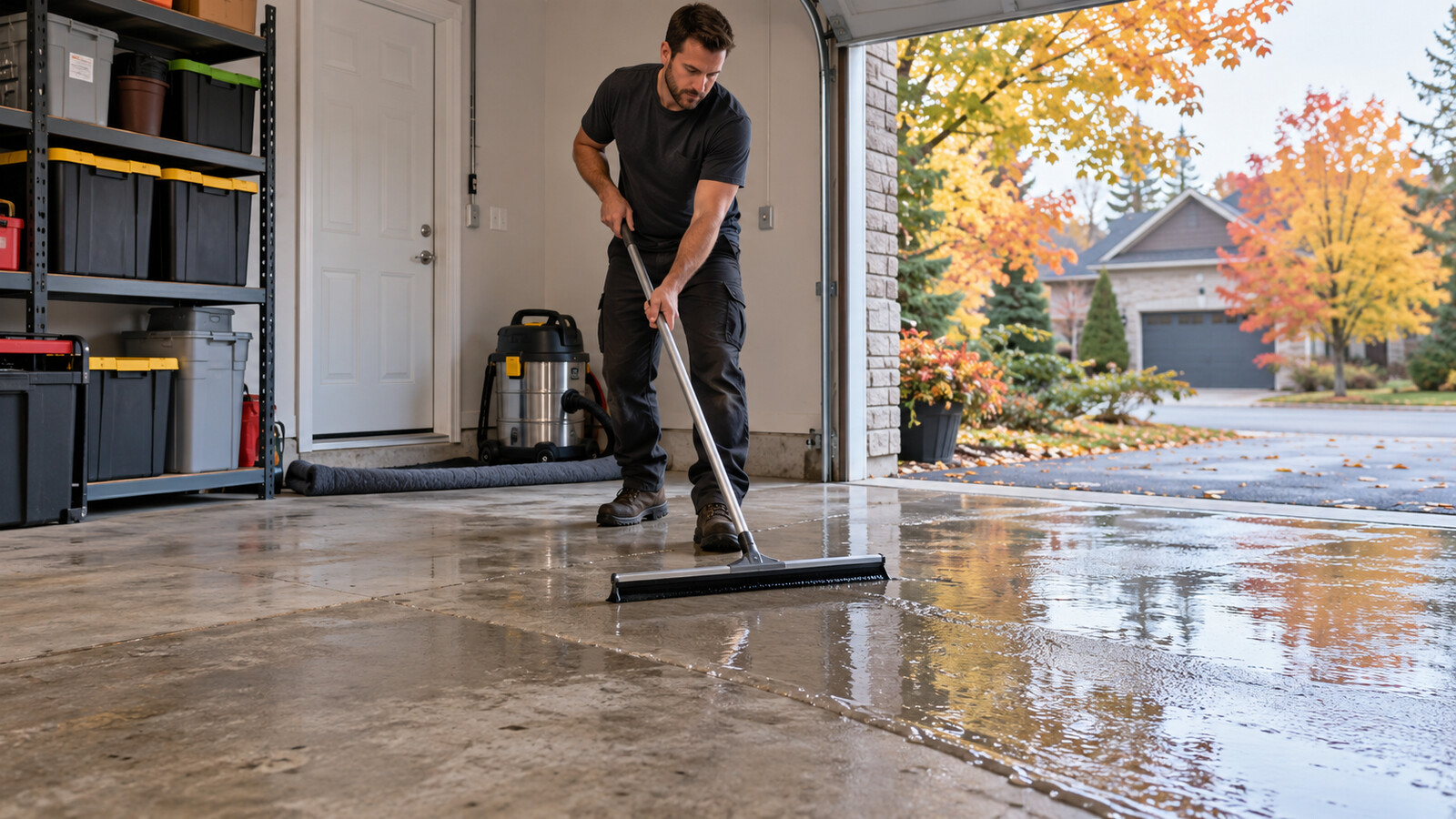
The threshold is where a neat indoor job can become an outdoor mess. Use a wide squeegee, wet vacuum or other planned recovery method to keep a shallow, controlled layer of water moving in the intended direction. Do not allow water to pool against the interior door, soak wall edges or run beneath stored items.
Watch the driveway slope and nearby walkways. Keep rinse water away from people, neighbouring areas and any route that must remain open. If the garage has a drain, confirm that it is suitable and functioning before relying on it. A drain is not permission to dispose of unknown residue.
Recover water and let the slab dry
Finish with a clean-water rinse only as needed, then recover standing water. Squeegee low spots and use a wet vacuum where appropriate. Air movement can support drying, but electrical equipment must remain suitable for the location and protected from water. Leave the overhead door positioned for ventilation only when it is safe and supervised.
Do not return cardboard, rugs, wood, upholstered items or tightly packed storage to a damp floor. Moisture can remain in joints and low spots after the surface looks dry. Confirm the slab and protected thresholds are dry before closing the garage for an extended period.
Return storage with winter access in mind
Use the reset to improve access. Keep floor-level storage limited, leave a clear route from the driveway to the house and avoid crowding the overhead-door tracks, electrical panel or appliances. Place absorbent material beneath equipment that has a known tendency to drip, and correct the source rather than treating repeated cleaning as the solution.
For a rental or managed property, photograph the dry floor and note any pre-existing cracks, coating failure or leaks that need separate attention. Pressure washing is cleaning, not concrete repair, waterproofing, mechanical service or hazardous-material remediation. Keeping those scopes separate makes the handoff clearer.
Garage-floor preparation checklist
- Photograph the dry slab, cracks, joints, patches and coatings.
- Check thresholds, wall edges, outlets, appliances and the expected water route.
- Remove vehicles, mats, boxes and loose floor-level storage.
- Separate fuel, paint, solvents, batteries and unknown materials from routine work.
- Confirm the surface is compatible and test an inconspicuous area.
- Protect the interior door and keep spray away from walls and electrical components.
- Plan hoses, equipment and a safe occupant route.
- Work in controlled zones with the least aggressive effective method.
- Use a squeegee or wet vacuum to control rinse water and low spots.
- Allow the slab and thresholds to dry before returning storage.
What to send for a firm quote
Send wide photos of the garage and closer photos of the floor condition, coatings, cracks, oil marks, thresholds and any drain or low spot. Include the approximate garage size, access details, what must remain in place and when the area needs to be ready.
Mattabo Property Care is fully insured for the services it provides. Readers can send photos, their Ottawa address and deadline for a firm quote. Same-day service is often available but is not guaranteed until Mattabo confirms the appointment. A quote request is not a confirmed booking.
To plan garage-floor pressure washing in Ottawa, [contact Mattabo Property Care](/contact) with clear photos and access information. The condition of the concrete, storage layout and water-control route all help define the appropriate scope.
Photos are illustrative examples of typical residential service results.