Pressure Washing
Pressure Washing Ottawa Garbage and Recycling Carts: A Practical Guide to Lids, Wheels, Drainage and Collection Day
A practical Ottawa guide to planning routine pressure washing for empty household garbage and recycling carts, including inspection, access, rinse-water control and drying.
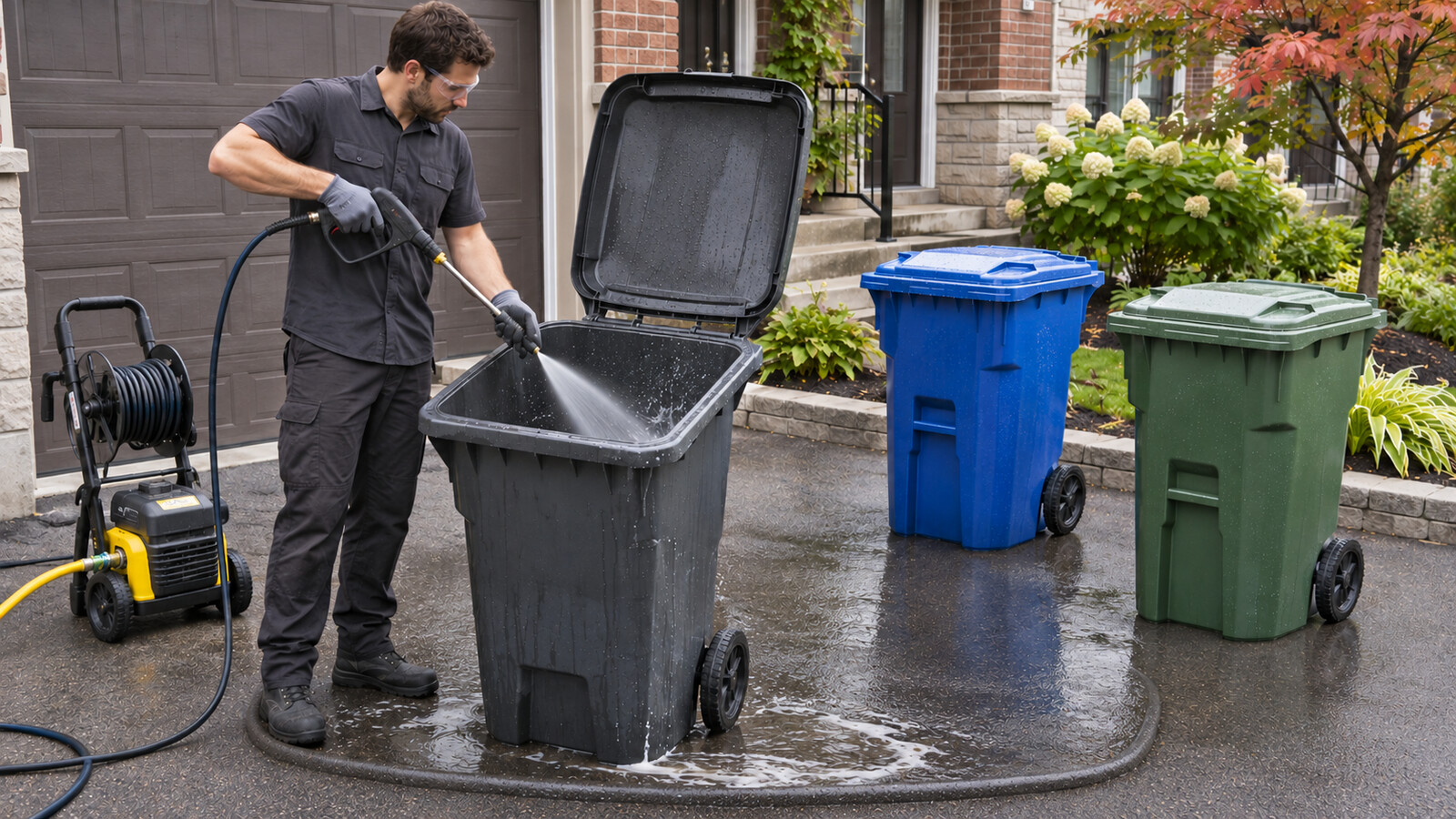
Household garbage and recycling carts spend most of their time outdoors, where lids, handles, wheels and interior corners collect ordinary residue. A routine wash can make the carts easier to handle and store, but the job needs more planning than pointing a pressure-washing wand into an open bin. Collection timing, cart condition, runoff, drying and the work location all affect the scope.
For Ottawa homeowners and property managers, the best starting point is an empty cart and a clearly defined service area. The goal is routine exterior cleaning of ordinary non-hazardous residue—not pest treatment, hazardous-waste handling, sewage clean-up or restoration of a damaged cart.
Schedule the wash after collection, not before
Plan the appointment for a time when the carts are genuinely empty. Loose bags, cardboard and recycling should not be removed by a pressure-washing crew unless ordinary junk removal is separately confirmed. An almost-empty cart can still hide glass, sharp metal, batteries, liquids or other items that should be sorted before any water is introduced.
If carts are shared by tenants, confirm who is responsible for emptying them and where they can be taken out of service. Property managers should leave enough time for washing, drainage and drying before the next collection cycle. Do not block a shared waste route or leave residents without the approved number of usable carts.
- Confirm the carts are empty and accessible.
- Remove loose ordinary debris using appropriate gloves and tools.
- Keep glass, batteries, chemicals and sharp objects out of the wash area.
- Record which carts belong to the property before moving them.
- Plan enough time for drainage and drying before the carts return to use.
Inspect the cart before applying pressure
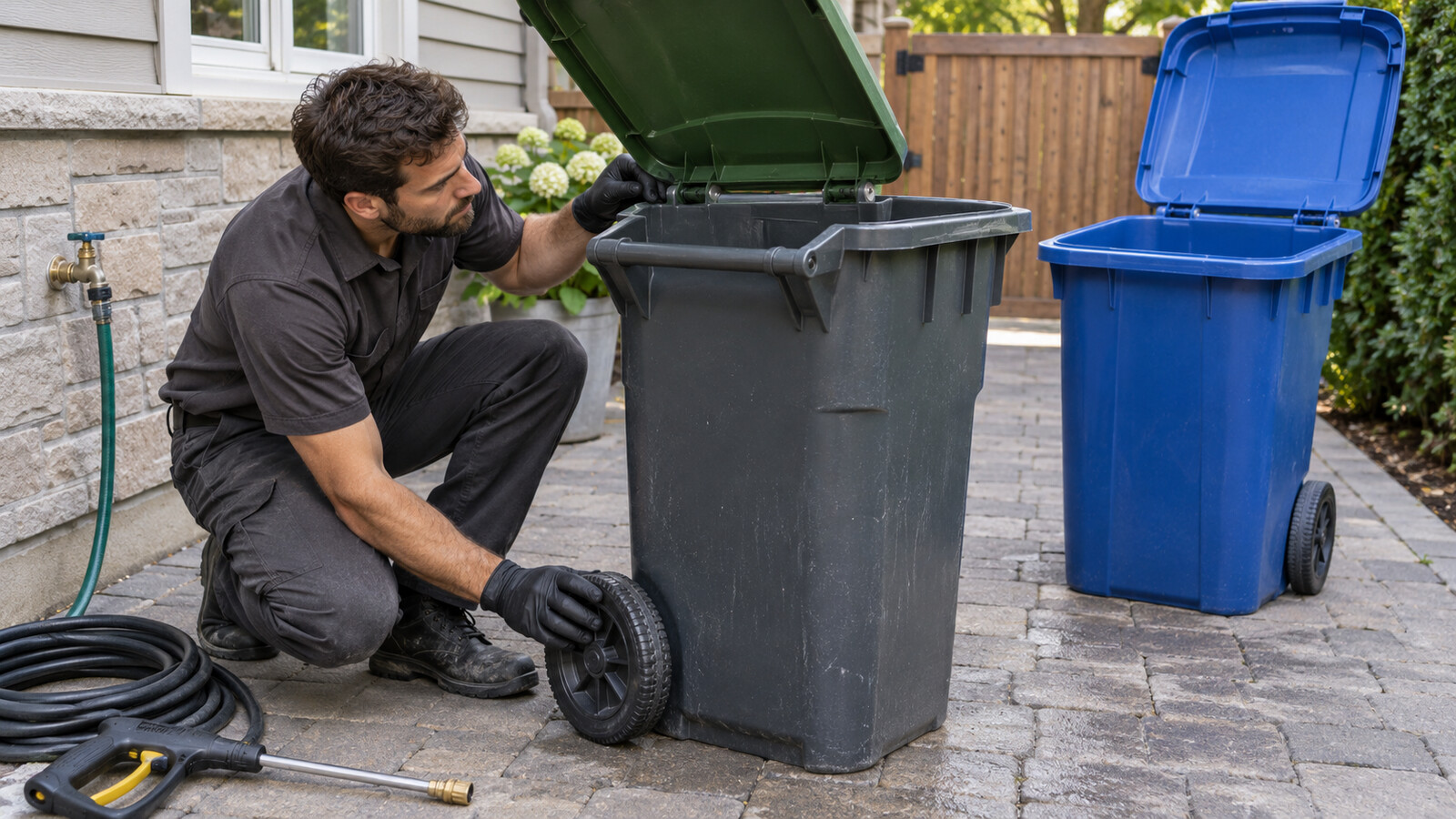
Check each cart from lid to wheels. Look for cracked plastic, missing hinge pins, loose axles, damaged handles, split seams and wheels that no longer turn freely. Photograph existing damage before cleaning. Pressure washing cannot repair a warped lid or broken wheel, and a weakened cart should not be moved or sprayed as though it were sound.
Identify any labels, serial numbers or property markings that need to remain legible. These areas may require a gentler method. Also check whether the cart includes vents, drainage holes or removable components. Do not drill holes, alter the cart or remove fixed parts simply to make water drain faster.
Know what does not belong in a routine cart wash
Stop and arrange appropriate handling if a cart may contain hazardous chemicals, medical waste, needles, sewage, animal waste, unknown liquid, fire residue, mould growth or significant pest activity. Do not spray questionable material to see whether it rinses away. Water pressure can spread contamination beyond the cart and turn a contained problem into a larger one.
Strong or unusual odours also deserve attention before work begins. Ordinary food residue is different from an unknown chemical smell or a condition suggesting contamination below a false bottom or inside a damaged seam. When the source is unclear, the correct next step is assessment—not a stronger spray.
Choose a stable work area with controlled access
Use a level or gently sloped hard surface with enough room to open lids, rotate carts and handle equipment without blocking doors, sidewalks or parking. The route from the storage area should be clear of steps, vehicles, toys and landscaping. On a multi-unit property, separate the work zone from tenant traffic and post any required building notice.
Confirm access to a suitable exterior water source and power if the equipment requires it. Hoses and cords should run along the edge of the work area rather than across the normal walking path. Carts can become awkward when wet, so keep them upright and move one at a time.
Match pressure and technique to the plastic
Plastic carts can be marked or damaged by an overly aggressive nozzle, a very close spray or prolonged pressure on one point. A controlled approach starts with a suitable test area and enough distance to clean without cutting into the surface. Hinges, labels, wheel hubs and thin edges usually need extra care.
Work from the upper interior surfaces toward the base so loosened residue moves in a predictable direction. Clean the underside of the lid, handles and accessible wheel areas without aiming water into bearings or forcing damaged components. Products, if used, should be compatible with the cart material and the ordinary residue being addressed.
- Inspect and photograph the empty cart.
- Set the work zone and protect nearby doors, vehicles and landscaping.
- Loosen ordinary debris before applying water.
- Clean the lid, interior walls, base, handles and accessible wheel areas in a controlled order.
- Rinse without directing water outside the contained area.
- Drain, inspect and leave the cart open to dry where it cannot tip or block access.
Plan rinse-water control before the first cart is opened
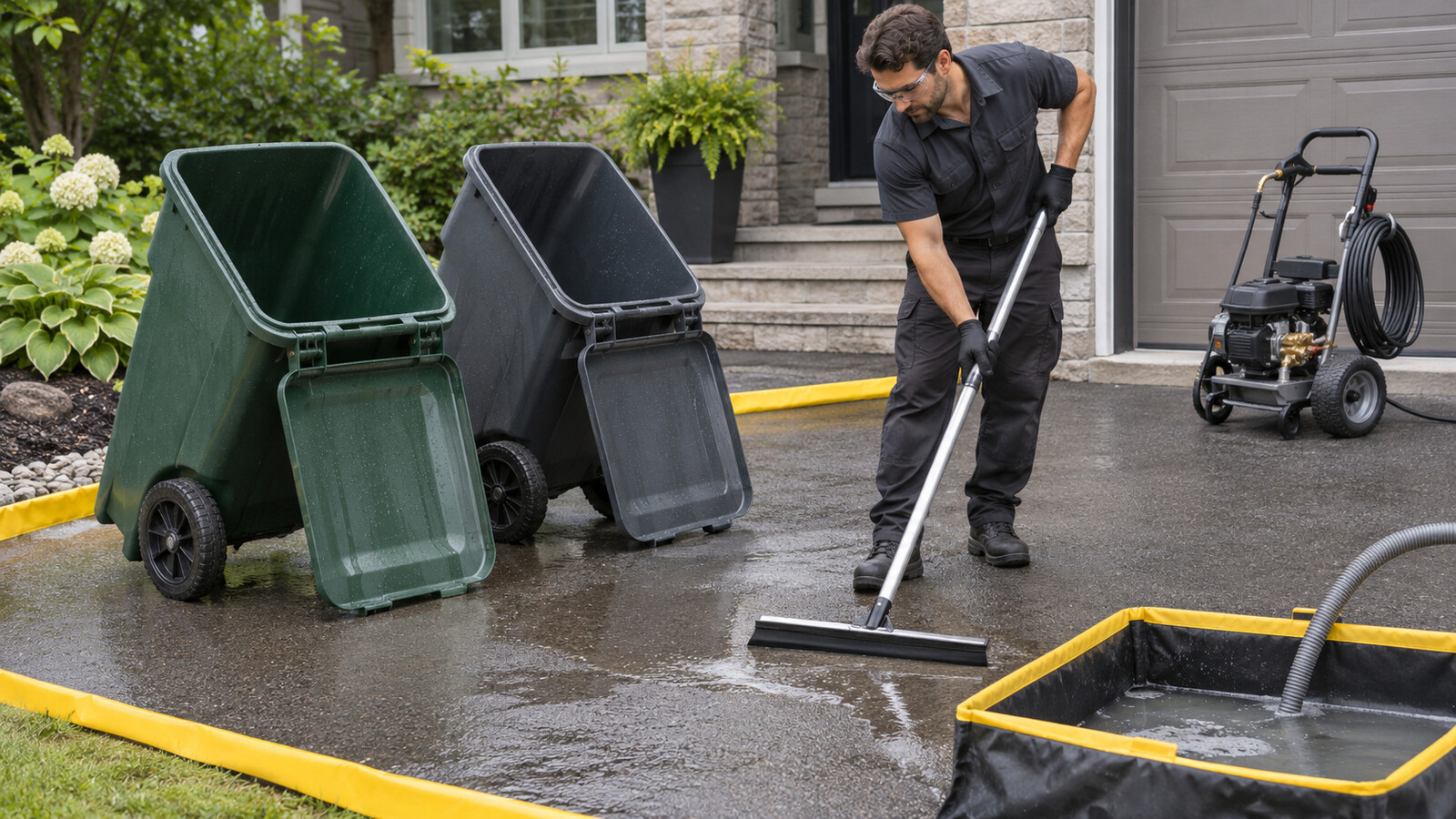
Rinse water should not simply be allowed to run wherever the driveway slopes. Before washing, identify nearby doors, gardens, neighbouring properties, catch basins and storm drains. Use the work area's containment and collection approach to keep ordinary residue and wash water from leaving the confirmed zone.
The right method depends on the property layout, surface and residue. It may include low-profile barriers, wet-vacuum recovery, absorbent materials or another appropriate collection method. Do not direct dirty water into a storm drain, across a public sidewalk or onto a neighbour's property.
Protect landscaping, finishes and nearby property
Move carts away from garage doors, painted trim, vehicles, stored items and delicate plants. Spray can carry grit farther than expected, especially from inside a deep cart. Close nearby windows and keep people and pets out of the work zone until equipment is off and walking surfaces are no longer slippery.
Check pavement joints, asphalt condition and interlock sand before work begins. A pressure-washing method that is suitable for the cart may not be suitable for the surface below it. The scope should identify both the item being cleaned and the area used to clean it.
Drain and dry carts without creating a new obstruction
After rinsing, allow each cart to drain in the contained work area. Position the lid so air can circulate while keeping the cart stable. Do not leave a large cart balanced upside down where wind, a slope or passing traffic could move it. Return carts to their storage position only when dripping will not create a slippery route.
Cold or freezing conditions change the safety of the work area. If rinse water could freeze on pavement or equipment cannot be used within its operating requirements, reschedule rather than creating an icy surface. Same-day availability does not replace a safe weather and site assessment.
What to send for a firm cart-washing quote
Send photos showing all carts, their lids, wheels, interiors and the route from storage to the proposed wash area. Include the Ottawa address, number and size of carts, whether they are shared, the collection schedule, water and power access, driveway or service-area surface, nearby drains and the deadline.
Mention broken parts, strong odours, unknown residue, pest activity or anything that may place a cart outside routine cleaning. Clear information helps confirm whether the request is suitable for ordinary pressure washing or needs a different service.
A useful cart wash starts with empty containers, sound components and a controlled work area. When collection timing, pressure, rinse water and drying are planned together, homeowners and property managers can reset ordinary carts without spreading residue or creating a new access problem.
The images in this article are illustrative examples and do not show an actual Mattabo Property Care job.
Photos are illustrative examples of typical residential service results.