Pressure Washing
Pressure Washing Garbage and Recycling Enclosures in Ottawa: A Property Manager’s Planning Guide
A practical Ottawa guide to planning garbage and recycling enclosure pressure washing around bin access, concrete condition, runoff and resident traffic.
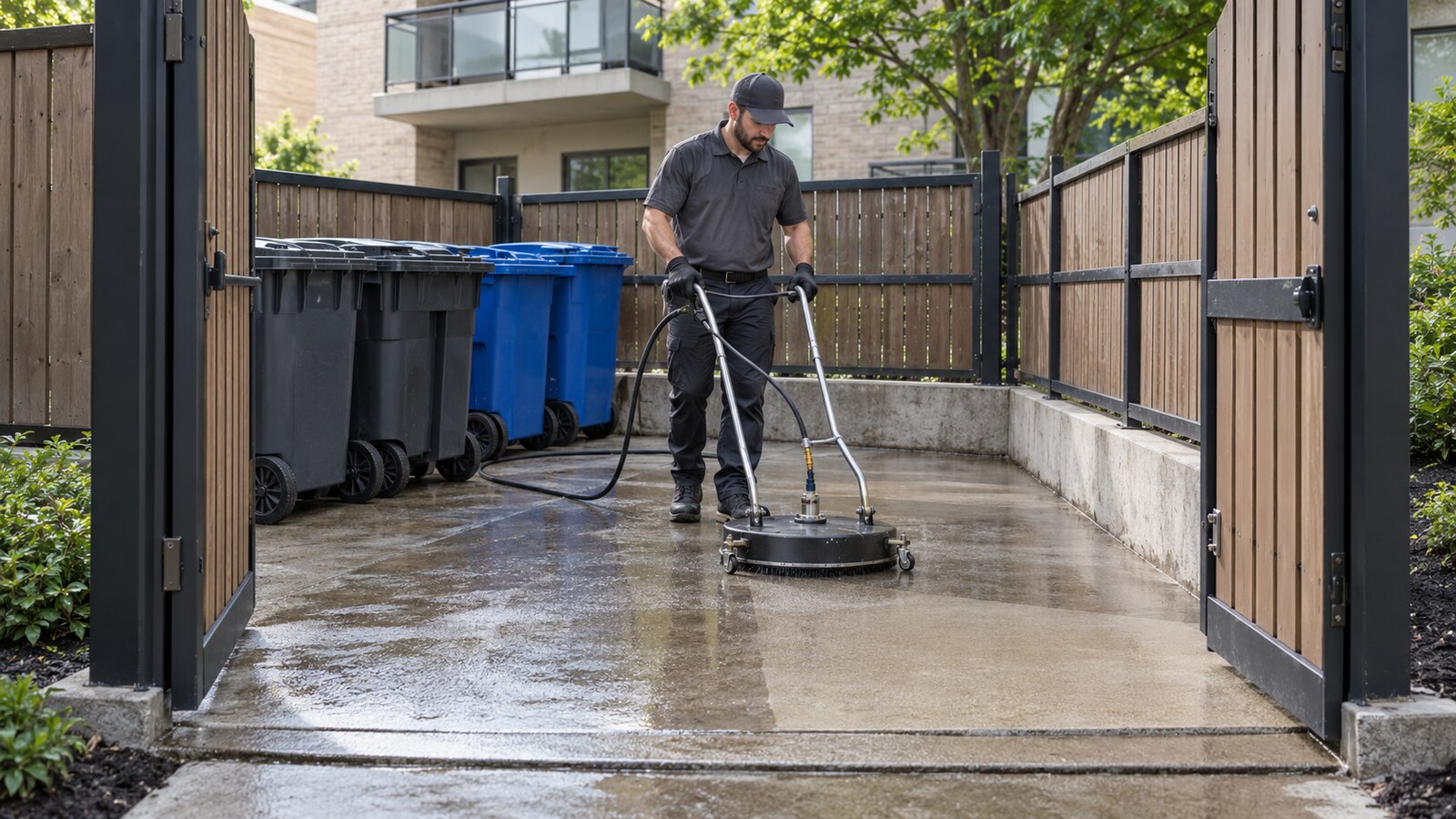
Garbage and recycling enclosures are small work areas with several competing demands. Bins must remain available, collection vehicles need access, residents may pass nearby, and the concrete pad can contain spills or residue that should not simply be pushed somewhere else. For an Ottawa property manager, useful pressure washing starts with scheduling and inspection rather than maximum pressure.
A clear plan protects the property and keeps the service within an ordinary exterior-cleaning scope. It should identify what is being cleaned, who will move the bins, where water can go, and which conditions need a different contractor or specialist.
Confirm the exact enclosure and surface
Begin by separating outdoor enclosures from indoor garbage rooms, loading areas and compactor rooms. These spaces can have different ventilation, drainage, electrical and access conditions. An outdoor concrete pad that can be cleared safely is not the same project as an enclosed room containing fixed equipment.
List the surfaces in scope: the horizontal concrete pad, curbs, gate threshold, lower wall or fence panels, and any short approach walkway. Note whether the bins themselves are included. Washing the pad does not automatically include opening, tipping or cleaning containers.
Photograph the entire enclosure with the gates open and closed. Include the route from the service vehicle, nearby doors, landscaping, parking stalls and any place where hoses would cross pedestrian or vehicle traffic.
Schedule around collection and resident access
The simplest working window is usually when the area can be cleared without interfering with collection. Confirm the building’s collection schedule, but also allow for delays or containers that return at a different time. The property manager should decide where bins can be staged and how residents will be directed while the enclosure is unavailable.
Do not block a fire route, accessible path, loading bay or neighbouring property with temporarily moved containers. Keep lids closed and wheels secured on stable ground. If bins are too heavy, damaged or connected to fixed equipment, change the plan instead of forcing them into a temporary location.
Choose one onsite contact who can confirm access, approve exclusions and answer questions about unexpected material. Gate keys, fobs, parking permissions and water access should be arranged before the appointment.
Inspect the pad before moving any bins
Look at the concrete while the area is still in its normal condition. Identify cracks, loose patches, failed joints, damaged curbs, uneven thresholds and areas where water already collects. Pressure washing will not repair those problems, and aggressive work at a damaged edge can make deterioration more noticeable.
Check gates, hinges and latches so they do not swing into the operator or equipment. Note electrical outlets, exterior fixtures, door seals and wall penetrations. Damaged electrical covers or exposed wiring require attention from a qualified professional before water is introduced nearby.
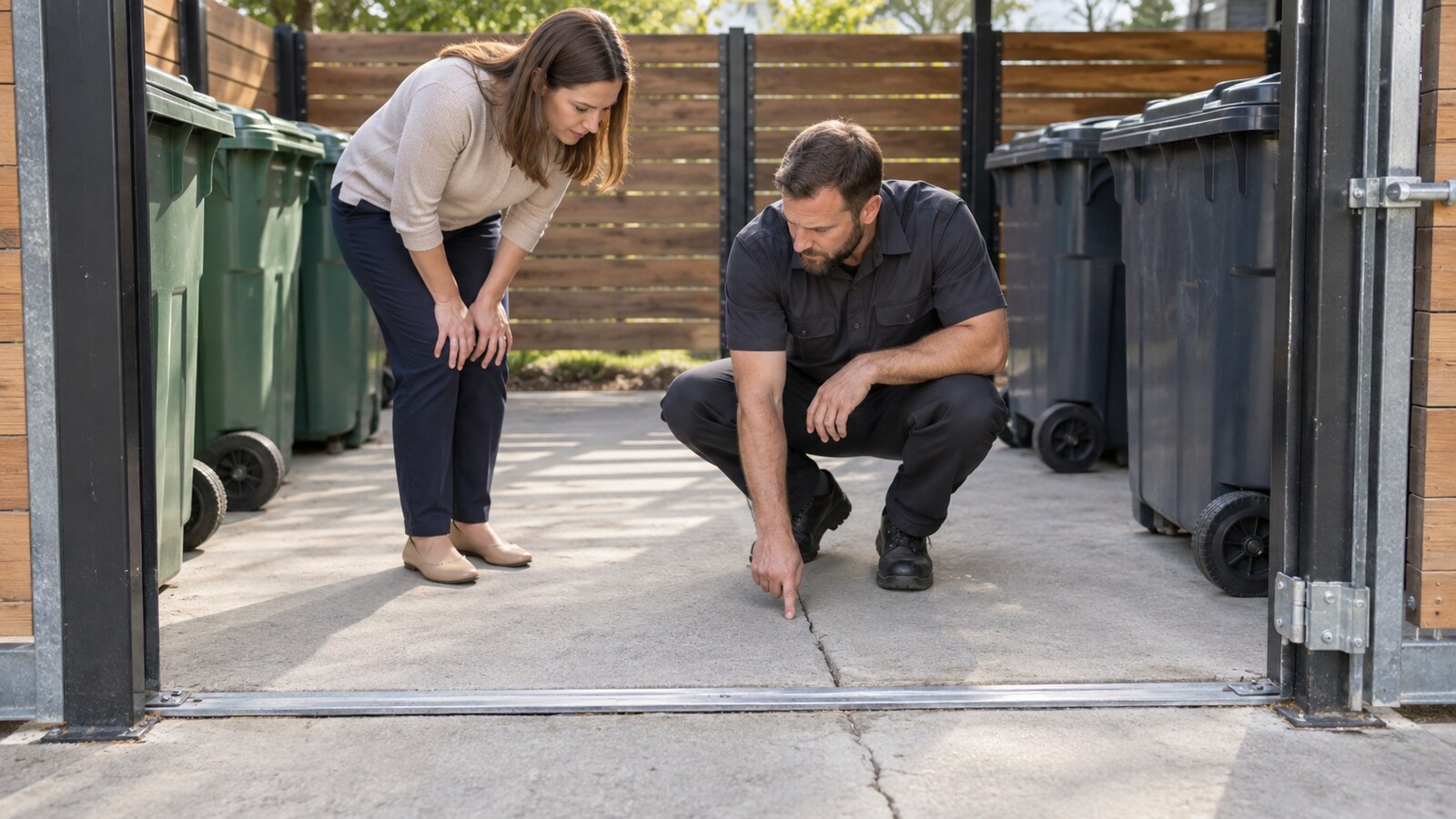
Identify the residue on the pad. Ordinary dust, leaves and light organic grime can fit a routine exterior-cleaning plan. Unknown liquids, fuel, paint, chemicals, sharps, biological waste, significant pest contamination or other hazardous material should be isolated and directed to the appropriate specialist rather than washed.
Remove loose material before pressure washing
Pick up ordinary non-hazardous loose waste before using water. Sweep leaves, grit and small dry debris into suitable containers. Pressure washing is not a substitute for garbage removal, and spraying loose material can send it under gates, into landscaping or across a parking area.
Keep waste streams separate according to the property’s current system. Do not transfer loose garbage into a recycling container merely to clear the pad. If bulky abandoned items are present, photograph them and obtain clear removal authorization before the service date.
Plan cleaning products and runoff before work begins
Map the slope of the pad and identify every drain, low point, gate opening and landscape edge. The property manager should confirm the site’s current drainage and environmental requirements. Never assume that an unknown drain is the right destination for wash water or residue.
Choose cleaning products for the confirmed surface and ordinary soil, then follow their directions. Protect nearby plants, painted panels, metal gates and adjacent finishes where necessary. If runoff cannot be controlled within an appropriate plan, reduce the scope or use a different cleaning method.
Photograph oil-like marks, unidentified staining or leaking containers before moving anything. A pressure washer should not be used to spread a substance that has not been identified.
Use the least aggressive effective method
Start with an inconspicuous test area. A suitable cleaning solution, controlled dwell time and mechanical agitation can reduce the pressure needed. On a sound flat pad, a rotary surface cleaner may help maintain a more consistent working distance than repeated wand passes.
Work in manageable sections and keep hoses away from gate hinges, wheels and walking routes. Avoid concentrating spray on cracked concrete, failed joints, loose coatings or soft mortar. Vertical surfaces, metal panels and painted finishes may require a different nozzle, distance or method from the concrete floor.
Set realistic expectations for permanent discolouration, rust, worn coatings and deep oil penetration. Routine pressure washing can remove ordinary surface soil; it cannot restore damaged material or guarantee removal of every mark.
Finish with controlled water removal and a handoff
After the final rinse, remove unnecessary standing water with a suitable squeegee or recovery method for the site. Keep the gate and approach route open while surfaces are wet, and do not return bins until the pad is ready for normal use.
Coil hoses, remove protective materials and inspect the threshold, gates and surrounding pavement. Confirm that residue has not been pushed into nearby landscaping, onto parked vehicles or beyond the agreed work area.
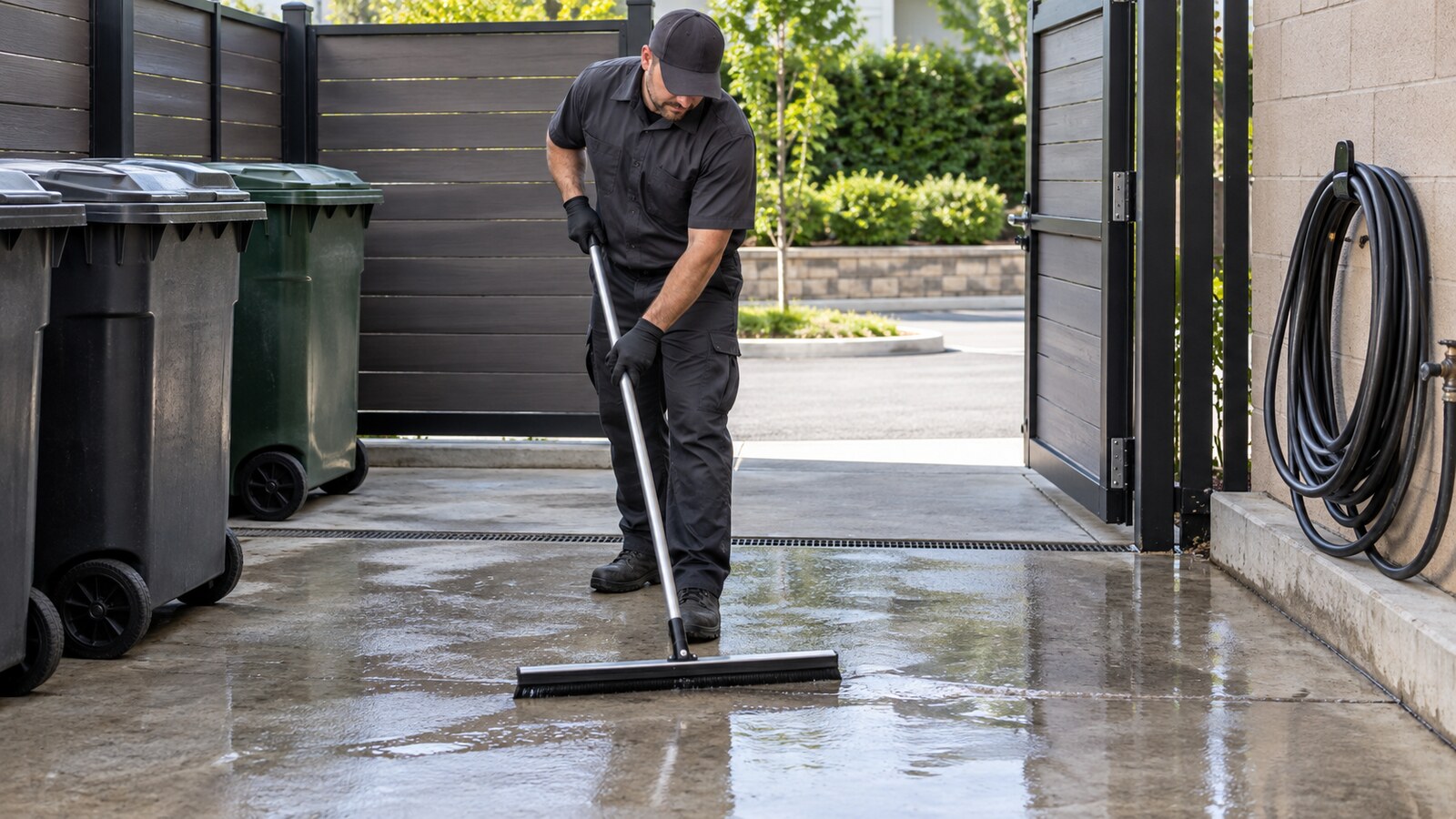
Walk the area with the onsite contact or provide completion photos. Record any cracked concrete, broken gate hardware, leaking container or excluded stain that needs maintenance or specialist attention. Return bins to their approved positions without blocking gates or access.
Garbage enclosure pressure-washing checklist
- Confirm whether the area is an outdoor enclosure or an indoor garbage room.
- Define whether the pad, walls, gates, approach and bins are included.
- Schedule around collection, deliveries and resident access.
- Choose a safe temporary location for closed bins.
- Photograph concrete damage, fixtures, residue and drainage points.
- Remove ordinary loose waste and debris before introducing water.
- Exclude unidentified, hazardous or contaminated material.
- Confirm the water source, hose route and runoff plan.
- Test the cleaning method on a small area first.
- Complete a final inspection before reopening the enclosure.
What to send for a firm quote
Send wide photos of the enclosure and approach, close-ups of the concrete condition and residue, the number and approximate size of bins, gate access, water access and the proposed service window. Include any collection timing, parking limits, resident notices or building rules that affect the work area.
Mattabo Property Care is fully insured for the services it provides.
Same-day service is often available but is not guaranteed until Mattabo confirms the appointment.
Readers can send photos, their Ottawa address and deadline for a firm quote.
A quote request is not a confirmed booking.
Photos are illustrative examples of typical residential service results.