Seasonal Property Care
Ottawa Guest Room Clean-Up Before Holiday Visitors: A Practical Plan for Storage, Linens and Clear Access
A practical Ottawa guide to turning a guest room back into a usable bedroom by sorting stored items, preparing linens and keeping the route from the doorway clear.
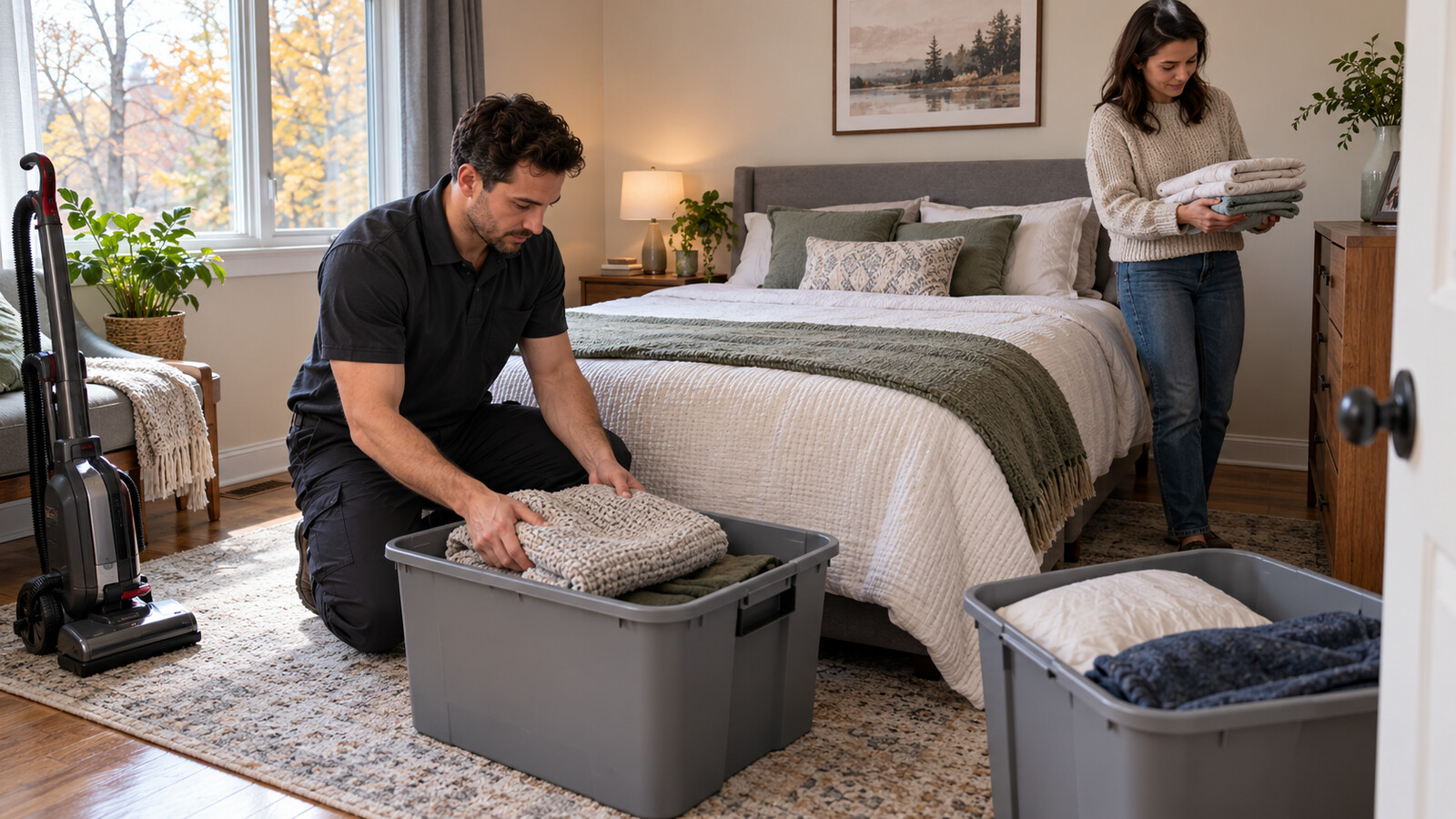
A guest room can become the easiest place to put anything that does not have a permanent home. Seasonal decorations, extra bedding, unopened boxes, small furniture and donation bags can all collect there quietly. Then visitors are expected, and the room needs to work as a bedroom again without simply moving the same clutter into a hallway or basement.
The most useful approach is to decide what the room must provide, sort ordinary items before cleaning, and protect a clear route from the door to the bed. For Ottawa homeowners preparing for holiday guests, an organized sequence is usually more effective than trying to finish the entire room in one rushed evening.
Define the room's job before moving anything
Start with a short list of what a visitor will actually need: a usable bed, space to set down a bag, a clear walking route, working lighting and access to a door or window without stored items in the way. If the room also has to keep some household storage, choose one contained storage zone instead of letting boxes spread around every wall.
Set a practical finish line. The goal is not to make the room look like a hotel or to remove every personal item. It is to create a clean, comfortable and functional space. Decide which furniture stays, where kept items will go and what must leave the room before the first box is moved.
Use four sorting groups
Sort the room into four groups: keep in the guest room, relocate elsewhere in the home, donate or give away, and remove as approved ordinary junk. Keep these groups physically separate. A labelled note placed beside each group can prevent family members from mixing decisions, but remove or cover personal labels before anyone photographs the finished room.
Open uncertain boxes rather than moving them blindly. Paper records, photographs, medication, electronics, jewellery and other valuables should remain under the owner's control. Mattabo can help move agreed furniture, gather approved ordinary non-hazardous items and remove an agreed junk list, but the owner should decide what is kept, donated or discarded.
Deal with bulky items early
A spare dresser, chair, small desk or bed frame can determine the entire layout. Measure doorways and the route to the intended destination before lifting. Remove drawers where appropriate, secure movable parts and clear small trip hazards first. Do not stack furniture in a stair landing or shared corridor while deciding where it belongs.
If an item is unusually heavy, unstable, attached to the building or beyond the agreed crew capability, pause and choose the appropriate mover or specialist. Ordinary junk removal should not turn into improvised disassembly of a fixture, electrical equipment or built-in cabinetry.
Prepare linens as a separate task
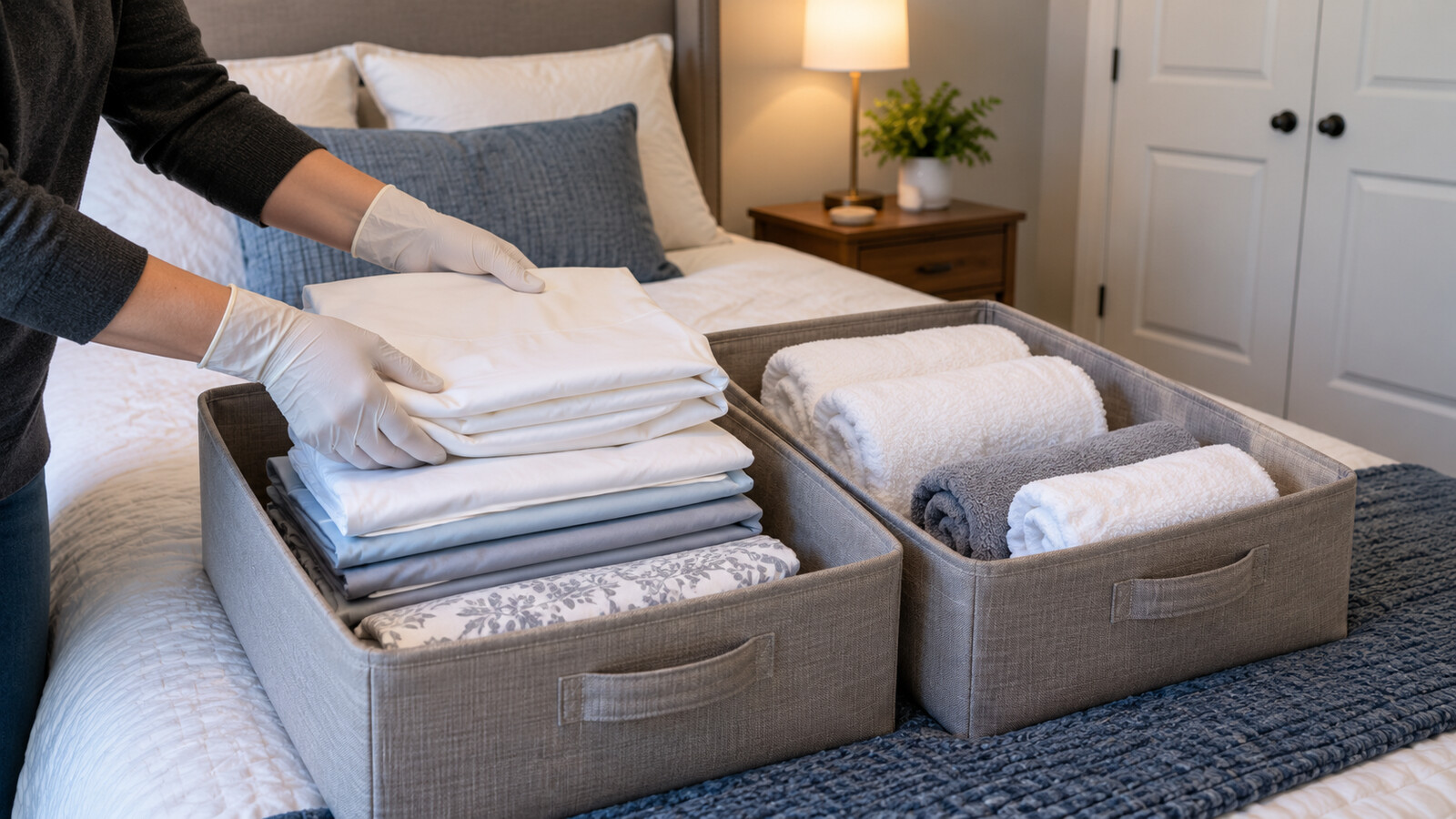
Keep guest linens out of the general sorting pile. Check that sheets fit the bed, assemble pillowcases and towels as complete sets, and place clean items in a dry container or closed cupboard until the room is ready. Extra blankets should be easy to reach without requiring a visitor to open boxes of household storage.
Inspect mattresses, pillows and fabric furniture before making the bed. If there is an unexplained odour, visible damage, suspected pests or dampness, stop and address the cause through the appropriate service rather than covering it with fresh bedding. Routine clean-up does not include pest treatment, mould work or restoration.
Clean in an order that avoids repeat work
Once sorting and furniture decisions are complete, dust accessible high surfaces, wipe suitable furniture, clean baseboards where needed and finish with the floor. Use methods appropriate for each finish. Cleaning around boxes that will be moved later usually creates extra work and leaves missed strips along walls and under furniture.
Check the bed frame, nightstand, lamp and any luggage surface while they are accessible. Keep cords close to the wall and avoid placing a power bar or extension cord across the walking route. Do not block a heat register, radiator, closet door or other feature that needs normal clearance.
Protect a clear route from the doorway
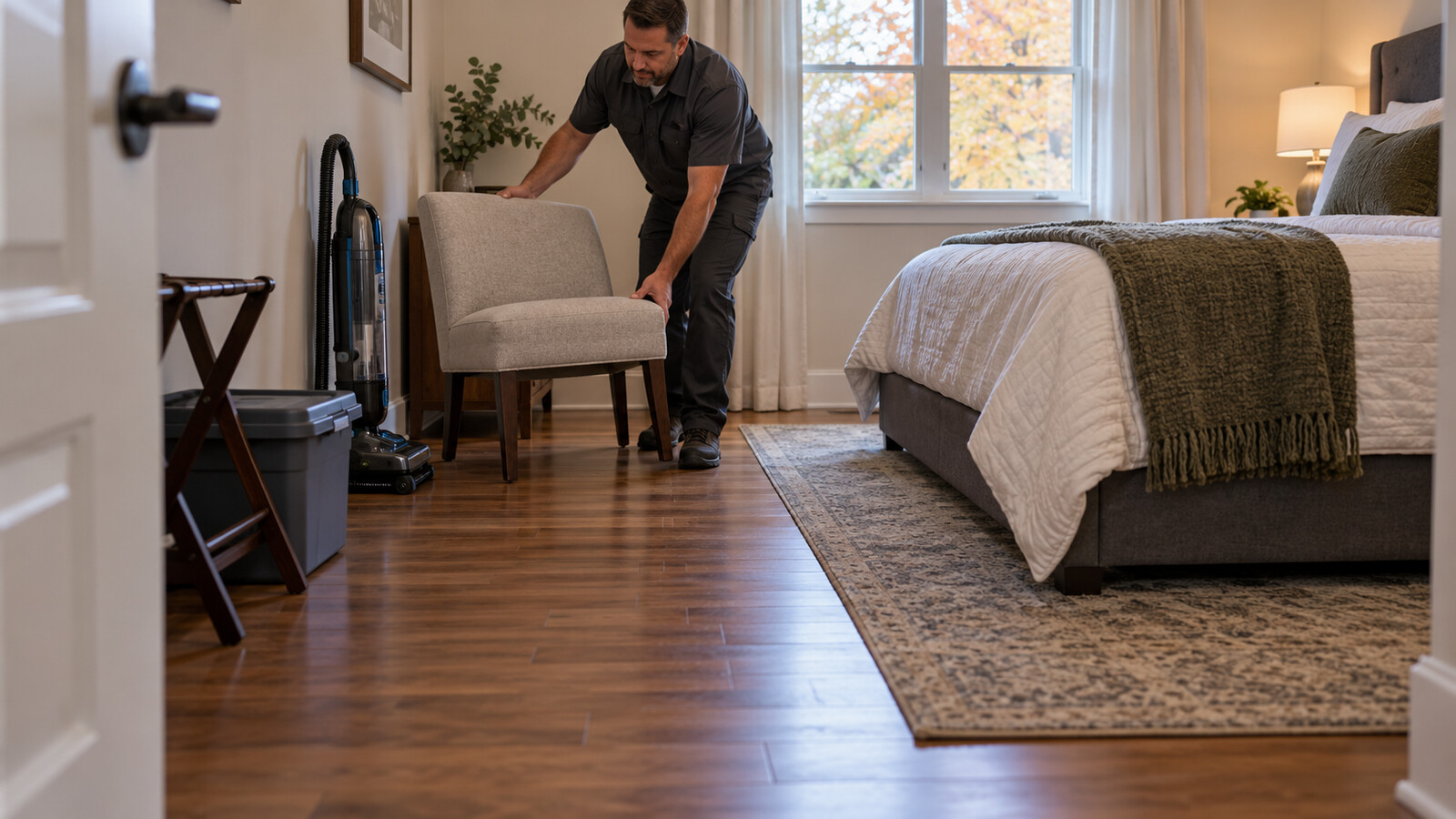
Walk the route from the bedroom door to the bed as if carrying an overnight bag. Move small stools, laundry baskets and loose containers out of that path. Make sure the door opens properly and that stored items do not narrow the approach to the bed. A chair or luggage rack is useful only if it does not create a pinch point.
If an older visitor, child or anyone with limited mobility will use the room, ask them or the host what layout is appropriate rather than guessing. Leave enough space for their needs and keep the floor dry and free of loose rugs or other avoidable trip hazards.
Give kept storage clear boundaries
Some guest rooms still need to store household items. Use a defined closet section, closed bins or one shelving area, and avoid putting loose items under every piece of furniture. Keep anything needed during the visit accessible elsewhere so the host is not repeatedly entering the room to retrieve it.
Do not use the room for hazardous products, leaking containers, paint, fuel, propane cylinders or unknown materials. Those items require appropriate storage or disposal decisions outside an ordinary interior clean-up. Tell the service provider in advance if any questionable material is present so it is not included by assumption.
Plan condo and townhouse access
For a condo, confirm elevator, loading and common-area rules before furniture or junk is moved. Protect corridors, keep exits open and avoid leaving bins in a lobby. In a townhouse, check tight corners, stair widths and the final route to the vehicle. Photos of these access points help define the work before arrival.
Choose one person to approve the item list and provide access. If relatives are helping remotely, settle uncertain decisions before the appointment rather than asking the crew to wait while several people compare messages. A clear scope keeps the room reset focused and avoids accidental removal.
Do a simple final walkthrough
After the room is cleaned and arranged, open and close the door, test the main light, check the route around the bed and confirm that the guest can reach their belongings without shifting storage. Look at the room from the doorway and remove any last visual obstruction that also makes access awkward.
Keep the final day for bedding and small details, not heavy furniture or uncertain junk decisions. Finishing the sorting and removal earlier gives the room time to stay organized and makes it easier to notice anything that still needs attention before visitors arrive.
Send enough detail for a firm quote
Send wide photos from the doorway, closer views of the stored items, an itemized list of furniture or ordinary junk to move, and the destination for anything staying in the home. Include stairs, elevators, parking or loading limits and the date by which the room must be ready.
If the scope includes cleaning as well as moving or removal, identify the surfaces and furniture involved. Say which items have already been approved for disposal and which remain undecided. This helps the quote reflect the actual work instead of a room that changes when the crew arrives.
Photos are illustrative examples of typical residential service results.