Junk Removal
Ottawa Home Gym Cleanout and Equipment Removal: A Practical Guide to Weight, Flooring and Access
A practical Ottawa guide to sorting home-gym equipment, handling dense weights, protecting floors and planning a clear removal route through stairs and doorways.
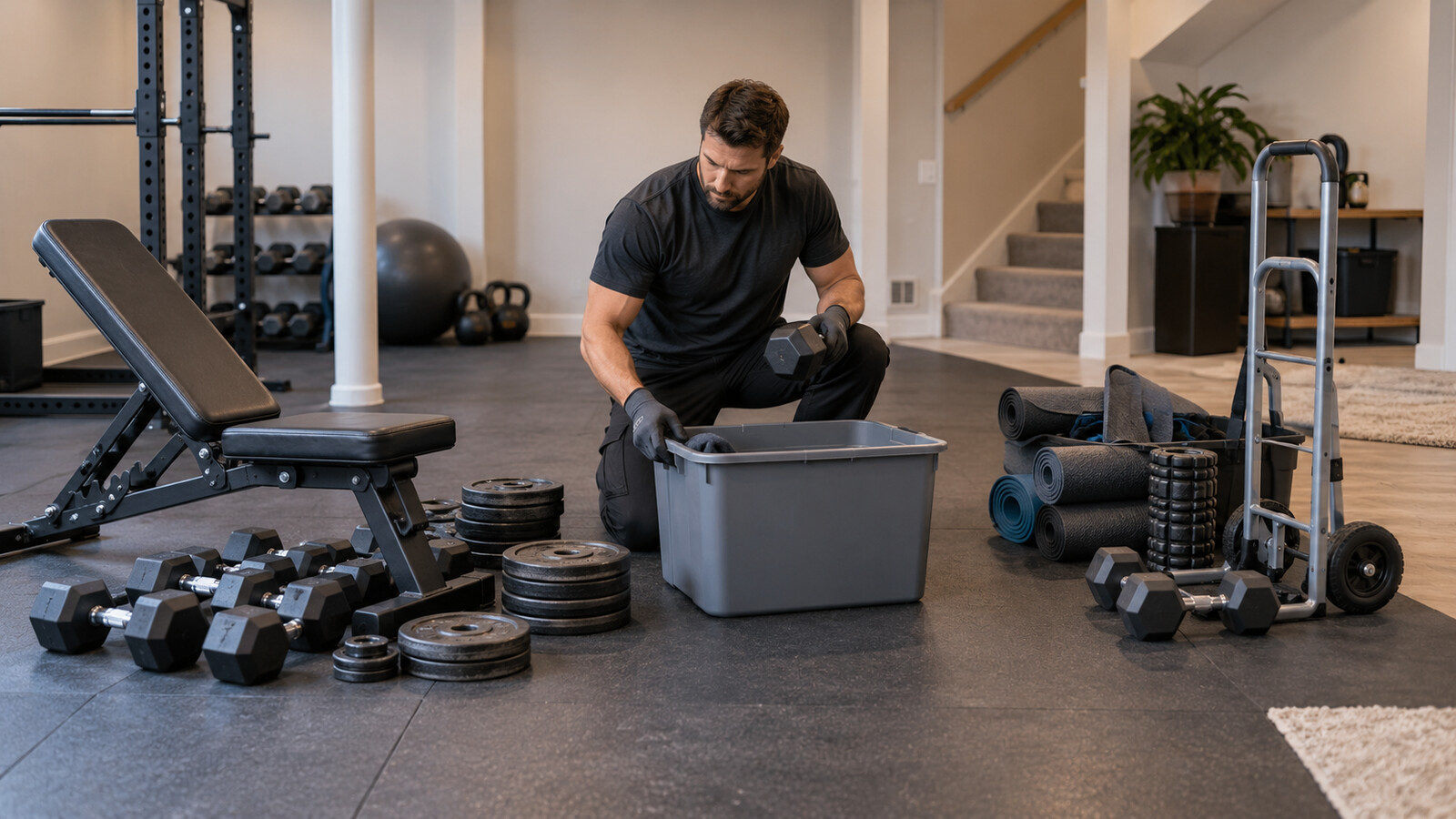
A home gym can become one of the hardest rooms to clear because a small footprint may hold a great deal of weight. Dumbbells, plates, benches, mats, racks and cardio equipment all require different handling. The project is not simply a matter of carrying everything upstairs.
For Ottawa homeowners, sellers and property managers, a useful home-gym cleanout starts with a complete inventory and a realistic route assessment. Dense items need controlled loads, equipment needs to be released by its owner, and finished flooring, walls and stairs need protection from the room to the exit.
Inventory every piece before moving anything
Photograph the room from several angles, then list the major equipment and smaller accessories. Include weight ranges or labelled plate sizes where known, but do not guess. Note whether benches fold, racks are anchored, machines use electricity and any equipment is already damaged or unstable.
Keep manuals, adjustment pins, collars, bolts, safety catches and power cords with the correct item. Small parts are easy to lose when everything is placed in one open bin. If equipment may be sold, donated or reassembled elsewhere, a complete hardware set matters.
Create clear keep, transfer and removal groups
Separate equipment that will remain in the home, items being moved to another room, pieces going to a confirmed buyer or recipient, and ordinary non-hazardous material approved for removal. Use distinct zones rather than relying on verbal instructions during loading.
A removal provider should not decide whether a working machine, branded plate set or personal training item has value. If the owner has not made a decision, place the item in a hold area. Confirm any donation destination and its current acceptance requirements before removal day; acceptance should never be assumed.
Record equipment condition and ownership
Photograph torn upholstery, cracked plastic, rust, missing fasteners and any unstable component before handling begins. Record which attachments belong with each machine. In a rental or shared building, confirm who owns wall-mounted bars, mirrors, floor tiles and equipment left by a previous occupant.
Do not detach wall-mounted or floor-anchored equipment until the owner has confirmed the scope and an appropriate person has assessed the connection. Removal of ordinary loose equipment is different from structural work, electrical disconnection or repair.
Measure equipment and the complete exit route
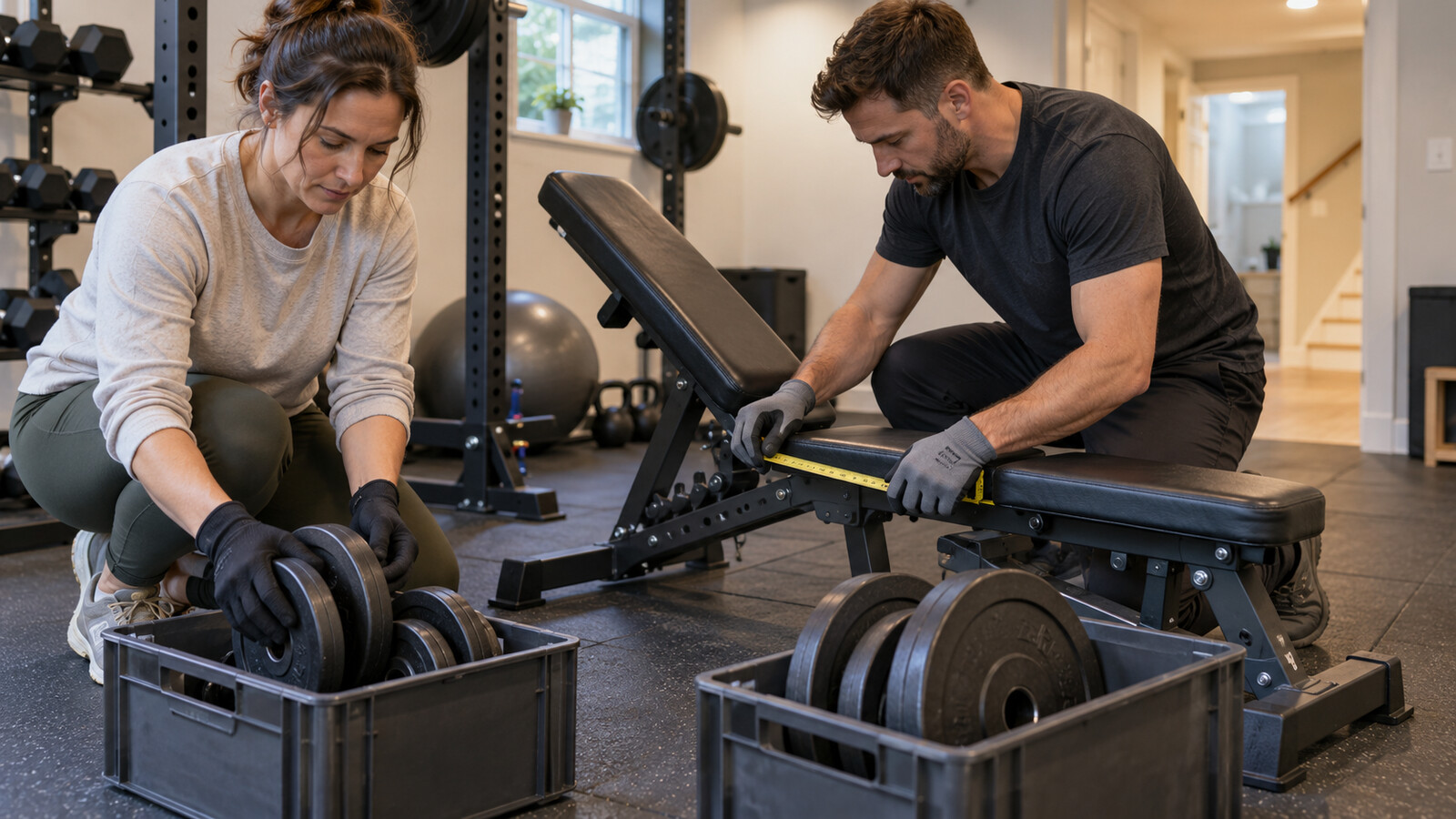
Measure the widest, tallest and longest points on benches, racks and machines. Then measure door openings, stair width, ceiling height over stairs, landings, tight corners and exterior gates. Check whether handrails, doors or other fixtures reduce the usable opening.
Compare the equipment dimensions with the route before disassembly starts. A frame that clears one doorway may not rotate on a landing. If the route cannot be controlled safely, the plan needs to change rather than relying on extra force.
Disassemble only what is designed to come apart
Use the manufacturer instructions where available and photograph each connection before parts are removed. Label hardware outside the image workflow with the owner’s approval, or place it in a sealed bag attached to the correct component. Never improvise by cutting a frame or forcing a joint.
Keep tensioned cables, springs, hydraulic components and counterweighted parts under control. Complex machines may require a qualified technician. Stop if a component shifts unexpectedly, remains under tension or cannot be supported once a fastener is removed.
Treat dumbbells and plates as dense loads
Weight plates and dumbbells can overload a large tote long before it looks full. Use smaller sturdy containers and keep the load within what can be handled and transported safely. Pack weights low and flat so they do not roll, tip or protrude.
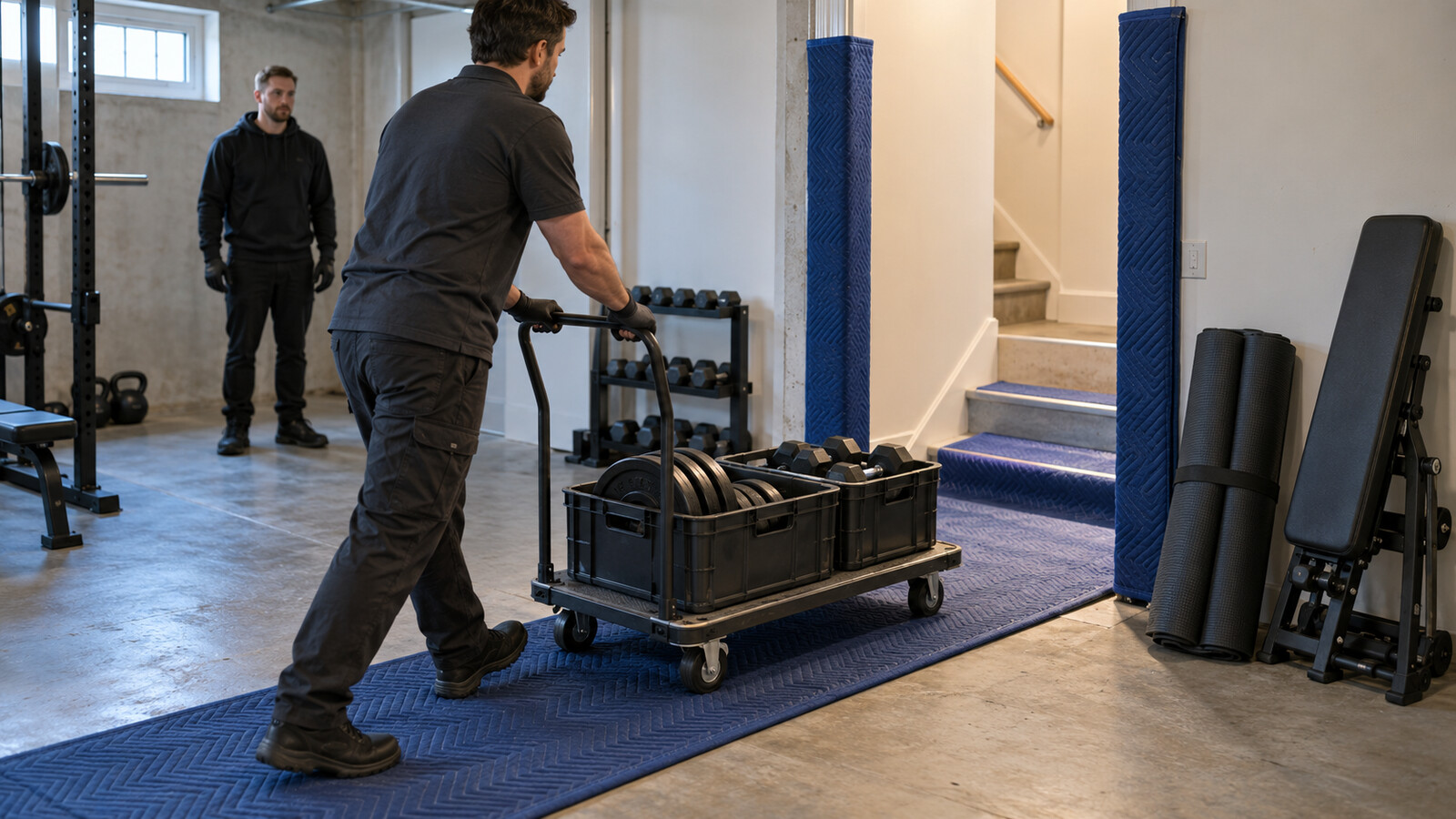
Do not stack loose plates in a doorway or balance dumbbells on upholstered furniture. Clear the floor around each loading area and move one controlled batch at a time. A cart or dolly must be rated and suitable for the surface, route and total load.
Protect gym flooring and finished surfaces
Remove loose mats only after equipment sitting on them has been stabilized or moved. Interlocking tiles can separate at the edges, and rolled rubber can shift under a loaded cart. Check the subfloor for dust, moisture or damage before deciding how the flooring will be handled.
Extend floor protection from the gym to the exit, including finished hallways and landings. Use corner and door-jamb protection where frames must pass close by. Do not drag metal feet, plate edges or machine bases across flooring.
Plan stairs, doorways and shared access
Clear exercise bands, water bottles, cords, small weights and personal items from the route. Keep pets, children and other occupants away from the work area. On stairs, maintain a clear landing and avoid staging equipment where it could block an exit or shift.
For condos and multi-unit properties, confirm the building’s current elevator, loading and protective-padding requirements. Share the floor number, elevator dimensions, access window and distance to the loading area. Requirements vary, so confirm them for the specific building.
Separate powered and specialized equipment
Treadmills, bikes, rowers and other powered machines may contain electronics, motors, batteries or capacitors. Unplug equipment only according to its instructions, secure loose cords and disclose any battery or damaged electrical component before the appointment.
Fuel-powered equipment, leaking batteries, unknown liquids, chemical products, medical sharps and biohazardous material are not ordinary home-gym junk. Keep them out of routine removal containers and arrange the correct handling route for each item.
Finish with a room and route check
After approved equipment leaves, check the gym, hallway, stairs and exterior loading route for loose hardware, rubber fragments and small accessories. Confirm that keep and transfer items remain in their designated zones. Photograph the cleared space when the owner or manager cannot be present.
State the final condition clearly. Removing equipment and collecting ordinary loose debris is not the same as wall repair, flooring removal or detailed cleaning. Those tasks should remain separate unless they were included in the confirmed scope.
Home gym cleanout checklist
- Photograph and list all equipment, attachments, cords and loose weights.
- Confirm what stays, moves, transfers to a recipient or is approved for removal.
- Keep pins, collars, fasteners and manuals with the correct equipment.
- Document damage, instability and anchored or wall-mounted components.
- Measure equipment, doors, stairs, landings and tight turns.
- Follow manufacturer guidance for permitted disassembly.
- Pack dumbbells and plates in small, stable, controlled loads.
- Protect gym flooring, hallways, corners and door jambs.
- Confirm elevator and loading requirements in multi-unit buildings.
- Separate powered, battery-containing and specialized equipment.
- Complete a final room, stair and loading-route check.
What to send for a firm quote
Send wide photos of the gym and close photos of equipment, hardware, stairs and tight turns. Include known equipment dimensions and weights, the floor number, elevator or parking details, which items are approved for ordinary non-hazardous removal and the deadline for the room.
Mattabo Property Care is fully insured for the services it provides. Readers can send photos, their Ottawa address and deadline for a firm quote. Same-day service is often available but is not guaranteed until Mattabo confirms the appointment. A quote request is not a confirmed booking.
To plan an Ottawa home-gym cleanout, [contact Mattabo Property Care](/contact) with equipment and access photos. A complete scope helps confirm the handling plan before the appointment is booked.
Photos are illustrative examples of typical residential service results.