Interior Clean-Up
Preparing an Ottawa Home for Renovation: What to Clear Before Contractors Arrive
A practical Ottawa guide to clearing rooms, protecting belongings and creating safe access before renovation contractors arrive.
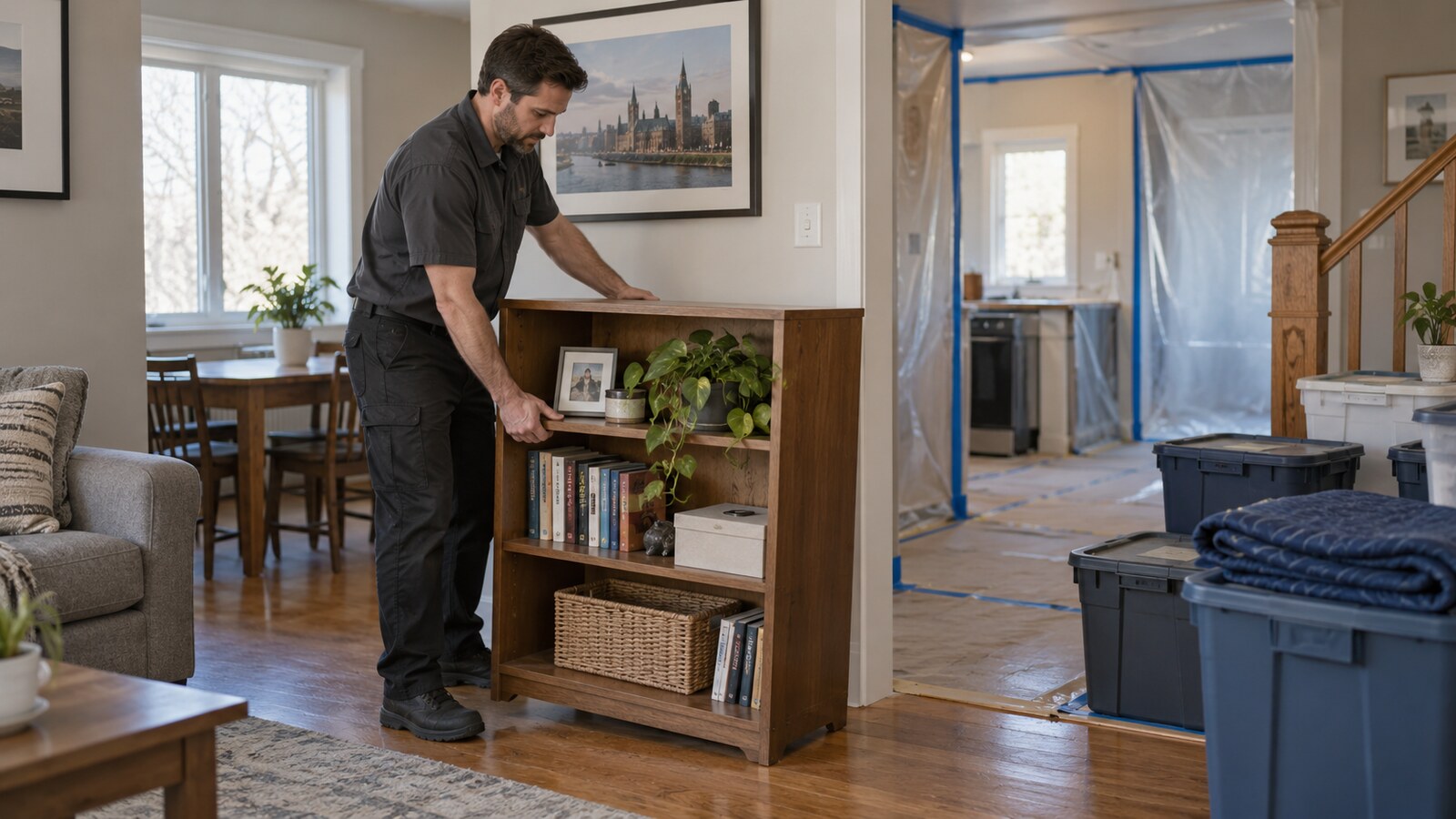
Renovation preparation is easier when it starts before the contractor’s first delivery. A room that looks mostly clear can still slow a project if furniture blocks a doorway, cabinets remain full, or stored items sit along the route between the entrance and the work area. A focused clear-out gives trades room to move, helps protect household belongings and makes the handoff more predictable.
For Ottawa homeowners and property managers, the practical goal is not to empty the entire property. It is to create a clean work zone, a usable access route and a sensible place for everything that must stay. The exact amount of space depends on the renovation, so confirm the contractor’s requirements before moving or discarding anything.
Confirm the work zone before you start clearing
Ask the contractor to identify every room, closet, cabinet and adjacent area they expect to use. A kitchen project may also affect the dining area, a nearby hallway and the route to the exterior. A bathroom project may require access to a linen closet or mechanical area. Do not assume the visible floor area is the full scope.
Clarify what must be completely removed, what may remain covered, and whether the crew needs space for materials or tools. Also ask which entrance they plan to use and whether doors will need to stay open during deliveries. These answers determine where household items can safely go.
Create an empty work zone, not a staged room
Moving everything to the far side of the same room rarely solves the problem. Contractors may need to reach walls, outlets, windows, trim, vents or plumbing from several directions. Covered furniture still occupies floor space and can trap dust around its edges.
Where possible, remove freestanding furniture, rugs, lamps, artwork, electronics, plants, window coverings and decorative items from the work zone. Empty cabinets, drawers and shelves that will be removed, refinished or exposed to vibration. Take down nearby wall pieces even if they appear outside the immediate work area.
- Move valuables, documents and sentimental items to a secure room that will not be used by the crew.
- Pack small objects in closed bins so they are protected and easy to relocate.
- Keep everyday essentials together instead of scattering them through several rooms.
- Leave a clearly defined area for contractor materials if the contractor requests one.
Sort each item into one of four destinations
A simple destination system prevents the clear-out from turning into a second project. Decide whether each item will be moved to another room, stored off-site, donated or removed as ordinary non-hazardous material. Use separate zones so that items intended to stay are not confused with items leaving the property.
Avoid filling a garage, basement or spare room without a plan. If those spaces contain mechanical equipment, electrical panels, drains or future work areas, preserve access. A renovation can shift quickly from one phase to another, and a temporary pile may become a costly obstacle.
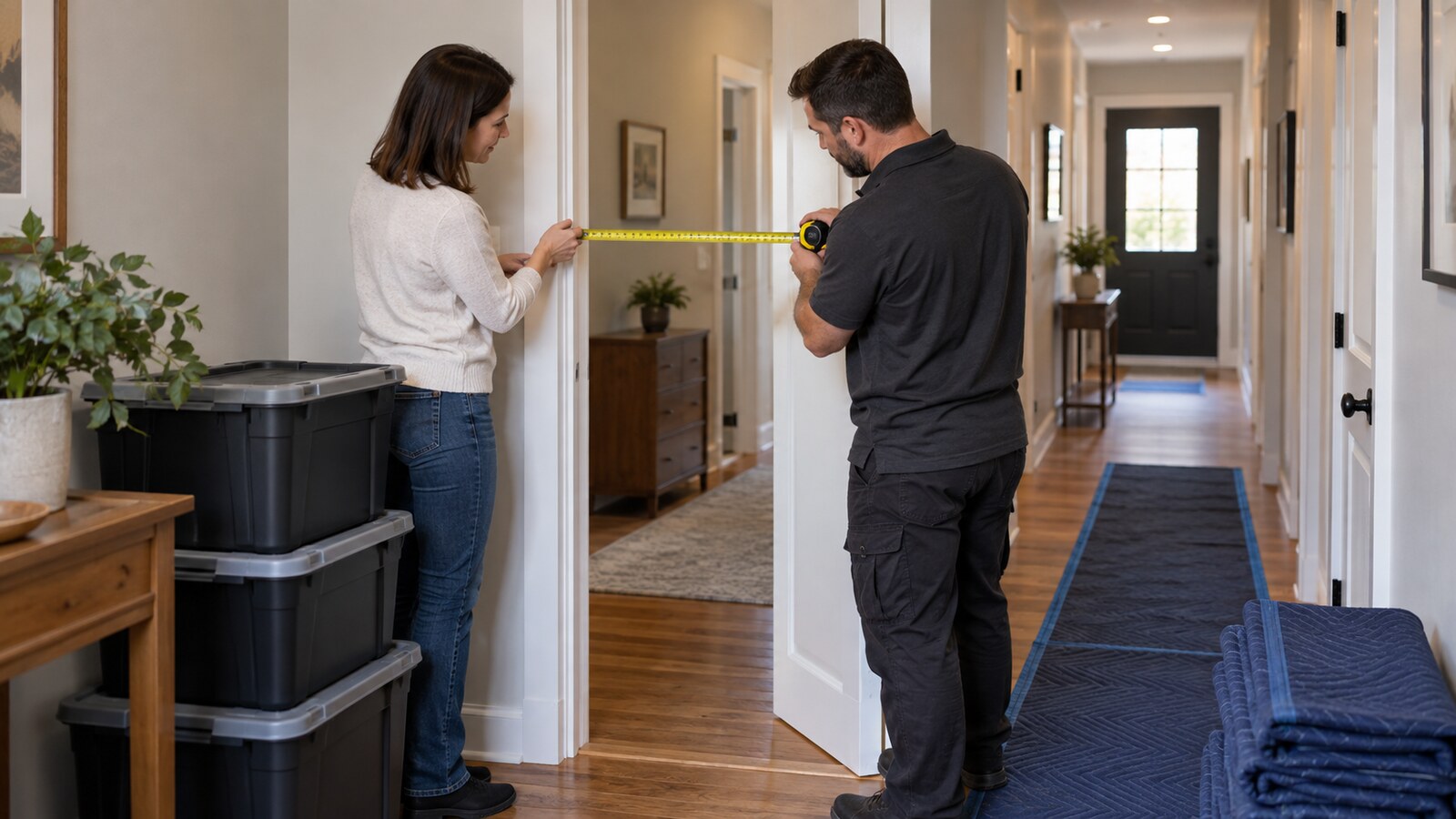
Be realistic about furniture dimensions. Measure large pieces before carrying them toward a stairwell or doorway. Remove detachable shelves, drawers or legs only when the item is designed for it, and keep hardware in a closed container with the item.
Plan the route from the driveway to the room
The work zone is only useful if people and materials can reach it. Walk the full route from the planned parking or loading point to the room. Look for narrow gates, porch steps, tight turns, low fixtures, loose mats, fragile décor and furniture that reduces the usable width.
In a condo or apartment building, confirm elevator booking requirements, loading access and any building protection rules with management. In a house, decide which entrance best separates the work route from normal household traffic. Keep children and pets away from the route while moving is underway.

Protect the parts of the home that are staying
After the route is clear, protect surfaces appropriate to the planned work and traffic. Floors, stair edges, thresholds and doorframes often take the most contact during a renovation. Use stable, purpose-made protection that will not slide or create a trip point. Ask the contractor which materials are compatible with the floor finish.
Do not tape directly to delicate painted surfaces, finished wood or stone unless the product is approved for that surface. Protection should be installed securely and checked as work progresses. Household sheets and thin plastic can shift underfoot, so they are not automatically suitable for a traffic route.
Fixed fixtures that remain in the room may need protection, but the contractor should specify what can be covered safely. Do not block air returns, heat sources, smoke alarms, electrical panels or shutoffs. Keep at least one clear path through any occupied part of the home.
Separate ordinary removal from specialist work
A pre-renovation clear-out can include ordinary household furniture, empty boxes, shelving and non-hazardous clutter. It should not be used to handle unknown or regulated material. Set aside anything that requires identification or specialist disposal rather than mixing it into a general removal pile.
- Paint, solvents, fuels, propane cylinders and unmarked containers need appropriate handling.
- Sharps, medications, biological waste and pest-contaminated material are not ordinary household junk.
- Suspected asbestos, significant mould or other hazardous building material should be assessed by a qualified specialist.
- Gas, electrical and plumbing disconnections belong to the appropriate licensed trade.
If you are uncertain about an item, photograph it and describe what you know before scheduling removal. Clear information helps determine whether it is within scope and avoids surprises on the day.
Coordinate timing with deliveries and daily life
Schedule the clear-out early enough that the contractor can inspect the room before materials arrive. Leaving it until the evening before work can create pressure to make rushed decisions. It also gives no room to address an unexpectedly heavy item, a blocked stair, or building access that requires advance notice.
For an occupied home, decide how the household will function during the project. Keep medications, school items, pet supplies, chargers and necessary kitchen or bathroom basics out of packed bins. Label boxes for your own use, but keep identifying information out of sight if items will be stored in a shared area.
Use a final pre-renovation checklist
- Contractor scope and required clearances are confirmed.
- Furniture, décor, electronics and loose contents are out of the work zone.
- Cabinets, closets and drawers within scope are empty.
- The access route is measured, clear and protected.
- Valuables and everyday essentials are stored securely.
- Removal items are separated from belongings that will stay.
- Hazardous or specialist items are excluded and directed appropriately.
- Parking, elevator or loading arrangements are confirmed where applicable.
- The cleared room and access route are photographed for reference.
Getting help with the clear-out
Professional help can be useful when furniture must be moved, several rooms need to be organized, or ordinary non-hazardous items have to leave the property before a fixed contractor date. A useful quote request describes the rooms involved, the largest items, stairs or elevators, parking access, and where belongings should be moved.
Mattabo Property Care is fully insured for the services it provides.
Same-day service is often available but is not guaranteed until Mattabo confirms the appointment.
Readers can send photos, their Ottawa address and deadline for a firm quote.
A quote request is not a confirmed booking.
Photos are illustrative examples of typical residential service results.