Interior Clean-Up
Interior Clean-Up After a Minor Water Leak in Ottawa: What to Move, Document and Leave to Specialists
A practical Ottawa guide to documenting rooms, sorting belongings and clearing safe access after a minor leak has been controlled—without confusing clean-up with restoration.
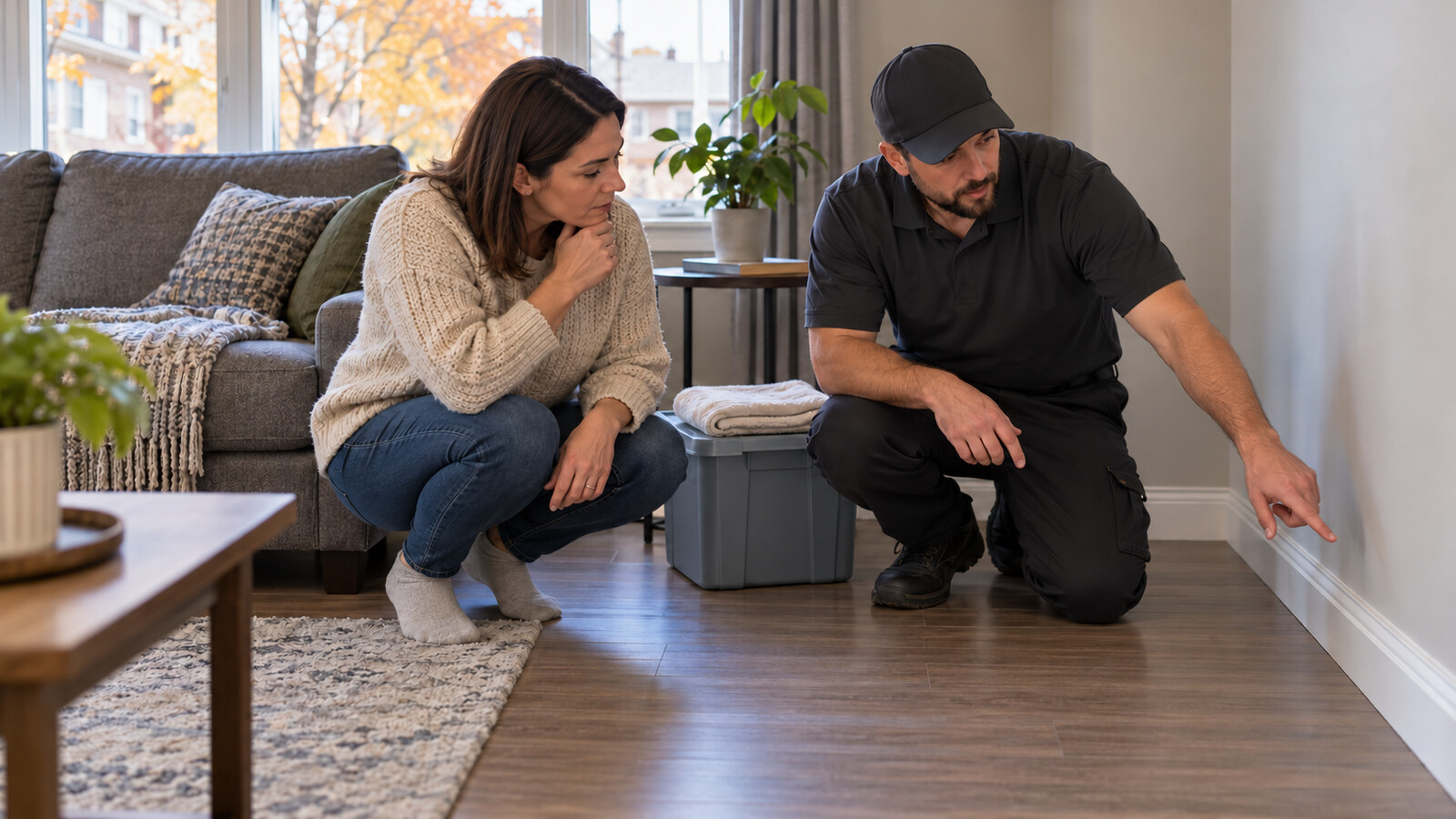
A small interior water leak can create a confusing handoff. The source may be stopped, but furniture, boxes and ordinary household items still block the area that needs to be checked. Moving everything immediately can erase useful information, spread damp belongings into dry rooms or put people into a space that is not ready for routine clean-up.
The practical approach is to separate urgent building or restoration work from ordinary property care. This guide is for the later stage: the leak has been controlled, the space has been assessed as safe to enter and the remaining job is documenting, sorting, moving and cleaning ordinary non-hazardous contents. It is not a substitute for plumbing, electrical, structural, mould or water-damage restoration services.
Start only after the source is controlled
Before arranging an interior clean-up, confirm who has addressed the cause and who has decided the area is ready for ordinary access. If water is still entering, the source is unknown, or water is near electrical equipment, do not enter or start moving items. Contact the appropriate qualified professional or emergency service for the situation.
For a rental or managed property, record the name and role of the person giving the go-ahead. A verbal “it looks dry” is not the same as a clear handoff. Ask which rooms, surfaces and contents are in scope, and identify any areas that must remain untouched for inspection, restoration or an insurance process.
Separate ordinary clean-up from specialist work
Mattabo can help with an agreed ordinary, non-hazardous clean-up scope after the affected area is ready. That might include moving approved furniture, gathering dry household items, clearing access and cleaning suitable hard surfaces. It does not include diagnosing the leak, removing contaminated material, opening walls, testing for mould or certifying that a building is dry.
Stop and seek appropriate advice when the water source may be a drain backup, sewage or another unknown or contaminated source; when building materials remain wet; when there is a persistent musty odour or visible suspected mould; or when ceilings, walls or floors have changed shape. Do not ask a general clean-up crew to make a technical safety decision outside the confirmed scope.
Document the room before moving contents
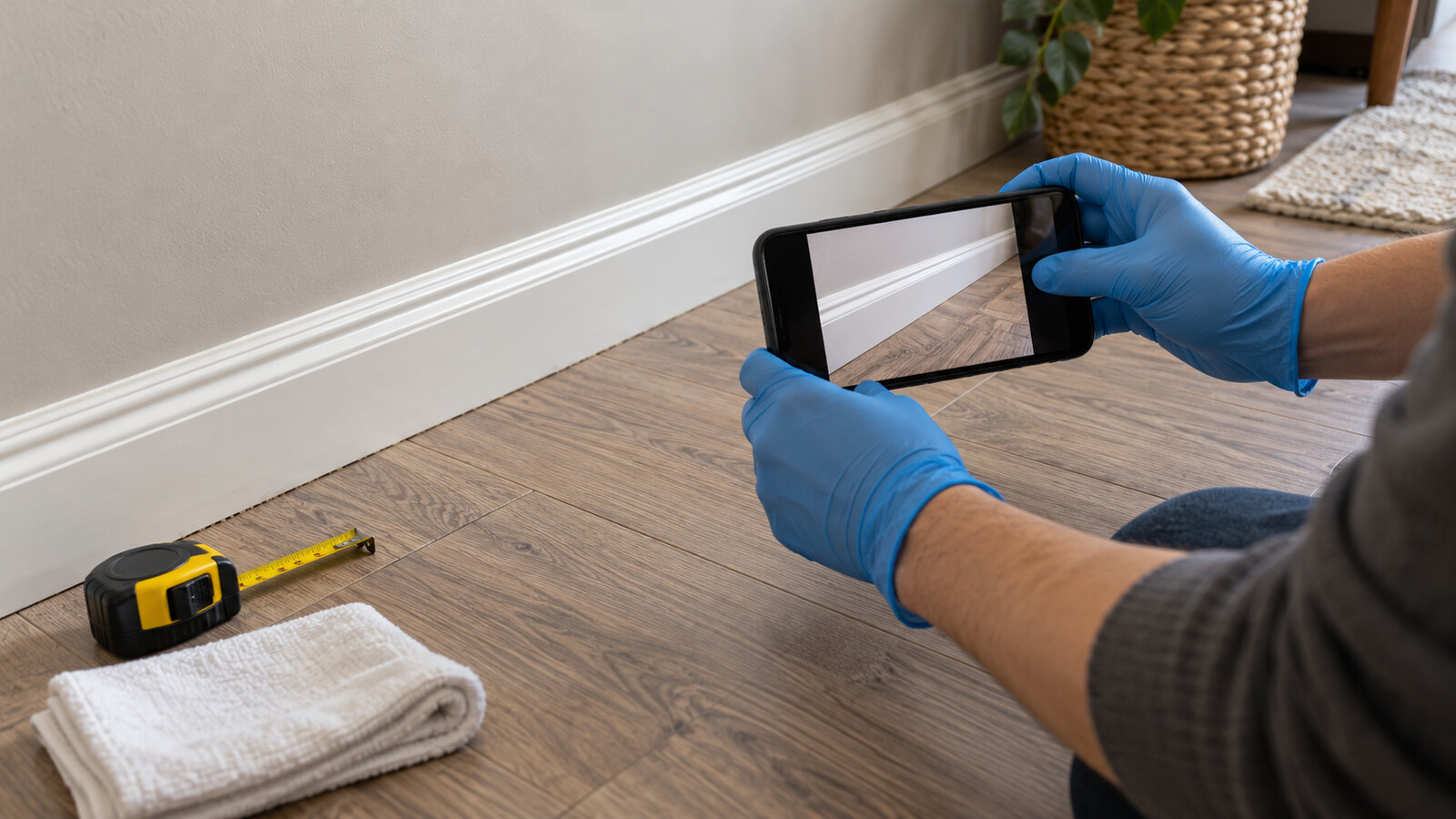
Take wide photographs from the doorway, then closer images of the floor edge, baseboards, furniture feet and any items that were in contact with water. Keep the sequence simple and note the date. The purpose is to preserve the starting condition, not to create a dramatic record or claim a cause that has not been established.
Make a short written inventory of what will be moved, what will stay and what needs a separate decision. Property managers should identify the person authorized to approve disposal. Homeowners should avoid placing uncertain items at the curb or mixing them with confirmed rubbish until they have decided what can be cleaned, retained or removed.
Create four clear item groups
Use four practical groups: keep in place, move to a dry holding area, remove as approved ordinary junk, and hold for a specialist or owner decision. Plain bins or separate floor zones work better than one mixed pile. Do not seal damp items into containers or carry them through the property without an agreed plan.
Documents, photographs, electronics and valuables should stay under the owner’s control unless the scope says otherwise. Food, medication and personal-care products also need an owner or qualified-party decision rather than an assumption. A clean-up quote should identify ordinary labour and removal work without promising the condition or recoverability of individual belongings.
Clear the route before moving furniture
Plan the path from the affected room to the approved holding or loading area. Measure narrow doorways, protect dry flooring and remove small trip hazards first. In a basement or townhouse, check corners, stair landings and the final exit. Heavy or awkward items may require a different method or a specialist mover.
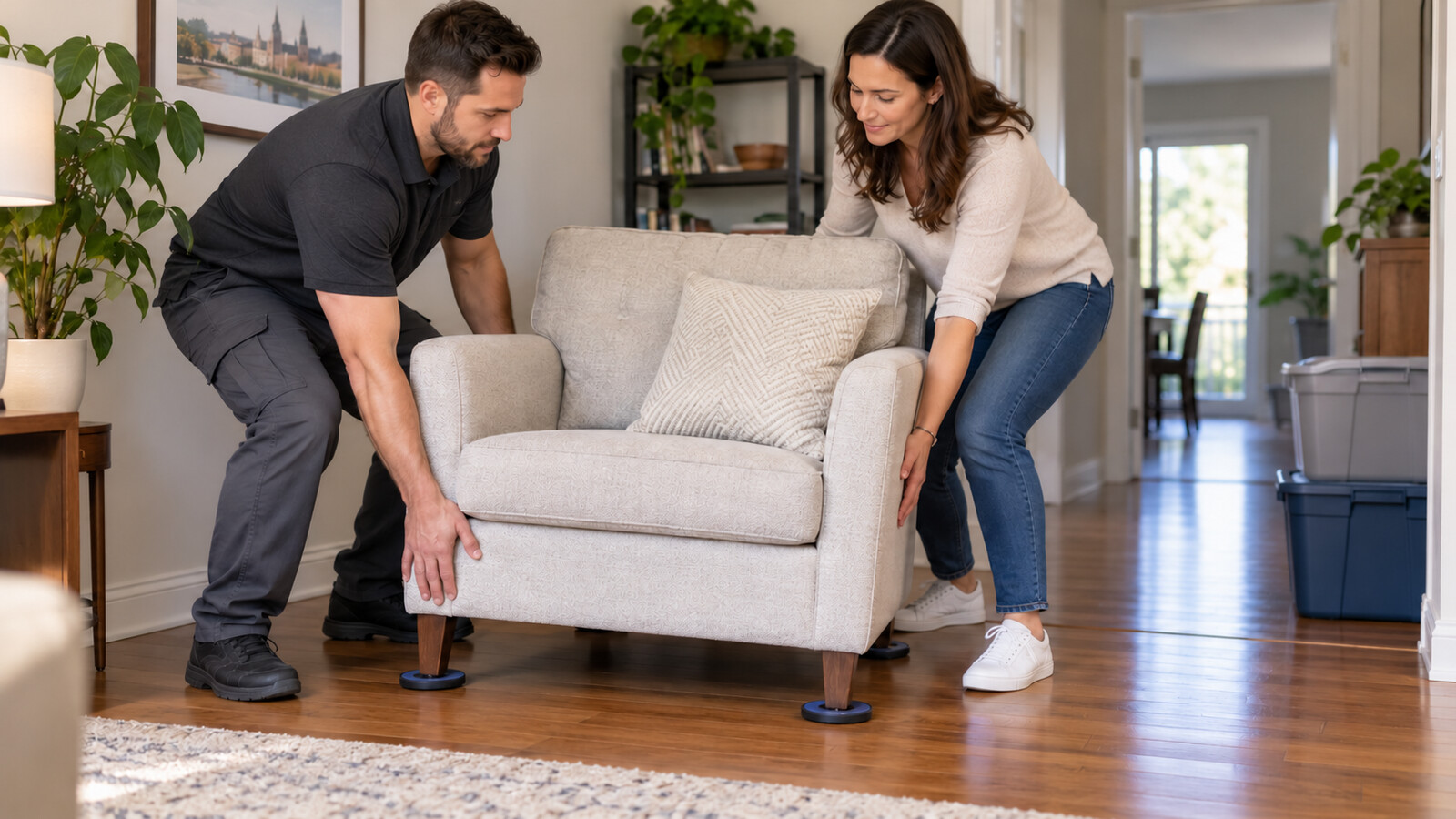
Move one item at a time and keep required exits usable. Furniture sliders can help on a suitable dry hard floor, but they do not make every item safe to move. Do not drag furniture across damp transitions, lift beyond the crew’s agreed capability or stack items where they block a furnace, panel, shutoff or shared corridor.
Keep dry rooms from becoming storage problems
Choose the holding area before the first item leaves the room. It should be dry, accessible and separated from everyday routes. Avoid filling another bedroom, hallway or stair landing simply because it is nearby. Leave space to inspect items and retrieve essentials without repeatedly shifting the whole group.
Use breathable spacing where appropriate and keep uncertain contents separate from confirmed dry belongings. Do not place items against finished walls or directly over vents. If the property needs continued restoration work, confirm how much clearance that provider requires and when stored contents must be removed again.
Coordinate access in condos and rentals
In an apartment or condo, confirm elevator, loading and common-area rules before scheduling removal. Protect corridors and keep neighbours’ routes open. A property manager should coordinate keys, unit access and any resident notice. Do not leave bags, bins or furniture in a lobby while waiting for a vehicle or disposal decision.
For a tenant turnover, distinguish the clean-up scope from maintenance and from decisions about possessions left behind. The landlord or manager should provide written direction about approved items. Mattabo does not determine ownership. A clear item list, contact person and deadline prevent the clean-up crew from guessing at the door.
Plan the final ordinary clean-up
Once approved contents are moved and the area remains suitable for routine work, clean only the surfaces and materials included in the confirmed scope. Start high only where dust or loose residue is present, then work towards the exit. Use a method suitable for the finish rather than adding more water to an uncertain area.
The final walkthrough should confirm that agreed items are in the correct location, access routes are open and removed ordinary junk matches the approved list. Photograph the completed ordinary clean-up for the handoff, while avoiding claims that specialist drying, restoration or repair is complete unless the responsible provider has confirmed it.
Send enough detail for a firm quote
Send wide room photos, close views of the affected edge, a list of furniture or bins to move, the approved removal list and the destination for kept items. Include stairs, elevators, parking or loading limits, who controls access and whether another contractor needs the room by a specific time.
State that the source has been controlled and explain who has cleared the area for ordinary access. If that confirmation is still pending, say so. The quote can be prepared around a proposed scope, but the clean-up should not begin until the necessary handoff is complete and the appointment is confirmed.
Photos are illustrative examples of typical residential service results.