Pressure Washing
Pressure Washing Interlock Patios in Ottawa: A Practical Guide to Joints and Drainage
A practical Ottawa guide to inspecting interlock, protecting jointing sand, planning drainage and preparing patios and walkways for controlled pressure washing.
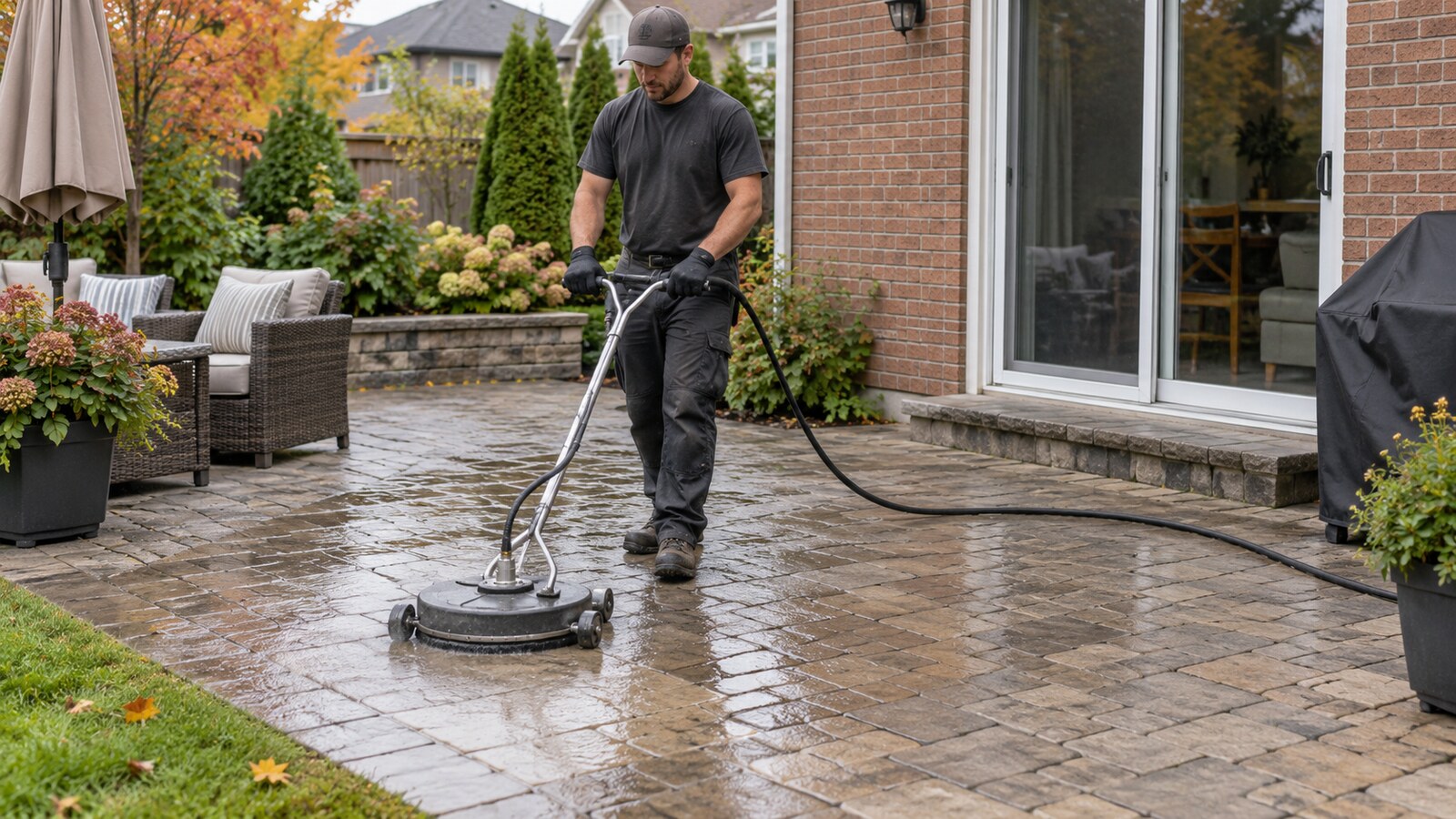
Interlock patios and walkways are built differently from poured concrete. The surface is made of individual pavers, the joints depend on sand, and the whole installation is designed to move water toward an edge, drain or garden area. Pressure washing can refresh the surface, but only when the condition of the stones, joints and drainage route is understood first.
For Ottawa homeowners and property managers, the goal is not maximum pressure. It is controlled cleaning that removes ordinary surface soil without scattering joint material, forcing water toward a doorway or making an existing low spot worse. This guide explains what to inspect, how to prepare the area and when cleaning should be separated from repair or re-sanding work.
Why interlock needs a different cleaning plan
A concrete slab behaves as one surface. Interlock does not. Each stone is supported by a prepared base and held in place by its neighbours, edge restraints and jointing material. A narrow high-pressure stream aimed into the joints can remove sand quickly, while uncontrolled runoff can carry loose material into gardens, drains or a garage threshold.
Age alone does not determine whether a patio can be cleaned. A newer installation may have a loose edge or shallow joints, while an older patio may be stable and simply need a careful wash. The useful question is whether the pavers and their supporting details are sound enough for cleaning today.
Inspect the stones, joints and edges first
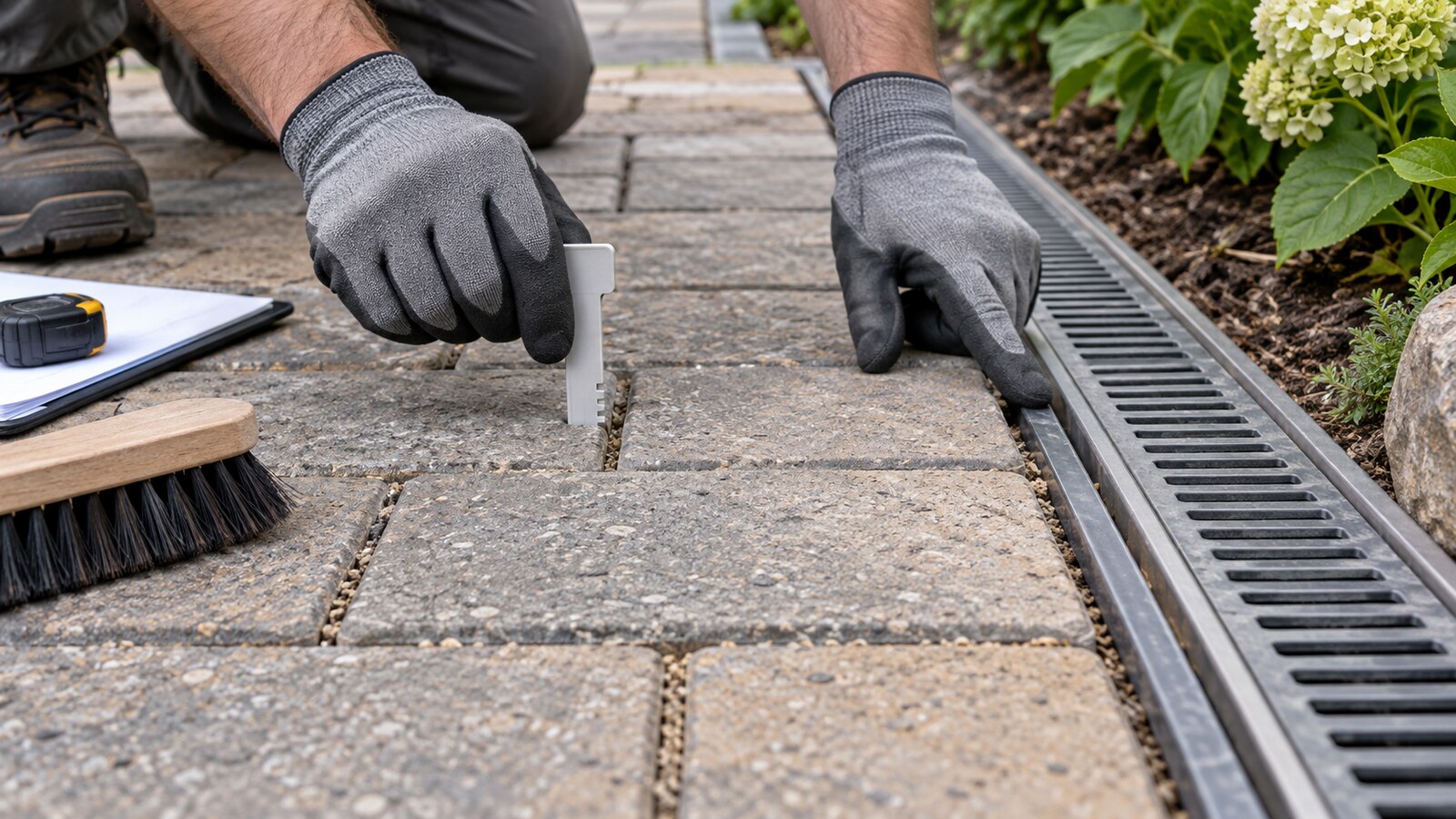
Walk the full area while it is dry. Look at the middle of the patio, but spend extra time at steps, downspouts, door thresholds, retaining edges and places where wheels or furniture regularly travel. These are the points where movement and drainage problems usually become visible first.
- Loose, rocking, cracked or badly spalled pavers that should be repaired or replaced before washing.
- Low joints, missing sand or weeds rooted deeply enough that removal may leave open gaps.
- Sunken sections where water already collects instead of moving toward a safe outlet.
- Loose plastic, metal or concrete edge restraints at the outside row of stones.
- White haze, unknown coatings or old sealer that may not respond like ordinary surface dirt.
- Oil, paint, rust or other specific stains that need to be identified before any cleaner is chosen.
Photograph questionable areas before moving furniture. If a stone is already damaged or an edge is already spreading, that condition should be documented and kept outside the cleaning path until the right repair is decided.
Prepare the work area without blocking drainage
Move furniture, planters, barbecues, toys and portable storage completely off the area rather than shifting them from side to side during the wash. Sweep leaves and loose grit first. Close windows and doors, note low vents and electrical fixtures, and keep pets and children away from the hose route.
- Choose a clear route for hoses that does not cross a doorway or common walkway.
- Protect delicate garden edges and move lightweight containers out of the runoff path.
- Clear channel drains, catch basins and open edges before adding water.
- Keep neighbouring vehicles and outdoor cushions away from overspray.
- For shared properties, notify residents and keep one safe entrance available.
Decide where the water will go
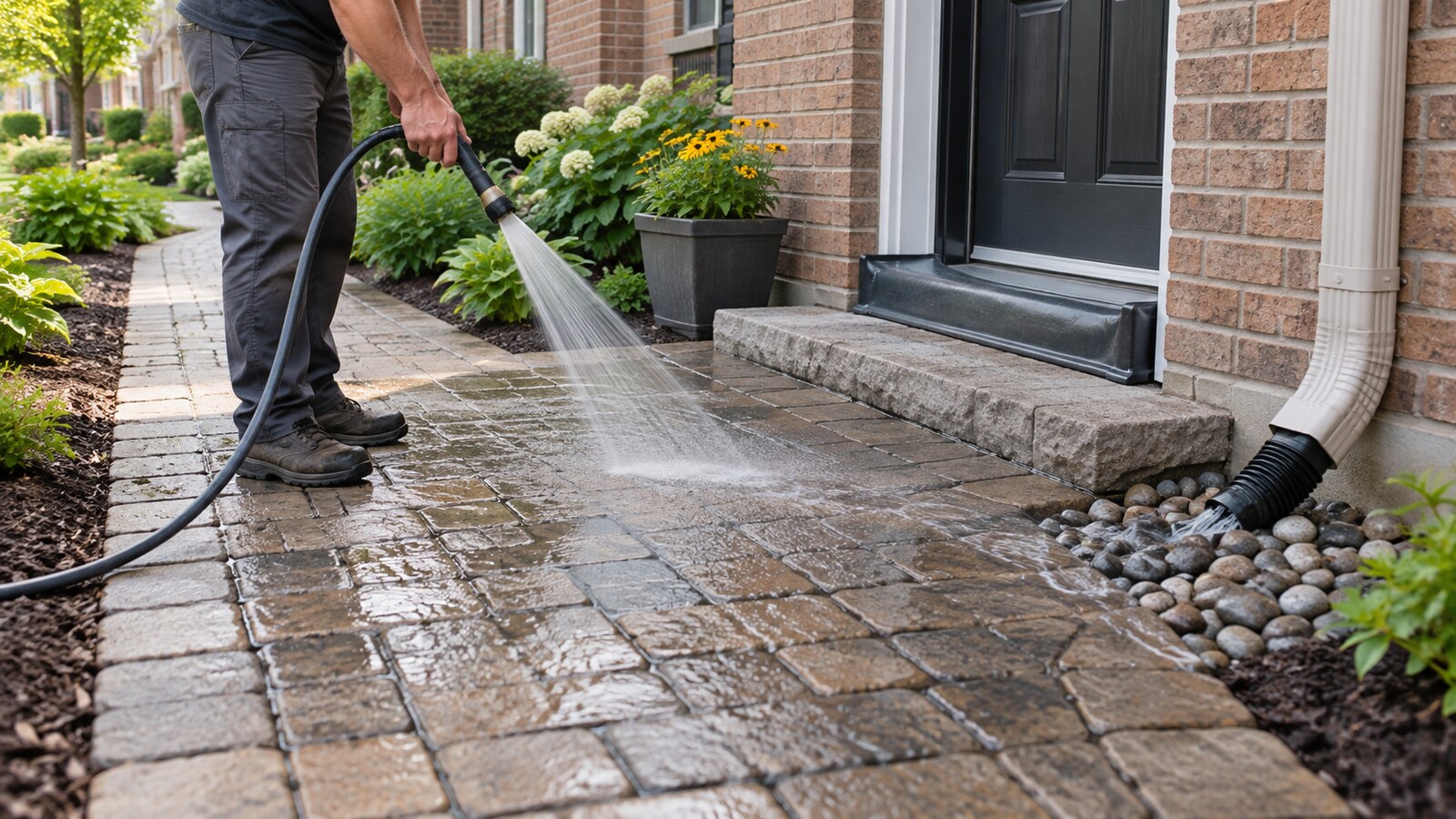
Water management is part of the job, not the final rinse. Before cleaning, identify the natural slope and watch where a small amount of water travels. A patio that drains toward the lawn may need a different starting point from a walkway that runs beside a foundation or toward a garage.
Do not push soil, loosened joint sand or cleaning residue into a drain. Work in manageable sections, collect loose material where practical and keep the discharge path open. If water pools against the house, flows toward a basement entrance or disappears into a visibly sunken section, stop and assess the grading problem rather than adding more water.
Use controlled passes instead of chasing every mark
Start with a small test area away from the most visible edge. Use the least aggressive setup that produces a useful result, keep the tool moving and approach joints at a shallow, controlled angle. A surface cleaner can help keep distance and motion consistent on a broad, stable patio, while edges and steps usually need more deliberate work.
Overlap passes so the finish is even, but do not keep returning to one stubborn spot with a concentrated jet. If ordinary cleaning does not change a mark, identify it before escalating. A stain may be inside the paver, beneath a coating or caused by mineral movement rather than removable soil.
Expect to reassess the joints after washing
Even careful cleaning can reveal joints that were already shallow or weak. Let the patio dry, then inspect the jointing material from several angles. If sand has dropped below the appropriate level or gaps have opened, re-sanding may be needed as a separate step.
Do not apply new jointing material to a wet surface or assume every existing installation uses the same product. Polymeric and conventional jointing sands have different preparation and activation requirements, and an incompatible product can create haze or fail to bond. Follow the selected manufacturer's instructions and keep re-sanding separate from the washing estimate unless it has been specifically included.
Know what pressure washing will not repair
A cleaner patio can make defects easier to see, but it does not rebuild the installation. Set realistic expectations before the appointment.
- Sunken or heaved pavers still require base correction and levelling.
- Cracked stones remain cracked and may need replacement.
- Loose borders need their restraint repaired.
- Deep oil penetration, rust and efflorescence may remain visible after ordinary washing.
- Peeling or uneven sealer may require a specialized coating assessment.
Plan shared and managed properties carefully
For a townhouse complex, rental property or small apartment building, access can matter as much as the surface. Confirm which entrances must remain open, where residents will walk, when outdoor furniture can be moved and where equipment may be positioned. One clear work zone is safer and more efficient than washing around deliveries, bicycles and foot traffic.
Photographs help a property manager identify separate areas with different needs: a stable courtyard, a stair landing with loose joints, a shaded walkway and an entrance where water must be tightly controlled. The scope can then be confirmed before residents are notified.
When to schedule the work
Book early enough that the surface can dry and be inspected before a listing, tenant handoff, outdoor event or planned re-sanding. Avoid tying the job to an exact result on an exact day without leaving room for surface repairs or unsuitable conditions. If the pavers are unstable or drainage is unclear, resolving that issue first is the more reliable plan.
What to send for a firm quote
Send wide photos of the full patio or walkway, close photos of the joints and edges, and images of the route from the street or driveway to the work area. Include the approximate dimensions, water access, parking situation, stairs or gates, known stains, drainage concerns and the date the area needs to be ready.
Mattabo Property Care is fully insured for the services it provides.
Same-day service is often available but is not guaranteed until Mattabo confirms the appointment.
Readers can send photos, their Ottawa address and deadline for a firm quote.
A quote request is not a confirmed booking.
Photos are illustrative examples of typical residential service results.