Junk Removal
Ottawa Junk Removal Sorting: What Belongs in an Ordinary Cleanout—and What Does Not
A practical Ottawa guide to separating ordinary household junk from paint, batteries, propane, chemicals, electronics and other items that need a different disposal route.
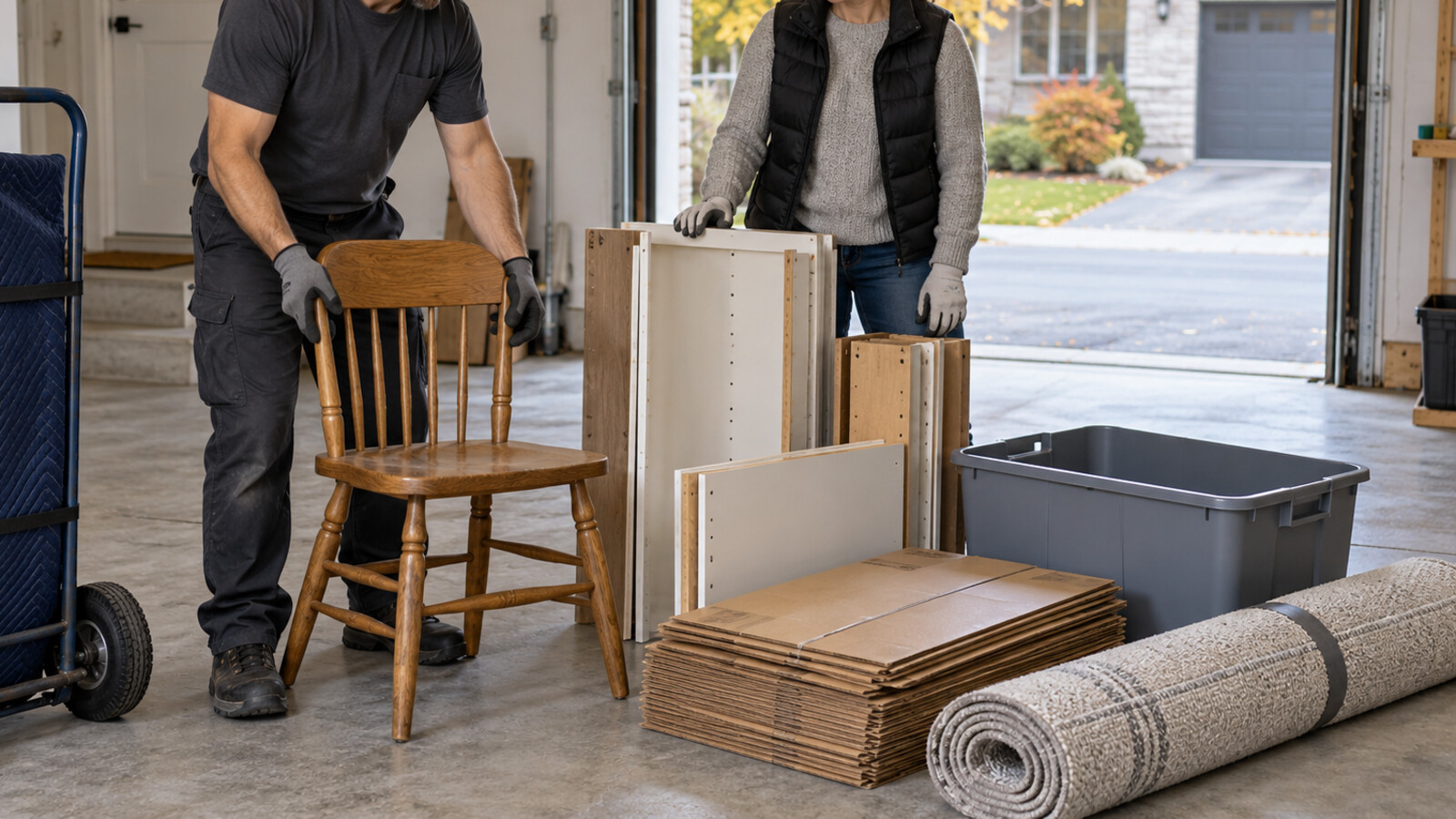
A cleanout becomes much easier when the items are sorted before anyone starts loading. The difficult part is not usually the chair, rug or empty box. It is the half-used paint can behind the shelf, the loose batteries in a drawer or the small propane cylinder beside ordinary household items. Those materials should not be mixed into a general junk-removal pile.
For Ottawa homeowners, landlords and property managers, the safest approach is to separate the job into clear streams: items that stay, reusable items, ordinary non-hazardous removal, municipal recycling or garbage, and hazardous or special-disposal material. That simple decision at the start protects the crew, the property and the final handoff.
Start with a walk-through, not a loading pile
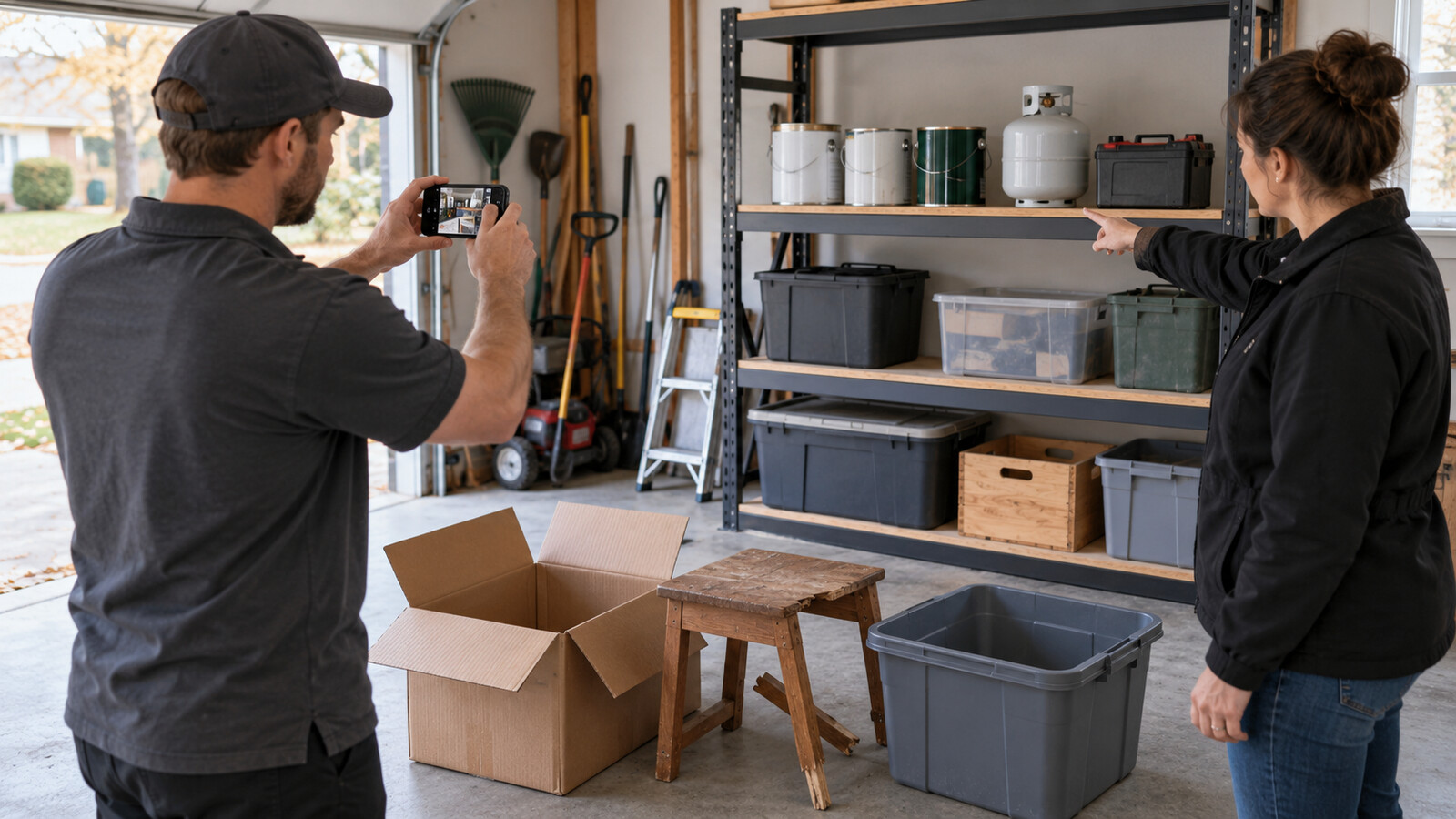
Walk through the garage, basement, storage room or unit before moving anything. Open cabinets only when you are authorized to do so, and look behind furniture where small containers often collect. Photograph the overall area and any item whose contents or ownership are unclear. If the property is a rental or estate, the owner or manager should approve the removal list before work begins.
Use separate staging zones that do not block the door, stairs, electrical panel, furnace, shutoffs or vehicle route. A broad instruction such as remove everything can create expensive mistakes. A better list names the ordinary items to be removed and separately records anything that needs research or specialized handling.
What usually fits an ordinary non-hazardous cleanout
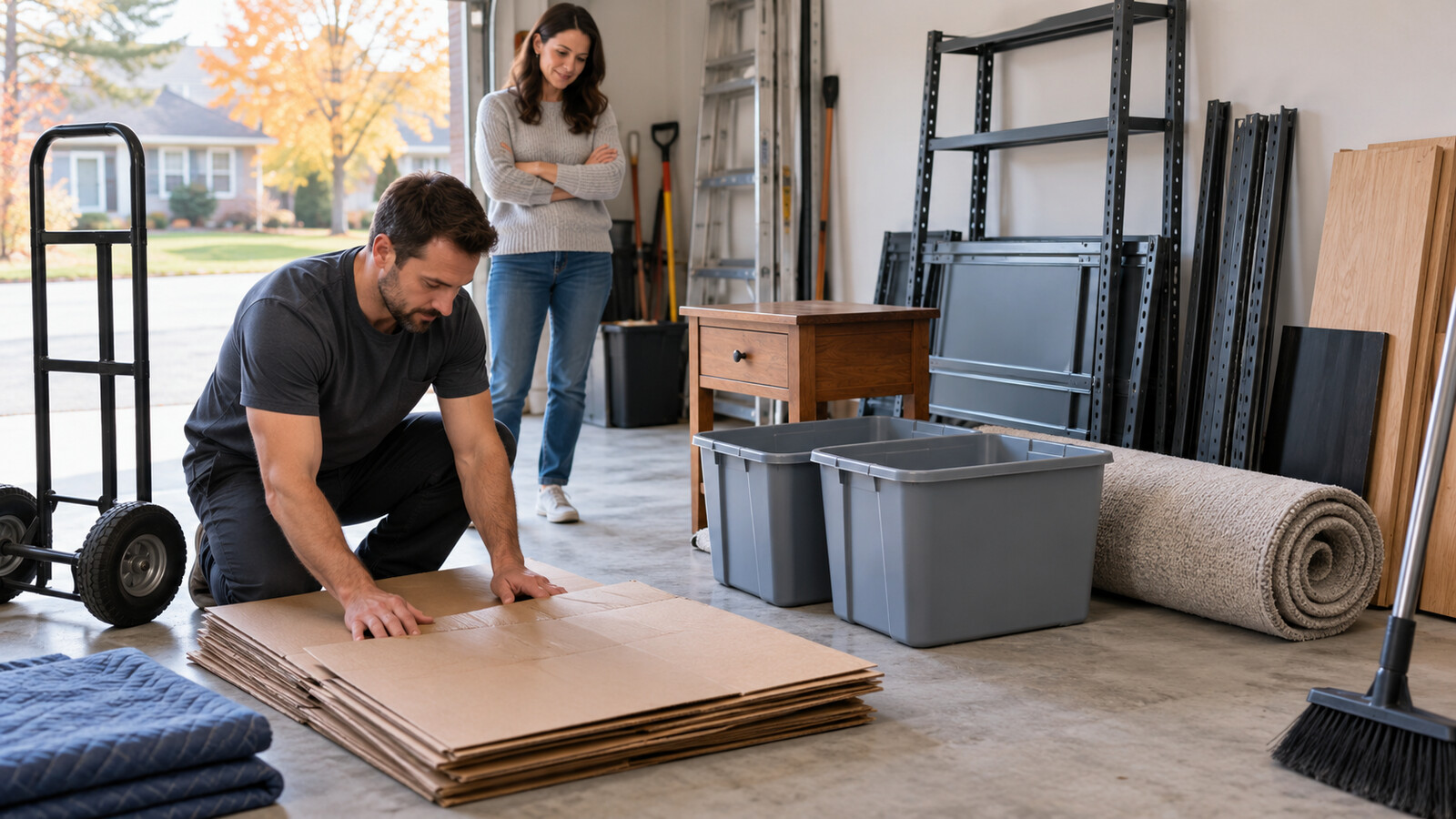
Ordinary cleanout items are recognizable household goods that are dry, stable and free of hazardous contents. Depending on their condition, size and access, that may include furniture, empty shelving, rolled rugs, clean cardboard, empty storage totes, small household decor, bagged clothing, mattresses, bed frames and other common belongings.
- Confirm that every item is authorized for removal.
- Empty drawers, cabinets and bins so hidden contents are not loaded accidentally.
- Keep reusable or donated items separate from disposal items.
- Disassemble furniture only when it can be done safely and without damaging the property.
- Measure tight doors, stairs, elevators and corners before moving bulky pieces.
Condition matters. A clean empty tote is straightforward; the same tote filled with leaking containers is not. A wooden shelf is ordinary; a shelf contaminated by an unknown liquid needs assessment before anyone handles it. If the contents change the risk, the item should leave the general pile.
Items that need a different route
Paints and coatings, fuels, motor oil, propane cylinders, pesticides, pool chemicals, many cleaners, aerosols with contents, fire extinguishers, fluorescent lamps, medications, sharps and mercury-containing products should not be added to ordinary junk. Loose batteries also require separate attention because damaged or improperly handled batteries can create a fire risk.
Electronics and appliances may have their own recycling or disposal requirements even when they are not visibly hazardous. Do not assume that a municipal hazardous-waste event accepts every special item. The City of Ottawa’s Waste Explorer is the current source for checking an item and finding an appropriate drop-off or take-back option. Requirements and participating locations can change, so verify the exact item before travelling.
Mattabo’s ordinary junk-removal scope does not turn hazardous material into ordinary waste. If paint, chemicals, propane, fuel, sharps, unknown liquids or other excluded material is discovered, keep it separated and arrange the correct channel. Do not open, combine, drain or transfer the contents to make the container look empty.
Do not guess about an unknown container
An unlabelled bottle, damaged pail or container with a strong odour is not a sorting puzzle for the crew to solve. Leave it upright and undisturbed, keep people away from the immediate area and notify the property owner or manager. If there is a leak, vapour, heat, swelling, active reaction or an immediate safety concern, stop work and contact the appropriate emergency or specialized service.
The same caution applies to mould, pest contamination, ammunition, explosives, compressed-gas cylinders of uncertain condition and medical sharps. A general cleanout appointment should not expand into remediation or hazardous-material handling without the right assessment, equipment and qualified provider.
Keep batteries, electronics and data-bearing devices controlled
Gather loose batteries separately without mixing them with metal hardware. Follow the City’s current guidance for terminal protection and approved return locations. Do not place batteries inside a bag of ordinary garbage or a furniture drawer that will be loaded. Damaged, hot or swollen batteries should not be handled as routine cleanout material.
Phones, computers, tablets, storage drives and smart-home devices can contain personal information. The owner should decide whether they will be kept, wiped, recycled or transferred to an approved service. A cleanout crew should not make that privacy decision. Keep keys, documents, identification, medication and access cards with the authorized representative.
Prepare a photo-based quote request
Wide photos help show the amount of ordinary material and the route from the items to the exit. Add close photos of bulky furniture, stairs, narrow doors and anything that may fall outside the normal scope. Do not move or open a questionable container for a better picture. Photograph it from a safe distance and describe where it is located.
Include the Ottawa address, property type, floor level, parking or elevator arrangements, deadline and who can authorize decisions on site. State whether the unit is occupied and whether other trades will be working. A clear inventory makes it easier to identify exclusions before the appointment instead of discovering them after loading has started.
Finish with a documented handoff
Before leaving, confirm that only approved ordinary items were removed, special-disposal items remain safely separated, and the access route is clear. Provide the owner or manager with a short list of anything that still needs a decision or another provider. Final photos should show the cleared area and any excluded material left in its agreed location.
Photos are illustrative examples of typical residential service results.