Junk Removal
Ottawa Mattress and Bed Frame Removal: A Practical Guide to Bedrooms, Stairs and Condo Access
A practical Ottawa guide to preparing a clean mattress and bed frame for removal, including bedding, disassembly, stairs, elevators and safe handoffs.
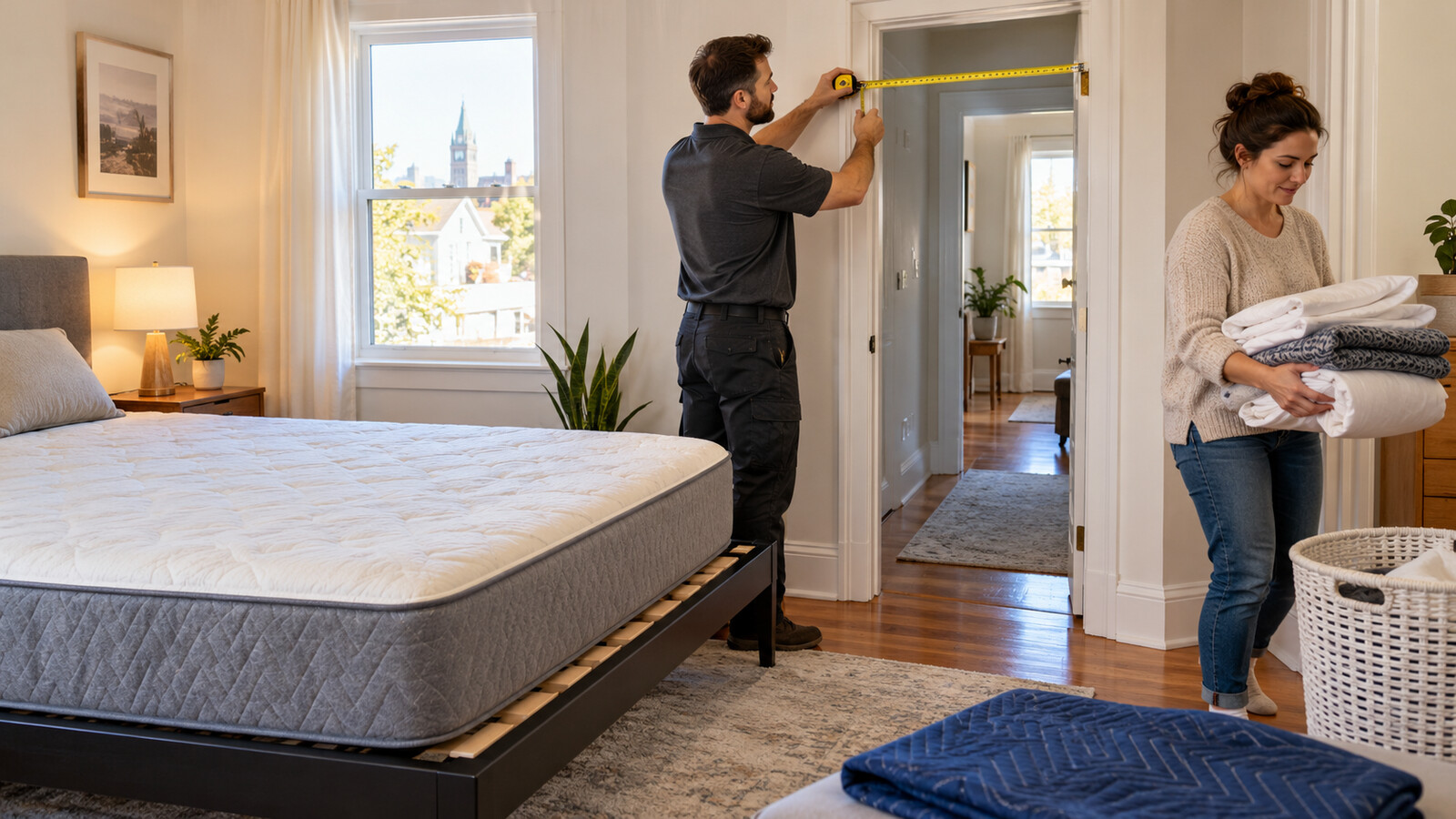
Removing a mattress and bed frame sounds straightforward until the item has to turn through a bedroom door, clear a narrow staircase or reach a reserved condo elevator. Mattresses are flexible, awkward to grip and difficult to keep clean once they leave the room. Bed frames can contain hidden fasteners, long rails and hardware that disappears easily. A little planning makes the handoff clearer for the homeowner, property manager and removal crew.
This guide covers clean, dry mattresses and ordinary household bed frames within a non-hazardous removal scope. It does not cover items affected by pests, mould, bodily fluids, unknown contamination or other conditions requiring specialized handling. Disclose the condition before booking so the service provider can confirm whether the item can be accepted.
Confirm exactly what is leaving
Start with a complete item list. A bed setup may include a mattress, box spring or foundation, headboard, footboard, side rails, slats, platform panels, under-bed drawers and an adjustable base. Do not assume every piece is part of the removal. A tenant may be leaving a frame while the mattress belongs to the incoming occupant, or a seller may want to keep the headboard for a different room.
Photograph the full bed from two angles and include close views of the frame connections. Note the mattress size if known, whether there is a separate foundation and whether any component is unusually heavy. Adjustable bases, storage beds and solid wood frames need to be identified in advance because their weight and disassembly needs can differ from a simple metal or slatted frame.
Remove bedding and personal items first
Strip sheets, mattress protectors, blankets and pillows before the appointment. Decide what will be washed, packed, donated if suitable or discarded separately. Check under the bed, behind the headboard and inside storage drawers for clothing, documents, medication, electronics and small valuables. Removal work should not begin while personal belongings are mixed into the frame.
Keep the mattress dry. If it needs temporary protection, use a clean cover suited to the item and the planned route. Do not wrap a damp mattress tightly or conceal stains, odours or signs of pests. Accurate condition information protects the crew, the building and the vehicle used for transport. If there is any uncertainty, send clear photos before the appointment rather than waiting until pickup.
Measure the route, not only the mattress
Measure the bedroom doorway, hallway turns, stair width and the final exterior door. Include railings, light fixtures, low ceilings and tight landings that affect how the item can turn. A flexible mattress still needs enough room for safe control, and a rigid foundation may be less forgiving than the mattress above it.
Clear the route before moving begins. Remove shoes, floor lamps, loose rugs, pet items, hampers and small tables. Keep children and pets outside the work area. Do not stage frame parts on a staircase, in an exit or where another resident must step around them. If the route appears too tight, share measurements and photos so the plan can be adjusted before arrival.
Disassemble the bed frame in a controlled order
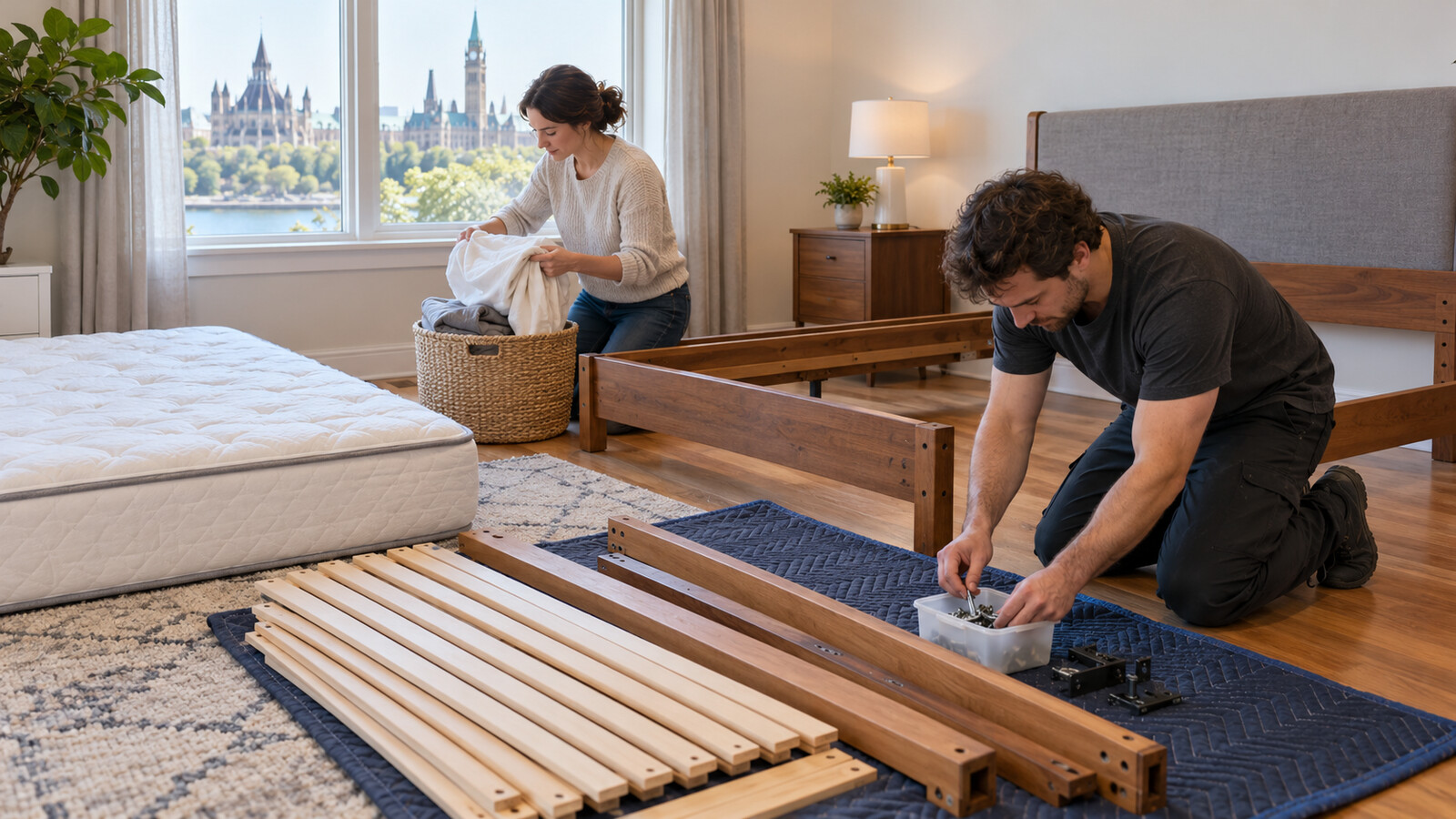
If the frame must come apart, follow the manufacturer's instructions where available. Photograph connections before removing hardware. Place screws, bolts, brackets and small fittings into a plain container instead of leaving them on the floor. Keep long rails and slats flat on a moving blanket so they do not lean into a walkway or mark a wall.
Do not improvise destructive disassembly unless the owner has clearly authorized it and the method is within the agreed service scope. Avoid forcing seized fasteners or using unfamiliar powered tools in a rushed room. Upholstered frames may conceal brackets, while storage beds can contain moving parts. Stop when the next step is uncertain and document the connection for review.
Plan stairs and older-home turns
Many Ottawa homes have narrow staircases, short landings or doors that do not line up with the hall. Photograph the route from the top and bottom of the stairs. Note turns, railings and any door that can be safely held open without removing hardware. Protect nearby floors and corners with appropriate coverings, but do not attach materials in a way that damages paint or blocks a handrail.
A mattress should remain under control rather than being folded sharply, dragged or allowed to slide down stairs. Do not attempt a solo carry simply because the item is soft. The removal team should choose the handling method based on the item, route and available people. If a component cannot be moved safely, pause rather than forcing it through the opening.
Plan condo and apartment access
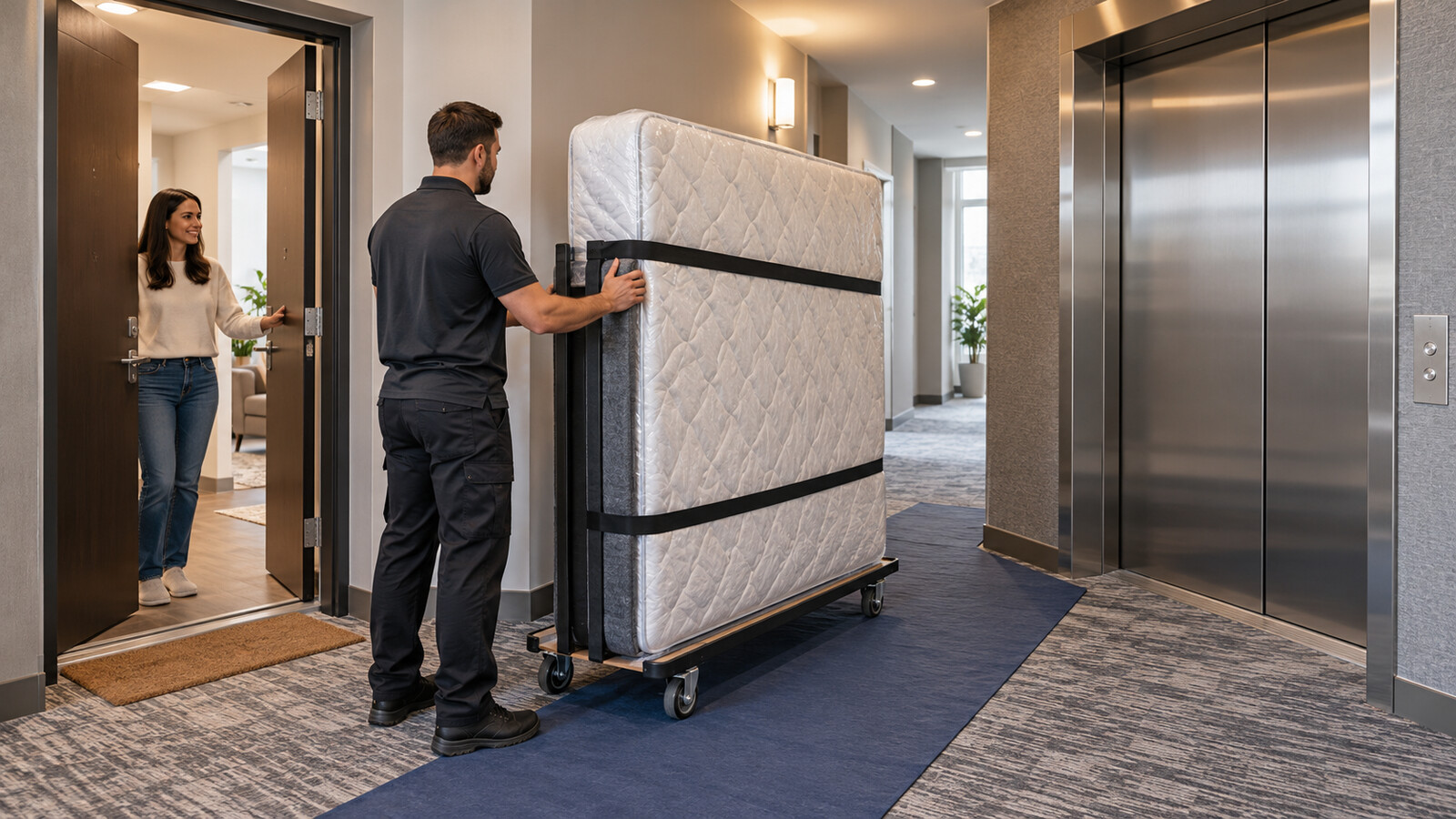
For a condo or apartment, confirm the building's move-out requirements before choosing a pickup time. Ask whether the elevator must be reserved, which entrance should be used, whether floor protection is required and where a vehicle may load. Provide the unit number and contact procedure privately to the confirmed service provider rather than posting access details publicly.
Keep corridors, elevator doors and fire routes open. The mattress and frame parts should remain inside the unit until the route and transport equipment are ready. If building staff require a service entrance or loading area, include that instruction with the quote request. A missed reservation can turn a simple pickup into a delay for residents and property management.
Handle pest or contamination concerns separately
Do not move a mattress into a shared hallway if there are signs of bed bugs or another pest concern. Do not treat mould, heavy moisture, bodily fluids, needles or unknown residue as ordinary household junk. Keep the area undisturbed, limit access and seek appropriate professional guidance. A standard removal appointment should never be used to bypass a condition that requires specialized treatment or disposal.
For rental turnovers, the property manager should document the item and obtain any required authorization before it leaves. Confirm which bedding and furniture belong to the property, tenant or staging inventory. This avoids accidental removal and creates a clear handoff record without making claims about responsibility.
Mattress and bed-frame removal checklist
- List every mattress, foundation, frame part and drawer included in the removal.
- Send photos of the bed, connections and access route.
- Remove bedding, personal belongings and valuables before the appointment.
- Disclose moisture, odours, pests, mould, stains or unknown contamination.
- Measure doorways, hall turns, stairs and the final exit.
- Keep frame hardware in a container and long parts flat on a protective blanket.
- Confirm condo elevator, service-entrance and loading requirements.
- Keep hallways, stairs and exits clear until the route is ready.
- Obtain owner or property-manager approval before disposal.
Request a firm quote
For an accurate scope, send photos of the mattress, frame and route from the bedroom to the exit. Include the Ottawa address, property type, mattress size if known, stairs or elevator details, parking or loading limits and the pickup deadline. State clearly whether disassembly is needed and whether all items are clean, dry and free of pest or contamination concerns.
Photos are illustrative examples of typical residential service results.