Junk Removal
Moving Box and Packing Material Removal in Ottawa: A Post-Move Clean-Up Guide
A practical Ottawa guide to sorting and removing moving boxes, packing paper, reusable wrap and leftover move-in clutter without discarding items too soon.
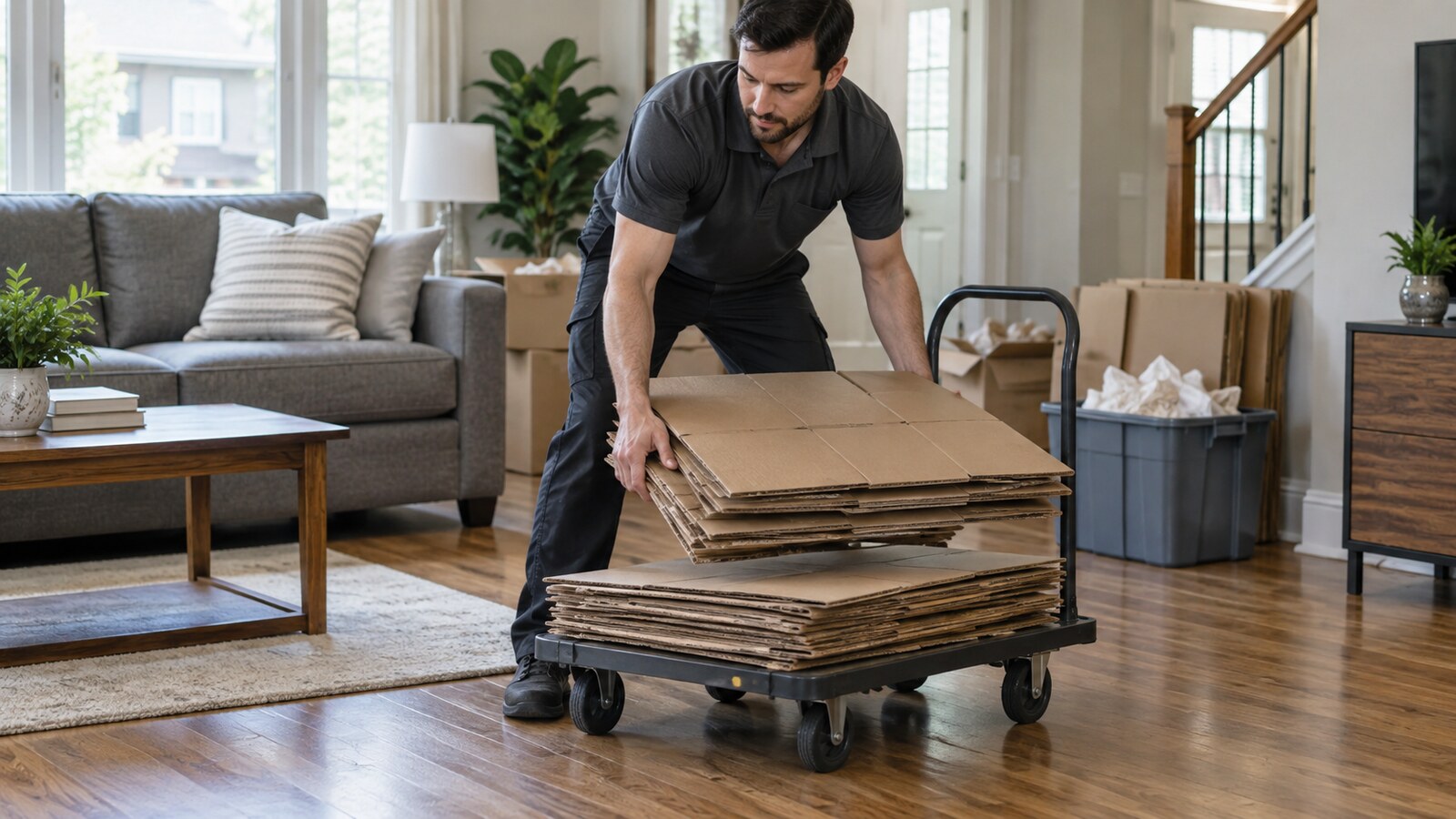
Moving day may be finished, but a home can still feel unsettled when boxes, packing paper and protective wrap occupy every spare corner. In an Ottawa house, condo or rental, these materials quickly narrow walkways, hide items that still need attention and make routine cleaning harder. Removing them in one rushed sweep can also create a different problem: useful boxes disappear before the final rooms are unpacked, or small hardware and documents leave with the packaging.
A practical post-move clean-up is less about creating a perfect room overnight and more about separating what is finished from what is still active. Work in stages, keep uncertain items visible and plan how materials will travel from the home to the loading point.
Finish one unpacking zone at a time
Choose a room or a defined section of a room and complete it before gathering its packaging. Open each box, check the bottom and folded flaps, and place the contents where they belong. Small screws, shelf pins, keys, receipts and instruction sheets can slip under packing paper or become caught in cardboard seams.
Keep a clearly marked personal review area for anything that still needs a decision. This may include returns, warranty material, spare hardware, electronics accessories or objects that belong to another room. A removal crew should receive a separate, unmistakable pile rather than deciding which boxes are empty.
Do not use hallways, stairs or door landings as long-term sorting areas. If space is limited, flatten completed boxes immediately and stack them against one wall inside the unit until the removal time is confirmed.
Decide what is worth keeping
A small supply of sound boxes can be useful for returns, storage or a future donation run. Keep only clean, dry boxes with intact bottoms and remove old tape that prevents them from folding flat. Choose a fixed limit, such as one shelf or one tied bundle, so a temporary supply does not become permanent clutter.
Specialty packaging may be worth retaining until the related item has been tested. Television cartons, computer inserts and appliance boxes can help if something must be returned. Once the return period and installation checks are complete, reassess them rather than leaving them in a basement or locker indefinitely.
Boxes that are damp, oily, heavily torn or contaminated should be kept separate from clean material. Do not stack questionable cardboard against finished walls or on flooring where moisture can transfer.
Sort materials before they leave the room
Moving supplies are not all the same material. Create separate groups for clean cardboard, kraft packing paper, reusable plastic totes, bubble wrap, plastic film, foam and ordinary garbage. This keeps reusable items from being discarded and makes it easier to follow the current disposal or recycling instructions that apply to the property.
Flatten cardboard along its existing folds instead of tearing it into irregular pieces. Remove loose straps, food residue and unrelated waste. Fold paper into a box or paper bag so it does not scatter through the house or across a loading area. Keep plastic film and wrap contained; lightweight pieces can escape quickly when an exterior door opens.
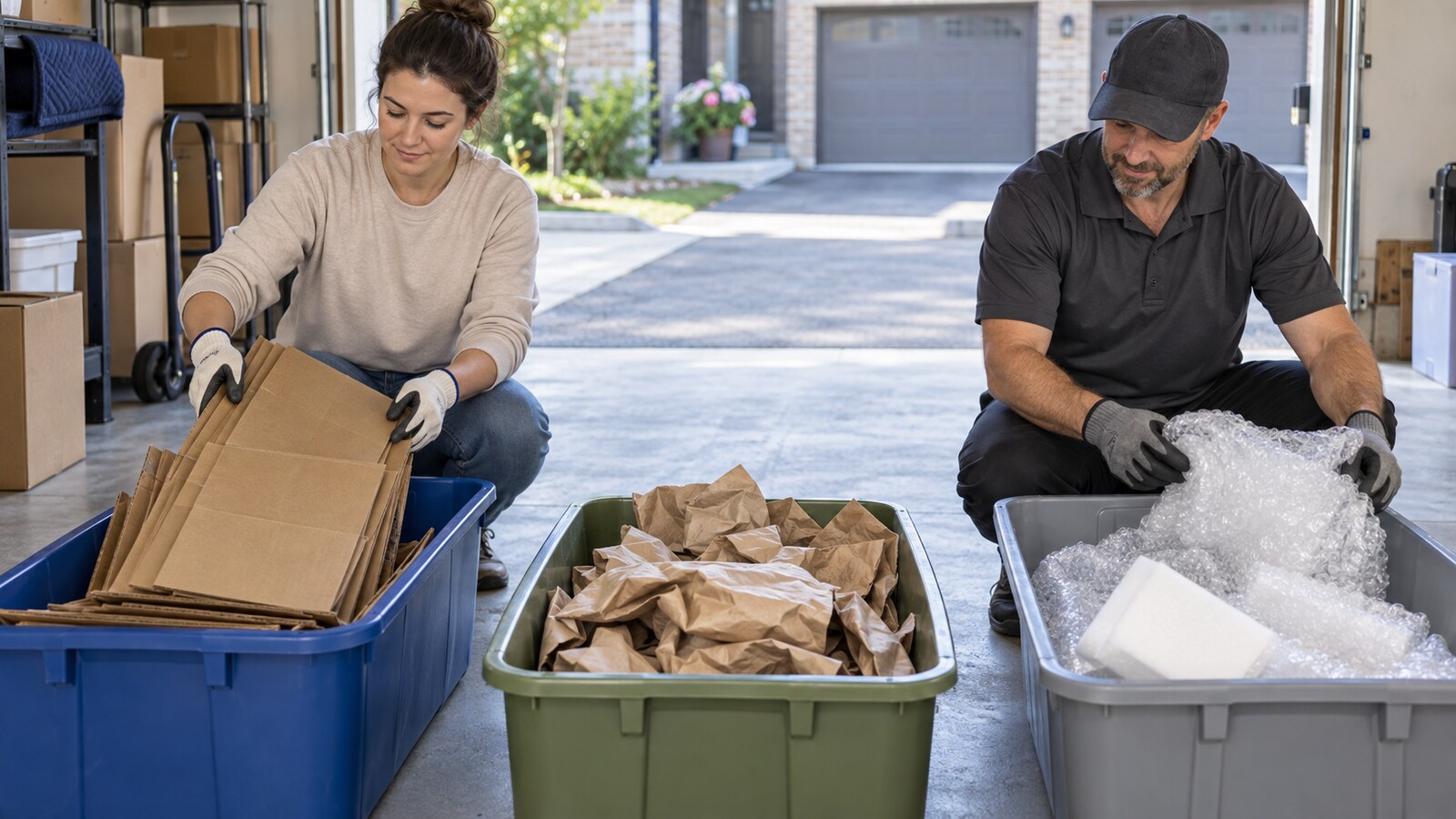
Local acceptance can vary by material, building and collection method. Check the current instructions for your address or ask the property manager where each group belongs. Do not assume that foam, bubble wrap or large quantities of cardboard can be placed in the same location simply because they arrived together.
Build stable loads for removal
Tie or contain flattened cardboard in manageable bundles. A very tall loose stack is awkward to steer through a doorway and can block the person carrying it. Keep each bundle light enough for safe handling, and use a cart or dolly when the route is long.
Bag or bin loose paper and protective material separately. Do not hide rigid objects, broken glass, blades, chemicals, batteries or liquids inside a box of packing material. Those items need to be identified and handled according to what they are, not mixed into an ordinary non-hazardous removal load.
If furniture packaging includes large foam blocks, wood bracing or metal fasteners, show them clearly in quote photos. Their volume and handling are different from a pile of flattened cardboard.
Plan the route through a condo or apartment
Shared buildings add another layer of planning. Confirm loading access, elevator arrangements and the building’s current rules before moving a large volume of material. Keep unit doors, corridor corners, stair landings and elevator entrances clear while the work is underway.
Stage completed bundles inside the unit until the cart is ready. Move one controlled load at a time, and avoid leaving cardboard in the lobby or beside a shared waste room while someone checks where it belongs. The property manager or superintendent should identify the approved route and final location.
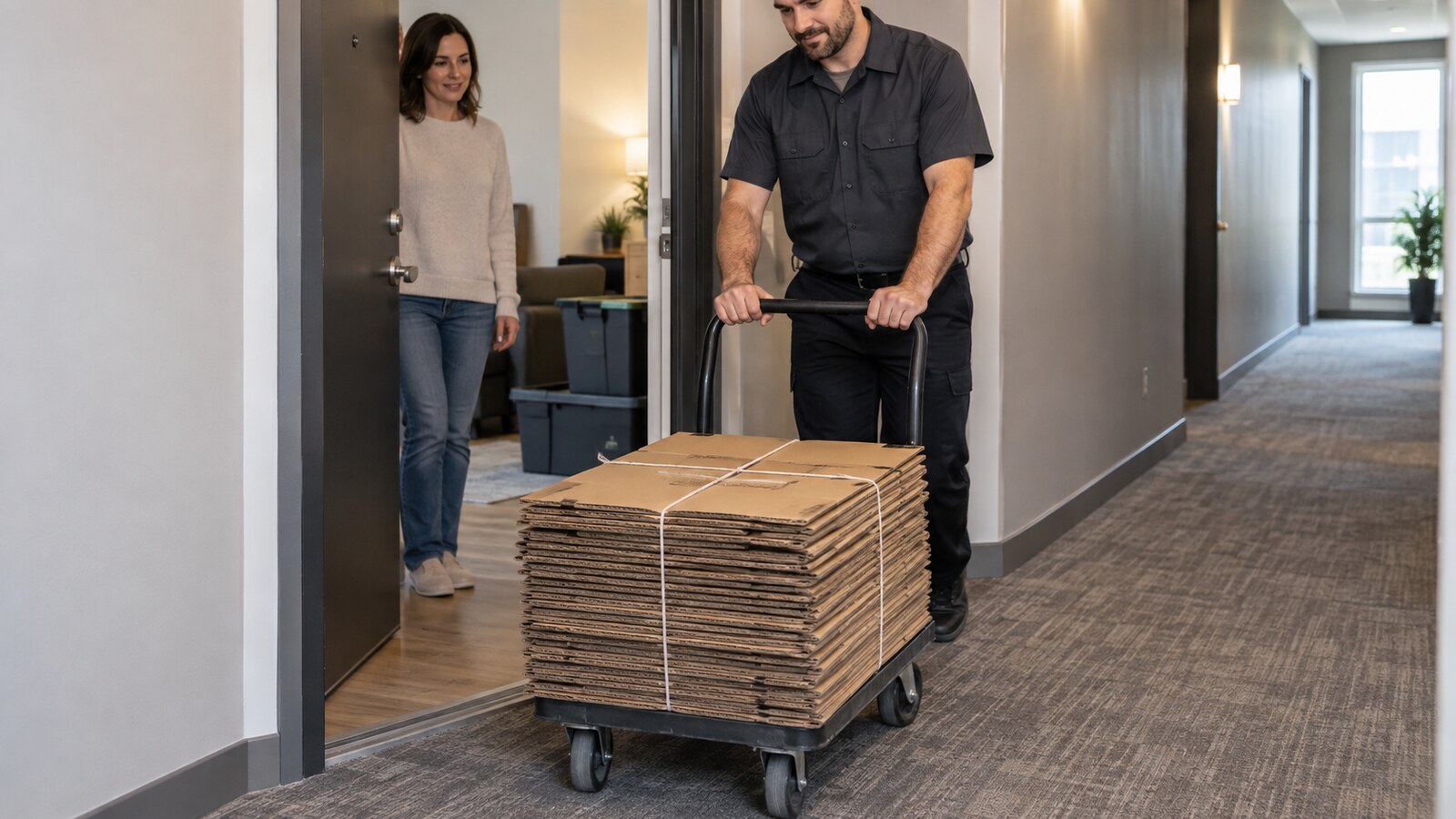
Protect walls, doorframes and elevator finishes from protruding cardboard corners. Measure large bundles against door and elevator openings before moving them, and divide the load if visibility or steering is reduced.
Keep the clean-up separate from final placement decisions
Packing-material removal works best when furniture and belongings have reached their intended rooms. If half the home is still in temporary storage, schedule the removal in two stages or retain a limited supply of boxes. Clearing too early can lead to buying more supplies, while waiting too long makes cleaning and organization harder.
After packaging is removed, vacuum or sweep the areas where boxes stood and inspect the floor for tape, fasteners and small parts. Check behind doors, along baseboards and beneath the edges of furniture. Record any damage discovered during unpacking so it is not confused with later service work.
Post-move box removal checklist
- Finish unpacking one defined zone before clearing its packaging.
- Check box bottoms, seams and packing paper for small items.
- Separate boxes that must be retained for returns or storage.
- Flatten clean, dry cardboard into manageable bundles.
- Contain loose paper, film, wrap and foam separately.
- Keep hazardous, sharp or unidentified items out of ordinary loads.
- Photograph bulky inserts, bracing and the full removal pile.
- Confirm the route, elevator and loading arrangements where needed.
- Keep corridors, stairs, doors and shared rooms clear.
- Sweep or vacuum the former staging areas after removal.
What to send for a firm quote
Send wide photos of the full pile and closer images showing the different materials. Include your floor or storey, stairs or elevator, distance to the loading point, parking access and whether the boxes are already flattened. Note any large foam pieces, wood supports or mixed ordinary household items so the eligible scope is clear before arrival.
Mattabo Property Care is fully insured for the services it provides.
Same-day service is often available but is not guaranteed until Mattabo confirms the appointment.
Readers can send photos, their Ottawa address and deadline for a firm quote.
A quote request is not a confirmed booking.
Photos are illustrative examples of typical residential service results.