Seasonal Property Care
Ottawa Mudroom and Entryway Organization Before Winter: A Practical Reset
A practical Ottawa guide to clearing entryway clutter, organizing boots and outerwear, protecting floors and preparing a safer daily route before winter.
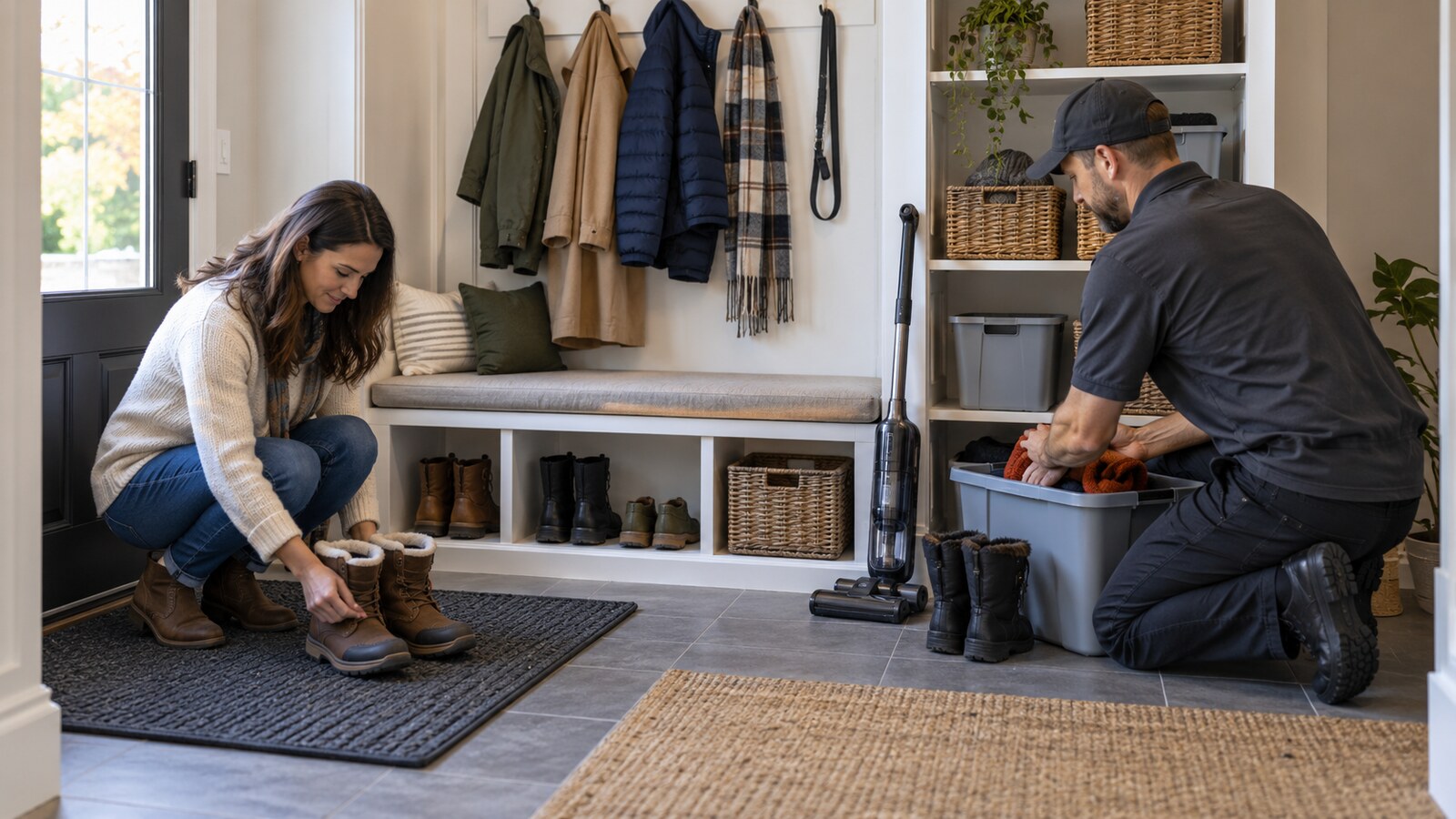
Ottawa entryways work hard once colder weather arrives. Boots bring in moisture and grit, bulky coats compete for hook space, and gloves or hats can disappear just when someone needs to leave. A mudroom, side entrance or small apartment foyer does not have to be large to work well, but it does need a clear route and a place for wet items.
A useful reset is more than placing extra baskets by the door. It starts by removing what no longer belongs, checking the floor and storage, and assigning limited space to the items used most often. The result should be easy to maintain on a busy morning, not a display that only works while everything is perfectly arranged.
Define the entryway’s daily jobs
List who uses the entrance and what normally comes through it. A family entrance may need room for several pairs of boots, backpacks and children’s winter gear. A front foyer used by guests may need a simpler coat and shoe plan. In a rental or condo, the usable area may stop at the unit door rather than extending into a shared hallway.
Identify the route that must remain open from the door to the rest of the home. Include the full door swing, access to locks and light switches, stairs, nearby closets and any mobility equipment. Storage that narrows this route or forces people to step over shoes will create more work through the season.
Take a few wide photos before emptying the area. They help show the amount of furniture and ordinary contents, the flooring material and the access conditions if professional help is being considered. Avoid including keys, alarm panels, mail or other private information in photos sent for a quote.
Empty the area by category
Remove loose items in useful groups rather than creating one mixed pile. Separate footwear, outerwear, bags, sports equipment, pet supplies, reusable shopping bags and cleaning tools. Keep household keys, identification and important documents with the homeowner instead of placing them in general sorting bins.
Make simple decisions: return to the entryway, relocate within the home, donate if accepted, ordinary non-hazardous removal, or special handling. Items that belong to another person should be set aside for approval. A worn boot may be obvious; a coat, work uniform or piece of sports equipment may not be.
Do not use the entryway as temporary storage for paint, solvents, fuel, pressurized cylinders, leaking batteries or unknown products. These are not ordinary household clean-up items and should be handled through an appropriate current program or specialist.
Inspect the floor, threshold and storage
With the area empty, check the floor for loose tiles, lifted edges, cracked grout, damaged boards or places where moisture collects. Look at the threshold and door sweep without blocking the doorway. Cleaning and organization will not repair a failed floor or exterior door, so note defects that need a qualified trade or property manager.
Test hooks, shelves, cubbies and benches by hand before loading them. Loose fasteners, bowed shelves or unstable furniture should be repaired or removed rather than hidden behind coats. Do not place heavy bins overhead where someone must reach across a narrow entrance.
Clean from high surfaces toward the floor using methods suitable for each finish. Vacuum corners, under the bench and inside empty cubbies. Wipe ordinary dust from washable surfaces and allow the area to dry before returning clothing or footwear.
Build a practical wet-boot zone
Place the wettest footwear close enough to the door that people do not cross the room before taking it off. A stable boot tray or other suitable containment surface should fit the available space without interfering with the door swing. Leave enough room to sit or stand safely while changing footwear.
Use an absorbent, low-profile entrance mat that lies flat and suits the floor beneath it. Check the underside regularly rather than allowing moisture to remain trapped. An oversized mat that curls at the edges or blocks the threshold can become another obstacle.
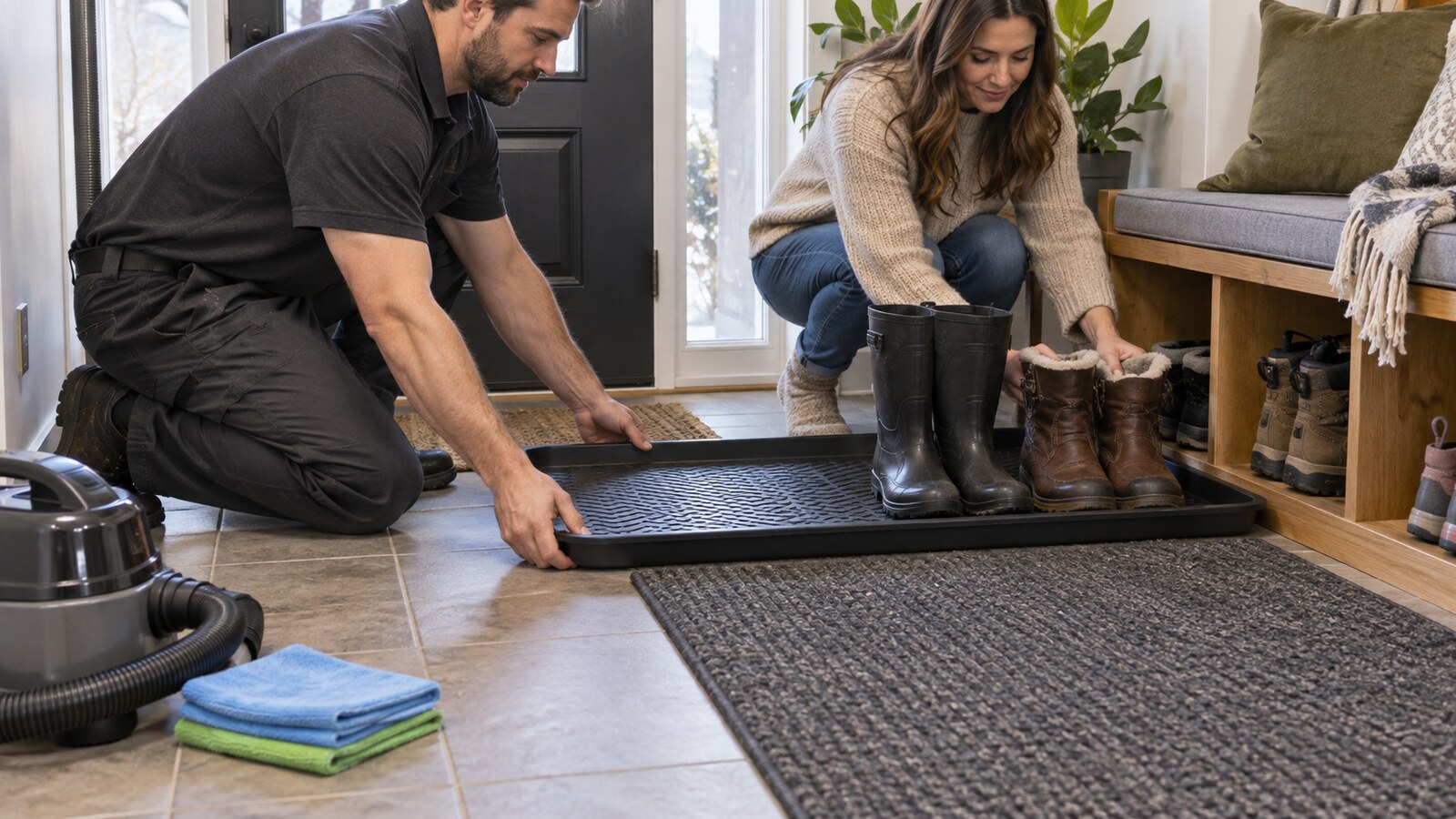
Keep only in-season daily footwear in the most convenient positions. Clean and dry off-season shoes before moving them to longer-term storage. If several people share a small entrance, assigning one section per person is usually easier to maintain than arranging everything by colour or style.
Sort coats and small winter accessories
Check that everyday coats fit the available hooks without piling on top of one another. Heavy winter coats need secure support and air around them. Formal, outgrown or rarely used outerwear can move to another closet instead of occupying the prime space beside the door.
Group hats, mittens, scarves and removable boot liners by person or purpose. Shallow open containers work well for items used every day because their contents remain visible. Closed bins can suit backups or less frequent gear, provided they are easy to reach and do not become a place for unrelated clutter.
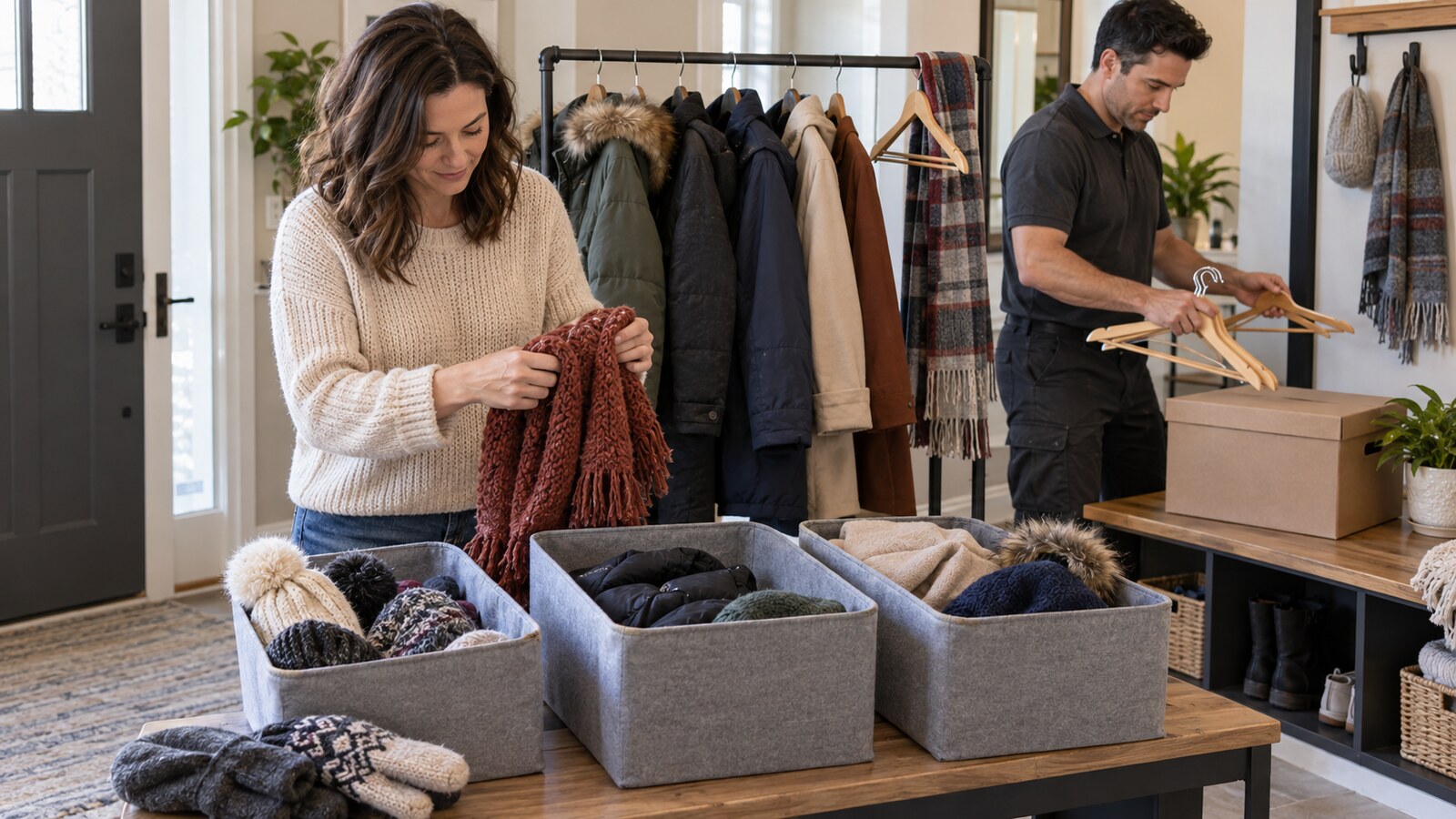
Set aside clean, usable items for a donation destination that has confirmed it can accept them. Clothing that is wet, heavily damaged or contaminated should not be presented as reusable. Bag approved donation items separately so they are not confused with ordinary removal.
Give bags, mail and pet gear a controlled space
Backpacks, handbags and reusable shopping bags need a limit. Keep the ones used regularly near the door and move extras elsewhere. Do not hang so much weight on a hook or rail that it pulls away from the wall.
Mail should have a small temporary landing place, not an expanding stack on a bench. Move bills, identification and confidential papers to a secure indoor location for review. Ordinary property clean-up does not replace secure document destruction.
For pet gear, choose one washable container for leashes, towels and outdoor accessories. Keep food, medication and waste products in appropriate separate storage rather than combining them with footwear or children’s clothing.
Keep the route easy to clean
The most maintainable layout leaves visible floor around the main path. Avoid filling the space under every bench or adding multiple small pieces of furniture that must be moved during routine cleaning. A clear surface and one defined container usually work better than several crowded baskets.
Store the tools needed for quick upkeep where an adult can reach them without blocking the entrance. A compact vacuum, broom, washable cloths or floor-appropriate cleaning supplies may be useful. Follow product and flooring directions, and never mix cleaning products.
In a condo or apartment building, keep personal storage inside the unit unless the property manager has clearly approved otherwise. Shared corridors, stairs and exit routes should not become overflow space for shoes, mats, boxes or furniture.
Mudroom and entryway reset checklist
- Confirm the full door swing and the clear route into the home.
- Sort footwear, coats, accessories, bags and pet gear separately.
- Keep keys, identification and confidential mail secure.
- Remove off-season and outgrown items from prime storage.
- Inspect floors, thresholds, hooks, shelves and benches.
- Create a stable wet-boot area close to the door.
- Use a flat mat that suits the floor and can dry properly.
- Assign accessible storage for everyday hats and mittens.
- Separate approved donations from ordinary non-hazardous removal.
- Leave enough open floor for routine cleaning.
What to send for a firm quote
Send wide photos of the entryway, floor, furniture and items to be organized or removed. Include the Ottawa address, floor level, stairs or elevator access, parking conditions, deadline and whether shelves or benches must be moved. Identify any damaged surfaces, unusually heavy furniture or items that may require special handling.
Mattabo Property Care is fully insured for the services it provides.
Same-day service is often available but is not guaranteed until Mattabo confirms the appointment.
Readers can send photos, their Ottawa address and deadline for a firm quote.
A quote request is not a confirmed booking.
Photos are illustrative examples of typical residential service results.