Seasonal Property Care
Ottawa Patio Furniture Clean-Up Before Winter: A Practical Plan for Cushions, Frames and Storage
A practical Ottawa guide to cleaning, drying and storing patio furniture before winter, with clear steps for cushions, frames, covers and access routes.
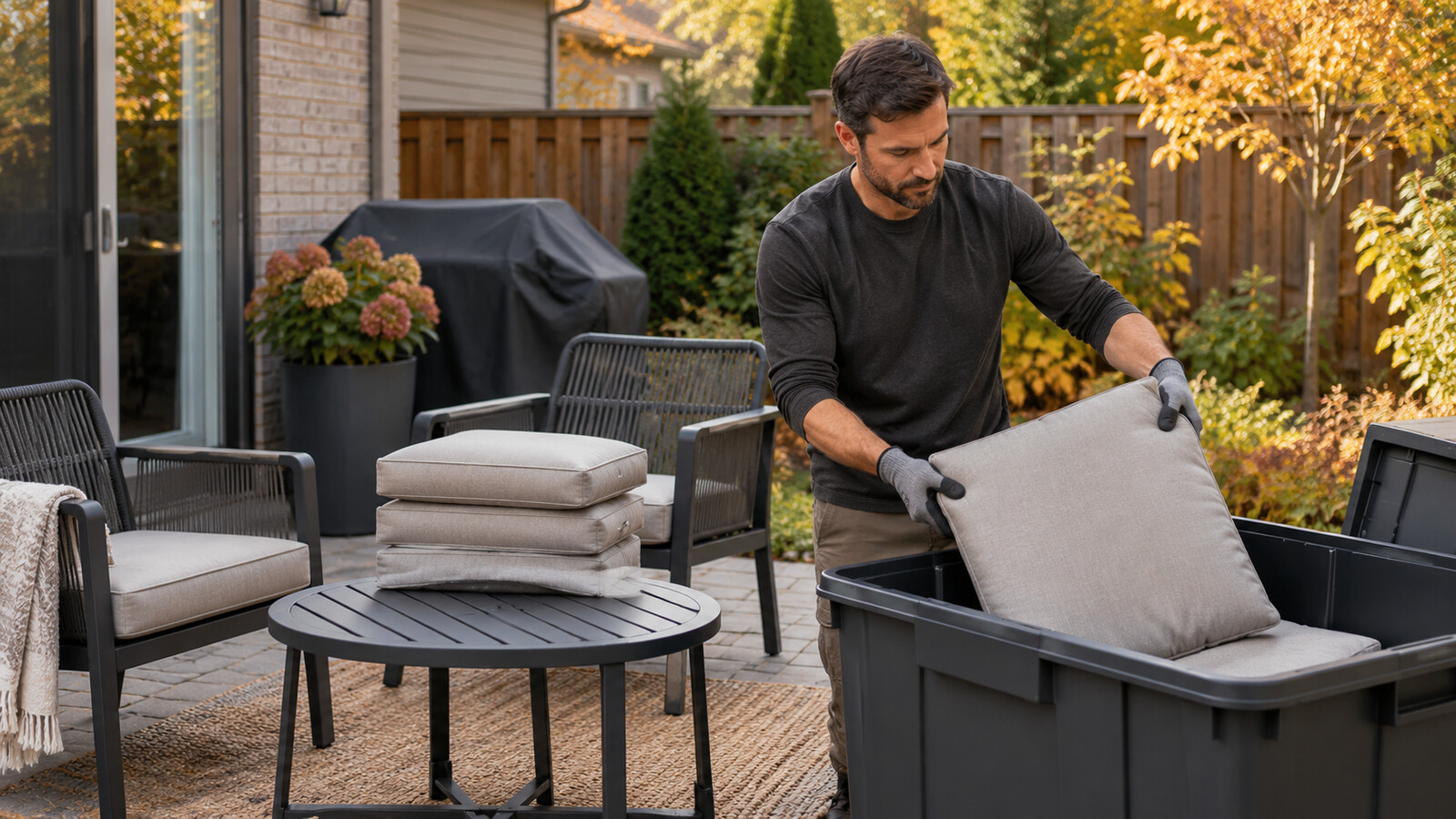
Patio furniture can look simple until it is time to put everything away. A single Ottawa outdoor space may include fabric cushions, metal frames, resin chairs, wood pieces, glass tabletops, planters, covers and small accessories. Each item needs a slightly different decision before winter storage.
A good seasonal clean-up is not about rushing every chair into the garage. It is about removing loose debris, using surface-appropriate cleaning methods, allowing every item to dry fully and building a storage arrangement that remains accessible. The work goes more smoothly when sorting comes before washing.
Start with an inventory and a storage destination
Photograph the patio as it stands and group matching cushions, covers and furniture pieces. Check beneath tables and inside storage benches for small accessories. Decide which items will remain outdoors under fitted covers, which will move to a garage or shed, and which ordinary non-hazardous items are approved for removal.
Measure the storage space before moving anything. Confirm shelf depth, door width, ceiling clearance and the floor area needed for other winter equipment. A chair that fits through the patio door may still block a snow shovel, electrical panel or vehicle path once it reaches the garage.
Separate cushions from furniture frames
Remove loose seat and back cushions before cleaning the frames. Pair each cushion with its chair or sofa section so reassembly is straightforward. Inspect seams, zippers, ties and care labels. If a cover is designed to be removed, follow its manufacturer instructions rather than assuming it can be machine washed.
Set aside cushions that are already wet, heavily damaged, mould-affected or carrying an unusual odour. They may need specialized assessment or replacement rather than routine seasonal cleaning. Do not seal damp fabric in a tote or bag simply to finish the job faster.
Match the cleaning method to the material
Begin with dry debris. Brush or vacuum loose leaves, dust and grit from seams, mesh, slats and frame joints. Then test a mild cleaning method on an inconspicuous area. Powder-coated metal, resin, finished wood, wicker-style materials and outdoor fabric can react differently to moisture, brushes and cleaners.
Avoid aggressive pressure or harsh scrubbing on furniture unless the manufacturer specifically permits it. High pressure can damage fabric, force water into joints, lift finishes or loosen woven material. Use soft tools and controlled moisture, and keep cleaning products away from plants, soil and surfaces that may be affected by runoff.
Inspect joints, feet and fasteners while cleaning
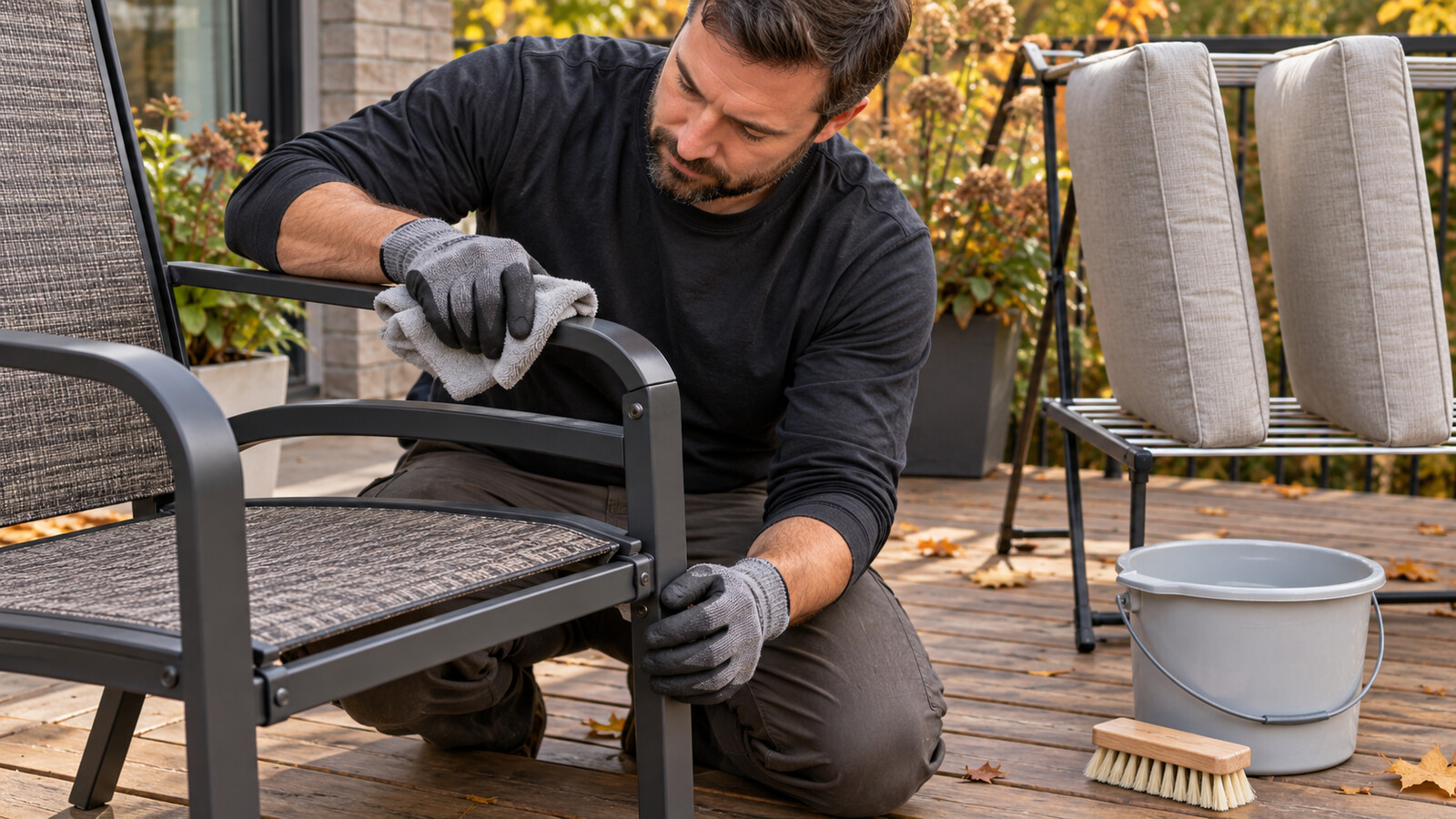
Cleaning is a useful time to inspect the parts that are easy to overlook. Check chair feet, table levellers, bolts, folding mechanisms and connection points for looseness or damage. Keep hardware with the correct item, and do not force a mechanism that is stiff or misaligned.
Surface rust, cracked resin, splintered wood and torn fabric should be documented so the owner can decide whether to repair, replace or remove the item. Routine clean-up does not include structural furniture repair. Unstable pieces should be kept out of normal use and moved only with an appropriate handling plan.
Dry every surface before covering or stacking
After cleaning, place cushions upright with air around both faces. Open zippers or vents only where the product instructions allow. Turn pieces as needed and check seams, piping and the underside before declaring them dry. The surface can feel dry while inner filling still holds moisture.
Frames also need attention. Water can collect inside hollow tubing, beneath glass supports and around fasteners. Wipe accessible surfaces, allow drainage and wait until joints are dry before folding or covering the furniture. Trapping moisture under a cover can undo careful cleaning.
Choose covers that fit without creating pockets
Use a cover sized for the furniture rather than a loose sheet that can sag between chair arms or table edges. A low centre can collect water and pull on the fabric. Secure the cover according to its design while preserving the ventilation the manufacturer recommends.
Remove decorative pillows, light accessories and anything that could move in wind before covering the main piece. Covers should not conceal an unstable stack. If several chairs are designed to stack, confirm that they sit securely and do not press against glass, railings or siding.
Build a storage layout that stays usable
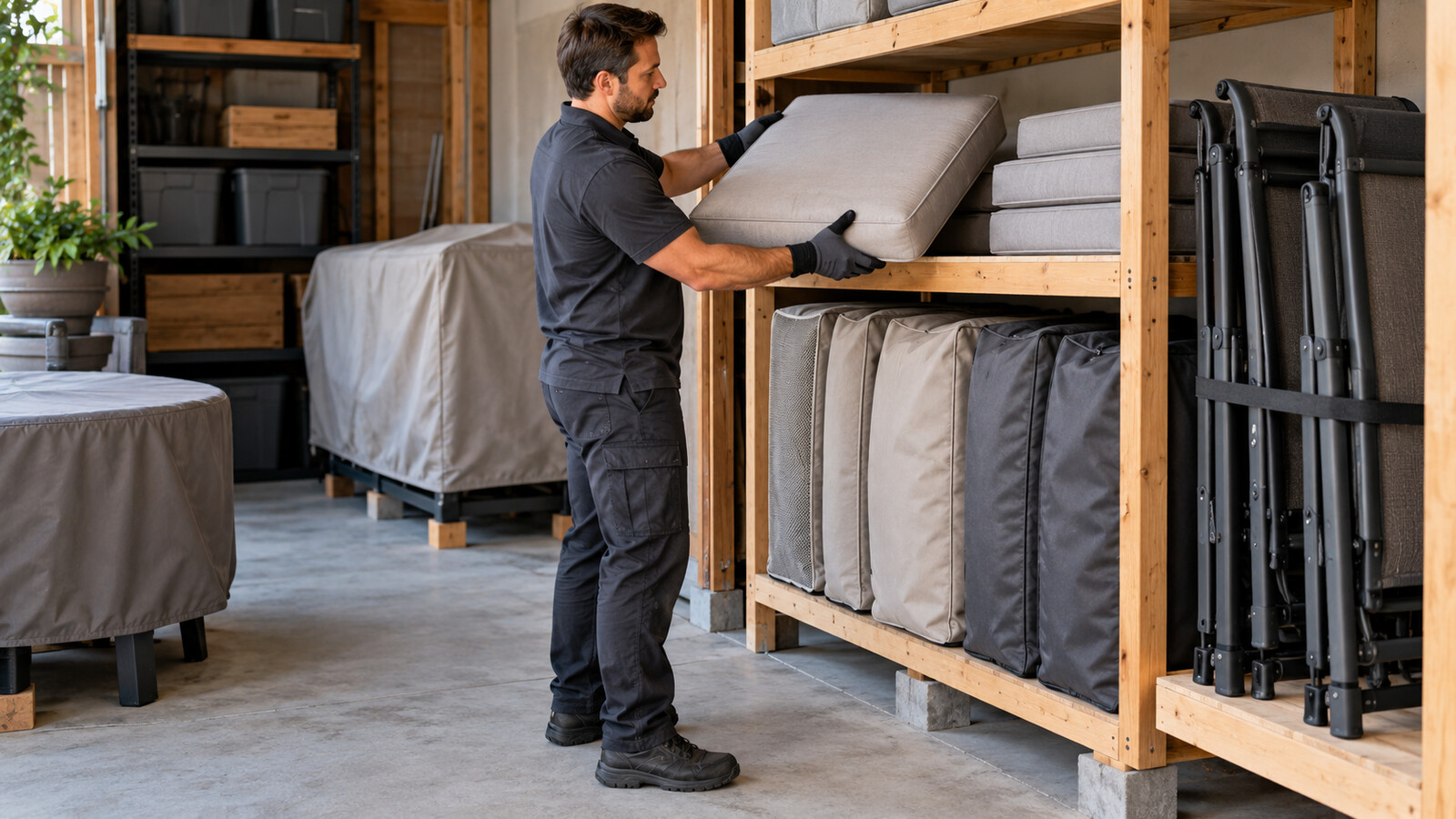
Keep dry cushions off bare concrete and away from known moisture sources. Use clean shelving or an appropriate raised platform, and leave space around fabric rather than compressing every cushion into one dense stack. Plain breathable storage bags can keep matching sets together where suitable for the item.
Store heavier furniture low and stable. Secure folded chairs so they cannot fall into a walkway, and keep glass components upright only in a rack designed to support them. Maintain access to doors, tools, winter equipment and building systems. The storage plan should survive ordinary use of the room, not just look organized on the first day.
Protect the route from patio to storage
Measure wide chairs and tabletops against gates, doorways and tight turns. Clear hoses, planters, mats and garden tools before carrying starts. Use floor protection indoors where furniture feet or remaining grit could mark a finished surface.
Remove loose cushions and detachable parts before lifting large frames. Use two people for awkward items rather than twisting through a narrow opening. If a table has a removable glass top, follow the manufacturer handling instructions and store it separately with proper support.
Decide what should not be stored
Broken frames, badly degraded cushions and furniture that no longer stands safely can take up valuable indoor space. Separate approved ordinary non-hazardous removals from items the owner still needs to assess. Do not discard hardware, covers or matching pieces until ownership and condition are confirmed.
Propane cylinders, fuel, batteries, chemicals, pest-contaminated material and unknown liquids are not ordinary patio-furniture junk. Keep them out of the removal pile and arrange the correct handling route for each material. A clear exclusion zone prevents accidental loading.
Patio furniture winter-preparation checklist
- Photograph the patio and match cushions, covers and furniture pieces.
- Confirm what will remain outside, move to storage or be removed.
- Measure the storage area and the complete carrying route.
- Brush or vacuum loose debris before using moisture.
- Follow care instructions and test cleaning methods in a hidden area.
- Inspect joints, feet, fasteners and folding mechanisms.
- Dry cushion seams, inner filling, frames and joints completely.
- Use properly fitted covers without creating water-catching pockets.
- Keep fabric raised and store heavy furniture low and stable.
- Maintain clear access to doors, tools and winter equipment.
- Separate hazardous, regulated and unknown material from ordinary removal.
What to send for a firm quote
Send wide photos of the patio and storage area, plus closer photos of cushions, frames, damaged pieces and tight access points. Include approximate furniture counts, stairs or gates, where items will be stored, what is approved for ordinary non-hazardous removal and when the work needs to be complete.
Mattabo Property Care is fully insured for the services it provides. Readers can send photos, their Ottawa address and deadline for a firm quote. Same-day service is often available but is not guaranteed until Mattabo confirms the appointment. A quote request is not a confirmed booking.
To plan a patio-furniture clean-up and storage reset, [contact Mattabo Property Care](/contact) with photos of the furniture, access route and destination. A clear scope helps separate cleaning, organization and approved ordinary removal before the appointment is confirmed.
Photos are illustrative examples of typical residential service results.