Rental Property Care
Ottawa Rental Bathroom Turnover Clean-Up: A Practical Handoff Guide for Property Managers
A practical Ottawa rental-bathroom turnover guide covering condition notes, vanities, fixtures, tubs, toilets, floor edges and a clear final handoff.
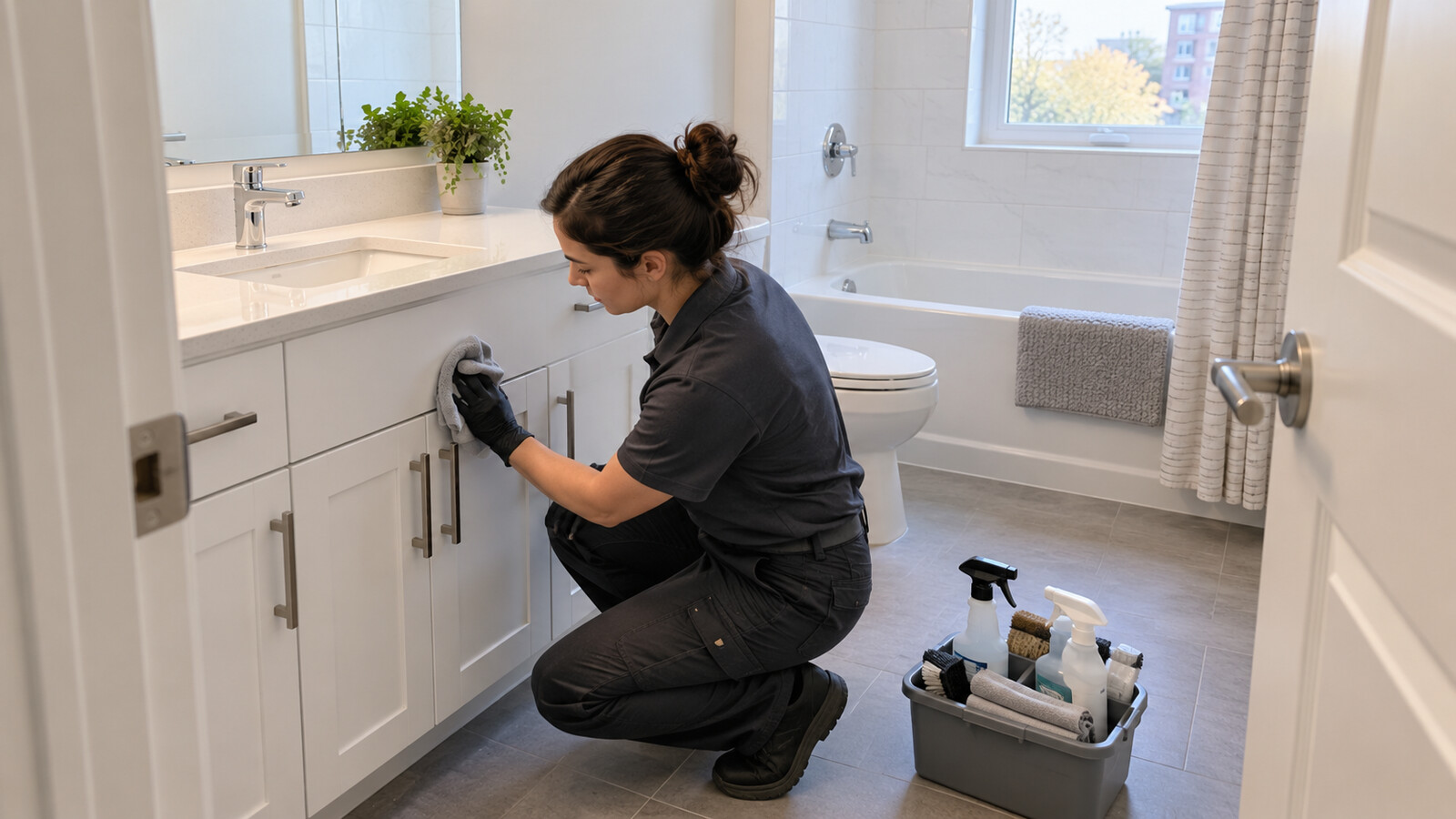
A rental bathroom may be one of the smallest rooms in a unit, but it can hold up an otherwise straightforward turnover. Water marks, leftover products, cabinet contents, dusty vents and floor edges all need attention, while damaged caulking, loose fixtures or a slow drain may require maintenance rather than cleaning.
For Ottawa landlords and property managers, the useful approach is to separate cleaning from repair, document the starting condition and work in an order that keeps the room safe and available for inspection. The goal is a clean, neutral bathroom and a clear handoff—not to hide wear or make promises about conditions that need another trade.
Document the room before moving anything
Take wide photos from the doorway and closer photos of the vanity, sink, toilet, tub or shower, walls, floor and ventilation grille. Record pre-existing chips, cracked tile, loose hardware, peeling paint, damaged caulking, swollen cabinet panels or staining that may need assessment.
Photos help distinguish ordinary residue from a maintenance issue and give the property manager a consistent reference at final walkthrough. Do not clean first and try to reconstruct the original condition later.
Confirm what is authorized for removal
Clear only items the landlord or property manager has approved. Check the vanity, medicine cabinet, shower ledges, hooks and the space behind the door. Personal documents, medication, toiletries and reusable tenant belongings should be set aside according to the manager’s instructions rather than treated as ordinary waste.
Separate empty packaging and ordinary non-hazardous items from batteries, needles, chemicals, unknown containers or anything contaminated. Sharps, biological material and unidentified substances require the correct specialized handling and should not enter a routine turnover load.
Set up ventilation, lighting and a clear exit
Turn on the available bathroom light and confirm that the doorway remains unobstructed. Use the exhaust fan or suitable ventilation when it is working, but do not rely on a fan that is noisy, damaged or not moving air. Keep the hallway clear so supplies do not block access for cleaners, maintenance staff or the property manager.
Place products in a stable caddy outside the main walking line. Read product labels, use only compatible materials and never mix cleaning products. More product does not replace dwell time, agitation or careful rinsing.
Inspect the vanity before cleaning
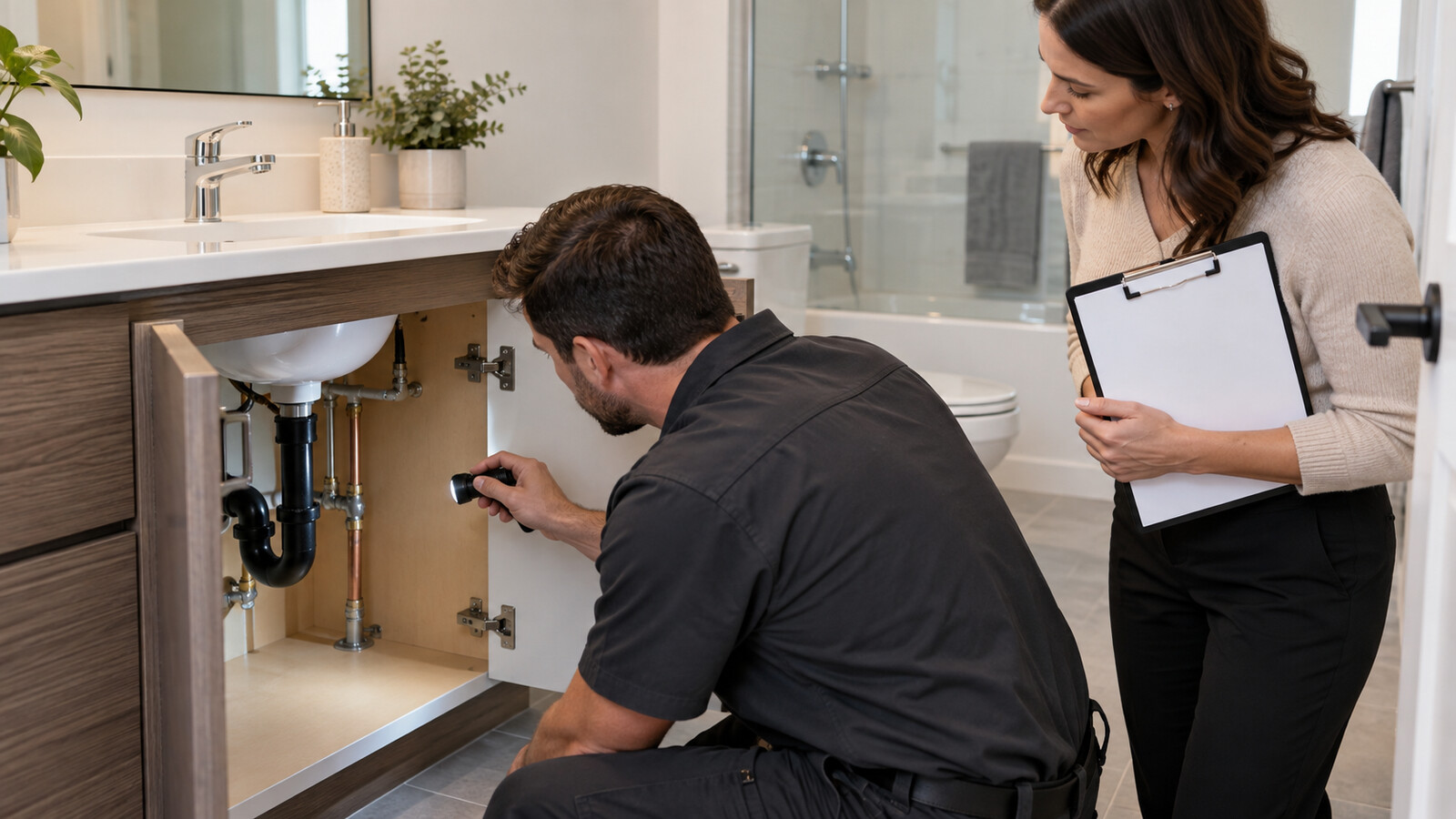
Empty approved contents from the vanity and look under the sink while the cabinet is dry. Note moisture, warped material, loose hinges, corrosion, active drips or staining around supply and drain connections. Routine cleaning should stop around an active leak or damaged electrical component until the correct repair is arranged.
Vacuum or collect dry debris from accessible cabinet surfaces before wiping. Use minimal moisture on wood-composite interiors and dry the area promptly. Do not loosen plumbing fittings, remove trap components or cover evidence of water damage.
Clean the mirror, sink and vanity in a controlled order
Begin with upper surfaces so loosened dust and residue move downward. Clean the mirror with a method suitable for its coating and keep excess liquid away from unsealed edges. Wipe the backsplash, faucet, handles, counter and basin without flooding seams or openings.
Check around the faucet base and sink rim as the surface dries. Mineral marks, worn finishes, scratches and failing sealant may remain after suitable cleaning. Record them honestly rather than using an aggressive abrasive that could damage the finish.
Treat the tub or shower as several materials
A tub or shower can combine acrylic, enamel, glass, metal, tile, grout, caulking and painted trim. Identify the materials before selecting a pad or product. Test an inconspicuous area and use the least aggressive effective method.
Work from the upper surround downward, then address ledges, fixtures and the basin. Keep water controlled near wall joints and outside the enclosure. Cleaning can remove suitable surface residue, but it does not repair missing grout, cracked tile, failed caulking, loose doors or damaged fixtures.
Keep drain and mould concerns in the right scope
Remove only accessible ordinary surface debris from a drain opening. A turnover clean is not a plumbing service, and tools or chemicals should not be used to force a slow or blocked drain without authorization. Record slow drainage, recurring odour or water backing up.
Small amounts of ordinary surface residue can be addressed with a compatible method. Significant mould, recurring moisture, soft wall material or growth extending beyond an accessible finished surface should be documented and referred for appropriate assessment rather than concealed.
Clean the toilet without spreading residue
Use separate colour-coded or clearly designated cloths and tools for the toilet. Work from cleaner touchpoints toward higher-contact and lower areas: handle, tank, lid, seat, exterior bowl and base. Follow product directions and avoid splashing walls or nearby stored supplies.
Check for movement, active leaks, damaged seats or failed sealant without attempting repairs outside the agreed scope. The floor around the base should be cleaned carefully, but persistent moisture or staining needs to be reported.
Address touchpoints, vents and overlooked edges
Wipe compatible door handles, light switches, towel bars, hooks and accessible trim. Dust the exterior face of the exhaust grille without pushing debris into the fan or removing components unless that work is specifically authorized and safe.
Check behind the door, beside the vanity, along the tub apron and around baseboards. These narrow edges often hold hair and dust that become obvious once the larger surfaces are clean. Keep cloths and tools separated according to the area they have touched.
Leave the floor until the end
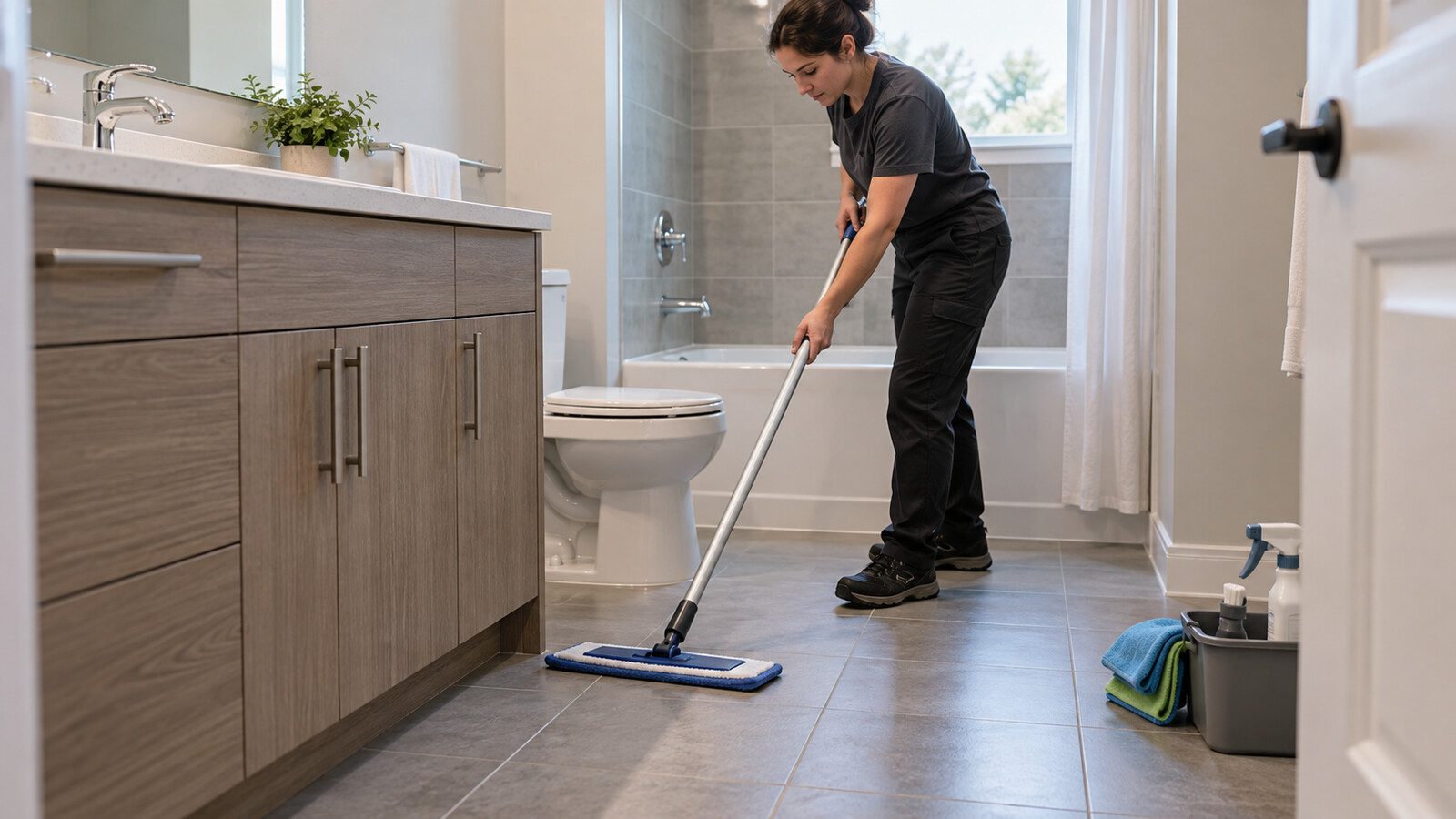
Collect dry debris first, then clean the floor with a method suitable for the finish. Work from the far corner toward the doorway so no one must cross a wet surface. Use controlled moisture around vanity panels, baseboards and transitions to the hallway.
Allow the floor to dry before the final inspection. Do not return waste bins, mats or accessories until the manager has confirmed what belongs in the unit and the surfaces are ready.
Complete a final handoff from the doorway
Inspect the dry room from the doorway, then check each fixture at close range. Confirm that approved belongings and waste are gone, cabinet doors and drawers operate, touchpoints are clean, the floor is dry and no supply has been left behind.
Provide a short maintenance list for anything outside the cleaning scope, with photos where useful. Separate urgent issues such as active leaks or unsafe electrical conditions from cosmetic wear that can be scheduled later. A clear list is more valuable than quietly working around a problem.
Rental bathroom turnover checklist
- Photograph the room and record existing damage before cleaning.
- Confirm which tenant items are authorized for removal.
- Separate medication, sharps, chemicals and unknown material from ordinary waste.
- Keep the doorway and hallway route clear.
- Inspect the dry vanity cabinet for leaks, swelling and loose hardware.
- Clean mirrors, sinks and counters without flooding seams.
- Match tub and shower methods to each surface material.
- Record slow drains, failed caulking, damaged grout and recurring moisture.
- Use separate tools for the toilet and surrounding surfaces.
- Dust accessible vents and clean handles, switches, bars and hooks.
- Clean the floor last and allow it to dry before inspection.
- Provide a concise maintenance list at handoff.
What to send for a firm quote
Send wide photos from the bathroom doorway plus closer images of the vanity interior, tub or shower, toilet base, floor edges and any condition that may need maintenance. Include the unit type, floor or elevator access, parking details, deadline and whether approved items need ordinary non-hazardous removal.
Mattabo Property Care is fully insured for the services it provides. Readers can send photos, their Ottawa address and deadline for a firm quote. Same-day service is often available but is not guaranteed until Mattabo confirms the appointment. A quote request is not a confirmed booking.
To plan an Ottawa rental bathroom turnover, [contact Mattabo Property Care](/contact) with the photos, access details and required handoff time. A defined scope helps separate cleaning, authorized removal and maintenance notes before the appointment is booked.
Photos are illustrative examples of typical residential service results.