Rental Property Care
Ottawa Rental Bedroom Turnover Clean-Up: A Practical Handoff Guide for Closets, Baseboards and Floors
A practical Ottawa guide for rental bedroom turnovers, covering condition notes, closets, trim, floors, access and a clear handoff before the next tenant arrives.
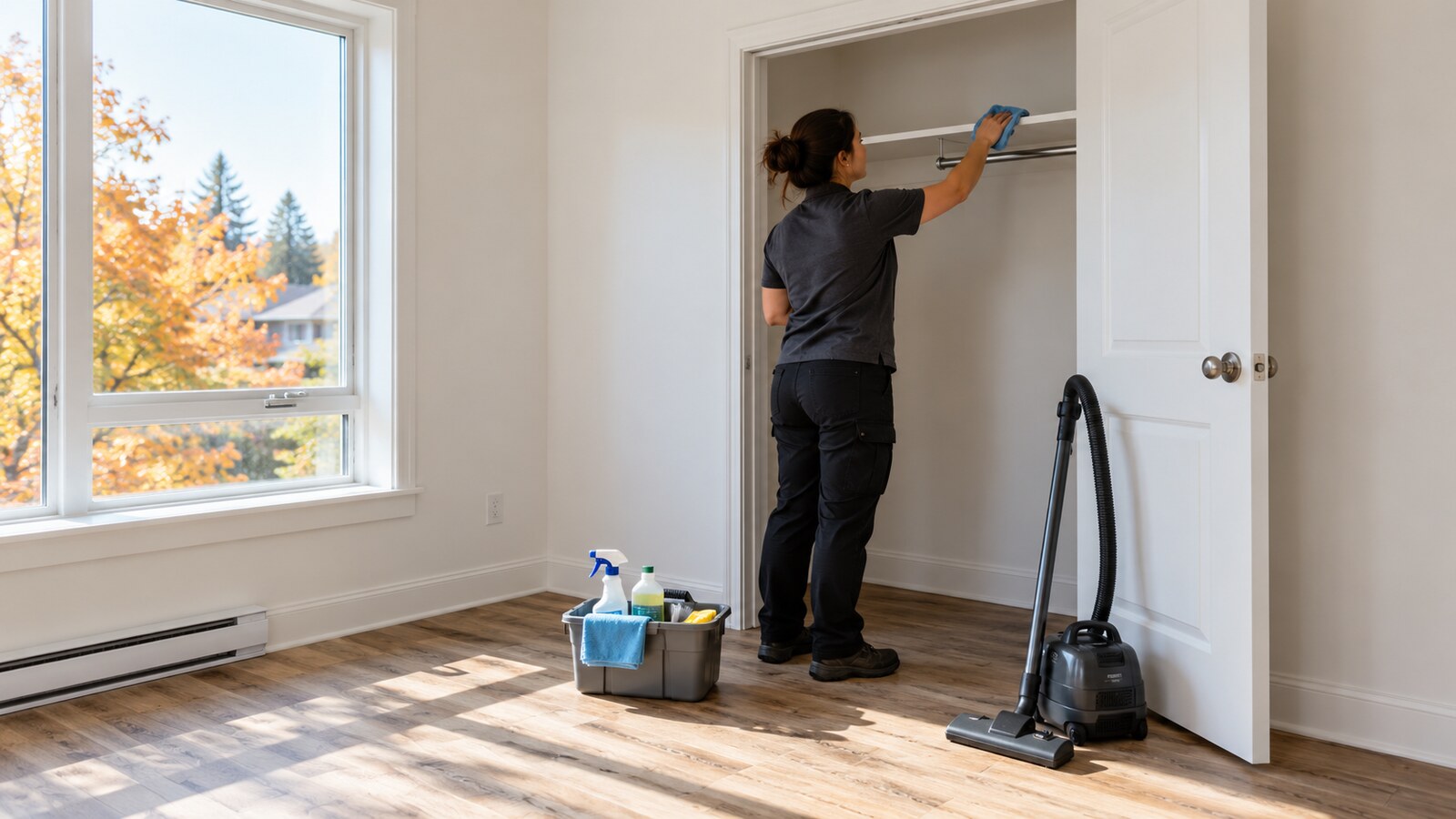
A rental bedroom may look simple once the furniture is gone, but it still needs a deliberate turnover plan. Closets hide dust and forgotten items, baseboards collect marks, floor edges hold debris, and small maintenance concerns are easy to miss when the room is rushed. For Ottawa property managers and landlords, a clear process helps separate cleaning from repairs and creates a useful record before the next tenant receives the keys.
The goal is not to make an older room look newly renovated. It is to leave the approved scope clean, accessible and honestly documented. Start with possession and condition records, remove only authorized items, clean from high surfaces to low ones, and finish with photographs taken after the room has dried and settled.
Confirm possession and the turnover scope
Before anyone removes belongings, confirm that the tenancy handoff is complete and that the person directing the work has authority over the contents. A jacket in a closet, a storage bin under a shelf or hardware left beside a wall may still belong to the outgoing tenant or the property owner. Put uncertain items in a hold area and ask for a decision instead of treating them as junk.
Define whether the appointment covers ordinary loose-item removal, interior clean-up or both. Wall repair, painting, pest treatment, mould remediation, flooring replacement and electrical work are separate scopes. Identifying those limits at the start prevents cleaners from hiding a maintenance concern or being asked to solve work that needs another trade.
Document the bedroom before cleaning begins
Take wide photographs from the doorway and opposite corners, followed by close views of walls, closet interiors, window trim, doors, baseboards and flooring. Record existing scratches, chips, loose hardware, cracked blinds, damaged screens, lifted flooring or staining without deciding who caused it. A dated condition record is more useful than a vague note made after cleaning.
Check whether personal information remains on papers, labels or medication packaging. Set those items aside for the manager rather than photographing or discarding them casually. Also note sharps, unknown liquids, pest evidence, heavy odours or suspected hazardous material. Those conditions can change the work plan and should not be mixed into an ordinary turnover clean-up.
Clear the closet without losing hardware
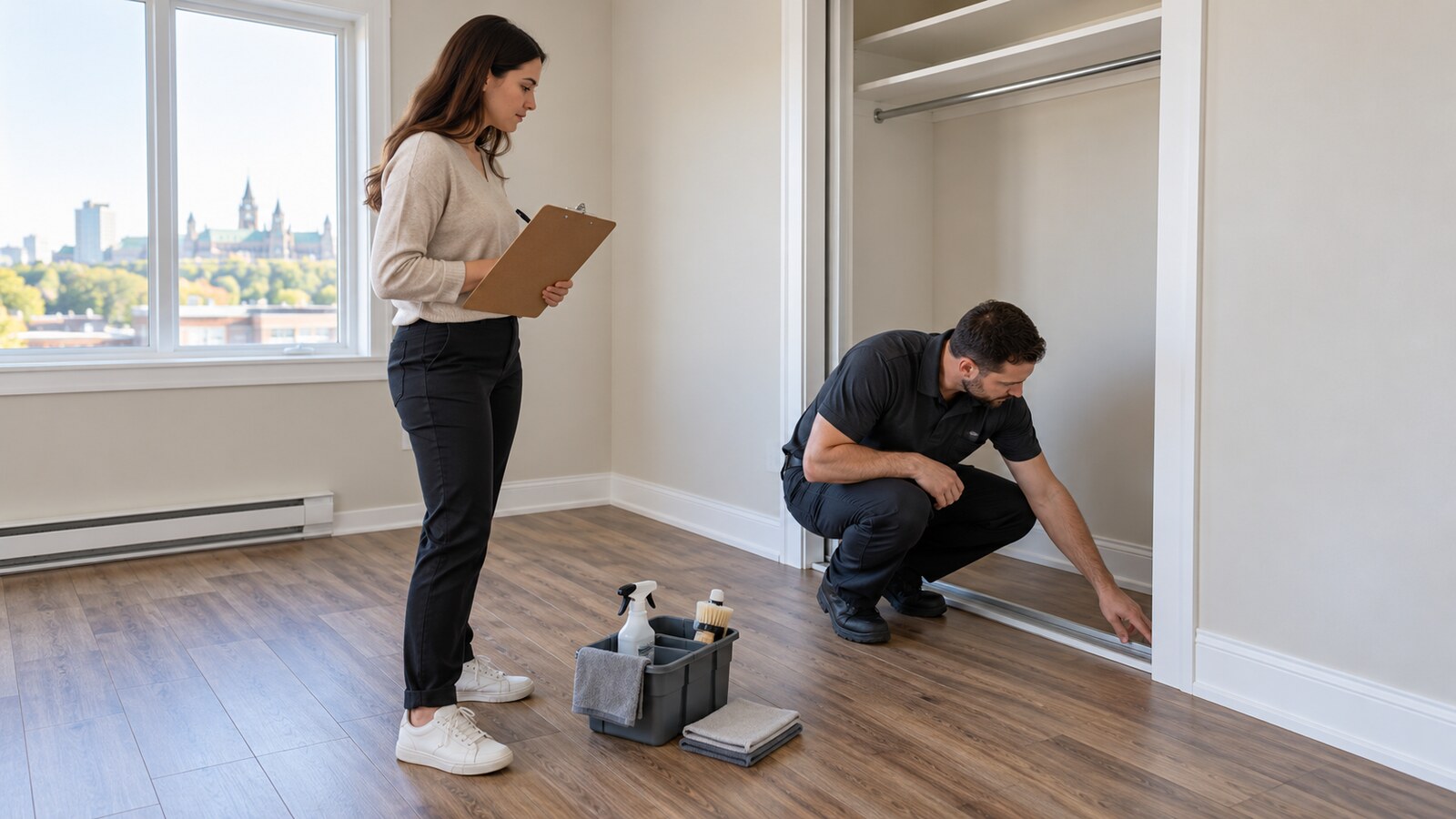
Empty the closet only after the contents have been approved for removal. Keep shelf supports, door guides, hanging rods and other property hardware with the unit. Small pieces should go into a labelled container for the manager, not into a general debris bag. Test sliding or folding doors gently and report binding, missing guides or loose tracks rather than forcing them.
Vacuum upper shelves, corners, tracks and the floor before damp wiping. Use a product suitable for the surface and avoid saturating unfinished shelf edges or particleboard. Clean the rod, supports and door pulls, then leave doors open long enough for the interior to dry. A closet can look clean at first glance while still holding dust along the track and shelf lip.
Work from upper surfaces down to trim
Begin with reachable ledges, window trim, the top of baseboard heaters where appropriate and other dust-catching surfaces. Follow with doors, handles, switch plates and painted trim using a lightly damp cloth. Do not spray liquid directly into electrical components or heating equipment. If a cover is loose, damaged or unusually dirty inside, flag it for maintenance.
For painted walls, remove loose dust first and spot-test a small, inconspicuous area before wiping marks. Aggressive scrubbing can change the sheen or lift paint, leaving a larger visual defect than the original mark. Cleaning should reveal the condition of the wall, not substitute for touch-up painting.
Give baseboards and corners a separate pass
Baseboards are easy to overlook because they sit below normal sightlines. Vacuum or brush away loose debris, then wipe the top edge, face and floor joint with a controlled amount of solution. Pay attention to corners behind the door, beside the closet and around heater ends, where hair and dust tend to collect.
Report gaps, swollen trim, separated caulking or moisture marks rather than covering them with furniture or cleaning products. In a basement or ground-floor bedroom, a water mark may need investigation before the room is ready. The cleaning record should distinguish removable surface soil from a material condition that remains.
Clean floors last and protect the exit route
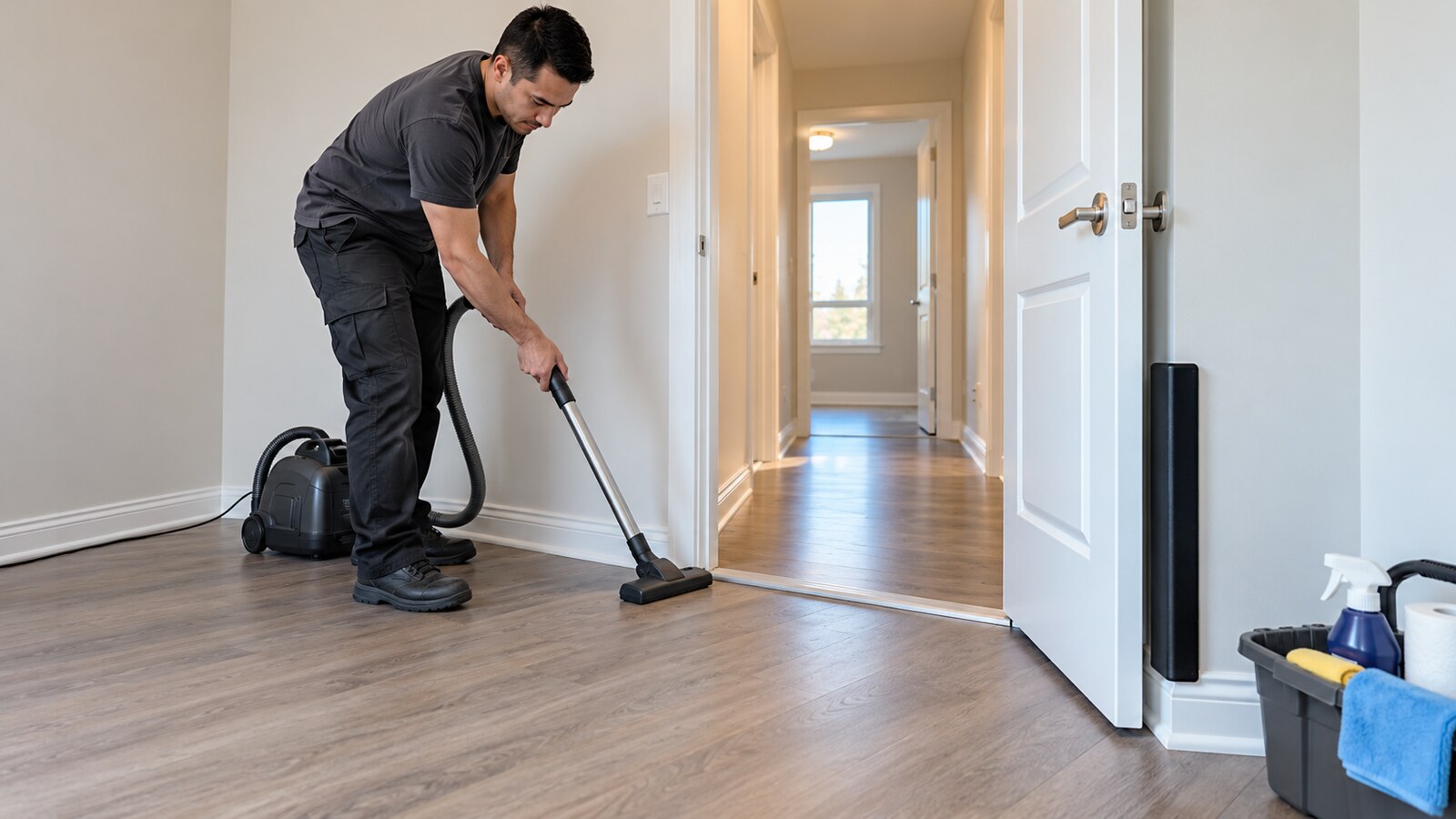
Vacuum the perimeter, closet floor, doorway and open room before using any damp method approved for the flooring. Move slowly along edges so the final pass does not push debris into a corner. Use only the amount of moisture the material can tolerate, and never assume that one product is suitable for laminate, hardwood, vinyl and tile.
Keep the doorway, hallway and stairs clear while supplies leave the unit. Protect finished thresholds and corners when equipment passes through them. Work toward the exit so the cleaned floor is not crossed repeatedly, then allow adequate drying time before the final inspection or photography.
Coordinate cleaning with maintenance and painting
The order of work matters. If patching, sanding or painting is still required, schedule detailed floor cleaning after that work or expect a final touch-up pass. If maintenance needs access to the closet track, heater, window or outlet, leave those areas open. A room that is cleaned too early may need to be done twice.
Share a concise list of unresolved items with the property manager. Useful notes identify the location and observable condition: for example, a loose closet guide at the right-hand door or lifted flooring beside the window wall. Avoid diagnosing causes unless the person making the note is qualified to do so.
Complete a consistent bedroom handoff
- Confirm possession, access and the authorized removal list.
- Photograph the room, closet, trim and flooring before work begins.
- Set aside uncertain belongings and personal information for the manager.
- Keep closet hardware and unit fixtures with the property.
- Clean upper surfaces before doors, trim, baseboards and floors.
- Use products and moisture levels suitable for each material.
- Report damage, moisture marks, pests and maintenance concerns separately.
- Keep the exit route clear and allow damp surfaces to dry.
- Take final photographs from the same useful room angles.
- Confirm what was completed and what remains outside the cleaning scope.
For multi-unit properties, include the unit number, floor, parking or elevator instructions, access window and contact person. Note whether keys, fobs or lockbox codes have a return procedure. A reliable handoff should make it easy for the manager to compare the room with the initial condition record and schedule any remaining trade work.
What to send for a firm quote
Send wide photographs of the bedroom and closet, plus close views of floor edges, trim, leftover contents and the access route. Include the unit type, floor number, parking or elevator details, whether ordinary non-hazardous items need removal, the approved cleaning scope and the turnover deadline.
Mattabo Property Care is fully insured for the services it provides. Readers can send photos, their Ottawa address and deadline for a firm quote. Same-day service is often available but is not guaranteed until Mattabo confirms the appointment. A quote request is not a confirmed booking.
To plan an Ottawa rental bedroom turnover, [contact Mattabo Property Care](/contact) with room, closet and access photos. A complete scope helps coordinate cleaning, authorized removal and the final property-manager handoff.
Photos are illustrative examples of typical residential service results.