Rental Property Care
Ottawa Rental Entryway Turnover Clean-Up: A Practical Handoff Guide for Closets, Doors and Floors
A practical Ottawa guide for cleaning and documenting a rental entryway between tenants, including approved item removal, coat closets, doors, thresholds and floor edges.
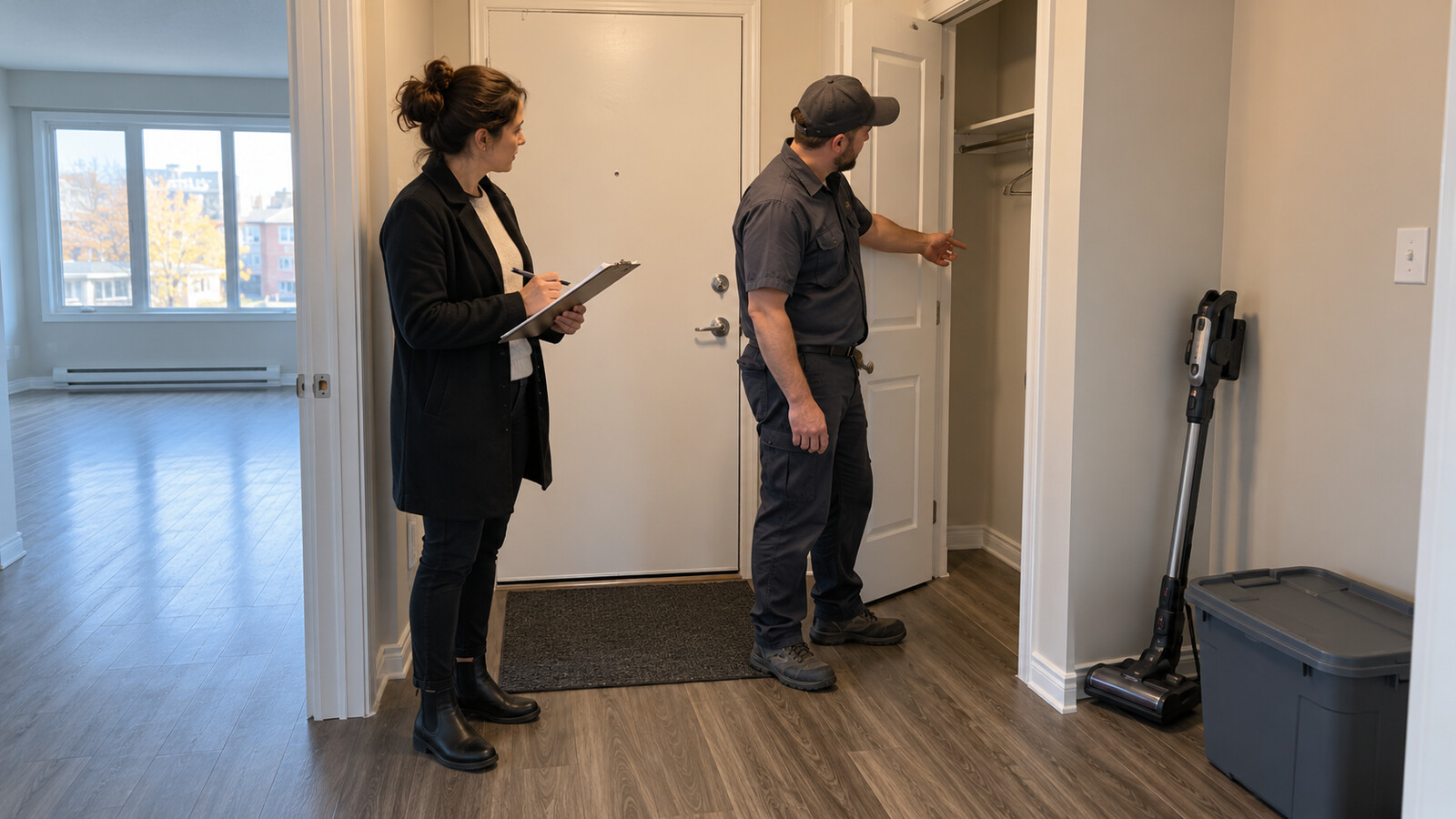
The entryway is a small part of a rental unit, but it carries a large share of the turnover work. Coats and shoes collect in the closet, grit gathers at the threshold, and wall marks appear where bags, furniture and moving boxes pass through. It is also the first area the next tenant, property manager or owner sees at handoff.
A reliable entryway reset is more than a quick sweep. The job should begin with condition notes and an approved removal list, then move through the closet, doors, trim, touch points and floors in a controlled order. This keeps maintenance issues separate from cleaning and reduces the chance that a tenant's property is removed without authorization.
Confirm the unit is ready for turnover work
Before cleaning starts, confirm who has possession of the unit, whether the former tenant has returned the keys and whether management has authorized access. If belongings remain, the landlord or property manager should decide what is to be kept, documented, stored or removed under the building's established process. A clean-up crew should not make ownership decisions.
Check for scheduled movers, contractors, inspectors or leasing staff who may need the same route. Entryway work is easier when traffic can be controlled and tools do not have to move every few minutes. Confirm parking, elevator arrangements, fobs and the location for approved waste before the appointment.
Document the condition before moving anything
Take clear photos of the door, lock area, walls, closet, baseboards, threshold and floor. Record visible damage such as loose trim, cracked tiles, deep scratches, sticking hardware or water staining. Cleaning can reveal a problem, but it should not erase the distinction between routine soil, wear and a repair that needs separate approval.
Photograph remaining items in place before they are moved. Keys, access cards, mail, medication, documents and valuables should go directly to the authorized building representative, not into a general sorting box. If there are sharps, pests, mould, unknown substances or strong odours, stop and arrange the appropriate specialized service.
Create a specific removal list
A useful list names the items and their destination: for example, one broken shoe rack for approved removal, two empty cartons for recycling and one labelled tote to remain. Avoid directions such as clear the closet or remove everything by the door. Broad instructions invite mistakes when property ownership is not obvious.
Keep removal items in one controlled staging zone away from the door swing and the main walking path. Do not block a shared corridor, stair landing or elevator lobby. Ordinary non-hazardous household items can be included only when their condition, size and materials fit the agreed scope.
Empty and inspect the coat closet
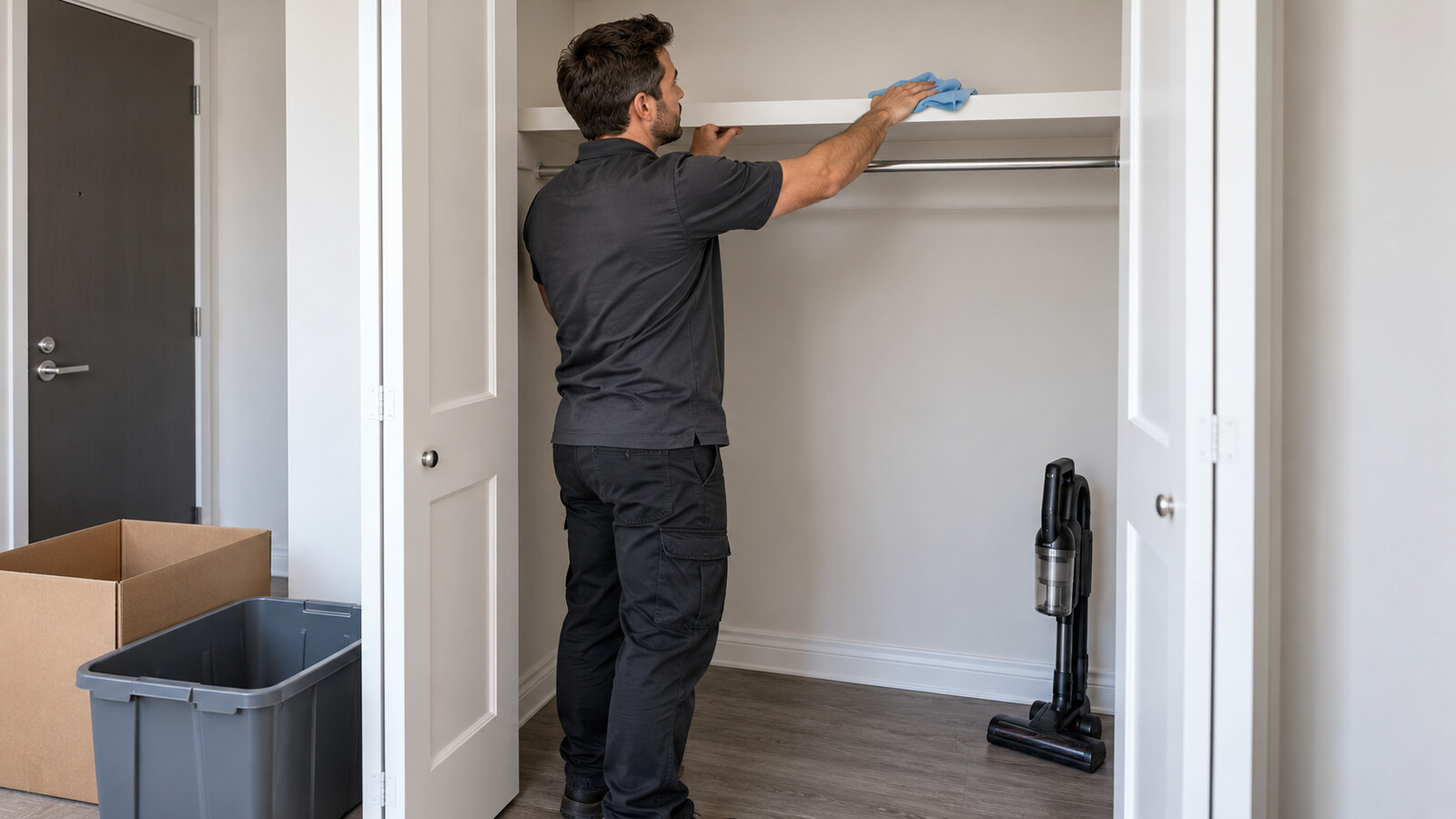
Remove only the contents management has approved, then check the upper shelf, corners, floor and the space behind the door. Small hooks, hangers and shelf pins are easy to miss. Keep hardware that belongs to the unit together and note any loose rod, sagging shelf, damaged hinge or missing stop for maintenance follow-up.
Dust the upper shelf and rod before cleaning lower surfaces. Use a method appropriate for painted walls, laminate, wood or metal rather than saturating the closet. Vacuum corners and floor edges after the shelf debris has settled. If marks do not release with the approved cleaning method, document them instead of scrubbing through the finish.
Separate door cleaning from door repair
Clean the interior door face, frame and approved touch points using products suited to the finish. Pay attention to the lower door edge, where shoes and moving boxes often leave marks. Do not flood the lock, latch, electronic hardware or weatherstripping with cleaner.
Test the door only within the property manager's authorized scope. Note whether it closes normally, latches, rubs the frame or leaves a visible gap. Loose handles, misaligned locks, damaged closers and torn weatherstripping are maintenance items. They should be documented and assigned rather than concealed by a cosmetic clean.
Clean walls, trim and touch points carefully
Start with dry dusting around trim, ledges and the top of the door frame. Spot-clean walls only after checking the paint condition in an inconspicuous area. Flat paint and older finishes can burnish, fade or lift when scrubbed aggressively. A mark that remains may need paint or repair rather than stronger cleaning.
Wipe approved switches, closet pulls and door handles with minimal moisture and a suitable product. Do not remove switch plates or dismantle hardware during routine cleaning. If a plate is cracked, a switch is loose or electrical damage is visible, stop and refer it to a qualified person.
Work from floor edges toward the exit
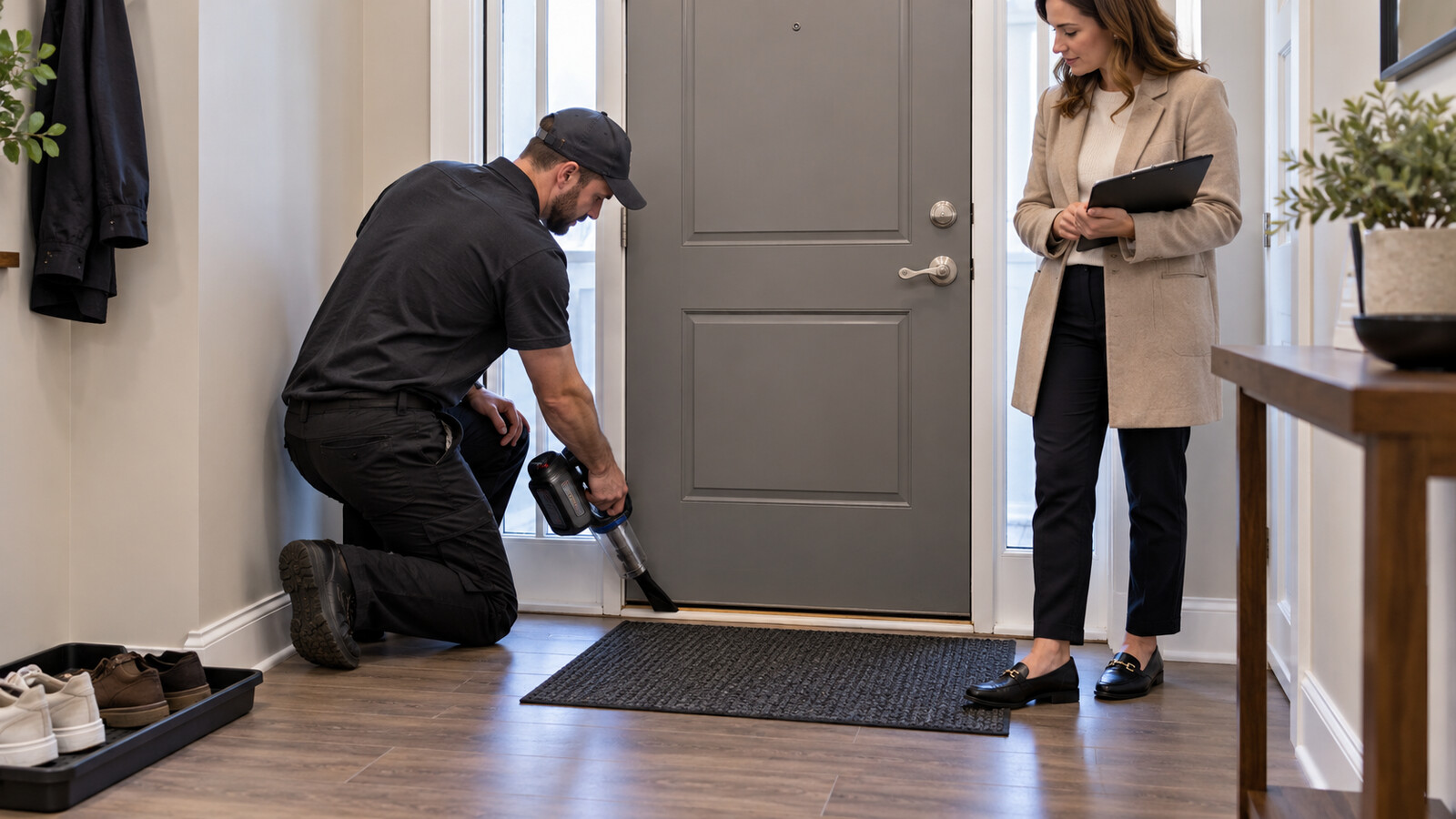
Lift and inspect removable mats or shoe trays before the final floor clean. Vacuum baseboards, closet corners and the perimeter first, then the open route. For hard floors, use the least moisture needed and a product approved for the material. Avoid leaving a wet surface in the only entrance to the unit.
Check the threshold groove, door sweep area and floor transition without prying or removing fixed components. Dirt can hide along these edges, but gaps, lifted flooring, cracked tile or swollen material are repair issues. Finish near the door so the completed section is not walked over repeatedly.
Protect the route during other turnover work
If painters, movers or repair trades are still scheduled, the entryway may not be ready for its final clean. Complete dusty or material-moving work first when possible. Use suitable floor protection that lies flat and does not prevent the door from operating. Loose sheets, curled cardboard and bulky tools can create a trip hazard in a narrow foyer.
Keep the coat closet available for inspection rather than filling it with supplies. If cleaning equipment must remain briefly, place it where the door can close and the route stays clear. Remove all temporary protection, tape and staging materials before the final handoff unless management has requested otherwise.
Complete a final entryway handoff
Review the entryway in normal lighting after surfaces are dry. Confirm the approved items are gone, the closet is empty, the floor is clear and no tools remain. Check that doors, closet panels and drawers used during the work are returned to their intended position.
Provide management with a concise list of unresolved repairs and any item that could not be handled within the cleaning scope. Confirm where keys and access devices were left. Final photos should show the complete route as well as close views of any condition that needs follow-up.
Send useful details for a firm quote
Send wide photos of the entryway and coat closet, plus close views of the threshold, remaining items and any tight access. Include the property type, floor level, parking or elevator arrangements, number of approved removal items, floor material, occupancy status and deadline. State whether other trades are working in the unit and who will provide access and ownership decisions.
Photos are illustrative examples of typical residential service results.