Rental Property Care
Ottawa Rental Kitchen Turnover Clean-Up: A Practical Handoff Guide
A practical guide for Ottawa landlords and property managers covering cabinet interiors, appliances, counters, floors, maintenance notes and final rental-kitchen handoff.
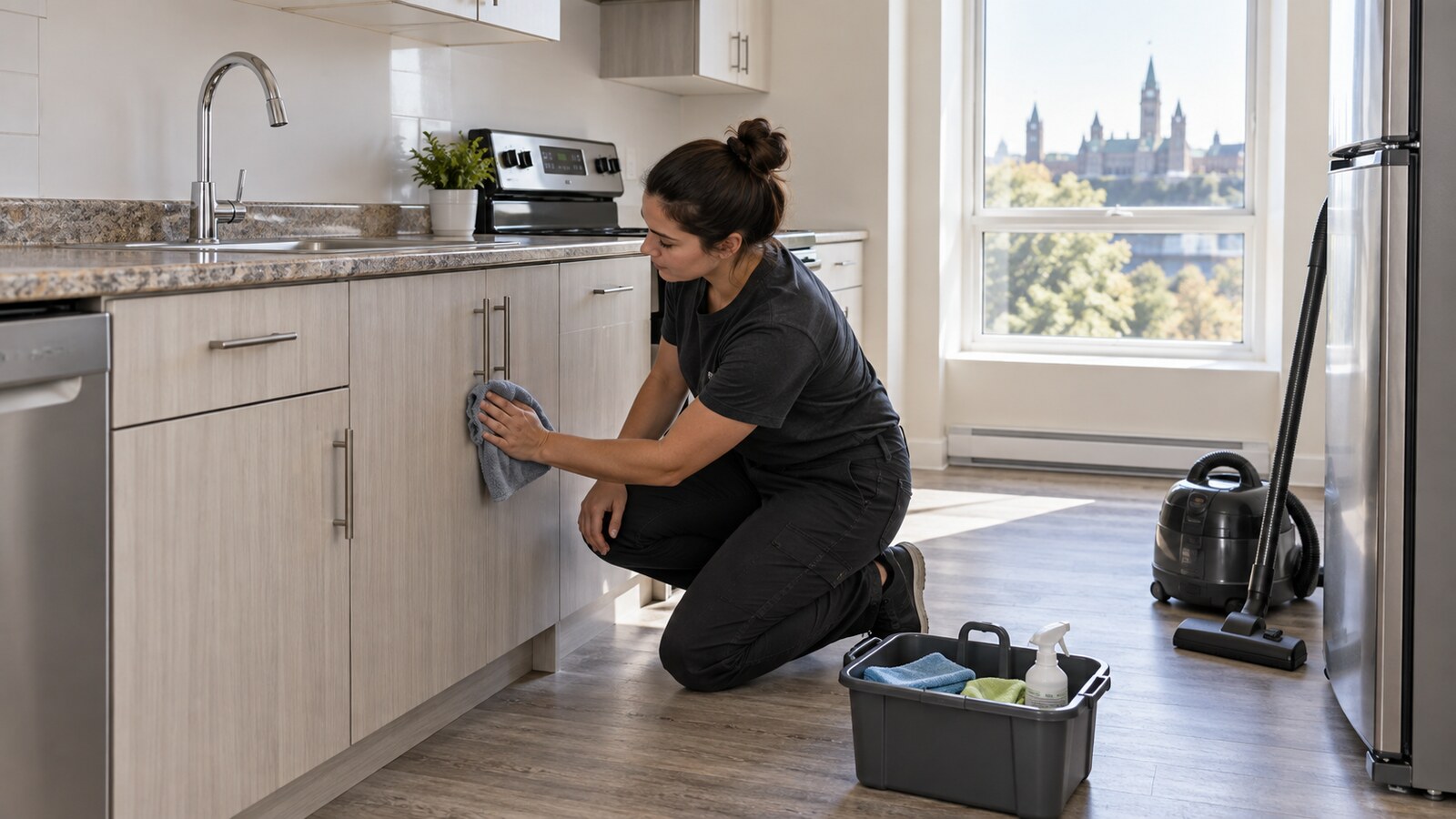
The kitchen is often the most detailed room in an Ottawa rental turnover. It combines food-contact surfaces, cabinets, appliances, plumbing fixtures, flooring and storage in a small area. A quick wipe can make the room look better from the doorway, but it may leave crumbs in drawer tracks, residue on cabinet edges and debris along appliance and toe-kick lines.
A reliable turnover clean-up starts with an empty, documented work area and a clear handoff standard. The goal is not to hide wear or treat maintenance problems as cleaning issues. It is to remove approved leftover contents, clean accessible surfaces methodically, identify anything needing repair and leave the kitchen ready for the property manager’s final review.
Define the scope before cleaning starts
Confirm whether the unit is fully vacant and which items belong to the owner. Small appliances, spare hardware, instruction manuals and cleaning products should not be removed simply because they remain in a cabinet. Property managers should identify what stays, what moves to storage, what is approved for ordinary non-hazardous removal and what needs special handling.
The expected finish should also be specific. Does the job include cabinet interiors, appliance exteriors, the inside of the refrigerator or oven, removable shelf liners, the space under movable items and ordinary loose-item removal? A written scope helps avoid assumptions and makes the final inspection more useful.
Document condition and maintenance issues first
Take clear photos before the clean-up begins. Include the full room, counters, sink, cabinet interiors, appliance fronts, floor edges and any visible damage. Photos are especially useful when several people are coordinating the turnover, such as a landlord, property manager, cleaner and repair contractor.
Cleaning should not cover up a leak, loose hinge, damaged outlet, swollen cabinet panel, cracked counter, unstable appliance or pest concern. Note these items and direct them to the appropriate owner or qualified trade. If there is unknown material, significant mould, sewage, sharps or another hazardous condition, stop ordinary cleaning and arrange appropriate specialist handling.
Remove approved contents and dry debris
Empty only the contents approved for removal. Check every cabinet, drawer, shelf and appliance cavity included in the scope. Keep keys, manuals, appliance accessories and owner-supplied parts together. Food, liquids and unlabelled containers should be separated rather than mixed into an ordinary junk load.
Collect dry debris before applying cleaner. Crumbs, loose shelf material and dust are easier to remove with a vacuum or dry cloth before surfaces become wet. This also prevents grit from being spread across cabinet faces or flooring.
Clean cabinets and drawers from the inside out
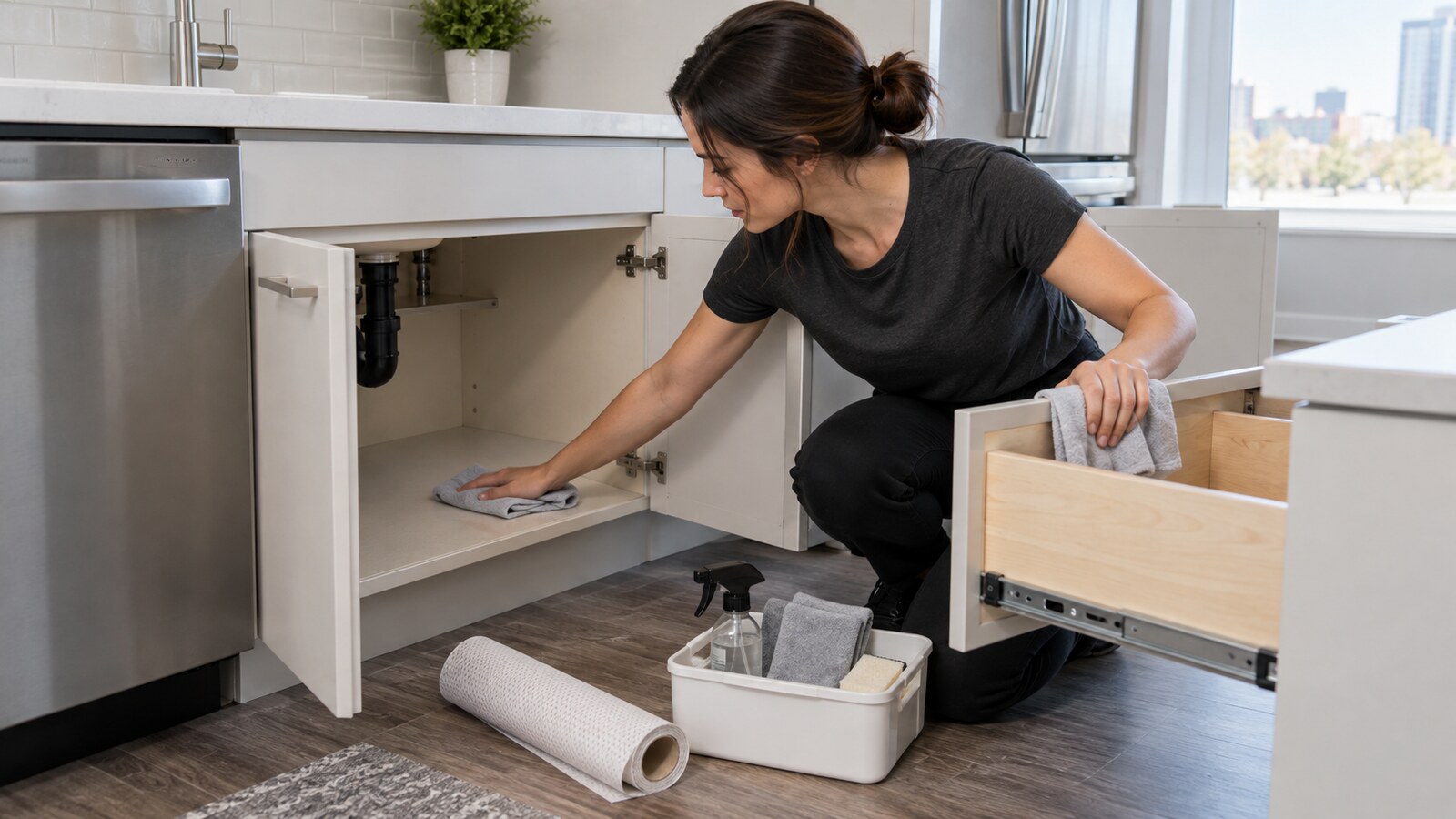
Work from upper cabinets down so loosened dust does not fall onto completed areas. Wipe shelves, corners, door edges, handles and accessible hinges using a method suitable for the cabinet finish. Drawer boxes and tracks often hold fine debris, so remove loose material first and use controlled moisture around unfinished edges.
Old shelf liner should only be removed when it is part of the approved scope. Adhesive liner can pull at weak finishes or leave residue that needs a different method. If a liner is staying, lift only what can be checked safely and avoid soaking the material or the cabinet base beneath it.
Treat appliances as separate work areas
Confirm which appliances are included and whether interior cleaning is required. Refrigerator shelves and bins should be handled according to the appliance instructions and allowed to dry before reassembly. Oven racks, trays and removable parts may need separate attention. Do not use abrasive tools or incompatible products on coated, glass or stainless-steel surfaces.
Appliances should not be pulled out casually. Moving a refrigerator, range or dishwasher can affect flooring, cords, water lines, gas connections or anti-tip hardware. If cleaning behind or beneath an appliance is required, the property manager should confirm a safe method and involve a qualified trade where connections or installation are involved.
Finish accessible exterior surfaces by checking handles, control areas, door edges and the floor line. Product labels and digital controls should remain readable and undamaged. Cleaning is not a substitute for testing appliance operation.
Reset counters, backsplash and sink areas
Clear the counter before cleaning so the full surface is visible. Use products compatible with the countertop and backsplash materials, especially around natural stone, laminate seams and painted surfaces. Avoid flooding joints, wall edges or the area behind the sink.
At the sink, remove ordinary residue from the basin, faucet base and accessible drain area without forcing material into the plumbing. Check the cabinet below for moisture, staining or stored items. A slow drain, active leak or damaged seal should be reported for maintenance rather than treated as a cleaning problem.
Leave floors and toe-kicks until late in the process
Cabinet and counter work can drop dust onto the floor, so final floor cleaning belongs near the end. Vacuum along toe-kicks, corners and appliance edges before using a damp method suitable for the flooring. Too much water can enter seams, cabinet bases or transitions.
Pay attention to the route out of the unit. Equipment and removal bags can reintroduce grit after a floor is finished. A clean staging area near the entrance and a final pass after equipment leaves help prevent avoidable footprints and debris.
Use a final handoff inspection
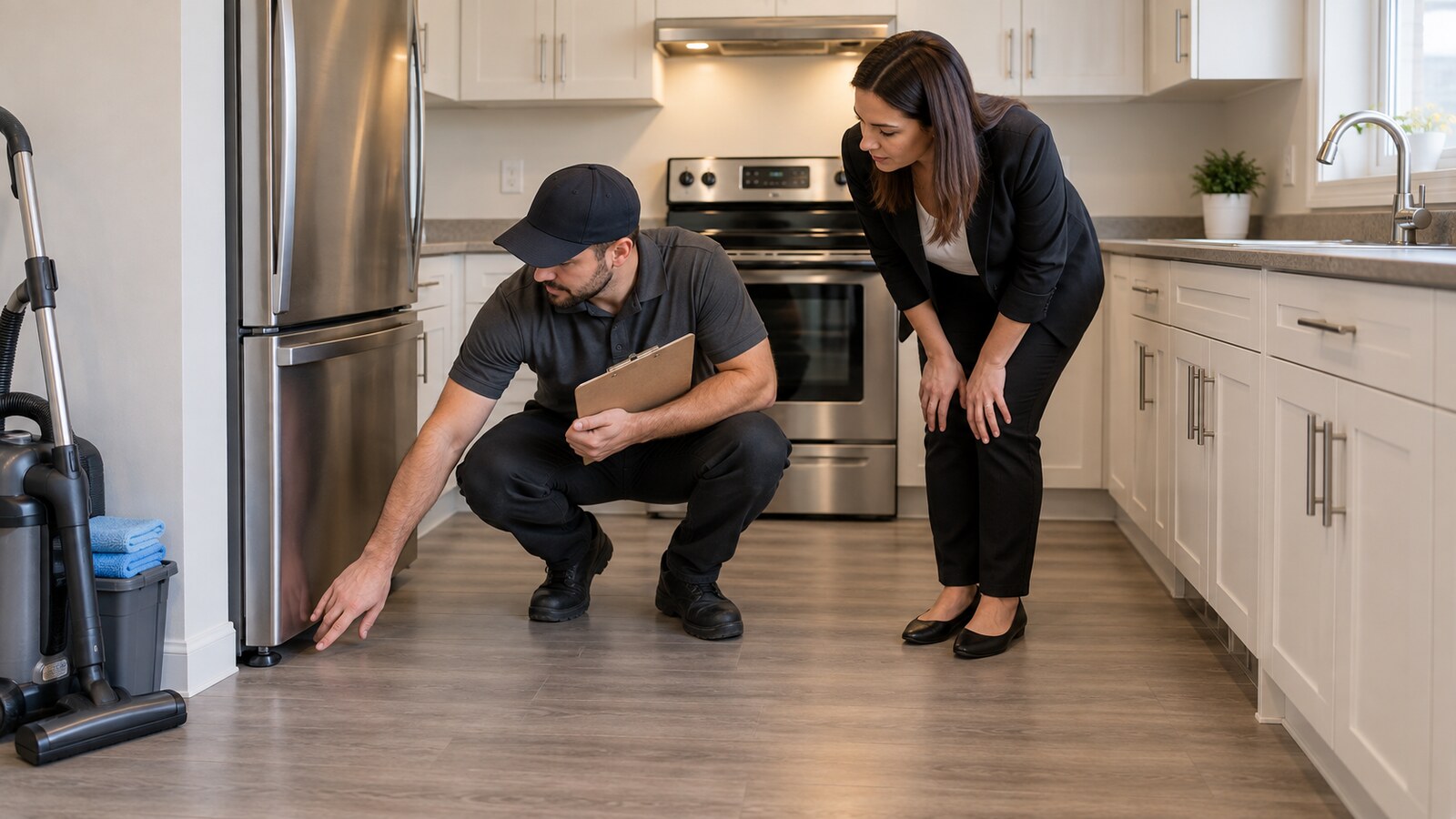
Inspect the kitchen in consistent order: cabinet interiors, doors and handles; counters and backsplash; sink and faucet; appliance interiors included in the scope; appliance fronts; toe-kicks; floor edges; and the exit route. Open every cleaned cabinet and drawer rather than judging the room only from the doorway.
The final review should distinguish clean-up completion from outstanding maintenance. Record loose hardware, chips, water damage, non-working lights, appliance concerns and anything excluded from the scope. This gives the property manager a useful list for the next trade or owner decision.
Coordinate the kitchen with the rest of the turnover
Cleaning is usually most efficient after approved belongings are removed and dusty repairs are complete, but before final photography or tenant handoff. If painting, cabinet repair or appliance replacement is still scheduled, agree on who will complete the last wipe-down and floor pass.
For occupied buildings, confirm parking, elevator use, access times and waste-handling procedures before arrival. Keep hallways and exits clear, protect common-area finishes as required by the property, and avoid leaving equipment or removal bags unattended.
Rental kitchen turnover checklist
- Confirm the unit is vacant and identify owner-supplied items that must remain.
- Photograph the kitchen and record visible repair or maintenance concerns.
- Separate ordinary non-hazardous removal from food, liquids and special-handling items.
- Remove dry debris before using wet cleaning methods.
- Clean cabinets and drawers from upper areas downward.
- Confirm the appliance scope and avoid unapproved movement or disconnection.
- Clean counters, backsplash and sink with methods suited to each material.
- Finish floor edges and toe-kicks after higher surfaces are complete.
- Inspect every cabinet, drawer, appliance area and exit route before handoff.
What to send for a firm quote
Send wide photos of the kitchen plus closer views of cabinet interiors, appliances, counters, the sink, floor edges and any leftover contents. Include the unit type, floor level, stairs or elevator details, parking or loading conditions, access window, deadline and the exact areas approved for cleaning or ordinary non-hazardous removal.
Mattabo Property Care is fully insured for the services it provides. Readers can send photos, their Ottawa address and deadline for a firm quote. Same-day service is often available but is not guaranteed until Mattabo confirms the appointment. A quote request is not a confirmed booking.
To plan an Ottawa rental-kitchen turnover clean-up, [contact Mattabo Property Care](/contact) with the photos, access details and handoff deadline. Clear information helps define the work before the appointment and reduces last-minute gaps between cleaning, maintenance and the next occupancy.
Photos are illustrative examples of typical residential service results.