Pressure Washing
Pressure Washing an Ottawa Retaining Wall: A Practical Guide to Materials, Drainage and Landscaping
A practical Ottawa guide to assessing retaining-wall materials, protecting joints and plants, controlling runoff and knowing when pressure washing should stop.
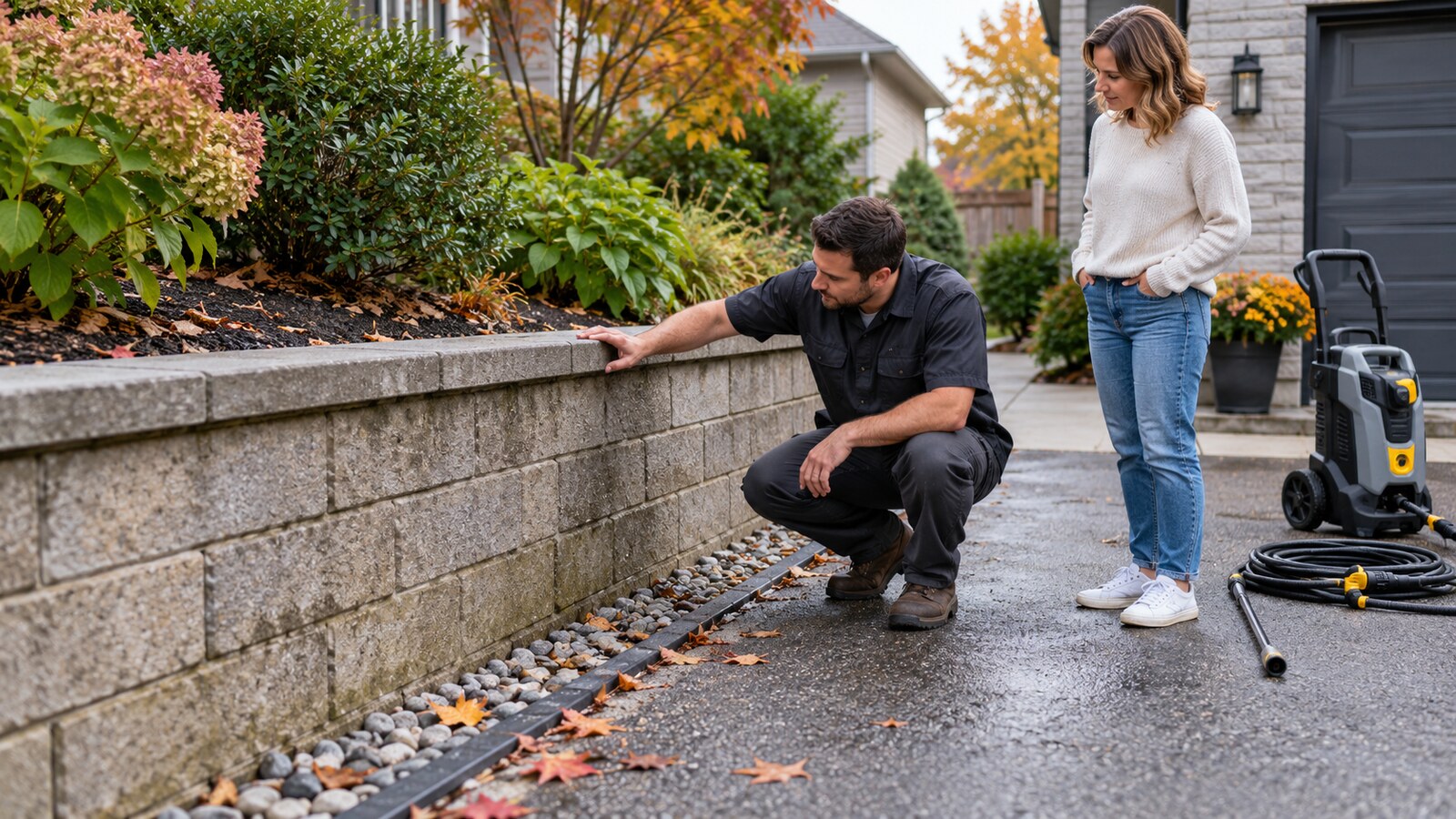
A retaining wall is more than an outdoor surface. It holds back soil, directs water and often borders a driveway, walkway or garden bed. That combination makes cleaning more involved than simply aiming a pressure-washing wand at the face of the wall. The surface material, condition of the blocks or mortar, drainage route and nearby landscaping all affect the plan.
This guide is for ordinary exterior dirt, organic film and seasonal buildup on sound residential retaining walls in Ottawa. Pressure washing is not a structural repair, drainage correction or mould-remediation service. A wall that is leaning, bulging, separating, shedding material or showing active water problems should be assessed before cleaning begins.
Identify the wall material first
Segmental concrete blocks, poured concrete, natural stone, brick and mortared masonry do not respond in the same way. Manufactured blocks can have textured faces or coloured finishes. Older brick and mortar may be softer than surrounding areas. Natural stone can include joints, sealers or repairs that are easy to overlook when the wall is dry.
If the material or coating is uncertain, start with documentation rather than assumptions. Take wide photos of the full wall and close views of the face, caps, joints and any repaired areas. Note paint, sealer, efflorescence, rust marks or previous patching. The least aggressive suitable method is generally the sensible starting point, and a small inconspicuous test area can reveal whether the surface changes colour, loses material or cleans unevenly.
Inspect the wall before washing
Walk the entire length of the wall before bringing equipment into position. Look for loose cap blocks, open joints, cracked faces, failed mortar, surface flaking and sections that have shifted. Check where fences, railings, lights, irrigation lines or downspouts meet the wall. These details may require protection, a reduced cleaning scope or a separate trade.
Pay particular attention to the base. Gravel strips, weep openings and drain outlets should remain visible and unobstructed. Soil washing out through a joint or persistent water emerging from one section may indicate a drainage issue that cleaning will not solve. Do not use pressure to probe a gap, clear a buried pipe or force water behind the wall.
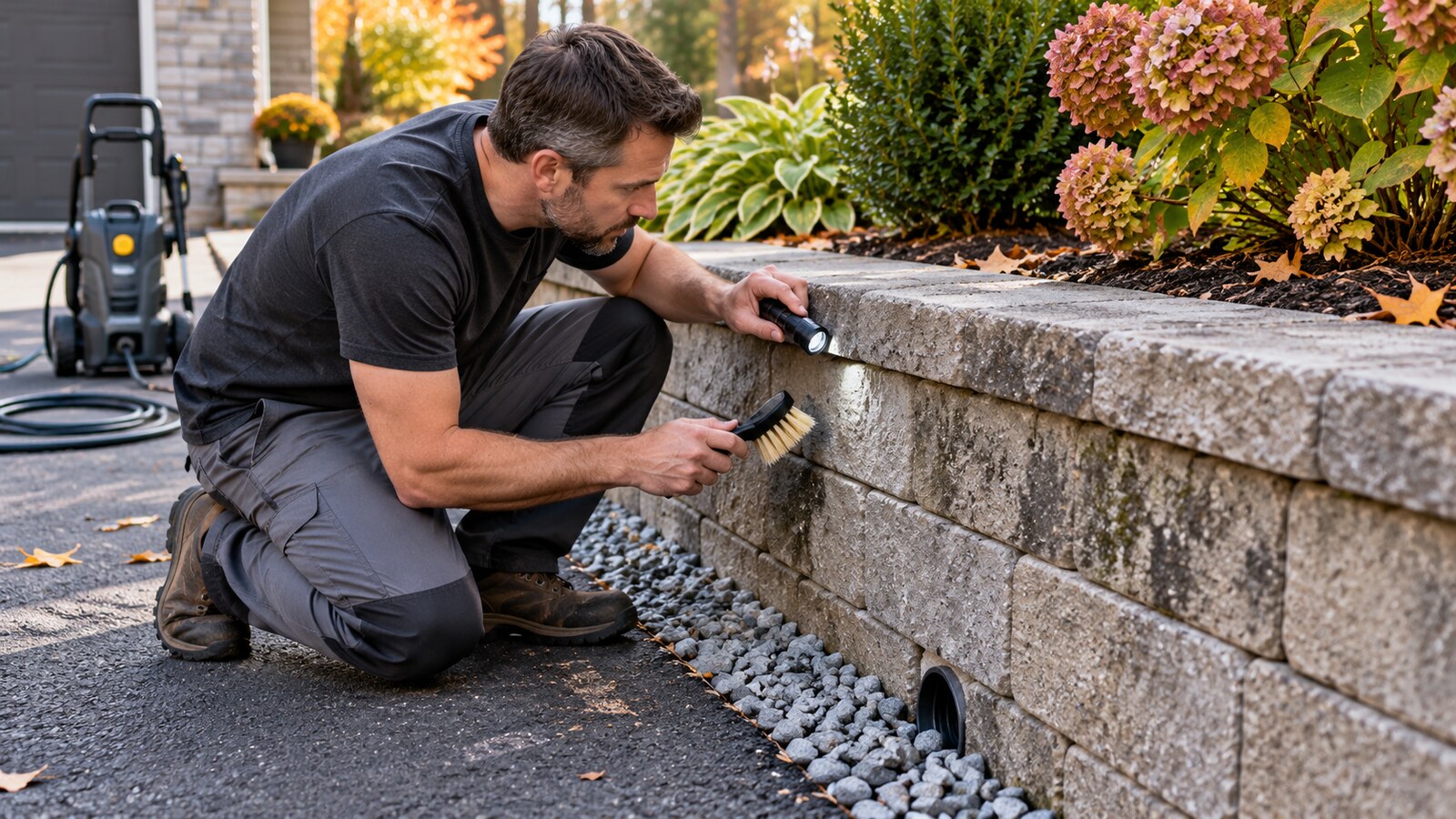
Clear access without disturbing the structure
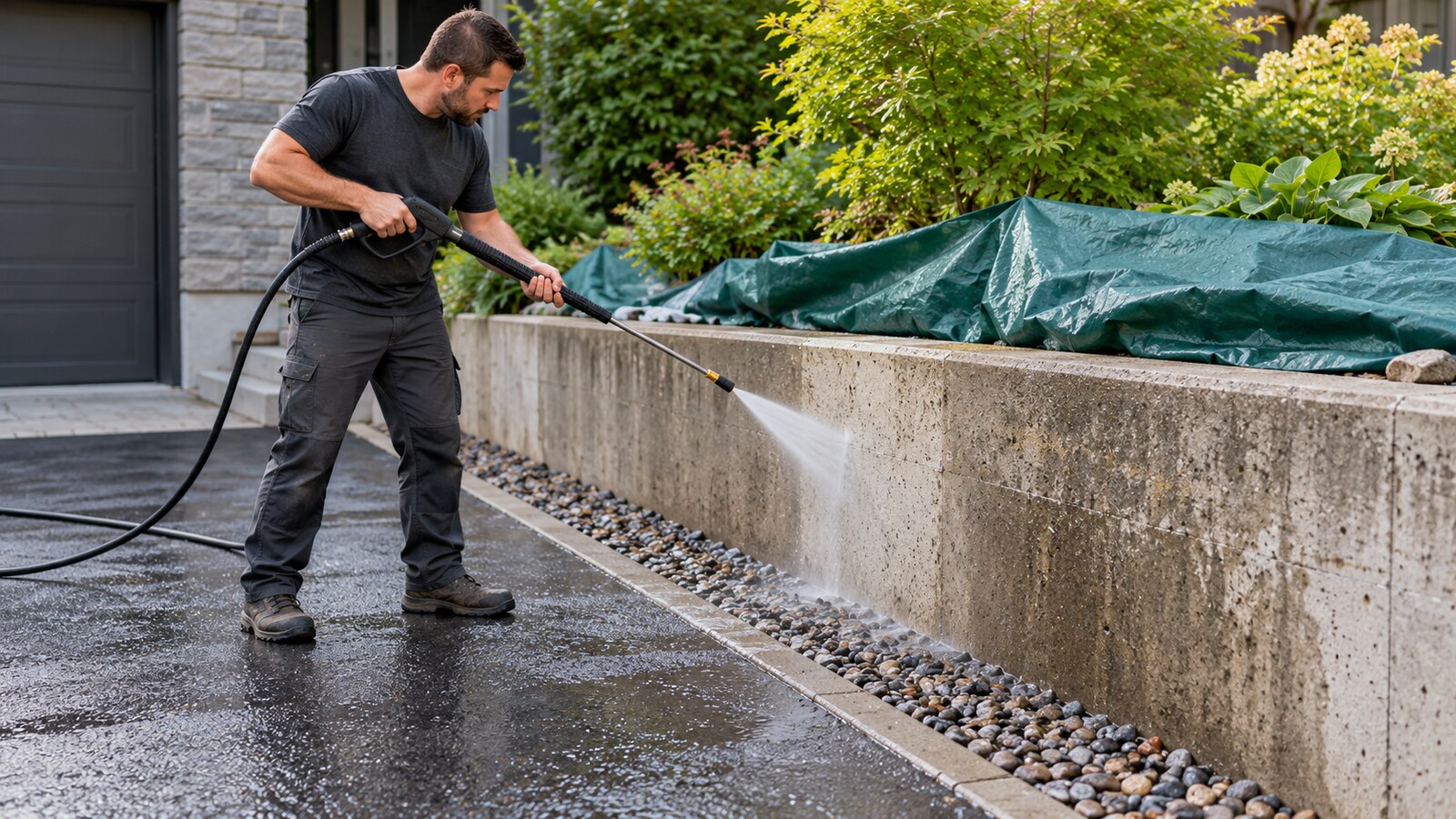
Move ordinary planters, garden décor and lightweight furniture out of the spray path where permission allows. Keep the top of the wall free of loose tools and objects. Trim or tie back flexible plant growth only with the property owner's approval; established roots and branches should not be pulled away roughly. Use practical plant protection that does not trap heat or place added weight on shrubs.
Plan a clear route for hoses and equipment. A hose crossing a front walk, shared driveway or gate creates a trip hazard and may restrict residents or contractors. Where a wall borders a parking area, the work zone should be clear of vehicles before water and debris begin moving across the pavement.
Use a controlled test area
Pressure alone is not a measure of cleaning quality. The right approach depends on the soundness and texture of the material, the distance and angle of the nozzle, the amount of buildup and any product guidance for the surface. Begin on a small, less visible section using a conservative method. Let the area settle, then check it in natural light before expanding the work.
Stop if the test exposes aggregate, lifts a coating, opens a joint, dislodges sand or mortar, or leaves obvious wand marks. Also stop if water is being driven behind caps or into openings. Moving closer or increasing pressure to chase a stubborn mark can turn a cosmetic issue into surface damage. Some discolouration may be permanent or require a different specialist assessment.
Control water and protect drainage
Before washing, decide where runoff can travel without carrying loose soil, leaves or dirty water into a garden bed, doorway or neighbouring property. Clear ordinary leaves and surface debris from the intended route. Keep drain openings visible rather than covering them with a tarp or pushing debris against them. Work in manageable sections so water does not pool at the wall base.
Aim the spray so it cleans the face without forcing water upward under caps or directly into joints and drainage openings. On a wall beside asphalt or interlock, monitor the edge where runoff collects. If pooling develops or the route changes during the job, pause and correct the work plan before continuing. Pressure washing should not be used to mask a recurring drainage problem.
Treat stains as clues, not just marks
Green or dark organic film often develops where shade and moisture persist. White mineral deposits may point to moisture moving through masonry. Rust-coloured marks can come from metal fixtures, soil or irrigation water. These conditions can look similar from a distance but do not call for the same response. Photos and a close inspection help establish realistic expectations before work starts.
Avoid mixing products or using an unlabelled cleaner. Any cleaning product should be suitable for the wall material, used according to its label and kept away from plants and finishes that it could affect. A service provider should confirm the proposed method rather than promise that every mark will disappear.
Know when cleaning should wait
Cleaning should wait when the wall shows movement, loose masonry, active leaks, significant cracking or unstable caps. It should also be postponed when the work area cannot be kept clear, the runoff route is blocked, or nearby electrical fixtures and outlets cannot be protected appropriately. Freezing conditions are another reason to delay exterior washing because wet walking and driving surfaces can become unsafe.
If the retaining wall supports a steep grade, a driveway, a structure or a heavily used access route, surface cleaning should not be allowed to distract from visible structural concerns. Document the condition and direct repairs or drainage questions to the appropriate qualified professional.
Retaining-wall preparation checklist
- Identify the wall material, finish and any previous repairs.
- Photograph the full wall, joints, caps, base and drainage points.
- Flag loose blocks, failed mortar, leaning or bulging sections before cleaning.
- Move approved planters and décor out of the work area.
- Protect nearby plants without placing weight on them or sealing in heat.
- Keep hoses away from doors, shared walks and vehicle routes.
- Choose a small inconspicuous test area before cleaning the full wall.
- Keep spray out of joints, drain openings and the space behind cap blocks.
- Plan the runoff route and stop if water begins to pool.
- Document permanent marks and repair concerns rather than over-cleaning them.
Request a firm quote
For a useful assessment, send one wide photo showing the full wall and several close photos of the material, joints, caps, drainage openings and the area where runoff would travel. Include the wall's approximate length and height, access details, nearby landscaping, the Ottawa address and the deadline. Mention any loose material, coating, previous repair or water issue you already know about.
Photos are illustrative examples of typical residential service results.