Junk Removal
Ottawa Small Office Cleanout Before a Lease Handoff: Desks, Chairs and Clear Access
A practical Ottawa guide to sorting office contents, protecting common areas and planning furniture removal before a commercial lease handoff.
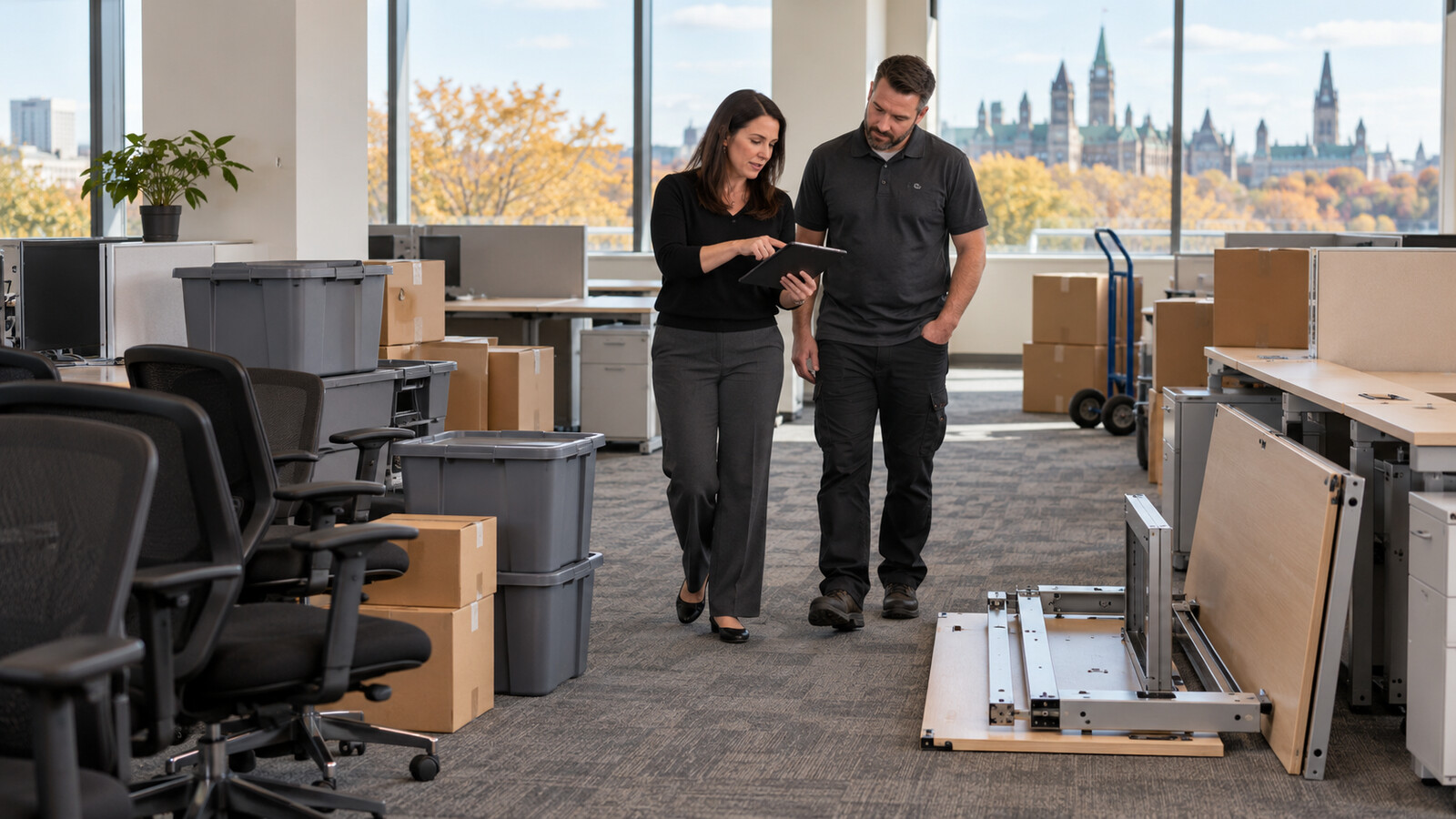
A small office cleanout can become complicated near the end of a commercial lease. Desks, task chairs, filing cabinets, shelving, boxes and forgotten break-room items may all need decisions at once. The property manager may also require clear corridors, protected elevator finishes and a final inspection before keys are returned.
The most reliable approach is to separate decisions from lifting. Confirm what belongs to the business, what belongs to the landlord and what is approved for ordinary non-hazardous removal before anything moves. Then plan the route, the loading point and the final handoff. This reduces confusion and protects both the office contents and the building.
Start with the lease-handoff requirements
Ask the landlord or property manager what the unit must look like at handoff. Confirm which fixtures, shelves, window coverings, cabling and wall-mounted items must remain. Do not assume that a desk, cabinet or reception counter can be removed simply because the business no longer needs it. Some items may be part of the leased premises or subject to a separate agreement.
Also confirm building access rules, permitted work hours, elevator booking, loading-door availability and where a service vehicle may stop. These details can affect the scope more than the size of the office. A short carry from a ground-floor door is different from several elevator trips through a shared lobby.
Create one decision maker and one inventory
Choose one authorized person who can answer questions during the cleanout. Multiple uncoordinated instructions increase the chance that something important is removed or left behind. Walk the office in a consistent order and photograph reception, workstations, private offices, storage, meeting rooms, the kitchenette and the full route to the loading area.
Use four groups: keep, relocate, donate or reuse where suitable, and remove. Add a separate assessment group for anything uncertain, unusually heavy, connected to the building or containing data. Place instructions on a shared inventory rather than relying on handwritten labels attached to furniture, which can fall off during handling.
Protect confidential records and business data
Paper records, hard drives, computers, phones, removable media and network equipment should not enter an ordinary junk load without an approved data-handling plan. Keep sensitive material secured and assign it to the business owner or an appropriate records, recycling or destruction provider. Empty drawers are not proof that a cabinet contains no private information; check them before the moving day.
Separate ordinary furniture removal from electronics and specialized disposal. Photograph equipment by quantity and size, but avoid sending images that expose client names, account details, access codes or other private information. When requesting a quote, the service provider needs the physical scope and access conditions, not the contents of confidential files.
Sort office contents before staging
Ordinary approved items may include empty desks, task chairs, small tables, shelving, non-locking cabinets, empty boxes and general non-hazardous contents. Condition, size, weight and access still matter. Heavy filing cabinets should be emptied and assessed before movement, and tall shelving should not be tipped into a corridor without a clear handling plan.
Keep unknown liquids, cleaning chemicals, batteries, fluorescent lamps, pressurized containers and damaged electronics separate. Do not hide mixed materials inside drawers or boxes. If the contents are unclear, leave the container closed and describe it honestly so the correct handling route can be arranged.

Measure furniture and doorways
Measure the widest points of desks, tables and cabinets, then compare them with office doors, tight corners and elevator openings. Note whether desk legs or table tops can be removed using ordinary fasteners. Do not dismantle electrical components, built-ins or furniture that may contain tensioned mechanisms unless the work has been specifically assessed.
A photograph of a desk beside its doorway is often more useful than a close-up of the desk alone. Include stairs, thresholds, floor transitions and the distance to the service exit. A clear view helps determine the equipment, crew and time needed without inventing assumptions about the building.
Plan elevators, corridors and loading access
Book the service elevator and loading area through the property manager when required. Confirm whether protective wall pads, floor runners or security access are provided by the building. Keep common corridors, stairs, fire doors and neighbouring suites clear throughout the work. Staging should happen inside the unit unless an authorized building representative approves another location.
Group furniture near the route only after the elevator and vehicle position are confirmed. Keep heavy or awkward pieces separate for assessment, and avoid building one large pile that blocks access. A steady sequence of manageable loads is easier to control than a rushed move through occupied common areas.
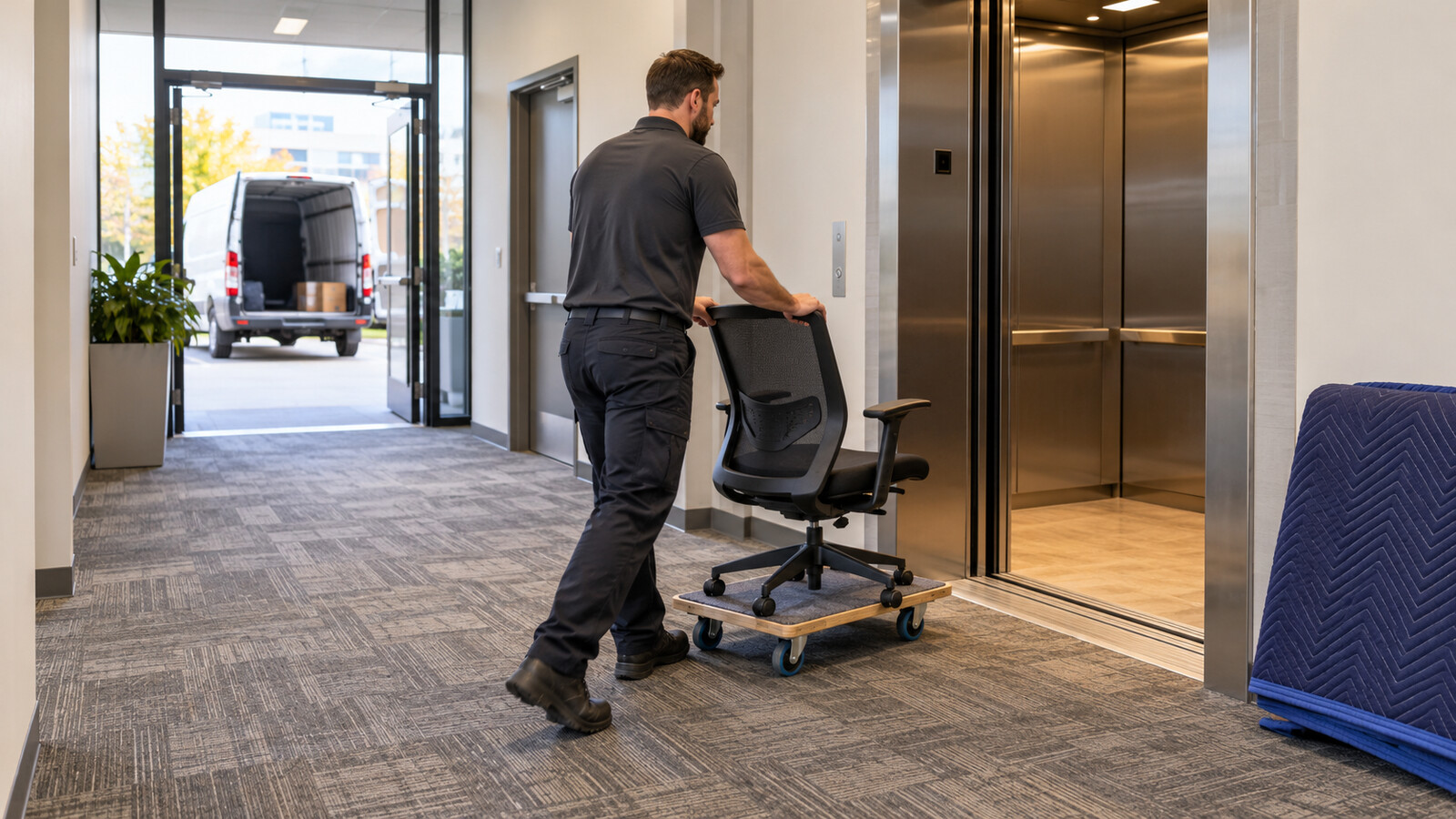
Protect the office and common areas
Inspect carpet tiles, finished concrete, door frames and elevator thresholds before movement begins. Use appropriate dollies and surface protection, and lift manageable items rather than dragging them. Keep wheels clean so grit is not carried through the lobby, and do not lean furniture against painted walls, glass or sprinkler equipment.
Remove only the contents included in the confirmed scope. Adhesive signs, wall anchors, cabling, built-in millwork and repairs may belong to a contractor or the landlord's approved vendor. A cleanout is not automatically a restoration job, and the final record should make that distinction clear.
Complete the final handoff walk
After removal, walk the unit and route with the authorized contact. Open approved cabinets and closets, collect loose hardware and packing material, and photograph each cleared area. Note anything intentionally left for the landlord, IT provider, records service or another contractor. Return keys, elevator access cards and loading credentials as directed.
The final photographs should show the work areas and access route without exposing confidential information from neighbouring tenants. A concise completion note helps the business and property manager agree on what was removed and what remains outside the cleanout scope.
Small-office cleanout checklist
- Confirm the landlord's lease-handoff requirements.
- Name one authorized cleanout decision maker.
- Photograph every room and the full loading route.
- Separate records, electronics and data-bearing equipment.
- Confirm what belongs to the landlord and must remain.
- Measure desks, cabinets, doors and elevator openings.
- Book elevators, loading access and approved work hours.
- Keep corridors, stairs, exits and neighbouring suites clear.
- Protect floors, walls, thresholds and elevator finishes.
- Document completed areas and unresolved follow-up items.
What to send for a firm quote
Send wide photographs of each office area, close views of larger furniture and images of the entire route to the loading point. Include the floor number, elevator dimensions or booking details, stairs, parking limits, permitted work window, deadline and the name of the person authorized to approve decisions.
Mattabo Property Care is fully insured for the services it provides. Readers can send photos, their Ottawa address and deadline for a firm quote. Same-day service is often available but is not guaranteed until Mattabo confirms the appointment. A quote request is not a confirmed booking.
For ordinary non-hazardous office cleanout and furniture removal in Ottawa, use /contact to share the approved scope and building-access details. Clear photographs help define the work before an appointment is confirmed.
Photos are illustrative examples of typical residential service results.