Junk Removal
Ottawa Sofa and Bulky Furniture Removal: A Practical Guide to Doorways, Stairs and Condo Access
A practical Ottawa guide to preparing sofas and bulky furniture for removal, including measurements, clear routes, stairs, elevators, floor protection and final handoff.
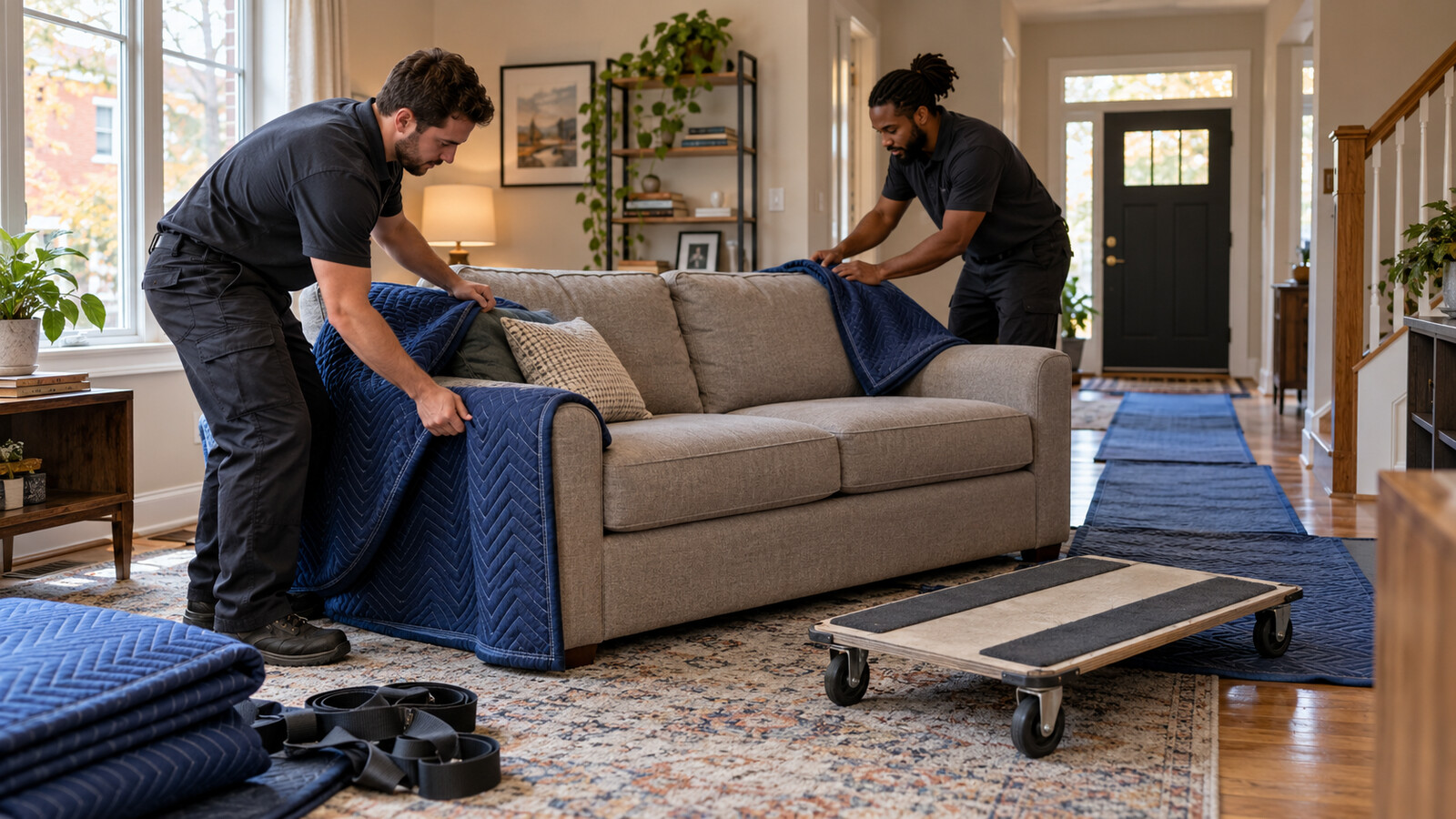
Removing a sofa, sectional, recliner or bulky cabinet from an Ottawa home is not only a lifting job. The difficult part is usually the route: narrow doors, sharp hallway turns, stairs, elevators, parked vehicles and finishes that need protection.
A short preparation check can prevent delays and property damage. It also gives the removal team enough information to arrive with suitable equipment and a realistic plan. The goal is a clear, documented handoff—not forcing a large item through a route that does not fit.
Confirm exactly what is leaving
List every approved item, including separate ottomans, cushions, loose shelves, bed components or matching chairs. For a rental, estate or managed property, identify who is authorized to approve removal. Do not treat nearby furniture, storage bins or décor as part of the load unless the scope is clear.
Photograph each item from more than one angle and include the room around it. Images should show approximate scale, access and condition. If a sectional separates, photograph the connection points without dismantling anything that is unfamiliar or damaged.
Disclose condition before the appointment
Tell the removal provider about broken frames, exposed springs, sharp hardware, wet upholstery, strong odours, visible mould, pest activity or contamination. These conditions affect whether routine service is appropriate and what handling is required.
Do not wrap or conceal a condition that changes the risk. Mattabo handles ordinary non-hazardous junk removal. Unknown material, biological contamination, active pest concerns and other hazardous conditions may require specialized assessment or service.
Measure the furniture and the route
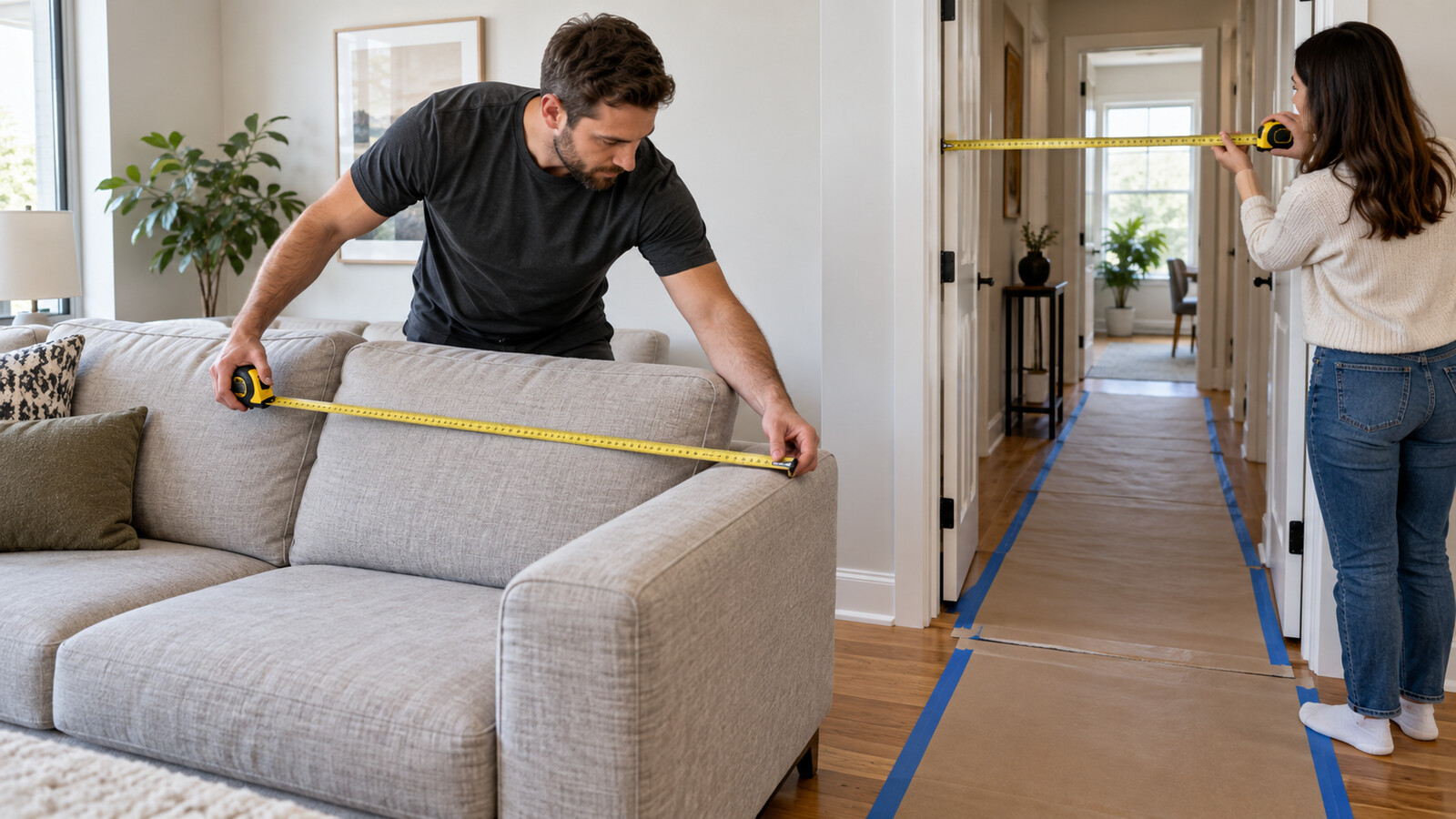
Measure the item at its widest, tallest and deepest points. For a sofa, include arms, feet and any fixed back profile. Then measure the clear doorway opening—not just the door slab—and note whether the door can open fully.
Follow the entire exit route. Check hallway width, corners, ceiling height, railings, stair landings, elevator openings and the final exterior door. A measurement at one doorway is not enough if the item must turn immediately afterward.
Take photos looking in both directions at tight turns. Include a tape measure in the frame where useful, but send the actual dimensions in writing so the team does not have to estimate from perspective.
Identify removable components without forcing them
Some sofa feet, backs, shelves or table leaves are designed to come off. Others are fixed or use concealed hardware. Check the manufacturer’s information if it is available, and do not pry, cut or disassemble an item simply because the route looks tight.
If approved disassembly is part of the plan, place hardware in a labelled bag and keep loose parts together. A reusable item is easier to donate, pass along or store when the fasteners and components remain complete. Disposal and donation acceptance should never be assumed until the destination confirms it.
Clear the room and protect the path
Remove small tables, lamps, floor décor, loose rugs and personal items from the working area. Secure pets in another room and keep children away from the route. The crew needs enough space to position the item, apply protection and change direction safely.
Identify hardwood, tile, carpet transitions, low light fixtures and vulnerable corners. Furniture pads, floor runners and corner protection can help, but they work best on a clean, uncluttered route. Do not tape directly to a finish unless the product and surface are compatible.
Treat stairs as a separate access problem
Photograph the full staircase from the top and bottom. Show the width between railings, the ceiling over the stairs and the size of any landing or turn. Mention loose railings, damaged steps or low clearance before anyone arrives.
Do not try to move a heavy sofa to a more convenient floor for the quote. Leaving it in place gives the removal team an accurate view of the work. If the route is not safe or the item cannot be controlled, the plan needs to change rather than relying on extra force.
Plan condo and apartment access
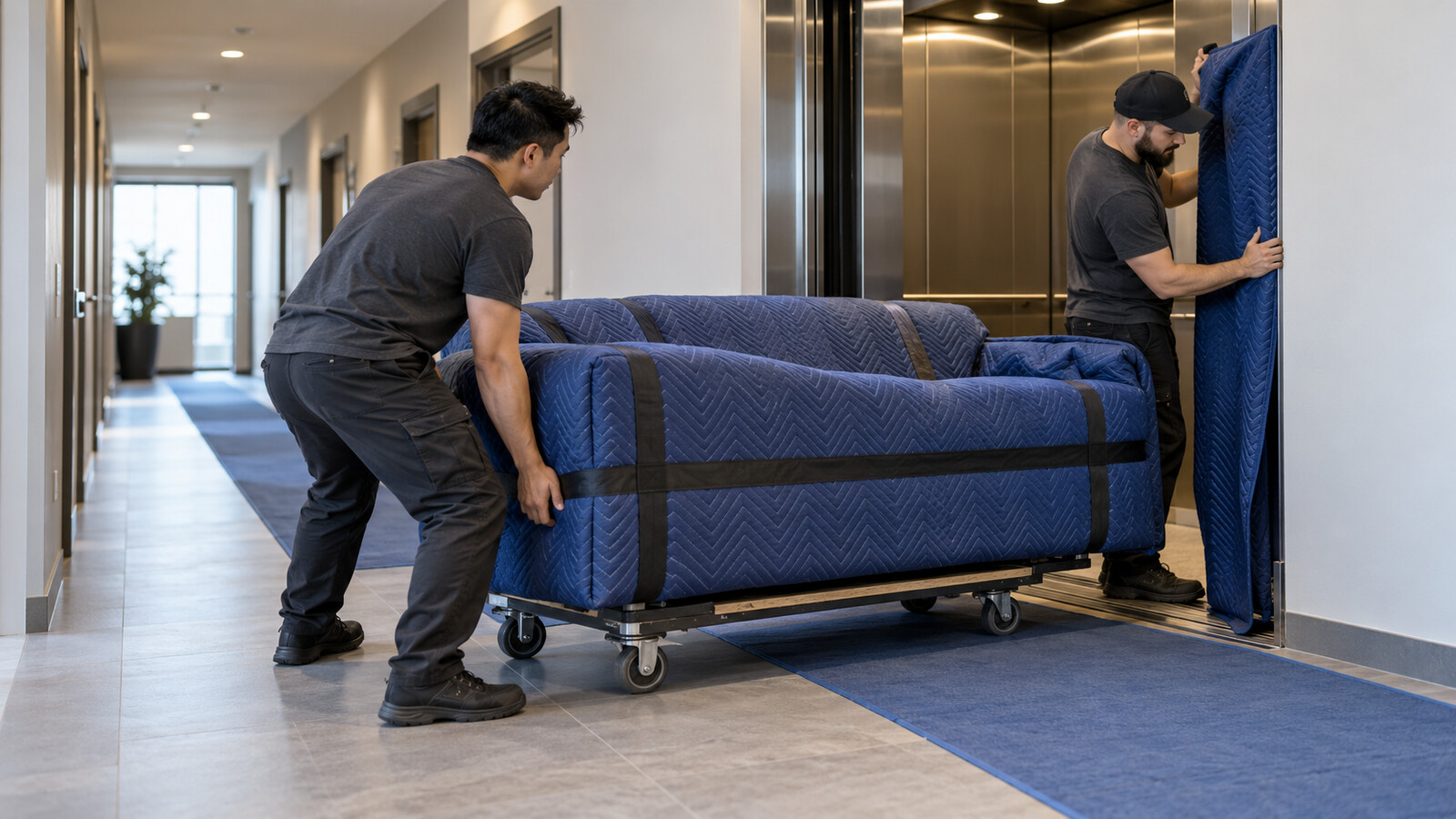
For a condo or apartment, confirm the building’s current moving procedures with management. Ask whether an elevator booking, loading-area reservation, protective padding, access key or certificate of insurance is required. Requirements vary, so do not rely on what applied to a previous move.
Share the permitted access window, elevator dimensions, floor number and distance from the unit to the loading area. Note stairs between levels, underground parking height limits or a long exterior route. Keep shared corridors and exits clear while work is underway.
Prepare the exterior handoff
Keep the driveway, front walk or loading space available as agreed. Move vehicles that would block the route and point out gates, steps, soft landscaping or overhead obstructions. The final path should be clear before the furniture reaches the door.
Do not place upholstered furniture at the curb or outdoors unless that is the confirmed plan. Rain, snow or ground moisture can make an item heavier, create a mess and eliminate possible reuse options.
Decide what happens to reusable furniture
If an item may be reusable, describe its age, condition, dimensions and access honestly. Donation centres and reuse organizations set their own acceptance standards, schedules and capacity. A removal company cannot guarantee that another organization will accept a specific sofa.
If a donation or handoff is arranged, confirm the destination before removal day. Otherwise, request a quote based on ordinary non-hazardous removal and let the provider explain the available options.
Complete a final room and route check
After the item leaves, check the room, doorway, hallway and building common areas. Confirm that loose cushions, hardware and approved companion pieces are included. Photograph any pre-existing wall, floor or furniture condition that was documented before the work.
For a property manager or real-estate agent, record that the authorized item was removed and that the route was left clear. Repairs, wall touch-ups and detailed cleaning should remain separate line items unless they were included in the confirmed scope.
Bulky furniture removal checklist
- List and photograph every item approved for removal.
- Disclose broken parts, sharp hardware, moisture, odours, pests or contamination.
- Measure the furniture and every tight point on the exit route.
- Photograph corners, stairs, landings, railings and exterior steps.
- Confirm which components are designed for safe disassembly.
- Clear small furniture, rugs, décor, pets and personal items from the route.
- Identify flooring transitions, low fixtures and vulnerable corners.
- Confirm condo elevator, loading and access requirements with management.
- Keep the exterior route and agreed loading space available.
- Confirm any donation destination before removal day.
- Complete a final room, route and common-area check.
What to send for a firm quote
Send wide photos of each item and close photos of any damage or unusual condition. Include measurements, floor number, stairs, elevator details, parking or loading access, building restrictions and the date the space needs to be ready.
Mattabo Property Care is fully insured for the services it provides. Readers can send photos, their Ottawa address and deadline for a firm quote. Same-day service is often available but is not guaranteed until Mattabo confirms the appointment. A quote request is not a confirmed booking.
To plan an Ottawa sofa or bulky furniture removal, [contact Mattabo Property Care](/contact) with the item photos, route details and access window. A complete description helps confirm the scope before the appointment is booked.
Photos are illustrative examples of typical residential service results.