Seasonal Property Care
Ottawa Utility Room Clean-Up Before Winter: A Practical Access Plan for Furnaces, Panels and Shutoffs
A practical Ottawa guide to organizing ordinary household storage so furnaces, water heaters, electrical panels and shutoffs remain visible and reachable before winter.
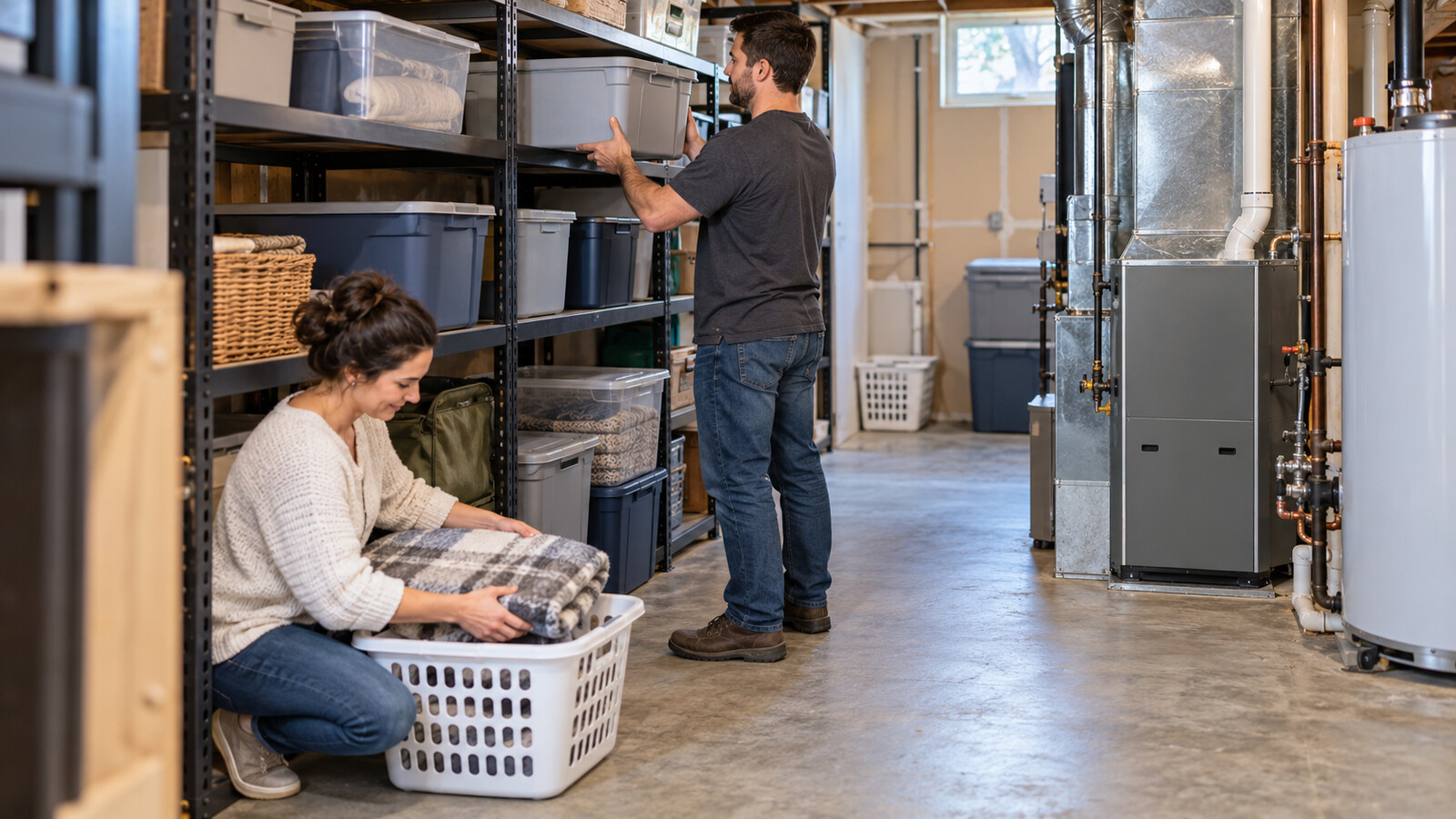
Utility rooms often become the place where seasonal decorations, spare household supplies, moving boxes and laundry overflow accumulate. That can work for a while, but crowded floors and shelves make it harder to reach the furnace, water heater, electrical panel, shutoffs and utility sink when somebody needs to inspect or service them. Before Ottawa homes settle into winter routines, a focused clean-up can make the room easier to use without turning it into a renovation project.
The objective is simple: keep ordinary storage controlled, preserve a clear walking route and make important equipment easy to see. This is organization and non-hazardous clean-up, not electrical, gas, plumbing or HVAC work. If equipment appears damaged, leaks, smells unusual or needs adjustment, stop and contact the appropriate qualified professional.
Start with an access map
Stand at the utility-room entrance and identify every point a homeowner, property manager or technician may need to reach. Common examples include the furnace cabinet, water heater, electrical panel, main water shutoff, floor drain, utility sink, sump equipment and any access door built into the wall or ceiling. Do not guess at required clearances. Follow the equipment manual, building instructions and guidance from the qualified trade responsible for the system.
Trace a practical route from the doorway to each access point. Look for boxes on the floor, leaning tools, laundry baskets, folding chairs or loose cords that narrow the path. A person should not have to move a stack of belongings before reaching an essential control. If the room is shared with laundry, keep the washer and dryer route separate from the area used for longer-term storage.
Sort ordinary household items before moving them
Work in small sections so the room remains usable. Separate items into keep here, relocate, donate if suitable, recycle where accepted and ordinary non-hazardous waste. Confirm decisions with the owner or property manager before removing anything. A closed box may contain records, spare parts or materials that belong with the property, even if it looks forgotten.
Set aside anything that is leaking, unlabelled, sharp, unusually heavy or potentially hazardous. Mattabo's ordinary junk-removal scope does not turn an unknown product into regular waste. Paint, fuel, chemicals, pressurized containers, batteries and similar items may require a separate handling or disposal decision. Keep them stable and obtain appropriate guidance rather than mixing them into a general removal pile.
Create clear storage zones
Use sturdy shelving for lightweight household supplies and seasonal items that genuinely belong in the room. Group similar belongings together and use closed bins where they help control small pieces. Put frequently used laundry or cleaning supplies at a comfortable height, while less-used decorations can sit farther from the main route. Avoid unstable stacks and do not place storage on top of mechanical equipment.
Leave the floor as open as practical. Floor storage is easily shifted, catches dust and can hide a drain or small leak. If a bin must stay low, place it in an agreed storage zone that does not block equipment, door swings or the walking route. Cardboard that has softened, torn or absorbed moisture should be reviewed before its contents are moved into a new container.
Keep mechanical equipment visible
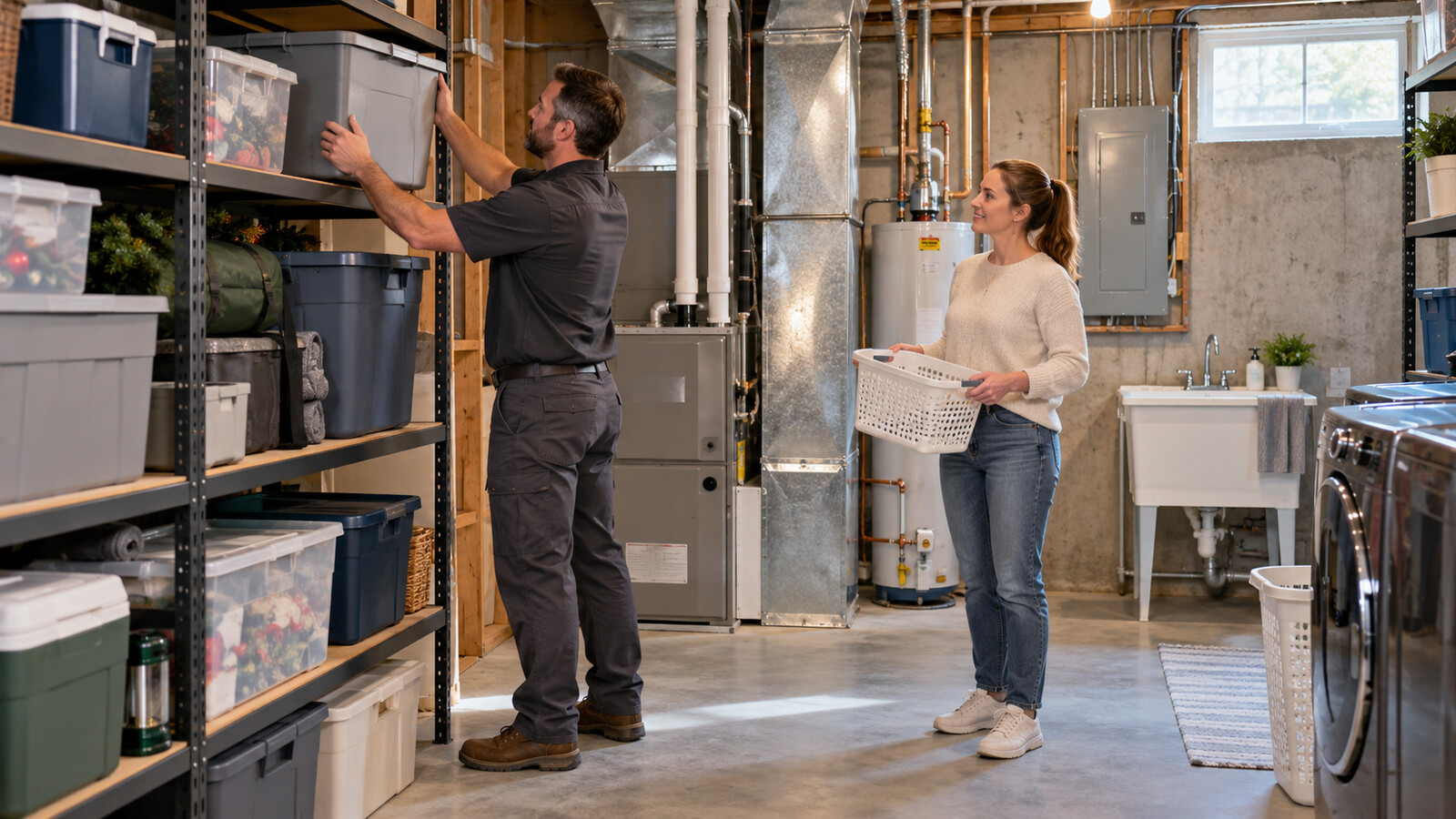
A furnace or water heater should not disappear behind holiday bins, sports equipment or spare furniture. Keep the front and surrounding access area visible according to the applicable instructions. Do not hang clothing, bags or cleaning tools from pipes, vents or equipment. Do not use the top of an appliance as a shelf. The clean-up team should move household belongings only and leave mechanical components untouched.
Visibility also makes routine observations easier. A homeowner can notice water on the floor, a shifted panel or an item resting where it should not. That does not replace professional inspection, but it avoids hiding a concern behind storage. If something looks wrong, photograph it from a safe distance and contact the appropriate service provider.
Protect access to panels and shutoffs
Electrical panels, water shutoffs and other controls need a clear approach. Move boxes, carts and furniture away from the wall or floor area used to reach them. Keep the panel closed, and do not tape notes, hooks or storage accessories to it. A clean-up is not the time to open a panel, test a valve or identify unfamiliar wiring. Those tasks belong to the owner or qualified professional responsible for the system.
For a rental or managed property, confirm which items belong to the building and which were left by an occupant. Spare filters, manuals and approved maintenance supplies may need a defined shelf. Unidentified materials should be documented before they are relocated. This keeps the room organized without discarding something required for future maintenance.

Check the laundry and utility-sink area
Where laundry shares the room, collect loose hangers, empty baskets and products that have drifted onto the floor. Keep dryer and washer surfaces free of unrelated storage, and leave doors and controls usable. Clean only ordinary accessible surfaces with a method suitable for the material; do not disconnect hoses, move appliances or disturb vents during a basic reset.
Around a utility sink, remove empty packaging and return brushes, cloths and buckets to a stable location. Do not pour leftover products down the drain as part of sorting. If the sink, drain or surrounding floor shows a maintenance concern, keep the area accessible and report it rather than covering it with a mat or storage bin.
Plan the work for an occupied or managed property
Before the appointment, confirm who can approve disposal decisions, whether the room must remain available for laundry and how workers will reach it. In a basement apartment, multi-unit building or townhouse, include stair widths, parking limits and shared-corridor rules in the scope. Photograph the room from the doorway and from each equipment side so the access conditions are clear before anyone arrives.
Keep children and pets away from the work area while bins and boxes are being moved. Do not create a staging pile in a stairwell, at an exit or in front of another door. If the route cannot handle an item safely, pause and revise the plan instead of forcing it through a narrow space.
Utility-room reset checklist
- Identify equipment, panels, shutoffs, drains and access doors before moving storage.
- Keep a practical walking route from the doorway to every required access point.
- Sort one small zone at a time and obtain approval before disposal.
- Separate unknown, leaking, sharp or potentially hazardous items from ordinary waste.
- Move suitable household storage onto stable shelving without stacking on equipment.
- Keep panel doors closed and leave mechanical, electrical and plumbing components untouched.
- Remove loose items from laundry and utility-sink routes.
- Photograph and report maintenance concerns instead of concealing them.
- Finish with one doorway-to-equipment walk-through.
Request a firm quote
Mattabo Property Care can help organize ordinary household storage, clear access routes and remove approved non-hazardous items from an Ottawa utility room. Send wide photos of the room, closer views of the shelving and floor, access details, the property type and the deadline. Do not send photos that require entering an unsafe area to capture.
Photos are illustrative examples of typical residential service results.