Pressure Washing
Pressure Washing Vinyl Siding in Ottawa: A Practical Preparation Guide
A practical Ottawa guide to inspecting vinyl siding, protecting openings and landscaping, and planning a controlled exterior wash.
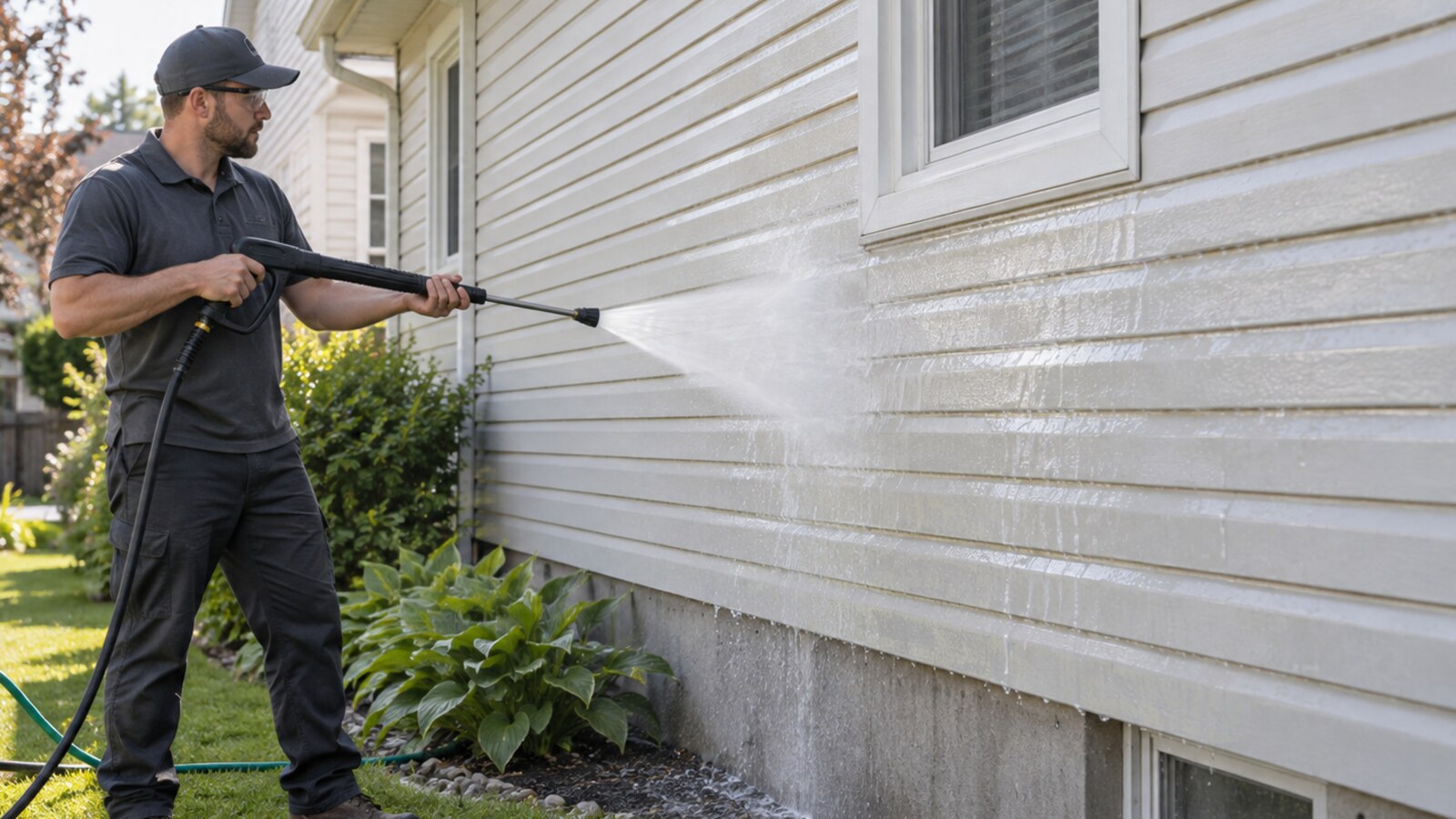
Vinyl siding can collect dust, pollen, traffic film and organic surface growth over a long Ottawa season. Cleaning it can freshen the exterior, but the useful result depends less on maximum pressure than on preparation, surface condition and controlled water direction. A strong spray used carelessly can force water behind panels, mark the finish or reach openings that were never designed for direct pressure.
Before booking or starting a siding wash, take a deliberate walk around the property. The goal is to identify what can be cleaned normally, what needs extra care and what should be repaired or assessed first. This is especially important on older homes, additions and properties where several exterior materials meet.
Confirm the siding material and its condition
Vinyl, aluminum, painted wood, fibre cement, stucco and masonry do not respond the same way to water, cleaning products or pressure. Even when most of a house is vinyl, trim, soffits, porch details or an addition may use another material. Treat each surface according to its manufacturer’s guidance and visible condition rather than applying one setting to the entire exterior.
Look for loose panels, open seams, cracked caulking, damaged trim, peeling paint and gaps around penetrations. Note areas that appear chalky or faded; that may be oxidation or an aged finish rather than removable dirt. Cleaning cannot restore worn material, and an aggressive attempt to do so can make the difference in colour more noticeable.
Photograph questionable sections before the appointment. If a panel moves, a window seal has failed, or the wall shows signs of water entry, arrange the appropriate repair or professional assessment before washing that area.
Inspect every opening before water is used
Close and latch windows and doors. Check screens, weatherstripping and lower window corners. Walk around exterior outlets, light fixtures, dryer vents, hose connections, utility penetrations and any wall-mounted equipment. Covers should be intact and designed for exterior exposure; damaged or open electrical components need attention from a qualified professional.
Siding panels overlap to shed ordinary weather. A spray directed upward can work against that design and push water into joints. The same concern applies around soffits, vents and trim. A careful plan keeps water moving down and away from openings instead of driving it behind the exterior finish.

Clear a practical route around the house
Move patio furniture, planters, toys, bicycles, decorative pieces and lightweight storage away from the wall. Retract awnings where appropriate and secure loose cords. A clear route reduces trip hazards and gives the operator room to maintain a consistent distance from the siding.
Do not simply move everything into the centre of a narrow side yard if that blocks access to the gate or water connection. Decide where equipment will be staged, how hoses will cross walkways and which areas occupants should avoid during the work. Keep children and pets inside and away from doors that may open onto the work route.
Let neighbours know when a shared driveway, close lot line or adjacent patio could be affected by overspray. Close nearby vehicle windows and move vehicles far enough away that hoses and spray are not an issue.
Prepare landscaping and plan the runoff
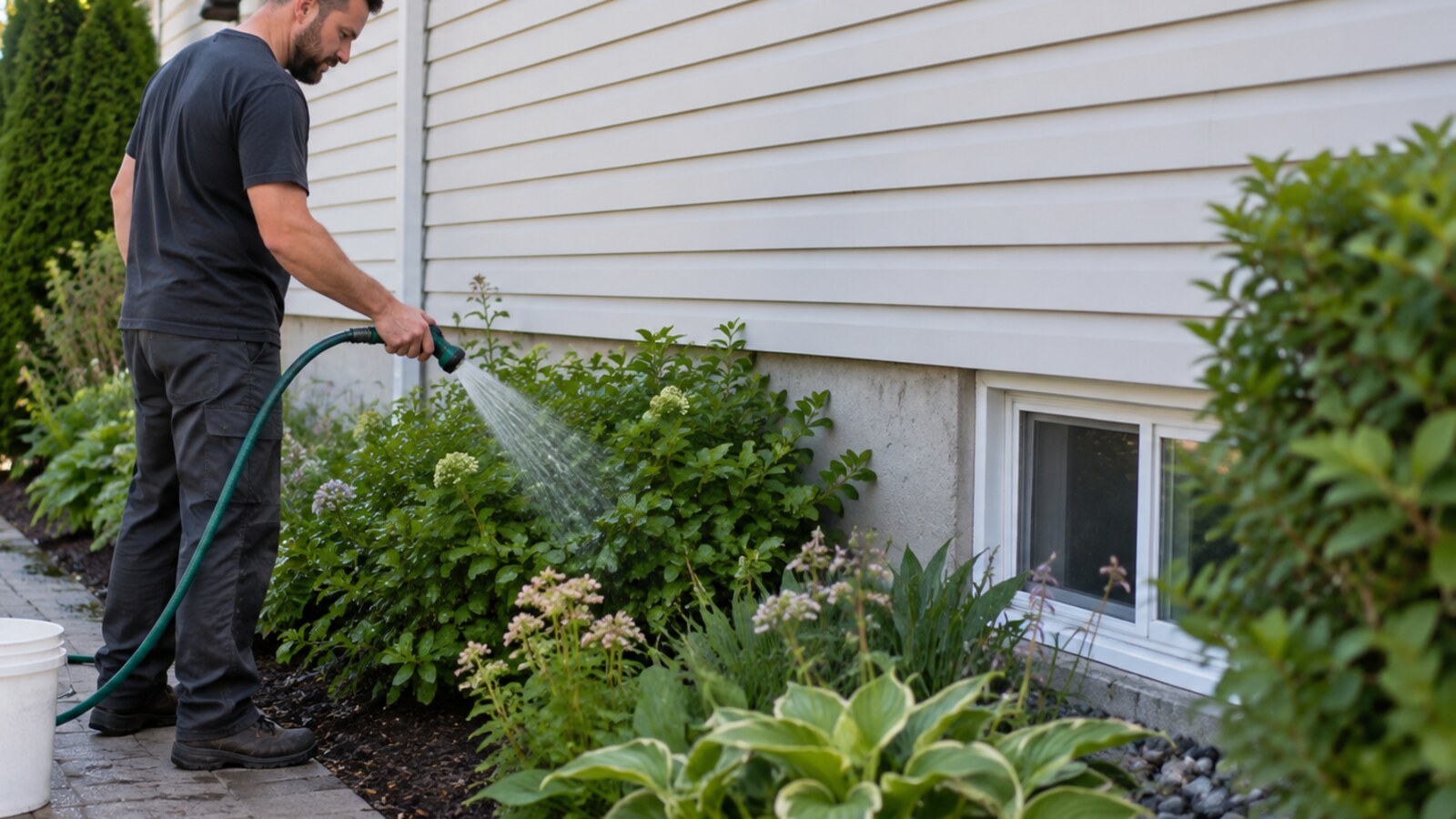
Identify shrubs, vegetable beds, delicate perennials and recently planted areas along the foundation. Watering plants before and after exterior cleaning can help dilute incidental contact, but the exact preparation depends on the cleaning product and the plant. Follow product directions and avoid leaving coverings over plants longer than necessary, especially in warm sun.
Keep cleaning residue out of ponds, rain barrels and other sensitive water features. Note the slope of the property, downspouts, basement windows, window wells and low spots where water may collect. If runoff cannot be controlled without affecting neighbouring property or an unsuitable drainage point, pause and choose a different approach.
Use the least aggressive effective method
Good siding cleaning starts with the surface and the soil, not the machine’s highest setting. A suitable cleaning solution, reasonable dwell time and a controlled rinse often do more useful work than extra pressure. Test a small, inconspicuous section first and allow it to dry before judging the result.
Maintain a consistent working distance and use a broad pattern appropriate to the surface. Keep the spray moving rather than concentrating it on one seam or trim edge. Work in manageable sections so cleaning solution does not dry on the wall, and rinse from the top of the active section downward without forcing water upward under the siding.
Avoid spraying directly into vents, electrical fixtures, window seals or damaged joints. Do not use a pressure-washer wand from an unsecured ladder. Upper-storey work, difficult rooflines and restricted side yards require equipment and methods suited to the access; if that cannot be done safely from a stable position, the scope should change.
Set realistic expectations for stains and aged finishes
Not every mark is ordinary surface dirt. Rust, paint transfer, old sealant, oxidation and deeply embedded staining may need a separate product or may not improve without risking the finish. Heavy repeated passes are not a substitute for identifying the material.
Ask for a clear explanation of what the wash is intended to remove and which sections may respond differently. A practical service plan should distinguish between normal cleaning, spot treatment, repair and replacement. It should also identify surfaces that will be excluded because their condition makes washing unsuitable.
Check the property after the rinse
Once the work is complete, walk the exterior while it is still easy to see the route and equipment setup. Confirm that windows and doors remain closed, exterior covers are in place, hoses and protective materials have been removed, and water is not collecting in window wells or against the foundation.
Review the siding again after it dries. Wet panels can temporarily hide chalking, fading or uneven colour. If a section looks different, compare it with the pre-service photos before deciding whether it is remaining soil, an aged finish or a separate maintenance issue.
Ottawa siding-wash preparation checklist
- Confirm the siding and trim materials.
- Photograph loose, faded, chalky or damaged sections.
- Close windows and doors and inspect exterior covers.
- Move furniture, planters and stored items away from the wall.
- Plan a clear equipment and hose route.
- Identify delicate landscaping and sensitive water features.
- Review drainage, window wells and neighbouring property.
- Confirm water access and any access restrictions.
- Keep children, pets and vehicles outside the work area.
- Agree on exclusions and realistic cleaning expectations.
What to send for a firm quote
Useful photos include one wide image of each wall, closer views of stains or damaged areas, the access route along both sides of the home, and any gates, steps or narrow passages. Include the number of storeys, the siding material if known, water access, nearby landscaping and the date the exterior needs to be ready.
Mattabo Property Care is fully insured for the services it provides.
Same-day service is often available but is not guaranteed until Mattabo confirms the appointment.
Readers can send photos, their Ottawa address and deadline for a firm quote.
A quote request is not a confirmed booking.
Photos are illustrative examples of typical residential service results.