Seasonal Property Care
Ottawa Yard Debris Removal Before Winter: A Practical Guide to Leaves, Small Branches and Access
A practical Ottawa guide to sorting, staging and removing ordinary yard debris before winter while protecting access, gardens and hard surfaces.
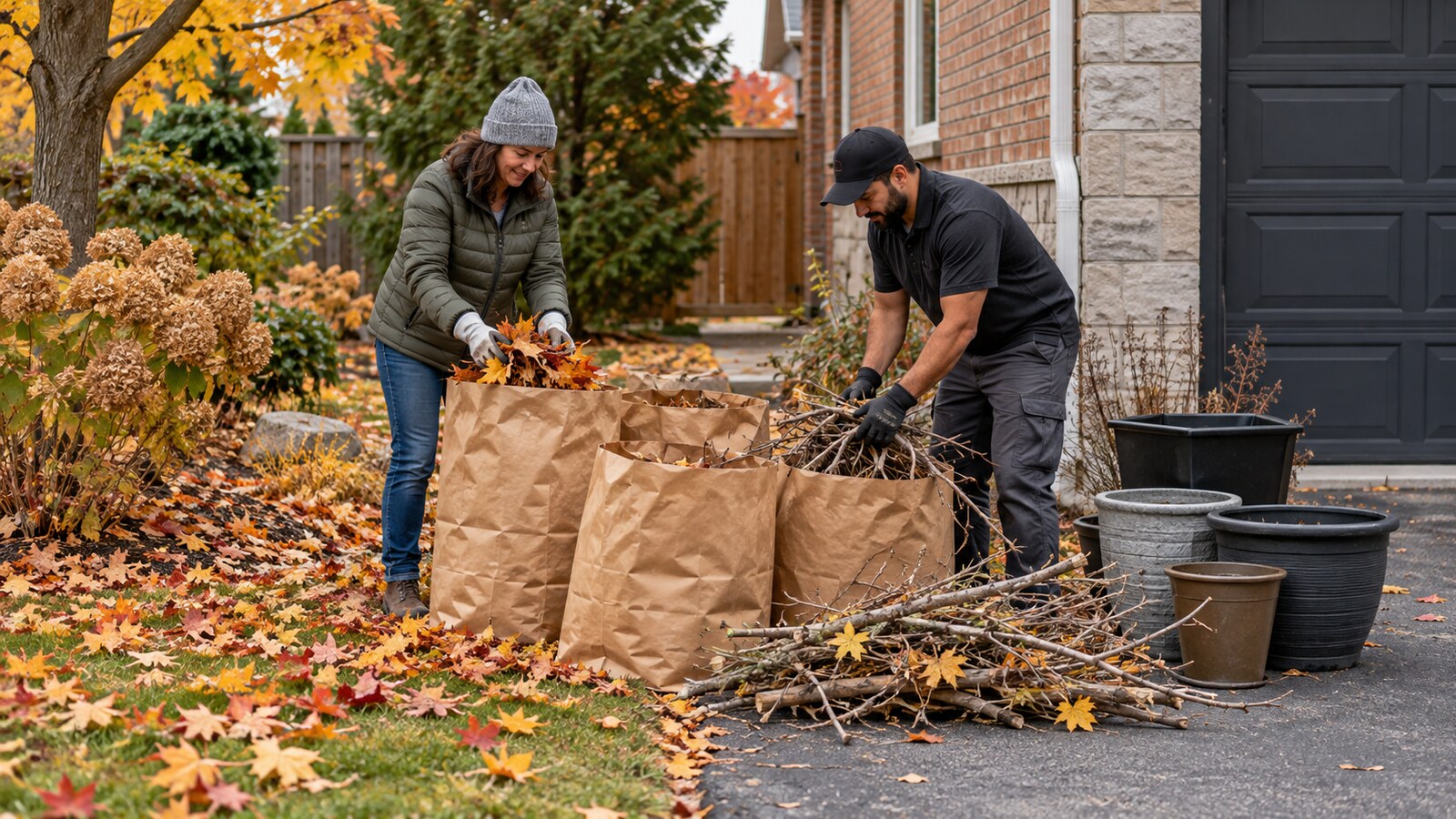
Fall yard debris can build up quickly around an Ottawa property. Bagged leaves, small fallen branches, empty planters, worn garden stakes and damaged outdoor accessories may end up spread across several areas instead of forming one clear removal job. Waiting until the ground is wet or access is restricted can make the work slower and harder on lawns, gates and walkways.
A useful pre-winter plan starts by identifying what is ordinary non-hazardous debris, what can be reused and what needs a separate disposal route. It also protects the property while material is moved. The objective is not to strip a garden or remove healthy landscaping. It is to clear loose seasonal material, improve access and leave the yard ready for the next stage of winter preparation.
Walk the property before collecting anything
Check the front yard, side passages, backyard, deck, patio, shed entrance and driveway. Note where leaves have gathered, where branches are resting and which planters are truly empty. Photograph each area so the removal scope can be estimated without relying on one close-up image. A wide view also shows gates, stairs, retaining walls and the distance to the loading point.
Look for hidden conditions before moving a pile. Sharp wire, broken glass, animal waste, liquids, fuel containers, pesticides, batteries and unknown materials do not belong in an ordinary yard-debris load. Keep them separate and describe them honestly when requesting guidance. Do not reach blindly into dense leaves or lift a container if its contents are unclear.
Define the ordinary yard-debris scope
Typical manageable material may include dry leaves already placed in sound bags, light twigs, small loose branches, dead annual plants, empty plastic planters and non-sharp garden accessories. Size, weight, moisture and access still matter. A soggy bag or soil-filled planter can be much heavier than it looks, so provide photos and avoid promising that every item belongs in the same load.
Large limbs, stumps, soil, sod, construction material and active tree work are different scopes. So are pressurized cylinders, chemicals, fuel and unidentified liquids. Separate these items before the appointment. If a branch is attached, overhead, under tension or entangled with a structure, use an appropriate tree-care professional rather than treating it as loose debris.
Sort before staging
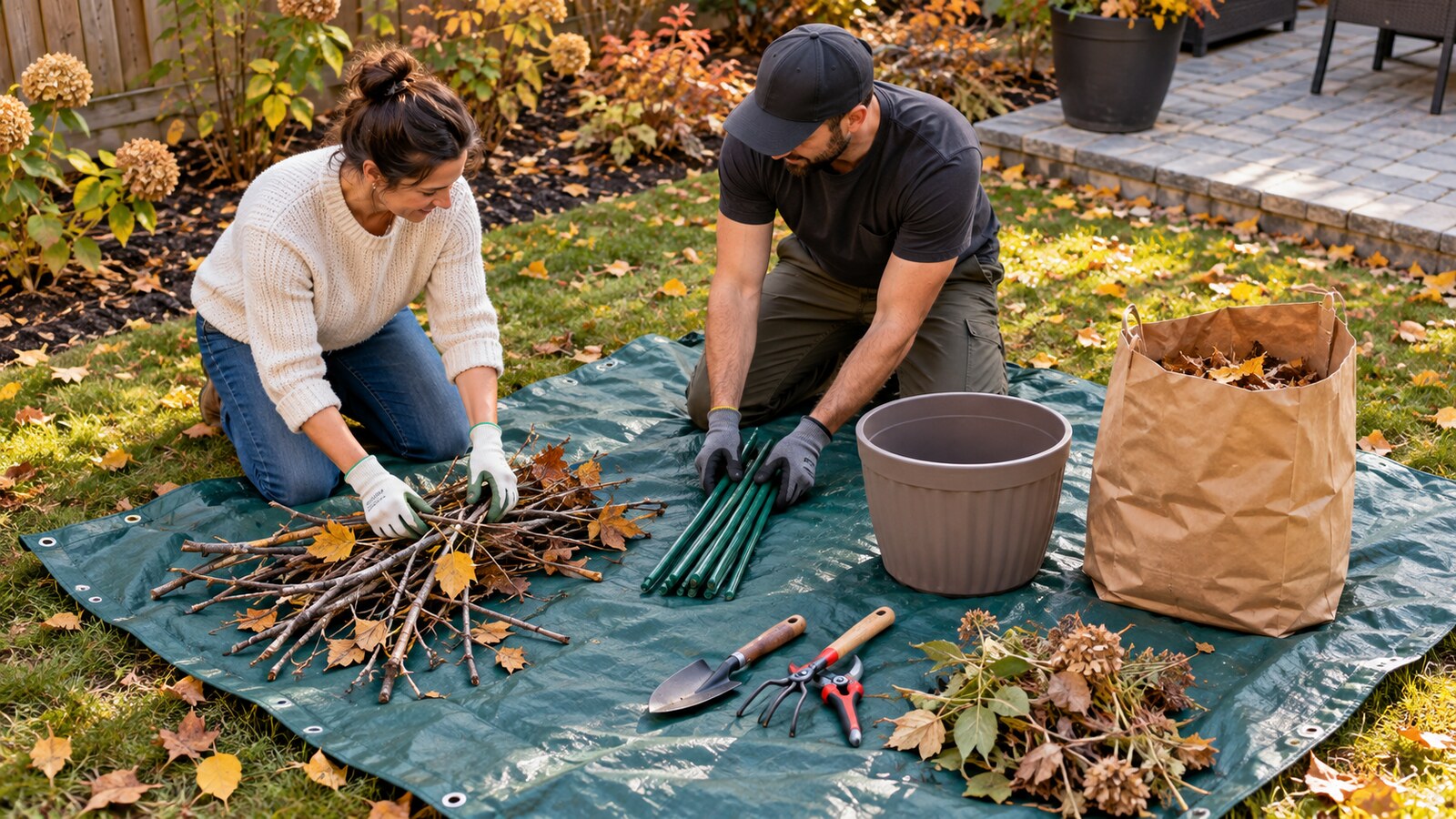
Choose a dry, level sorting area that does not block a door, sidewalk or vehicle. A tarp can keep small items visible and reduce damage to the lawn. Create groups for keep, relocate, donate where suitable, ordinary yard debris and items that require separate handling. Confirm decisions with the homeowner or property manager before anything reusable is removed.
Empty planters should be checked rather than assumed empty. Remove loose soil only if the owner has approved where it will go. Stack lightweight pots carefully and separate cracked pieces with sharp edges. Bundle small branches only when they are light enough to handle and the ties do not leave pointed ends projecting into the walking route.
Use bags and bundles that can be handled safely
Do not overfill bags. A bag should remain stable when set down and manageable when lifted. Wet leaves compact and add weight, while torn paper can fail when moved. If a bag is damaged, divide the contents rather than placing the failing bag inside an oversized load that is difficult to control.
Keep branches short enough for the planned route and vehicle, but do not cut them during the removal appointment unless that work has been specifically discussed. Tie loose pieces into modest bundles and keep ends aligned. Avoid combining branches, metal stakes and tools in the same bundle, because rigid or sharp pieces can shift unexpectedly.
Protect lawns, garden beds and hard surfaces
Repeated trips across soft ground can leave ruts or compact garden soil. Choose the firmest route available and use a tarp or suitable ground protection where needed. Do not drag filled bags across interlock, steps or deck boards. Lift manageable items or use appropriate moving equipment so grit and branches do not scratch finished surfaces.
Check low branches, gate hardware, downspouts, lighting and air-conditioning equipment along the route. A clear path should be wide enough for the item and the person carrying it. Move patio furniture only with permission, and return anything that is staying on the property once the route is no longer needed.
Plan the loading route
Measure narrow gates and note steps, steep grades and long side yards. Confirm where a service vehicle can stop without blocking traffic, neighbours or required access. At a rental or multi-unit property, coordinate the work window with the manager and keep entrances and emergency routes open.
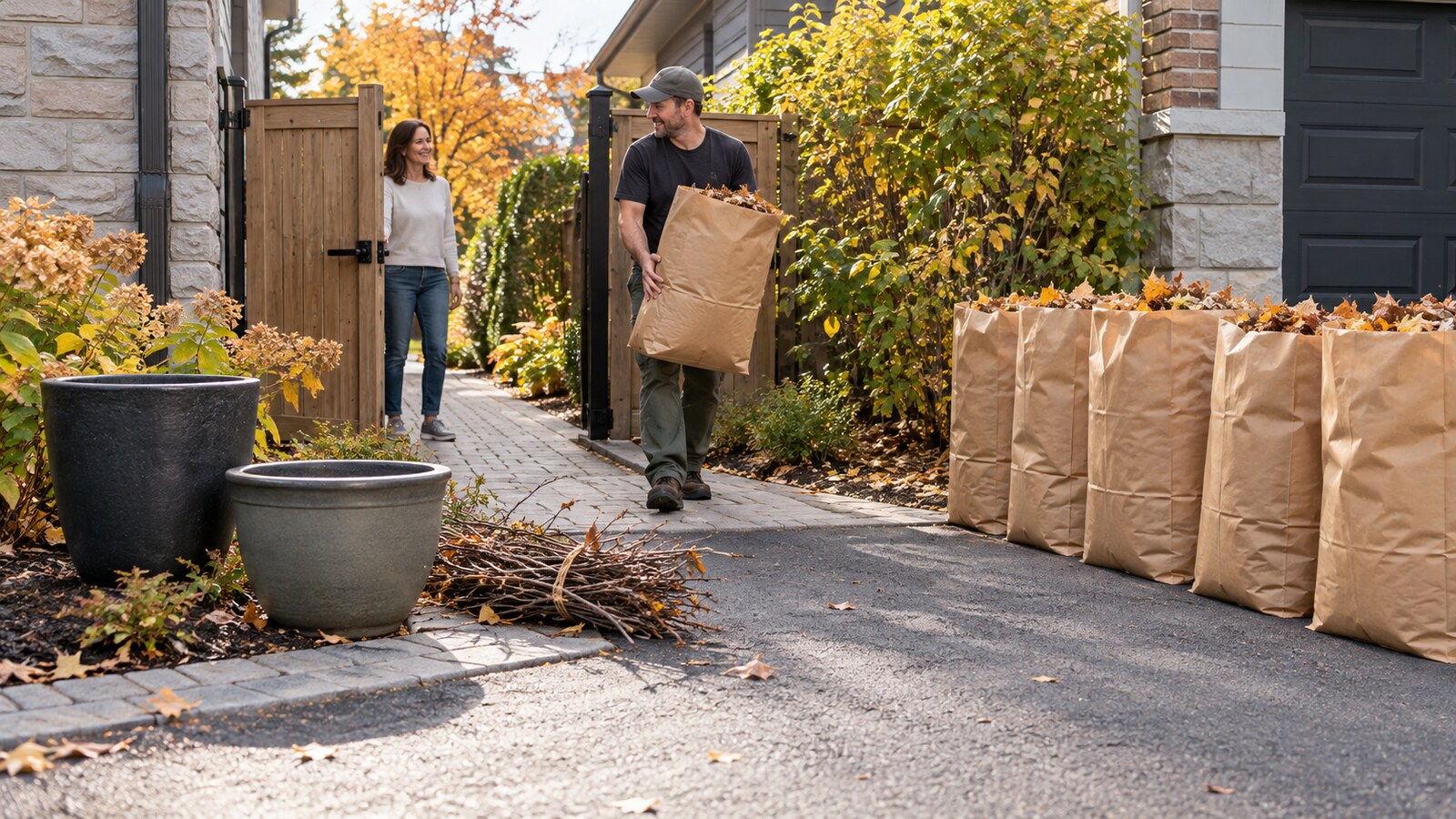
Stage material close enough to reduce carrying distance, but not so close that it blocks the garage, sidewalk or driveway. Keep bags upright and bundles parallel to the loading direction. Separate heavier or awkward items so they can be assessed before the main load begins.
Complete a final property check
After removal, walk the route from the loading point back to the yard. Collect loose ties, small twigs and spilled leaves. Check gate latches, stairs, lawn edges and the driveway for damage or displaced items. Photograph the cleared staging area and note anything that was intentionally left behind for a different service or disposal route.
A final check should distinguish removal from landscaping. Remaining garden beds, rooted plants, attached branches and seasonal fixtures are not unfinished work unless they were included in the confirmed scope. Clear notes prevent a loose debris job from being confused with pruning, excavation or property maintenance that was never booked.
Pre-winter yard-debris checklist
- Photograph every collection area and the full loading route.
- Separate unknown, hazardous or sharp materials from ordinary debris.
- Confirm what is reusable before removing planters or garden accessories.
- Keep large limbs, stumps, soil and active tree work outside the ordinary scope.
- Use manageable bags and modest bundles.
- Protect soft lawns, garden beds, decks and finished hard surfaces.
- Measure gates and identify stairs, slopes and long carries.
- Keep doors, sidewalks and required access routes open.
- Stage heavier or awkward items separately for assessment.
- Inspect the route and staging area after removal.
What to send for a firm quote
Send wide photographs of the yard, each debris group and the complete route to the driveway. Include close views of bags, branch bundles, planters and any item whose contents or weight may be unclear. Note gate width, stairs, parking limits, whether the material is wet and the deadline for the work.
Mattabo Property Care is fully insured for the services it provides. Readers can send photos, their Ottawa address and deadline for a firm quote. Same-day service is often available but is not guaranteed until Mattabo confirms the appointment. A quote request is not a confirmed booking.
For ordinary non-hazardous yard-debris removal in Ottawa, contact Mattabo Property Care through /contact with clear material and access photos. A complete view helps define the load, handling requirements and route before an appointment is confirmed.
Photos are illustrative examples of typical residential service results.