Junk Removal
Stittsville Dresser and Wardrobe Removal: A Practical Guide to Drawers, Mirrors and Stairs
A practical Stittsville guide to preparing dressers, wardrobes and removable mirrors for ordinary furniture removal while protecting rooms, stairs and shared access.
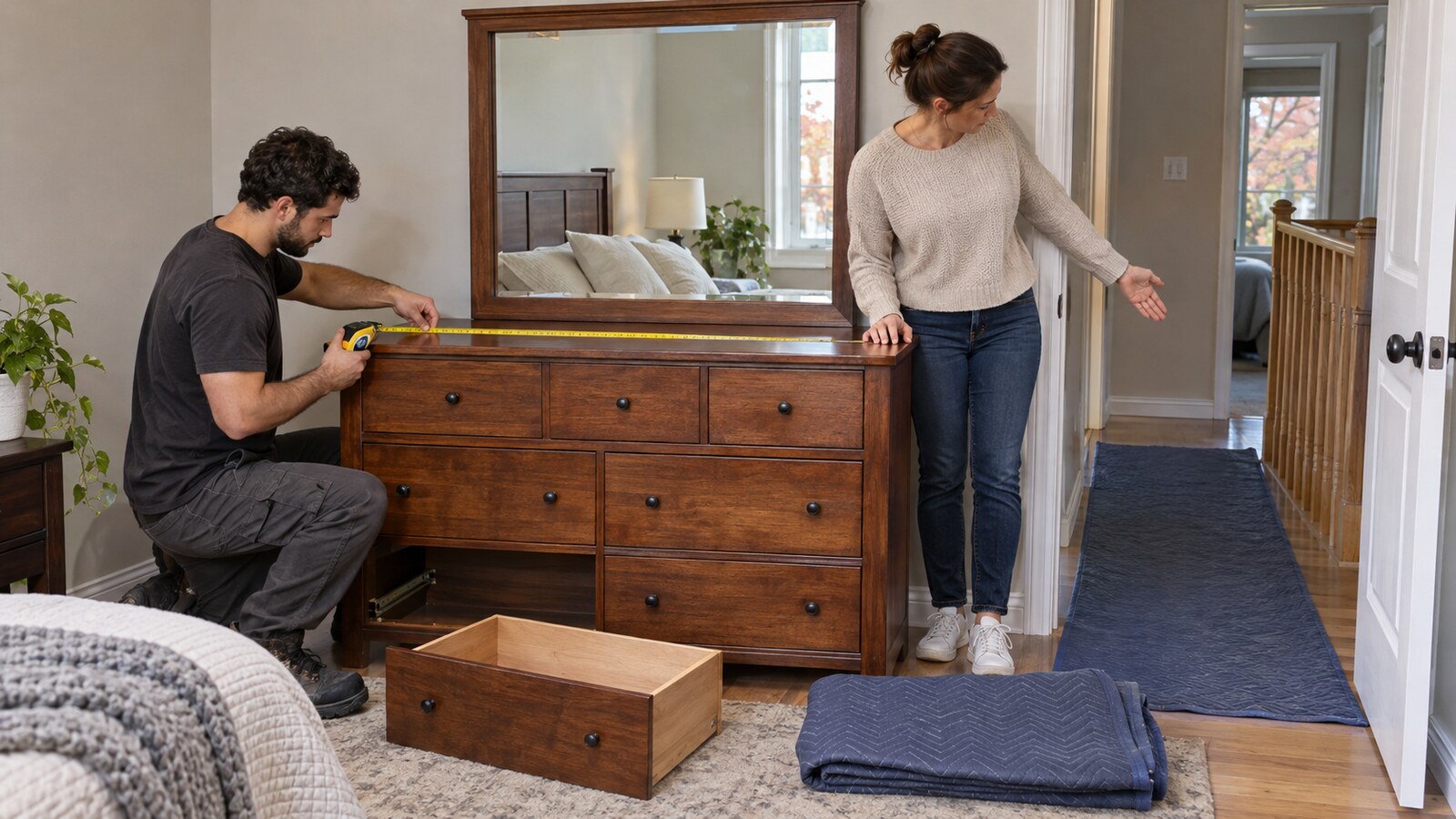
A dresser or wardrobe can look manageable while it is standing in a bedroom, then become awkward as soon as it reaches a doorway or stair landing. Solid wood, wide tops, deep drawers, attached mirrors and uneven weight all affect the removal plan. In a Stittsville townhouse, detached home or managed rental, the most useful preparation happens before anyone tries to lift the furniture.
Start by confirming that the item is approved for removal and where it should go. A move to another room, a donation handoff and ordinary junk removal are different jobs. The condition, dimensions and destination determine whether drawers should come out, whether a mirror can be detached and what protection is needed along the route.
Confirm ownership and the removal decision
In an occupied home, confirm the decision with the owner before emptying or moving anything. In a rental turnover, the property manager should identify which furniture belongs to the landlord, which items await tenant pickup and which pieces are approved for removal. Photograph the item where it stands, including any existing scratches, loose trim, damaged drawers or cracked mirror glass.
Do not assume that a dresser is empty because the visible drawers are open. Check every drawer, cabinet section and removable shelf with permission. Personal papers, medication, jewellery, keys, photographs and electronics should be set aside for the decision-maker, not mixed into a removal load. Unknown containers, leaking products, batteries and sharp items need separate direction.
Measure the furniture and the full route
Measure the widest, deepest and tallest points of the furniture. Include overhanging tops, feet, handles and decorative trim. Then check the bedroom doorway, hallway turns, stair width, ceiling height over the stairs, railings, light fixtures and the exterior exit. The narrowest point—not the size of the room—usually decides the method.
Look at the route as a sequence of turns. A dresser may pass through a door but still be too long to rotate on a landing. A tall wardrobe may clear the hall when upright but not have enough ceiling room to tilt. Record the measurements and stop if the route depends on forcing the item, removing structural components or working around an unsafe railing.
- Measure the furniture with doors and drawers closed, then note any removable parts.
- Check both sides of every doorway for hinges, stops and protruding handles.
- Confirm the usable stair width rather than measuring only between walls.
- Identify low ceilings, fixtures and tight turns before moving begins.
- Plan the loading position so the exterior door and shared route remain clear.
Empty and remove drawers in an orderly way
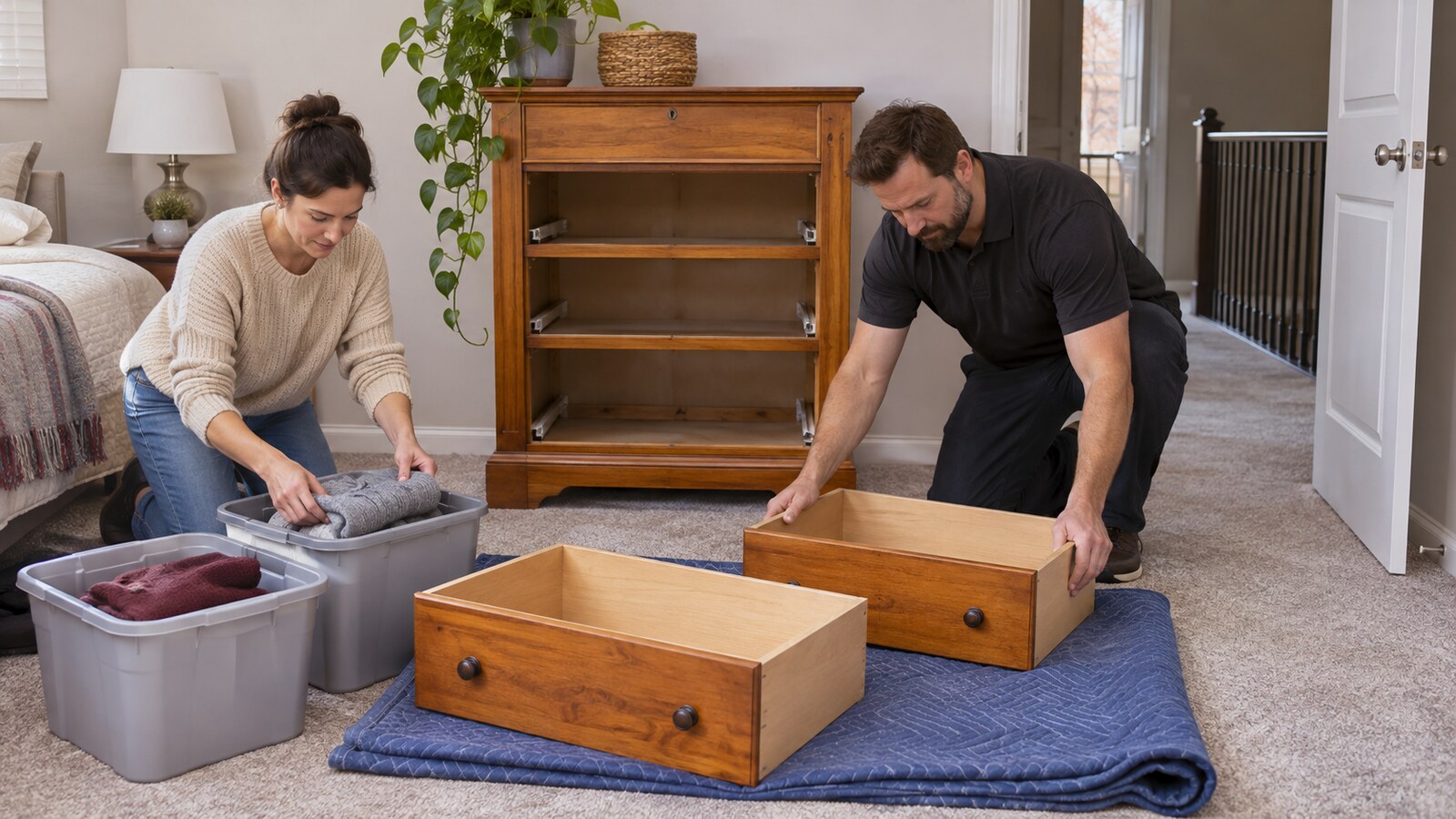
Removing drawers can reduce weight and prevent them from sliding open during handling. Empty them first, then label their positions with removable notes placed where they will not damage the finish. Some drawers lift out; others use stops, tabs or slides. If the release method is unclear, do not yank the drawer or pry the hardware. Keep screws and approved removable parts together in a small container.
Place empty drawers on a clean moving blanket away from the walking route. Do not stack them so high that the pile becomes unstable, and do not use them as containers for heavy contents during removal. If drawers cannot come out safely, secure them using a finish-appropriate method that will not leave adhesive or pressure marks.
Treat attached mirrors as a separate decision
Many dressers have mirrors fastened to supports at the back. Confirm how the mirror is attached before loosening anything, and have a stable padded surface ready. The mirror should not be allowed to pivot freely while hardware is removed. If the glass is cracked, unusually large, fixed in an unfamiliar way or difficult to support, pause and arrange an appropriate specialist or alternate removal plan.
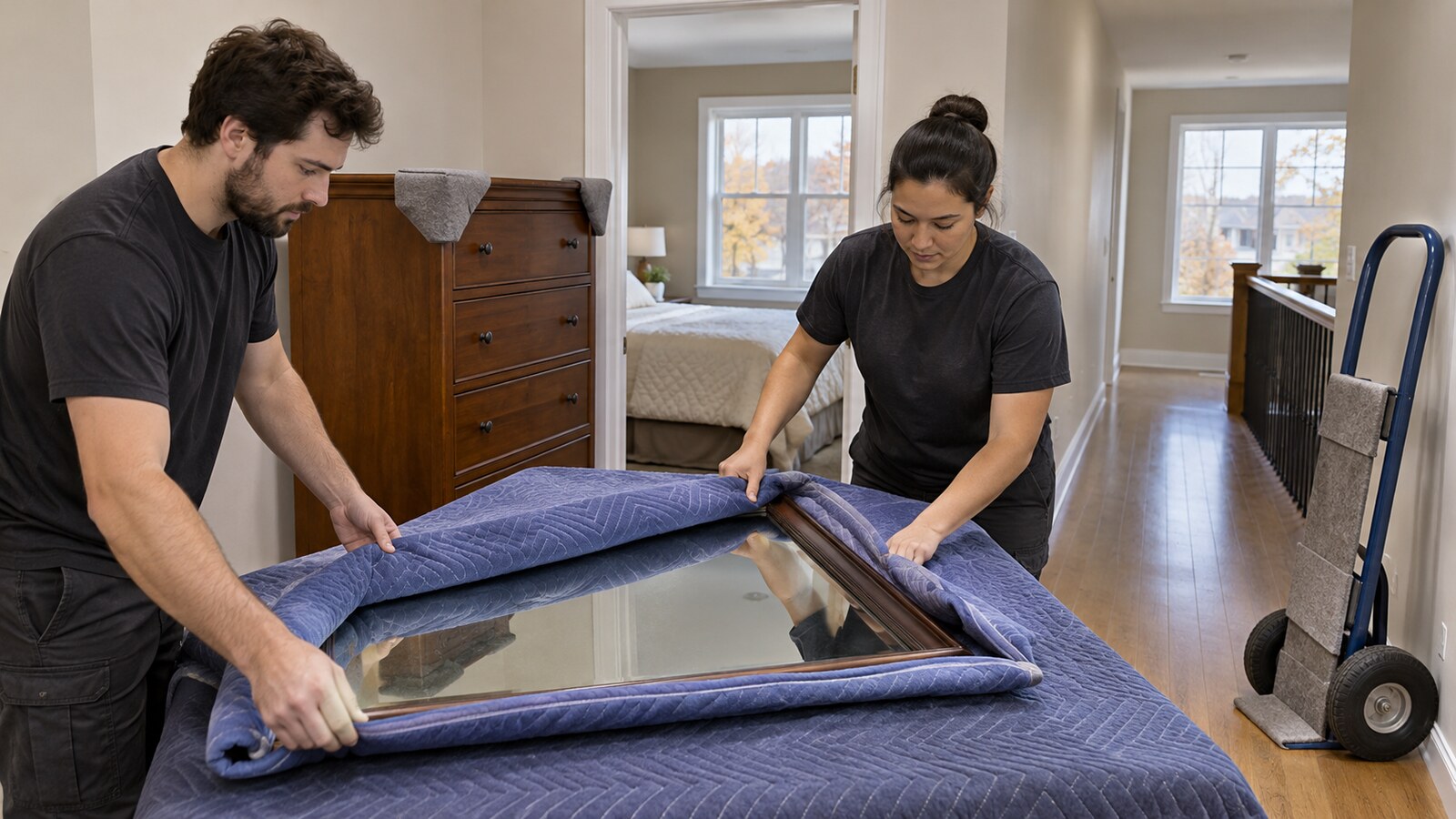
Wrap a safely detached mirror with clean padding that protects the face, frame and corners. Keep it upright or in the position recommended for the specific construction; do not place heavy objects on top. Store its hardware separately and identify which furniture piece it belongs to. A mirror should never be carried by a decorative frame that is already loose.
Check wardrobes for anchors and removable sections
A freestanding wardrobe may still be anchored to the wall for stability. Look for brackets or straps at the upper edge before moving it. Confirm that it is truly freestanding and not built into trim, flooring or adjacent cabinetry. Wall-anchor removal and any resulting repair should be included in the agreed scope rather than discovered after the wardrobe has been pulled forward.
Remove approved shelves, hanging rods and loose interior fittings when they are designed to come out. Close or secure doors without placing pressure on glass panels. Flat-pack wardrobes can sometimes be disassembled, but older particleboard, damaged fasteners or glued joints may not tolerate another cycle. Do not promise that a piece can be rebuilt until its construction has been assessed.
Protect floors, corners and stair landings
Clear clothing, lamps, rugs, pet items and small furniture from the route. Protect finished floors and thresholds with materials that lie flat and will not slide. Pad vulnerable furniture corners, but keep handholds usable. On stairs, avoid loose blankets underfoot and keep the top and bottom landings clear for the full duration of the move.
Furniture dollies and straps are useful only where the route and item suit them. A dolly that works in a hallway may not be appropriate on stairs. Do not drag furniture across flooring, balance it on a railing or rely on a drawer opening as a grip. If the weight, turn or stair geometry is uncertain, stop and revise the plan before lifting.
Plan shared access and the final handoff
For condos, stacked townhomes and managed properties, confirm elevator reservations, loading rules, door protection and parking before arrival. In a residential street setting, keep sidewalks, neighbouring driveways and fire routes open. The furniture should have a confirmed destination so it does not sit in a hallway, lobby or driveway while disposal or donation arrangements are decided.
- Photograph the room, furniture and existing damage before preparation.
- Keep drawers, shelves, rods and hardware grouped by item.
- Check the vacated wall and floor area without attempting unapproved repairs.
- Remove blankets, tape, tools and packaging from the route after the work.
- Send final photos and a note confirming where the furniture was taken.
What to send for a Stittsville furniture-removal quote
Send wide photos of the dresser or wardrobe, close views of any mirror, glass, wall anchors or damage, and pictures of the entire route from the room to the exterior exit. Include the Stittsville address, floor level, stair and landing details, elevator or parking instructions, approximate dimensions, the intended destination and the deadline. Identify unusually heavy construction, fixed sections or uncertain contents before the scope is confirmed.
A careful dresser or wardrobe removal is mostly a planning job: confirm ownership, empty the contents, understand the hardware, measure every turn and protect the route. Those steps make the final handoff clearer and reduce the chance that a heavy bedroom item becomes a last-minute problem at the stairs or front door.
Photos are illustrative examples of typical residential service results.